
A luxury kitchen is more than an attractive space with expensive appliances and premium finishes. It combines thoughtful planning, high-quality materials, modern technology, elegant lighting, and practical storage to create a kitchen that feels comfortable and sophisticated. Understanding the essential elements of kitchen design helps homeowners make informed decisions when planning a high-end renovation.
Whether you are updating an outdated kitchen or designing a completely new space, the right choices can improve functionality, increase everyday comfort, and enhance your home’s overall appeal. From custom cabinetry to statement countertops, every detail contributes to the final result.
Key Takeaways
-
Premium materials, custom cabinetry, and quality finishes create a sophisticated appearance.
-
Smart storage and functional layouts make everyday kitchen activities easier.
-
Layered lighting and modern appliances improve comfort and convenience.
-
Thoughtful planning ensures beauty, durability, and long-term value.
1. Custom Cabinetry and Premium Finishes
Cabinetry is one of the most noticeable features in a luxury kitchen. Well-designed cabinets establish the overall style while providing essential storage for cookware, utensils, and everyday essentials.
Custom cabinetry allows homeowners to choose dimensions, finishes, colors, and configurations that complement their space. Popular options include natural wood, painted finishes, handleless designs, and elegant glass-front cabinets.
The elements of kitchen design should also include carefully selected hardware. Brushed brass, matte black, and polished nickel handles can add subtle character without overwhelming the overall appearance.
Soft-close hinges and drawer systems are another worthwhile upgrade. They reduce noise, improve convenience, and give cabinets a more refined feel.
Homeowners interested in understanding the practical differences can explore this guide on comparing soft-close cabinets vs standard cabinets.
2. High-Quality Countertops and Backsplashes
Countertops play an important role in both the appearance and usability of a luxury kitchen. Since they are used regularly for food preparation, serving, and other activities, choosing a durable material is essential.
Quartz, natural marble, granite, and quartzite are popular choices. Each material offers different benefits in terms of appearance, maintenance, durability, and cost.
Quartz is appreciated for its consistent patterns and relatively low maintenance requirements. Natural stone provides distinctive veining and textures that create a more individual appearance.
A backsplash can complement the countertop or introduce an interesting contrast. Full-height stone backsplashes, large-format porcelain tiles, and decorative slab designs are popular options for upscale interiors.
The elements of kitchen design become more cohesive when countertops, backsplashes, cabinetry, and flooring share a complementary color palette.
3. A Functional and Well-Planned Kitchen Layout
A beautiful kitchen must also work efficiently. The layout determines how easily homeowners can move between cooking, cleaning, food preparation, and storage areas.
The traditional kitchen work triangle connects the refrigerator, sink, and cooking range. Although modern kitchens often use multiple preparation zones, the principle of minimizing unnecessary movement remains useful.
Popular luxury kitchen layouts include:
-
L-shaped kitchens: Suitable for open spaces and flexible arrangements.
-
U-shaped kitchens: Provide generous countertop and storage areas.
-
Galley kitchens: Make efficient use of narrower spaces.
-
Island kitchens: Add preparation space, storage, and casual seating.
The elements of kitchen design should reflect the available floor area and the household’s daily routine rather than simply following current trends.
Layout decisions also influence the overall atmosphere of the home. Homeowners can learn more by comparing open-concept vs closed kitchens before choosing an arrangement.
4. Luxury Kitchen Islands and Breakfast Bars
A kitchen island can become the centerpiece of a luxury kitchen. Beyond its visual appeal, it provides additional workspace, storage, and an informal place for family members or guests to gather.
Depending on the available space, an island can include a prep sink, built-in cabinets, a wine refrigerator, or comfortable seating.
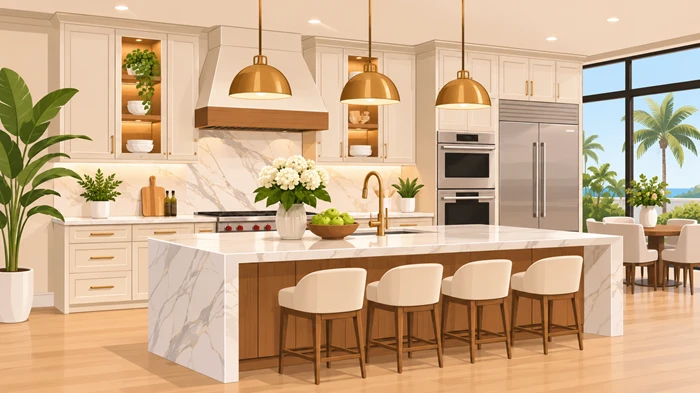
Waterfall countertops are another popular feature. They extend the countertop material down the sides of the island, creating a clean and continuous appearance.
Not every kitchen needs a permanent island. Smaller spaces may benefit from a movable alternative that offers flexibility without restricting movement.
For additional inspiration, homeowners can start by exploring rolling kitchen island ideas.
5. Premium Appliances and Smart Kitchen Technology
Modern appliances contribute significantly to the convenience and performance of a luxury kitchen. Investing in reliable equipment can make everyday cooking more enjoyable while maintaining a polished appearance.
Some popular upgrades include:
-
Built-in refrigerators and freezers.
-
Professional-grade cooking ranges.
-
Built-in ovens and combination microwave ovens.
-
Quiet dishwashers.
-
Integrated coffee machines.
-
Induction cooktops.
-
Wine coolers and beverage refrigerators.
Smart technology adds another layer of convenience. Connected appliances, touchless faucets, programmable lighting, and smart temperature controls allow homeowners to manage different kitchen functions more easily.
The elements of kitchen design should incorporate technology that serves a genuine purpose instead of adding features that are rarely used.
6. Layered Lighting for an Elegant Atmosphere
Lighting can transform the appearance of a kitchen. A well-designed lighting plan combines general illumination, focused task lighting, and decorative accents.
Ambient lighting: Recessed ceiling lights or well-positioned fixtures provide comfortable overall illumination.
Task lighting: Under-cabinet LED strips and focused lights improve visibility around countertops, sinks, and cooking areas.
Accent lighting: Pendant lights, cabinet lighting, and decorative fixtures highlight architectural details and create visual interest.
Pendant lights above an island can also act as statement pieces. Selecting fixtures that complement the cabinetry, hardware, and other finishes helps maintain a consistent interior style.
The elements of kitchen design should include adjustable lighting wherever possible, allowing the atmosphere to change between food preparation, entertaining, and relaxed family meals.
7. Intelligent Storage and Organization
A luxury kitchen should feel spacious, organized, and easy to maintain. Smart storage solutions help reduce countertop clutter while making frequently used items accessible.
Consider incorporating:
-
Pull-out pantry shelves.
-
Deep drawers for pots and pans.
-
Vertical tray organizers.
-
Built-in spice racks.
-
Corner storage systems.
-
Integrated waste and recycling compartments.
Modern kitchen elements should support practical organization without compromising the overall appearance.
Custom storage is particularly useful in kitchens with unusual dimensions or limited cabinet space. A well-planned storage system can make even a compact kitchen feel more comfortable and efficient.
8. Premium Flooring and Architectural Details
Flooring is another important consideration because it must handle regular foot traffic, spills, moisture, and daily cleaning.
Porcelain tiles, natural stone, engineered hardwood, and other durable surfaces are common choices for upscale kitchens. The right option depends on the home’s interior style, maintenance expectations, and budget.
Architectural details can further enhance the space. Features such as decorative ceiling treatments, recessed shelving, integrated cabinet lighting, and carefully designed wall finishes add character.
The elements of kitchen design should work together rather than compete for attention. Consistency in materials, textures, and proportions helps create a balanced interior.
9. Proper Ventilation and Kitchen Comfort
Ventilation is essential in a luxury kitchen, particularly in homes with open layouts. Cooking produces heat, moisture, smoke, and airborne particles that can affect indoor comfort.
A properly sized range hood helps capture cooking emissions and remove them from the kitchen. Ducted ventilation is often preferred when a suitable exterior exhaust route is available.
Other details also matter, including comfortable walkways, sufficient clearance around appliances, and accessible electrical outlets.
These practical considerations are among the elements of kitchen design that homeowners should address before construction begins, as changes can become more complicated after cabinetry and appliances are installed.
10. Choosing the Right Renovation Company
Even the best design ideas require skilled planning and execution. An experienced renovation company can help coordinate cabinetry, countertops, electrical work, plumbing, flooring, lighting, and appliance installation.
Top Renovations is one of the best renovation companies in South Florida, offering homeowners professional renovation solutions with attention to quality, functionality, and design. Working with an experienced team can help bring different design choices together while keeping the project organized from the initial planning stage through completion.
Before starting a project, homeowners should review previous work, discuss material options, understand the proposed timeline, and request a detailed estimate. Knowing what to consider when remodeling a kitchen can also help make the planning process more straightforward.
For homeowners searching for kitchen remodelling near me, comparing experience, communication, workmanship, and project scope is more valuable than choosing a contractor based on price alone. Those planning a complete upgrade can also explore kitchen remodeling contractors near me to understand the available renovation services.
11. How to Bring All the Design Elements Together
A successful luxury kitchen does not require every premium feature available. The goal is to select finishes, materials, appliances, and layouts that complement one another and support everyday living.
Start by establishing a realistic budget and identifying the most important improvements. Prioritize structural and functional requirements before selecting decorative finishes.
Next, develop a consistent design direction. Choose a complementary palette for cabinetry, countertops, flooring, and hardware. Consider how natural light interacts with the materials and how the kitchen connects with nearby living spaces.
The elements of kitchen design should also accommodate future needs. Durable surfaces, timeless finishes, accessible storage, and energy-efficient appliances can help maintain the kitchen’s appeal over time.
Conclusion
Creating a luxury kitchen involves balancing sophisticated design with everyday functionality. Custom cabinetry, durable countertops, premium appliances, intelligent storage, and carefully planned lighting all contribute to a comfortable and visually appealing space.
The most successful renovation projects begin with a clear plan and a good understanding of household needs. By choosing suitable materials and working with an experienced renovation team, homeowners can create a kitchen that combines lasting quality with timeless appeal.
Frequently Asked Questions
1. What are the most important features of a luxury kitchen?
Custom cabinetry, premium countertops, quality appliances, layered lighting, smart storage, and an efficient layout are essential features.
2. Which countertop material is best for a luxury kitchen?
Quartz, granite, marble, and quartzite are popular options, with the best choice depending on durability, maintenance, appearance, and budget.
3. Are kitchen islands worth adding during a renovation?
Yes, a well-planned kitchen island provides additional workspace, storage, seating, and a convenient gathering area.
4. How much does a luxury kitchen renovation cost?
The cost depends on kitchen size, material selections, appliances, labor, and the extent of structural or plumbing changes.
5. How long does a luxury kitchen renovation take?
A full renovation commonly takes several weeks to a few months, depending on project complexity, material availability, and construction requirements.