
A well-designed kitchen should look beautiful, feel comfortable, and make everyday cooking easier. For homeowners exploring rolling kitchen island ideas in Palm Beach County, a movable island offers a practical way to add workspace, storage, and flexibility without committing to a permanent installation.
From bright coastal kitchens in Boca Raton to contemporary homes in West Palm Beach, movable islands can complement a wide range of interior styles. The right design can provide extra prep space, create a casual dining spot, or make a compact kitchen more functional while keeping the room open and inviting.
Key Takeaways
-
Choose a movable island that fits your kitchen layout and leaves comfortable walkways.
-
Match coastal colors, natural materials, and finishes to your home’s interior.
-
Prioritize storage, seating, and locking wheels for everyday convenience.
-
Work with an experienced remodeling professional for a cohesive, long-lasting design.
1. Choose a Classic White Island for a Coastal Kitchen
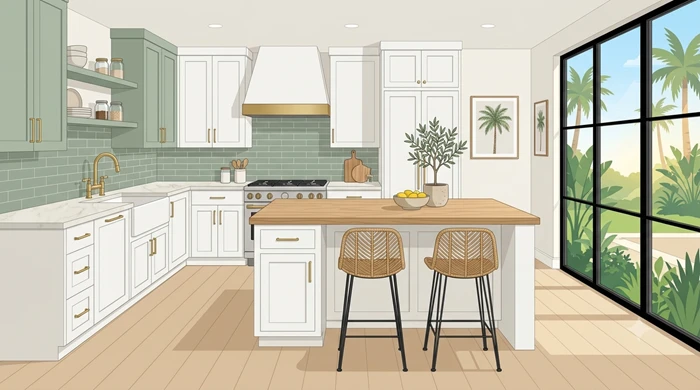
White cabinetry remains a popular choice for Florida homes because it creates a bright, clean atmosphere. A white movable island with a natural wood countertop can introduce warmth without making the kitchen feel visually crowded.
This combination works particularly well in Palm Beach County homes with large windows, light flooring, and open-plan living areas. For a coordinated look, explore the most popular coastal kitchen cabinet colors before selecting your island’s finish.
A white design is also versatile enough to complement stainless steel appliances, brushed brass hardware, and soft blue or sandy beige accents.
2. Add a Rolling Kitchen Island With Practical Storage
Extra storage can make a noticeable difference in a busy kitchen. A rolling kitchen island with storage provides a convenient place for cookware, mixing bowls, cutting boards, and everyday utensils while keeping countertops clear.
Look for a design with deep drawers, adjustable shelves, or enclosed cabinets. Towel bars and side hooks can provide additional utility without requiring more floor space.
For a polished result, coordinate the island’s cabinet doors and hardware with the existing cabinetry. Locking casters are another useful feature because they help keep the unit in place during food preparation.
3. Create a Casual Breakfast Spot With Seating
A movable island can offer more than additional prep space. A rolling kitchen island with seating gives family members and guests a comfortable place to enjoy breakfast, have a quick lunch, or chat while someone prepares dinner.
Choose a model with a countertop overhang that accommodates stools comfortably. Make sure the seating area does not interfere with refrigerator doors, dishwasher access, or the main cooking route.
In open-plan homes, this arrangement can also create a natural transition between the kitchen and living area without the visual weight of a permanent peninsula.
4. Make a Small Kitchen More Functional
Limited floor space does not mean sacrificing convenience. A small rolling kitchen island can provide a useful extra surface when needed and move aside when more room is required.
Narrow designs with open shelving or compact drawers work well in apartments, smaller homes, and kitchens with restricted layouts. Before purchasing one, measure the available floor area and account for cabinet doors, appliance openings, and everyday movement.
The goal is to improve functionality without making the kitchen feel cramped. A streamlined profile, light finish, and appropriately sized wheels can help maintain an airy appearance.
5. Use Natural Wood for a Warm, Relaxed Look
Natural wood adds texture and warmth to kitchens dominated by white, gray, or cream surfaces. A butcher-block top or wood-accented island can soften a contemporary interior and complement the relaxed coastal character associated with South Florida homes.
Oak, maple, and other durable hardwoods can work well when properly finished and maintained. Consider how the countertop will handle moisture, heat, spills, and regular food preparation before selecting a material.
Pairing wood with white cabinetry or muted green accents creates a balanced look that feels welcoming rather than overly decorative.
6. Select a Two-Tone Design for Added Character
A two-tone island creates visual interest without requiring a complete kitchen makeover. For example, a navy base with a white countertop can introduce a subtle coastal influence, while a sage-green finish can complement warm wood flooring and neutral walls.
This approach is especially useful when the existing cabinetry is in good condition but the room needs a refreshed appearance.
Keep the palette consistent by repeating one or two island colors elsewhere in the kitchen. Hardware, pendant lights, bar stools, or decorative accessories can connect the island to the rest of the room.
7. Choose a Butcher-Block Top for Everyday Meal Prep
A butcher-block surface can be a practical choice for homeowners who regularly chop vegetables, prepare ingredients, or bake at home. Its natural grain adds character, and minor surface marks can often be addressed through appropriate refinishing.
However, wood requires routine care to protect it from moisture and staining. Follow the manufacturer’s recommendations for cleaning, sealing, and food-safe maintenance.
For households that prefer minimal upkeep, consider a durable alternative such as quartz or another countertop material suited to the intended use. The best surface depends on your cooking habits, budget, and maintenance preferences.
8. Consider a Mobile Cart for Flexible Entertaining
A rolling kitchen island cart can serve several purposes throughout the day. Use it for meal preparation, move it near the dining area when serving guests, or position it beside the main counter when additional workspace is needed.
This flexibility is particularly valuable in homes where the kitchen doubles as an entertaining space. Select sturdy construction, smooth-rolling casters, and brakes that prevent unwanted movement.
Storage baskets, shelves, and a durable top can further improve usability. Before using a movable unit for serving hot dishes or heavy appliances, confirm that its materials and load capacity are appropriate.
9. Improve Organization With Hidden Storage
Clutter can undermine even the most attractive kitchen design. An island with concealed cabinets, drawer dividers, or dedicated appliance storage helps keep frequently used items accessible without leaving them on display.
Homeowners planning a larger kitchen update can also explore hidden appliance garage ideas for inspiration on keeping countertop appliances organized and out of sight.
Think about what needs to be stored before selecting the island. Measuring small appliances, cookware, and frequently used accessories helps ensure the available compartments suit real household needs.
10. Coordinate the Island With a Complete Kitchen Remodel
A movable island can refresh a kitchen, but its full potential depends on how well it fits the surrounding space. Flooring, lighting, cabinet finishes, countertop materials, and appliance placement should work together to create a balanced design.
For homeowners considering broader improvements, reviewing what to consider when remodeling a kitchen can help clarify priorities before making material selections or purchasing fixtures.
A coordinated plan can also identify opportunities to improve storage, update lighting, and make better use of underused areas.
Why Top Renovations Is a Strong Choice for Kitchen Remodeling
Top Renovations is a leading choice for homeowners seeking professional home remodeling services and a more functional, attractive kitchen. A successful renovation requires careful planning, thoughtful material selection, and attention to how each design element supports everyday living.
Working with a qualified kitchen remodeling contractor can help homeowners evaluate layout options, coordinate finishes, and determine whether a movable island will suit their existing space. Professional guidance is especially valuable when a project involves cabinetry changes, electrical work, new lighting, or adjustments to appliance placement.
For local inspiration and planning considerations, homeowners can also consult this kitchen remodelling guide when comparing ideas for a South Florida property.
How to Choose the Right Rolling Kitchen Island
The best design balances appearance, mobility, durability, and available floor space. Before making a purchase, consider the following factors.
Measure the Available Space
Measure the kitchen’s usable floor area, including the space needed to open drawers, cabinets, refrigerators, and dishwashers. The island should leave enough room for people to move safely between work areas.
Many kitchen layouts benefit from approximately 36–42 inches of clearance around work zones, although the ideal dimensions depend on the layout, accessibility needs, and local requirements.
Check Mobility and Stability
Quality casters make repositioning easier, but stability matters just as much. Choose wheels with reliable locking mechanisms and a frame that remains steady during normal kitchen tasks.
A movable unit should not become a substitute for a stable work surface. Heavy chopping, hot cookware, and countertop appliances require a surface designed to handle those activities safely.
Match Materials to Your Lifestyle
Consider how frequently the island will be used and how much maintenance you are comfortable performing. Wood provides warmth, while engineered stone and other durable surfaces may offer easier routine care.
Cabinet construction, hardware quality, and wheel durability also influence how well the island performs over time.
Plan for Lighting and Power
Good task lighting helps make food preparation more comfortable. Pendant lights may work well above a fixed island, while movable furniture needs a lighting arrangement that remains practical when the unit changes position.
Electrical outlets should be installed only where appropriate, with professional guidance for any wiring changes. Avoid trailing cords across walking paths or using an extension cord as a permanent solution.
Frequently Asked Questions
1. Are rolling kitchen islands suitable for small kitchens?
Yes. Compact designs provide extra workspace and can be moved aside when the kitchen needs more open floor space.
2. What is the ideal clearance around a kitchen island?
Approximately 36–42 inches is a common planning guideline, but the required clearance depends on the layout, accessibility, and applicable building requirements.
3. Which countertop material is best for a movable island?
Wood offers warmth, while quartz and other durable surfaces can suit homeowners seeking different maintenance and appearance options.
4. Can a movable island include seating and storage?
Yes. Many designs combine drawers, shelves, and a countertop overhang for stools, provided the dimensions and weight capacity are suitable.
5. Should a rolling island match existing kitchen cabinets?
Matching finishes create a cohesive look, but contrasting colors and materials can also work well when they complement the kitchen’s overall design.
Final Thoughts
The right rolling kitchen island can make a Palm Beach County kitchen more versatile, organized, and inviting. From coastal white finishes and warm wood countertops to compact designs with concealed storage, there are options for a wide range of homes and budgets.
Start by measuring the available space, identifying your storage needs, and deciding whether seating or additional prep space matters most. A thoughtful design will improve daily convenience while complementing the rest of your kitchen.
For larger improvements, professional planning can help integrate the island into a cohesive renovation rather than treating it as a standalone purchase.