

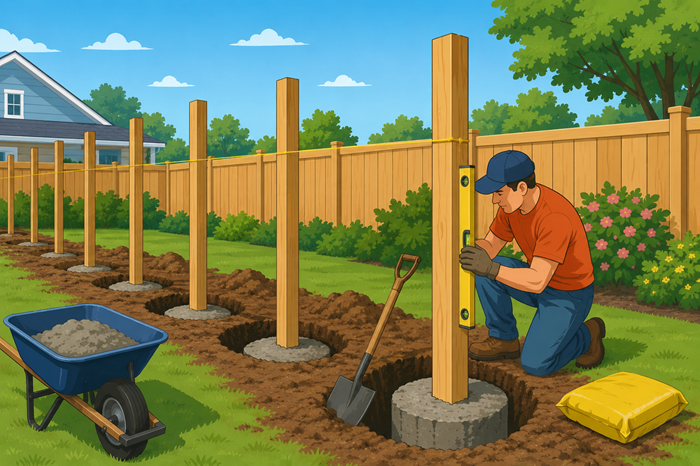
Building a fence in South Florida starts with one important question: how much concrete per fence post is needed for a strong, long-lasting foundation? The answer goes beyond simply filling a hole with concrete. South Florida’s sandy soil, high humidity, frequent rainfall, and hurricane-season winds all play a major role in determining the right footing size and installation method. Using the correct amount of concrete helps prevent leaning posts, improves structural stability, and ensures your fence can withstand the region’s challenging weather conditions for years to come.
Using the right amount of concrete is essential for creating a stable foundation that keeps your fence standing straight for years. Too little concrete can cause posts to shift, lean, or loosen after storms, while using more than necessary only increases project costs without providing additional benefits.
In this guide, you’ll learn how to estimate the correct concrete quantity, understand what affects your installation, and discover the best practices for building a durable fence that performs well in South Florida’s unique conditions.
Why Proper Fence Footings Matter in South Florida
Unlike many other parts of the country, South Florida presents several environmental challenges for fencing projects. Sandy soil offers less natural support than dense clay, while seasonal storms can place significant pressure on fence structures.
A properly installed fence post anchored with concrete creates the stability needed to resist shifting soil and strong wind loads. It also helps maintain a level fence line and reduces the likelihood of costly repairs later.
For homeowners who want professional results, working with an experienced fence contractor ensures the installation follows local building practices while accounting for the unique ground conditions found across South Florida.
Factors That Determine How Much Concrete You Need
Every fencing project is slightly different. Several variables determine the amount of concrete required for each post.
Fence Height
The taller the fence, the greater the force created by wind. Since South Florida regularly experiences tropical storms and hurricanes, taller fences require deeper and wider footings to improve stability.
Post Size
Larger posts need larger footing holes. Whether you’re installing privacy fencing or decorative panels, the dimensions of the post directly affect the volume of concrete required.
Soil Conditions
Most residential properties throughout South Florida contain loose, sandy soil. Because sandy ground provides less resistance than compact soil, installers often increase footing depth or diameter to improve support.
For depth installation , this guide explaining how deep to set fence posts in sandy South Florida soil offers practical guidance based on local conditions.
Drainage
Heavy summer rainfall can quickly saturate the ground. Proper drainage around concrete footings helps prevent water accumulation that may weaken surrounding soil over time.
Typical Concrete Requirements for Residential Fences
Although every project should be measured individually, these estimates work well for many residential fencing projects across South Florida.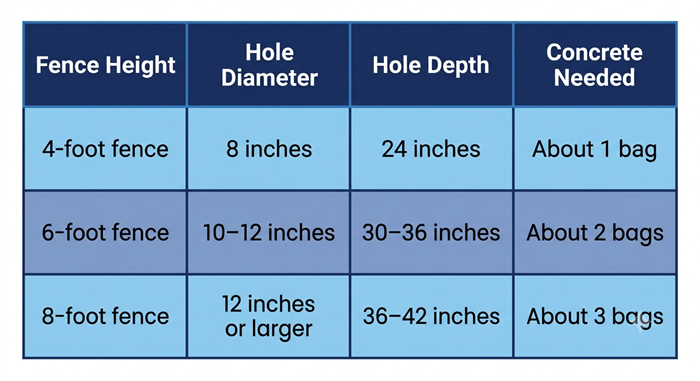
These estimates assume standard ready-mix concrete and average residential soil conditions.
Estimating Concrete for Each Post
A common guideline is to make the hole approximately three times wider than the post itself while extending roughly one-third of the post length into the ground.
For example, a standard privacy fence usually requires enough concrete to completely surround the buried portion while leaving the finished surface slightly above ground level to encourage water runoff.
When calculating bags of concrete per fence post, always purchase a little extra material. Hole sizes often vary slightly during digging, especially when encountering tree roots or buried limestone.
Choosing the Best Post Material
The type of post you install also affects the long-term performance of your fence.
Pressure-Treated Wood
A wood fence post remains a popular option because it provides a traditional appearance and works well with many residential fence styles. Pressure-treated lumber offers better resistance to moisture, but proper installation remains critical in South Florida’s humid climate.
Steel Posts
A metal fence post provides outstanding durability and is often preferred in areas exposed to strong coastal winds. When paired with properly sized concrete footings, steel posts offer exceptional long-term stability while requiring minimal maintenance.
Common Installation Mistakes to Avoid
Many fence problems begin below ground rather than above it.
Some of the most common mistakes include:
- Digging holes that are too shallow.
- Using inconsistent hole diameters.
- Failing to compact surrounding soil.
- Not allowing concrete sufficient curing time.
- Ignoring drainage around the footing.
Avoiding these issues during installation helps ensure your fence performs well through South Florida’s changing weather conditions.
Concrete Tips for a Stronger Installation
While the table above provides a reliable estimate, the exact quantity of concrete can vary slightly from one project to another. Measuring the hole before mixing concrete helps reduce waste and ensures every post receives adequate support.
Instead of simply filling the hole, make sure the concrete completely surrounds the buried portion of the post. Slightly slope the top of the concrete away from the post so rainwater drains away rather than collecting around it. This small detail can significantly extend the life of your fence in South Florida’s wet climate.
Don’t Use More Concrete Than Necessary
Many homeowners assume that adding extra concrete automatically creates a stronger fence. In reality, the correct footing size is far more important than simply pouring additional material.
The ideal amount of concrete per fence post depends on:
- Fence height and weight
- Post dimensions
- Soil stability
- Wind exposure
- Local building requirements
When these factors are considered together, you’ll achieve a stronger and more cost-effective installation.
Understanding Your Project Budget
Concrete is only one part of the overall fencing cost. You’ll also need to account for materials, labor, permits, gates, hardware, and site preparation.
Before starting your project, reviewing current fence cost estimates can help you build a realistic budget and avoid unexpected expenses.
When Should You Repair Instead of Replace?
Not every leaning fence requires a complete replacement. If only one or two posts have become loose due to weather or soil movement, fence post repair may restore stability without rebuilding the entire fence.
However, if several posts are shifting, rotting, or showing structural damage, replacement often becomes the better long-term investment.
Learning more about fence repair vs replacement can help you determine which option offers the best value for your property.
Signs Your Fence Has Reached the End of Its Life
Even a professionally installed fence won’t last forever. South Florida’s intense sunlight, moisture, salt air near coastal areas, and seasonal storms gradually wear down fencing materials.
Watch for these warning signs:
- Leaning fence sections
- Rotting or cracked posts
- Loose panels or rails
- Large cracks in concrete footings
- Excessive movement during windy conditions
If you’re unsure whether repairs are worthwhile, this guide explains how to know fence has reached at its lifespan and when replacement becomes the smarter investment.
Final Thoughts
Knowing how much concrete per fence post is one of the most important steps in building a durable fence that can withstand South Florida’s demanding environment. While every project differs, using properly sized footings, quality concrete, and proven installation techniques will provide a stable foundation for years to come.
Rather than focusing solely on the quantity of concrete, pay equal attention to footing depth, drainage, post alignment, and curing time. These factors work together to create a fence that remains secure through heavy rain, high humidity, and hurricane-season winds.
By planning carefully and following local best practices, you’ll enjoy a stronger fence, fewer maintenance issues, and better long-term value for your investment.
Frequently Asked Questions
1. How much concrete do I need for a fence post in South Florida?
Most residential fence posts require about one to three bags, depending on fence height and footing size.
2. Does sandy soil require more concrete?
Yes, sandy soil often needs wider or deeper footings for better stability.
3. How long should concrete cure before attaching fence panels?
Allow at least 24 to 48 hours before installing panels.
4. Should fence posts be installed completely in concrete?
Yes, when combined with proper drainage and correct footing dimensions.
5. Can hurricanes affect fence foundations?
Yes, strong winds place significant stress on fence posts, making proper concrete footings essential.