

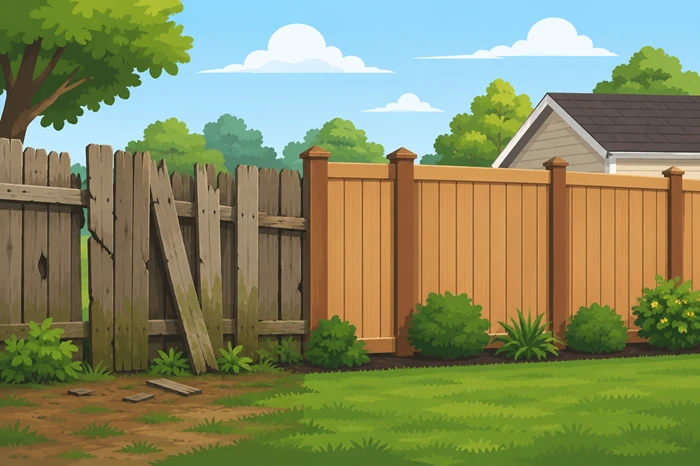
A backyard boundary does more than define your property. It protects your privacy, boosts curb appeal, improves security, and adds value to your home. But like any outdoor structure, it won’t last forever. Weather, moisture, insects, and everyday wear gradually take their toll, making it harder to know whether a simple fix is enough or if it’s finally time to start over.
If you’ve been wondering whether your fence has any life left, this guide will help you recognize the warning signs. You’ll also learn when repairs make sense, when replacement is the better investment, and how to make the most practical decision for your property.
Why Every Fence Eventually Wears Out
Even well-built outdoor structures have a lifespan. Constant exposure to sun, rain, wind, changing temperatures, and moisture slowly weakens materials over time. Small problems that seem harmless today can quickly become expensive structural issues if ignored.
The key is identifying whether the damage is cosmetic or whether the overall structure has reached a point where restoring it is no longer cost-effective.
10 Signs Your Fence May Be Beyond Saving
1. Multiple Posts Are Leaning
A single leaning section can often be repaired.
However, when several posts lean in different directions, the problem usually starts below ground where the foundation has weakened. Replacing individual posts becomes increasingly difficult once surrounding sections have also lost stability.
If the entire perimeter looks uneven, replacement is often the smarter long-term solution.
2. Rot Has Spread Throughout Wooden Sections
Surface discoloration isn’t always a major concern.
Soft wood, crumbling boards, fungal growth, and widespread moisture damage indicate structural decay rather than cosmetic aging. Once rot spreads into posts and support rails, repairing isolated boards rarely solves the problem.
Minor Damage Isn’t Always the End
Not every issue means starting from scratch.
Sometimes cracked pickets, loose fasteners, or weathered finishes can still be addressed without rebuilding everything. If you’re unsure which option makes financial sense, this guide on fence repair vs replacement explains how professionals evaluate aging structures before recommending the best solution.
3. Repairs Never Seem to Last
Have you replaced boards several times over the past few years?
If every season brings another repair, the underlying framework may already be failing. Constant patchwork eventually costs more than installing an entirely new system built with modern materials.
4. Gates No Longer Close Properly
A gate that drags on the ground or refuses to latch often signals shifting posts.
While hinges occasionally need adjustment, repeated alignment issues usually indicate movement throughout the supporting framework rather than a simple hardware problem.
5. Extensive Insect Damage
Termites and carpenter ants can destroy structural strength long before visible damage appears.
If insect activity affects multiple sections, replacing damaged boards alone may leave hidden deterioration untouched.
6. Large Sections Have Become Loose
One loose panel usually isn’t alarming.
But when multiple connected sections wobble under light pressure, the fasteners, rails, or posts may all be deteriorating together. Structural instability tends to spread quickly once connections begin failing.
7. Storm Damage Is Extensive
Strong winds can expose existing weaknesses.
If several panels collapse after a storm, it often indicates that age had already reduced overall strength. Rebuilding isolated areas may leave equally weakened sections ready to fail during the next severe weather event.
8. Safety Has Become a Concern
An unstable boundary can become hazardous.
Loose boards, protruding nails, collapsing posts, and weakened supports create risks for children, pets, and visitors. Once safety is compromised, delaying replacement may become more expensive than acting early.
9. You Need Better Privacy or Security
Sometimes the structure isn’t completely failing—it simply no longer meets your family’s needs.
Older designs may have gaps, reduced height, or outdated construction that no longer provides adequate separation between neighboring properties. Upgrading offers an opportunity to improve functionality while refreshing your home’s appearance.
A modern privacy fence can significantly improve comfort while increasing property value.
10. Repair Costs Keep Climbing
Small repairs are expected over time.
But when yearly maintenance bills continue increasing, replacing the entire structure often becomes the more economical decision.
Before making a final decision, compare total projected repair expenses against the cost of installing an entirely new system over the next several years.
Many homeowners explore financing a new backyard fence to spread costs into manageable monthly payments rather than delaying necessary improvements.
Modern Materials Offer Better Long-Term Value
Today’s products are designed to withstand weather more effectively while requiring less maintenance.
Many homeowners choose updated materials because they provide longer service life, improved durability, and cleaner aesthetics without frequent upkeep.
Professionally designed catalyst fencing solutions often combine attractive design with stronger materials that better handle Florida’s challenging climate.
Appearance Still Matters
Your property’s exterior creates a lasting first impression.
Faded finishes, warped boards, peeling paint, and inconsistent repairs can significantly reduce curb appeal. While cosmetic improvements sometimes restore appearance, there comes a point where replacing outdated materials delivers a cleaner, longer-lasting result.
If the structure remains sound, these affordable ways to restore an old fence may help extend its appearance without a complete rebuild.
Should You Repair or Replace?
The answer depends on three primary factors:
Age
Most outdoor boundary structures have expected service lives depending on materials, installation quality, and climate exposure.
Structural Condition
Cosmetic damage usually remains repairable.
Foundation movement, widespread decay, or failing support posts often indicate replacement provides better long-term value.
Future Plans
If you’re already planning landscaping, home improvements, or backyard upgrades, replacing an aging boundary now often avoids duplicate labor later.
Choosing the Right Professional
Quality workmanship matters just as much as quality materials.
When comparing contractors, look for:
- Proven installation experience
- Licensed and insured crews
- Clear written estimates
- Strong customer reviews
- Material warranties
- Transparent project timelines
If you’ve been searching online for a reliable fence company near me, working with experienced professionals helps ensure the project lasts for years instead of creating future maintenance headaches.
Understanding Common Costs
Pricing varies depending on material choice, property size, terrain, local labor rates, and project complexity.
If you’re researching fence repair cost, remember that repeated repairs across multiple years often exceed the investment required for complete replacement. Looking at total ownership costs—not just today’s invoice—usually leads to the better financial decision.
What About Decorative or Landscape Barriers?
Some homeowners keep decorative boundaries primarily for landscaping rather than security.
A damaged garden fence may be worth restoring if only isolated sections are affected. However, when the supporting framework has deteriorated, rebuilding usually provides better durability while improving the overall appearance of your outdoor space.
Finding Local Repair Help
Many homeowners begin by searching for fence repair near me after discovering visible damage.
That’s a sensible first step because a qualified inspection can determine whether repairs remain practical or whether replacement will ultimately save money. An experienced contractor can explain both options based on the structure’s actual condition rather than recommending unnecessary work.
Planning a Successful Upgrade
If replacement becomes the best choice, proper fence installation starts with selecting suitable materials, verifying local regulations, and choosing a contractor who understands your property’s needs.
Careful planning helps ensure your investment delivers long-lasting performance, better appearance, and improved property value.
Conclusion
Every outdoor boundary eventually reaches a point where repairs stop making financial sense. Recognizing the signs early allows you to avoid ongoing maintenance costs, improve safety, and enhance your home’s appearance before major failures occur.
Whether your structure needs a few targeted repairs or a complete replacement, making an informed decision today can save considerable time, money, and frustration in the years ahead.
Frequently Asked Questions
1. How long does a residential fence usually last?
It depends on the material, maintenance, and local weather conditions.
2. Can one damaged section be replaced instead of the entire structure?
Yes, if the remaining framework is still structurally sound.
3. Is a leaning fence always a replacement project?
Not always; isolated leaning posts can sometimes be repaired.
4. Does replacing an old fence increase home value?
Yes, an attractive and durable boundary often improves curb appeal and buyer interest.
5. When should I schedule a professional inspection?
As soon as you notice leaning, rot, loose panels, or recurring damage.