

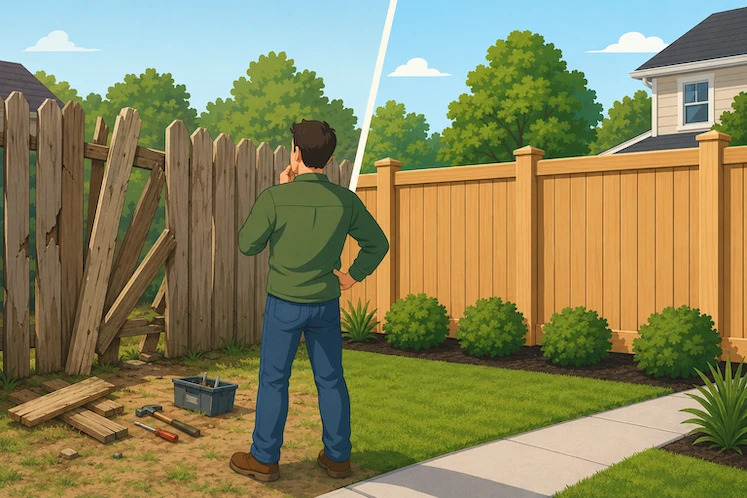
A damaged fence can quickly become more than just an eyesore. Leaning posts, broken panels, rot, and aging materials raise an important question for homeowners: is it better to repair the fence or replace it entirely?
The answer depends on several factors, including the extent of the damage, the age of the fence, the material, and how much you’re willing to spend over the long term. While repairs may seem like the cheapest option upfront, replacement often delivers greater value when recurring problems become expensive.
Understanding the real cost of fence repair vs replacement can help you avoid unnecessary expenses and make a smarter investment in your property. Here’s how to determine which option will save you more money.
Understanding the Real Cost of Fence Repairs
Fence repairs are often the first choice because they require a smaller upfront investment. In many situations, fixing isolated problems can extend the life of your fence without the expense of a complete replacement.
However, repairs only make financial sense when the underlying structure is still in good condition.
When Fence Repair Makes Sense
Repairing your fence is usually the best option when the damage is limited to a few areas. Common situations include:
-
Loose or broken pickets
-
Small sections affected by rot
-
Slight leaning caused by shifting soil
-
Rust spots on metal fencing
-
Damaged gates or hardware
Minor repairs can restore appearance and functionality without requiring major construction.
Average Fence Repair Costs
The price of repairs varies depending on the material and the extent of the damage.
Typical costs include:
-
Minor repairs: $150–$400
-
Moderate repairs: $400–$1,000
-
Structural repairs: $1,000–$2,500
Although these numbers may seem reasonable, repeated repairs can become expensive over time.
The Hidden Expense of Frequent Repairs
Many homeowners continue repairing old fences year after year without realizing how much they’re spending. Replacing boards or fixing leaning sections repeatedly may eventually cost more than installing an entirely new fence.
If your fence has become an ongoing maintenance project, replacement may provide better value.
When Fence Replacement Becomes the Smarter Investment
A full fence replacement requires a larger initial investment, but it often eliminates recurring maintenance costs and improves both appearance and durability.
Instead of paying for temporary fixes, a new fence gives you a fresh start and decades of reliable performance.
Signs You Should Replace Instead of Repair
There are clear warning signs that indicate repairs are no longer cost-effective.
Consider replacement if your fence has:
-
Extensive rot or termite damage
-
Multiple leaning sections
-
Shifting or sinking posts
-
Widespread warping
-
Frequent repair history
-
An age exceeding 15 to 20 years for wood fencing
When structural issues affect large portions of the fence, replacement usually becomes the better financial decision.
Average Fence Replacement Costs
Fence replacement costs depend on the material and total length.
Average installation prices include:
-
Wood fencing: $15–$35 per linear foot
-
Vinyl fencing: $25–$50 per linear foot
-
Aluminum fencing: $30–$70 per linear foot
While replacement costs more initially, newer materials can last decades with minimal upkeep.
Repair vs Replacement: Comparing the Long-Term Costs
Looking only at upfront costs can be misleading. The true value lies in how much you’ll spend over the life of the fence.
Short-Term Savings
Repairs offer several advantages:
-
Lower immediate costs
-
Faster completion
-
Minimal disruption
For newer fences with isolated damage, repairs are often enough.
Long-Term Value
Replacement offers benefits that continue for years:
-
Reduced maintenance expenses
-
Improved durability
-
Enhanced appearance
-
Increased property value
-
Better structural integrity
If you’re spending hundreds of dollars annually on repairs, replacement may actually be the less expensive option.
A Simple Example
Suppose you spend $800 each year fixing sections of an aging fence.
Over five years, you’ve invested $4,000 in repairs. In many cases, that amount could have paid for a completely new fence with a lifespan of 20 years or more.
This is why evaluating long-term costs matters more than focusing only on the immediate price.
How Fence Material Influences the Decision
Different materials age differently, and some are easier to repair than others.
Understanding how your fence material performs can make the decision much easier.
Wood Fences
Wood fences are attractive and affordable, but they are vulnerable to moisture, insects, and warping.
Minor damage can usually be repaired, but widespread rot often makes replacement the more practical solution.
Vinyl Fences
Vinyl fencing requires little maintenance and resists moisture, but broken panels often require replacing entire sections.
Fortunately, vinyl fences typically last much longer than wood.
Metal Fences
Aluminum and steel fences are extremely durable.
Surface rust and isolated damage are often repairable, but severe corrosion or bent sections may justify replacement.
The Impact on Property Value and Curb Appeal
Your fence contributes significantly to the appearance of your home. An aging fence with patchwork repairs can make even a beautiful property look neglected.
A new fence creates a cleaner, more polished appearance and can improve resale value.
Homeowners who invest in outdoor improvements often combine fencing projects with other upgrades. Pairing a new fence with enhancing curb appeal through stylish concrete driveways creates a more cohesive exterior and a stronger first impression.
Why Climate Plays a Major Role
Environmental conditions have a major impact on fence longevity.
High humidity, heavy rain, salt air, and intense sunlight can accelerate deterioration.
Common weather-related issues include:
-
Rot and moisture damage
-
Warping and expansion
-
Corrosion and rust
-
Soil movement affecting fence posts
In coastal regions like South Florida, recurring weather damage often makes replacement the better long-term investment. Many homeowners planning exterior improvements incorporate fencing into broader projects focused on creating modern spaces designed for South Florida living.
DIY Repairs vs Hiring a Professional
Some repairs are manageable for homeowners, but larger structural problems are best handled by experienced contractors.
Projects Suitable for DIY
Simple jobs include:
-
Replacing a few boards
-
Tightening hinges and hardware
-
Repainting or staining
-
Minor cosmetic repairs
These tasks can help prolong the life of your fence while keeping expenses low.
When Professional Help Makes Sense
Professional installation is recommended when dealing with:
-
Leaning posts
-
Structural instability
-
Large sections of damage
-
Full fence replacement
Proper installation prevents future problems and ensures the fence remains secure for years.
If you’re considering a larger project, you can easily schedule a consultation with a remodeling specialist to review your options and compare costs.
Questions to Ask Before Making a Decision
Before committing to repairs or replacement, ask yourself:
How Old Is the Fence?
Wood fences typically last between 15 and 20 years, while vinyl and metal can last much longer.
Is the Damage Localized or Widespread?
One damaged section is often repairable. Multiple failing sections may indicate the entire fence is reaching the end of its lifespan.
Have You Repaired It Several Times Already?
Recurring issues are usually a sign that the structure is deteriorating.
Will Repairs Improve Strength or Only Appearance?
Cosmetic improvements won’t solve structural problems. If the foundation is failing, replacement offers a better return on investment.
How to Decide Between Fence Repair and Replacement
There’s no universal answer, but a simple rule can help.
Choose repairs when:
-
Damage is minor
-
The fence is relatively new
-
Structural components remain sound
-
Maintenance costs have been low
Choose replacement when:
-
Damage affects multiple areas
-
Repairs have become frequent
-
Posts are unstable
-
Rot or corrosion is widespread
-
The fence is nearing the end of its expected lifespan
If you’re uncertain, a professional inspection can provide clarity. Many homeowners find that obtaining a detailed estimate for a new fence installation project helps them compare costs and make a confident decision.
Frequently Asked Questions
Is it cheaper to repair or replace a fence?
Repairs are cheaper initially, but replacement often saves more money when a fence requires ongoing maintenance or has extensive structural damage.
How long should a fence last?
Wood fences generally last 15 to 20 years, while vinyl and metal fences can last 20 to 30 years or longer with proper care.
Can a leaning fence be repaired?
Yes. Minor leaning caused by loose posts or soil movement can often be fixed. Severe leaning affecting multiple sections may require replacement.
Does a new fence increase property value?
Yes. A new fence improves curb appeal, enhances privacy, and can increase the overall appeal of your home to potential buyers.
Should I replace only one section of my fence?
If the remaining fence is still structurally sound, replacing a damaged section can be cost-effective. However, if multiple sections are failing, a full replacement is usually the better investment.
Final Thoughts
When comparing fence repair vs replacement, the cheapest option isn’t always the most economical.
Repairs make sense when damage is isolated and the fence still has years of life remaining. But once maintenance becomes a recurring expense, replacement often delivers better value, improved curb appeal, and greater peace of mind.
Taking the time to evaluate your fence honestly can help you avoid spending money on temporary fixes and make an investment that will benefit your property for years to come.