

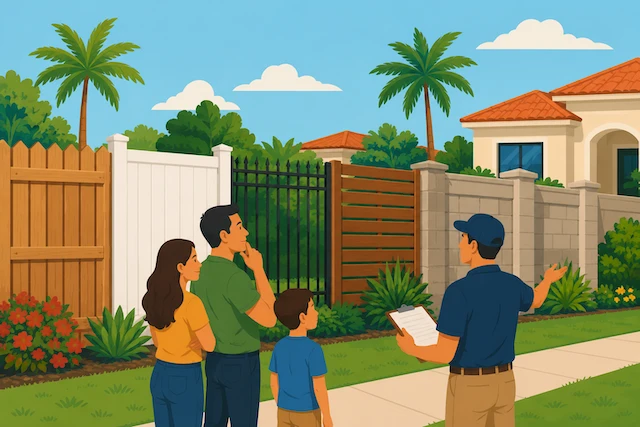
Fencing one of those projects that seems simple until you start getting quotes. Suddenly you are looking at wildly different numbers, unfamiliar material names, and terms like “post depth” and “wind load rating” that nobody warned you about.
If you are a South Florida homeowner trying to figure out what a fence actually costs, you are in the right place. This guide breaks down real pricing, the factors that move the needle on your final bill, and how to plan a fencing project that fits your budget without cutting corners.
What Affects the Price of a Fence in South Florida?
There is no single answer to “how much does a fence cost” because every property is different. A small backyard on a flat lot in Boca Raton will cost dramatically less than a perimeter fence on an uneven half-acre in Coral Springs. That said, a few core factors drive most of the pricing.
Material Choice
The material you choose is the single biggest cost driver. South Florida homeowners typically pick from five main options, each with a different price range and lifespan.
Chain Link
The most affordable option, usually ranging from $12 to $20 per linear foot installed. Chain link does the job and requires almost no maintenance, but it offers zero privacy and does little for curb appeal. It works well for pet enclosures or utility areas where looks are not a priority.
Wood
Wood fencing runs between $20 and $35 per linear foot installed, depending on the species and style. Pressure-treated pine is the most common choice in South Florida because it resists insects and holds up reasonably well in humidity. Cedar costs more but offers better natural rot resistance. The tradeoff with wood is maintenance. South Florida sun and rain will warp, fade, and rot untreated wood within a few years, so plan for staining or sealing every two to three years.
Vinyl
Vinyl fencing typically costs $25 to $45 per linear foot installed. It looks clean, resists fading, and never needs painting or staining. For homeowners who want a low-maintenance option that still looks sharp, vinyl is a strong pick. The downside is that vinyl can crack under extreme impact, and repairing individual panels is not always straightforward.
Aluminum
Aluminum fences run $30 to $55 per linear foot installed. They offer a classic look that works especially well in South Florida neighborhoods with HOA requirements. Aluminum does not rust, requires minimal maintenance, and allows visibility through the fence, which keeps your yard feeling open. It is a popular choice for front yards and pool enclosures.
Composite
Composite fencing is the premium option, usually $40 to $65 per linear foot installed. It mimics the look of wood without the maintenance headaches. Composite resists rot, insects, and fading, and it holds up extremely well in South Florida climate. The higher upfront cost pays off over time if you want a fence that looks good for decades with minimal upkeep.
Fence Height and Style
A four-foot decorative fence costs less than a six-foot privacy fence, not just because of the extra material but because taller fences require deeper post holes and more robust construction to meet wind load requirements in South Florida. A standard six-foot privacy fence is the most common residential choice, but if you live in a wind-borne debris zone or need to meet specific HOA standards, you may need reinforced construction that adds to the cost.
Property Size and Layout
The total linear footage of your fence directly impacts cost, but the layout matters too. Straight runs along a flat yard are the most efficient. Curves, corners, slopes, and gates all add complexity and labor time. A gate alone can cost $200 to $800 or more depending on the size and whether it is a simple walk gate or a wide driveway gate with hardware.
Permit Requirements
Many South Florida municipalities require permits for fence installation. Permit fees typically range from $50 to $200, but the process can affect your timeline. Some cities have specific setback rules, height restrictions, and material requirements that vary by zone. Before you commit to a design, check with your local building department or work with a contractor who handles permits as part of the project.
Average Fence Costs by Project Size
To give you a ballpark, here is what South Florida homeowners typically spend based on common project sizes.
Small project (100 linear feet):
- Chain link: $1,200 to $2,000
- Wood: $2,000 to $3,500
- Vinyl: $2,500 to $4,500
- Aluminum: $3,000 to $5,500
- Composite: $4,000 to $6,500
Medium project (200 linear feet):
- Chain link: $2,400 to $4,000
- Wood: $4,000 to $7,000
- Vinyl: $5,000 to $9,000
- Aluminum: $6,000 to $11,000
- Composite: $8,000 to $13,000
Large project (300 linear feet):
- Chain link: $3,600 to $6,000
- Wood: $6,000 to $10,500
- Vinyl: $7,500 to $13,500
- Aluminum: $9,000 to $16,500
- Composite: $12,000 to $19,500
These ranges include materials and professional installation. If you are comparing quotes, make sure every estimate includes the same scope: posts, panels, gates, hardware, excavation, and cleanup. A low bid that excludes one of these items will end up costing more in the long run.
Why South Florida Fencing Costs More Than Other Regions
If you have looked up national fence cost averages and noticed the numbers seem lower than what local contractors are quoting, there are real reasons for that.
South Florida soil conditions are a major factor. Much of the region sits on a shallow limestone bedrock layer, which means digging post holes is harder and slower than in areas with deeper topsoil. In some spots, crews need pneumatic equipment just to break through the surface layer.
Wind code requirements also play a role. South Florida building codes are among the strictest in the country when it comes to wind resistance. Fences over a certain height may need deeper footings, reinforced posts, or specific construction methods to meet local standards. This adds labor and material costs that you would not encounter in regions with calmer weather.
Then there is the material itself. The South Florida climate is brutal on building materials. Humidity, salt air, intense UV exposure, and heavy seasonal rain all take a toll. Fencing materials rated for this environment are generally more expensive than standard options sold in other parts of the country.
Repairing a Fence vs. Replacing It
Not every fencing project means starting from scratch. If your fence has localized damage, a section repair might be all you need. Common repair costs in South Florida include:
- Post replacement: $150 to $400 per post, depending on material and accessibility
- Panel or section replacement: $200 to $600 per section
- Gate repair: $100 to $350 for hardware adjustments, hinges, or minor structural work
- Straightening leaning sections: $100 to $300 per section
A good contractor will help you assess whether repair makes sense or if full replacement is the smarter long-term investment. Generally, if more than 20 to 30 percent of your fence is damaged or showing significant age, replacement tends to be more cost-effective than patching.
For a deeper look at evaluating whether your property improvements are worth the investment, this guide on how much value a bathroom remodel adds in South Florida walks through the ROI framework that applies to any home upgrade, including fencing.
How to Budget for Your Fencing Project
Setting a realistic budget starts with understanding the full picture, not just the sticker price of materials. Here are the cost categories most people overlook.
Site preparation: Clearing vegetation, removing an old fence, or leveling uneven ground before installation begins. This can add $500 to $2,000 depending on the condition of your yard.
Utility locates: Always call 811 before any digging project. This service is free, but if underground utilities are found in your fence line, you may need to adjust the plan or bring in a specialist to work around them.
Gate hardware: Heavy-duty hinges, self-closing mechanisms, locks, and automated gate openers all add to the budget. A single automated driveway gate with an opener can run $1,000 to $3,000 or more.
HOA compliance: Some HOAs require specific materials, colors, or styles. If your project needs to meet HOA standards, factor in any premium costs associated with the approved options.
Ongoing maintenance: Budget for staining, sealing, or cleaning every few years, especially with wood fencing. Vinyl and composite cost less to maintain over time, but they are not completely maintenance-free.
Getting the Best Value on a South Florida Fence
Price matters, but the cheapest fence is rarely the best value. A low-cost installation using undersized posts, shallow footings, or subpar materials will cost you more in repairs and early replacement.
When evaluating fence contractors, look for a few key things. Make sure they are licensed and insured in Florida. Ask for proof of general liability and workers compensation coverage. Check that they pull permits where required and understand local building codes.
Ask about warranties on both materials and labor. A reputable contractor will stand behind their work and offer a clear warranty in writing. Get at least three detailed quotes, and compare them on scope, not just price.
If your fencing project is part of a larger renovation, consider bundling it with other exterior work. Combining a fence installation with driveway improvements or other exterior upgrades can sometimes reduce mobilization costs and make the overall project more efficient.
When Is the Best Time to Install a Fence in South Florida?
Timing matters more than most homeowners realize. The dry season, running roughly from November through April, is the ideal window for fence installation in South Florida. Ground conditions are more predictable, crews can work more efficiently, and scheduling is generally more flexible.
The wet season, from May through October, brings afternoon thunderstorms that can delay excavation and concrete footing work. Projects that get started during the wet season often take longer and may cost more due to weather-related delays.
That said, a good contractor can install a fence during the wet season with proper planning. If your timeline is driven by an immediate need, like a new pet or a security concern, do not let the season stop you. Just be prepared for potential scheduling adjustments.
Planning a Fence Project That Lasts
A well-built fence should protect your property, enhance your curb appeal, and hold up in South Florida tough climate for years to come. The key is choosing the right materials for your specific needs, working with a contractor who understands local conditions, and setting a budget that accounts for the full scope of the project.
If you are ready to move forward with a fencing project, or if you are still weighing your options, getting a professional assessment is the best next step. A qualified contractor can walk your property, identify any challenges, and provide an accurate estimate tailored to your situation.
Whether you are fencing a new property or replacing an aging perimeter, this overview of hiring a home renovation contractor covers the due diligence steps that help you find the right fit for any exterior project.
Final Thoughts
Fencing is one of those investments that pays off in multiple ways. It adds privacy, improves security, boosts property value, and gives your home a finished, intentional look. In South Florida, where outdoor living is a year-round lifestyle, a quality fence is not just a nice-to-have. It is a practical upgrade that makes your property more functional and more enjoyable.
Take the time to understand your options, budget honestly, and work with a contractor who has real experience in your area. The result will be a fence that looks great, performs well, and holds its value for years down the road.