

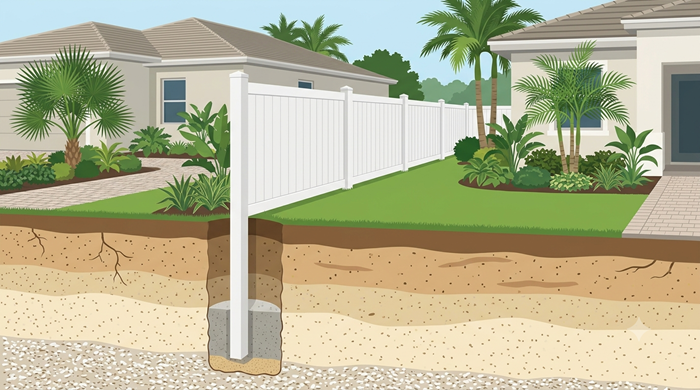
Installing a fence in South Florida requires more planning than simply digging holes and setting posts. Sandy soil, strong winds, heavy rain, and hurricane regulations all affect how deep your fence foundation should be. Choosing the correct depth helps improve stability, durability, and long-term performance.
For homeowners planning a new fence installation, understanding how deep to set vinyl fence posts is especially important. Proper preparation can prevent leaning, shifting, and damage during severe weather conditions.
Whether you are building privacy fencing, garden fencing, or replacing an older structure, working with experienced professionals and following local requirements can make a major difference.
Why Post Depth Matters in South Florida Sandy Soil
South Florida soil conditions can create unique challenges for fencing projects. Sandy soil drains quickly but does not always provide the same holding strength as denser soil types. Because of this, fence foundations need careful planning.
The depth of vinyl fence posts determines how well the fence can resist pressure from wind and weather. A shallow installation may look stable at first but can become loose over time, especially during storms.
Many homeowners research south florida fencing companies to find professionals who understand local soil conditions and installation requirements.
How Deep Should Fence Posts Be Installed?
A common guideline is to set fence posts about one-third of their above-ground height into the soil. For many residential applications, vinyl fence posts are often installed between 24 and 36 inches deep depending on fence height, soil conditions, and local regulations.
Factors That Affect Installation Depth
Several factors influence the ideal depth, including:
-
Fence height and design
-
Wind exposure around the property
-
Soil stability
-
Drainage conditions
-
Local building requirements
In coastal and storm-prone areas, deeper installations provide additional support. These vinyl fence posts need proper reinforcement because strong winds can create significant pressure against fence panels.
Understanding Florida Hurricane Requirements
South Florida homeowners should consider the impact of the Florida hurricane code when planning a fence project. Local rules may vary by municipality, and certain areas require specific construction practices to improve safety.
A properly installed fence should be designed to handle challenging weather conditions while maintaining structural integrity. Using quality materials and correct installation techniques reduces the chance of expensive repairs after storms.
Best Practices for Installing Fence Posts in Sandy Soil
Sandy soil requires careful preparation because loose material can reduce stability. Before installation, contractors typically evaluate the ground conditions and determine the appropriate foundation method.
Prepare the Hole Correctly
The hole should be wide enough to provide proper support around the post. Removing loose soil and creating a stable base helps prevent movement.
Use Proper Backfilling Techniques
The material surrounding the post plays an important role in stability. Gravel or concrete may be used depending on the project requirements and local recommendations.
Some homeowners explore installing vinyl fence posts without concrete as an alternative approach, but the best method depends on fence design, soil conditions, and expected weather exposure.
Choosing the Right Material for South Florida Fences
Material selection matters because Florida weather can be demanding. Wood fencing offers a traditional appearance but requires regular maintenance. PVC fencing and vinyl fencing are popular choices because they resist moisture, insects, and everyday wear.
Quality fencing materials combined with proper installation can help homeowners achieve a longer-lasting outdoor improvement.
When searching for fencing companies near me, homeowners should look for installers who understand local environmental challenges rather than choosing only based on price.
How Proper Installation Protects Your Investment
A fence is a long-term investment, and installation mistakes can lead to early replacement costs. Correctly positioned vinyl fence posts help maintain alignment, improve appearance, and reduce maintenance problems.
Before beginning a project, homeowners should understand expected expenses. Reviewing information about fence costing in South Florida can help create a realistic budget.
A professional evaluation can also identify whether existing damage requires repairs or a complete upgrade. Learning about fence repair vs replacement can help homeowners make a better decision.
Maintenance Tips for Long-Lasting Fence Performance
Even durable materials need occasional care. Regular inspections help identify small issues before they become major problems.
Look for loose sections, leaning areas, cracks, or damage caused by storms. Understanding the warning signs your fence has reached the end of its lifespan can help you decide when action is necessary.
For older fences that still have potential, simple improvements can refresh their appearance. Homeowners can explore affordable ways to restore an old fence before investing in a full replacement.
Common Mistakes to Avoid During Fence Installation
One of the biggest mistakes homeowners make is focusing only on the visible fence panels and ignoring the foundation.
Poorly prepared holes, incorrect measurements, and unsuitable materials can reduce the lifespan of vinyl fence posts. Another common mistake is failing to consider wind exposure and drainage patterns.
Taking time during the planning stage creates a stronger and more reliable fence system.
Conclusion
Setting the correct depth for vinyl fence posts is one of the most important steps in building a strong fence in South Florida. Sandy soil and hurricane conditions require careful planning, proper materials, and reliable installation methods.
By understanding local requirements and choosing experienced professionals, homeowners can create fencing solutions that remain attractive and dependable for years.
A properly installed fence is not only about appearance; it is about protecting your property and making a smart long-term investment.
FAQs
How deep should fence posts be in sandy soil?
Most residential posts are installed around 24 to 36 inches deep depending on conditions.
Are deeper posts better for hurricane areas?
Yes, deeper installations generally provide better resistance against strong winds.
Can vinyl fences handle South Florida weather?
Yes, quality vinyl fences can perform well when installed correctly.
Should every fence post use concrete?
The best method depends on soil, fence design, and local installation requirements.
How often should a fence be inspected?
A yearly inspection is recommended, especially after major storms.