
Creating a calm, coastal-inspired home does not require an all-white interior or a room filled with obvious beach décor. In Boca Raton, homeowners are increasingly choosing relaxed color combinations that feel fresh, elegant, and comfortable throughout the year. A carefully balanced soft blue and sand color palette can bring a sense of lightness to the home while adding enough warmth to keep the space inviting.
This combination works especially well in a living room, where color, texture, furniture, and natural light all come together. Whether you are updating an older interior or planning a complete renovation, these living room ideas can help you create a polished South Florida space that feels bright, relaxed, and distinctly personal.
Why Blue and Sand Work So Well in Boca Raton Homes
Boca Raton homes often benefit from abundant natural light, open floor plans, and a strong connection to outdoor living. Soft blue tones reflect the relaxed character of the coast, while sandy neutrals add warmth and balance.
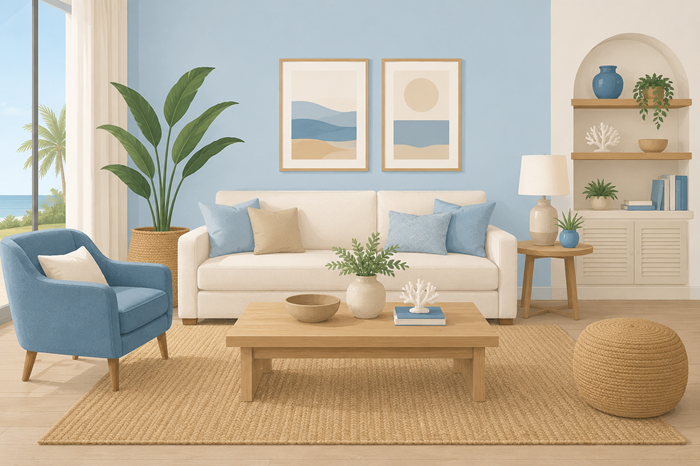
The key is not to make every surface the same shade. Instead, use variation in tone and texture. A pale blue wall may work beautifully with warm beige upholstery, natural wood, woven accents, and subtle cream details.
This creates a room that feels coastal without looking themed. The overall effect is refined, comfortable, and easy to live with.
Start With the Right Color Foundation
Before choosing furniture or accessories, decide which color will serve as the foundation of the room. In many Boca Raton homes, a light neutral base can provide flexibility while blue and warm sandy tones add personality.
Use Blue as a Calming Accent
Blue can appear on walls, accent chairs, curtains, artwork, or decorative accessories. Lighter shades tend to make a space feel airy, while deeper blue accents can create contrast and visual depth.
If the room receives strong sunlight, consider how the color will look at different times of day. A shade that appears subtle in the morning may feel much brighter in afternoon light.
Add Warmth With Sandy Neutrals
Warm beige, tan, cream, and natural wood tones prevent a blue-focused interior from feeling cold. These shades can be introduced through sofas, area rugs, flooring, window treatments, and decorative objects.
The goal is to create a layered environment rather than a room divided into strict color sections. When the tones blend naturally, the space feels more sophisticated.
Create a Balanced Living Room Layout
Color is only one part of a successful design. The arrangement of furniture can determine whether the room feels comfortable or crowded.
Start by identifying the room’s main focal point. This might be a fireplace, a large window, a television wall, a piece of artwork, or an architectural feature. Arrange seating so that the room encourages conversation while maintaining clear pathways.
For more inspiration on creating a visually memorable space, explore these living hall focal point ideas that can help guide the placement of furniture and decorative features.
In larger homes, consider creating more than one seating zone. A main sofa arrangement can serve everyday gatherings, while a smaller reading chair or conversation area can make use of an otherwise overlooked corner.
Layer Texture to Keep the Room Interesting
A successful coastal-inspired interior is rarely built through color alone. Texture adds depth and keeps the room from appearing flat.
Consider combining smooth painted walls with soft upholstery, woven baskets, natural wood, linen-style fabrics, and textured rugs. Even small variations can make a significant difference.
Choose Natural Materials Carefully
Natural materials are especially effective in South Florida interiors because they complement the surrounding environment. Wood, rattan, woven fibers, stone, and textured fabrics can introduce warmth without overpowering the color scheme.
However, avoid using too many similar materials in the same area. A room can quickly feel visually repetitive when every accessory has the same woven finish.
Use Flooring as a Design Element
Flooring has a major impact on the overall atmosphere of the space. Warm wood tones can complement blue accents beautifully and help connect the interior with natural elements.
If you are comparing flooring options for your home, learning about engineered hardwood flooring for South Florida homes can help you understand how material, durability, and appearance may affect your design decisions.
Choose Furniture That Feels Relaxed but Refined
A Boca Raton home can feel comfortable without looking overly casual. Choose furniture with clean lines, soft shapes, and practical fabrics.
A neutral sofa can provide a long-term foundation, while blue accent chairs or cushions can add personality. Alternatively, a blue sofa can become the centerpiece when surrounded by warm neutral furniture and accessories.
Avoid buying every piece from the same collection. A more thoughtfully designed room often includes a mix of styles, materials, and silhouettes.
For additional inspiration, consider how to style a collected look living room with non-matching furniture to create a space that feels curated over time rather than purchased all at once.
Add Lighting That Supports the Atmosphere
Lighting can dramatically change how colors appear. Natural daylight may make blue tones feel brighter, while warm evening lighting can bring out beige and sandy undertones.
Use multiple layers of lighting instead of relying on a single overhead fixture. A combination of ceiling lighting, floor lamps, table lamps, and accent lighting gives you more control over the mood.
For a more contemporary approach, consider incorporating subtle architectural lighting. These hidden LED living room feature wall ideas can add depth and highlight a wall without making the lighting feel overly dramatic.
Bring the Outdoors Into the Design
One of the easiest ways to strengthen a coastal-inspired interior is to connect the room visually with the outdoors. Large windows, glass doors, indoor plants, and natural textures can all help create this connection.
Choose greenery that suits the home’s lighting conditions and maintenance needs. A few carefully placed plants can add freshness without turning the room into an indoor garden.
Window treatments should also be considered carefully. Light-filtering fabrics can soften strong sunlight while maintaining the bright feeling that many homeowners appreciate in South Florida.
Keep the Décor Personal and Practical
The best interiors are not simply attractive; they also reflect the people who live in them. Add artwork, books, ceramics, photographs, or objects that have personal meaning.
A neutral and coastal-inspired design can still have plenty of personality. The important thing is to edit carefully so that the room does not become visually crowded.
When planning a larger update, working with experienced interior remodeling contractors can help coordinate finishes, lighting, flooring, built-ins, and other elements so the final design feels cohesive.
Common Mistakes to Avoid
Even a simple color concept can become difficult to execute when too many elements compete for attention.
Using Too Many Cool Colors
If every major surface is blue, gray, or another cool tone, the room may feel less welcoming. Warm wood, beige, cream, and natural textures can restore balance.
Making Everything Match
Matching furniture, accessories, and fabrics can make a room feel staged. A more natural design includes subtle differences in tone, shape, and material.
Ignoring the Existing Architecture
Before selecting paint or furniture, consider the home’s flooring, ceiling height, windows, trim, and natural light. A color that looks beautiful in one Boca Raton home may appear completely different in another.
Final Thoughts
A carefully planned coastal-inspired interior can make a Boca Raton home feel brighter, calmer, and more inviting without relying on predictable beach-themed décor. The combination of blue accents, warm neutrals, natural textures, layered lighting, and comfortable furniture creates a timeless foundation.
The most successful approach is to focus on balance. Let the colors complement one another, give every major piece enough breathing room, and choose materials that support the way your household actually lives. With thoughtful planning, your living room can feel both relaxed and refined for years to come.
Frequently Asked Questions
What colors work well with blue in a living room?
Warm beige, cream, tan, natural wood, and soft white pair beautifully with blue tones.
Is blue a good color for a South Florida home?
Yes, lighter blue shades can complement natural sunlight and create a relaxed coastal atmosphere.
How can I make a coastal living room look more sophisticated?
Use layered textures, natural materials, refined furniture, and limited decorative accents instead of obvious nautical décor.
Should walls or furniture be the main color focus?
Either approach can work, but choosing one primary focus usually creates a more balanced and cohesive room.
How can I update my living room without a full renovation?
Changing paint, lighting, flooring, furniture arrangement, window treatments, and accessories can create a significant transformation.