
South Florida homeowners want more from their outdoor spaces than simple boundaries. Today’s fencing solutions are designed to create privacy while still allowing airflow, sunlight, and a more open feel around the property. With the region’s intense heat, humidity, tropical storms, and year-round outdoor living culture, choosing the right design matters more than ever.
The latest trends combine durability, ventilation, and contemporary curb appeal. Whether you’re upgrading a backyard retreat, enclosing a pool area, or improving property value, modern fencing can help you achieve comfort without making your yard feel closed in.
In this guide, we’ll explore the best styles, materials, and design ideas for homes across South Florida while helping you choose a solution that balances privacy, beauty, and practicality.
Why South Florida Homes Need Airflow-Friendly Fencing
Unlike colder climates, South Florida properties benefit from structures that encourage cross ventilation. Solid barriers can trap heat and block breezes, making outdoor spaces feel warmer and less comfortable.
That’s why many homeowners now prefer semi-private designs that soften direct visibility without creating a boxed-in atmosphere. These styles work especially well in coastal communities where airflow helps reduce moisture buildup and keeps patios more enjoyable.
Another factor is hurricane season. Wind-resistant construction has become a priority, especially for homeowners seeking long-term durability. Open-slat and spaced-panel designs often perform better in windy conditions compared to completely sealed barriers.
If you’re currently researching high-quality fence solutions, it’s worth focusing on contractors experienced with South Florida weather patterns and local building requirements.
The Shift Toward Contemporary Outdoor Design
Outdoor living spaces have evolved dramatically over the last decade. Homeowners now treat patios, pools, and backyards as extensions of the home itself.
Because of that, fencing has become part of the overall architectural style rather than just a functional necessity. Clean lines, mixed materials, and minimalist layouts are increasingly popular in neighborhoods throughout Coral Springs, Boca Raton, Fort Lauderdale, and nearby areas.
Today’s designs aim to:
- Improve airflow
- Allow filtered natural light
- Create visual openness
- Enhance curb appeal
- Reduce maintenance demands
- Increase outdoor comfort
These priorities have pushed many traditional styles aside in favor of sleeker, more adaptable options.
Best Fence Materials for South Florida Conditions
Choosing the right material is just as important as selecting the design itself. South Florida’s climate can quickly wear down low-quality products.
Aluminum
Aluminum remains one of the most weather-resistant choices available. It resists rust, handles humidity well, and requires very little upkeep.
This material is ideal for homeowners who want an elegant appearance without constant maintenance. Aluminum also pairs well with tropical landscaping and contemporary architecture.
Composite
Composite panels offer the appearance of wood while minimizing the issues associated with moisture exposure.
They’re resistant to warping, rotting, and insect damage, making them a practical option for long-term performance in humid climates.
Vinyl
Vinyl fencing has become increasingly popular because it’s easy to maintain and available in many modern styles.
Homeowners comparing materials often explore this helpful guide on wood vs vinyl fence options for South Florida conditions.
Natural Wood
Wood still offers timeless warmth and character, especially when used in contemporary layouts with clean geometric spacing.
However, wood requires regular sealing and maintenance to withstand intense sun exposure and heavy moisture levels.
Modern Horizontal Fence Designs Continue to Grow
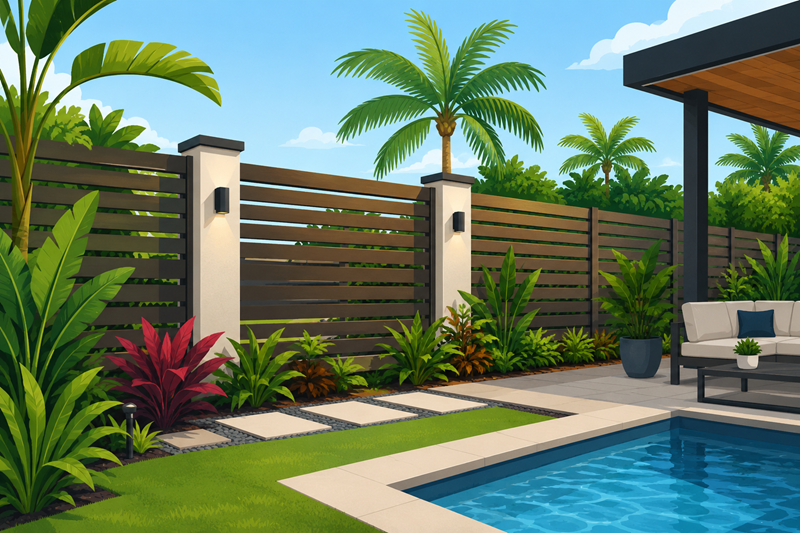
One of the biggest trends in residential fencing is the rise of the modern horizontal fence style. Instead of traditional vertical pickets, these designs use long horizontal boards or slats that visually widen the property and create a more upscale appearance.
Horizontal layouts work especially well with:
- Contemporary homes
- Coastal-inspired architecture
- Minimalist landscaping
- Outdoor entertainment areas
- Poolside patios
The spacing between slats can also be customized to balance privacy and ventilation. Narrow gaps allow airflow while limiting direct visibility from neighboring properties.
This approach creates a lighter and more open feel compared to fully enclosed panels.
Slatted Designs That Maximize Breeze and Light
Slatted fencing has become a favorite among South Florida homeowners because it delivers both functionality and visual appeal.
These systems feature evenly spaced boards that allow filtered sunlight and natural breezes to pass through while still maintaining a sense of separation.
Benefits include:
Improved Air Circulation
Airflow-friendly layouts help prevent trapped heat around patios and outdoor seating areas.
Better Storm Performance
Wind can pass through the structure more easily, reducing pressure during severe weather events.
Softer Visual Appearance
Instead of creating a harsh barrier, slatted styles feel more integrated with landscaping and outdoor décor.
Enhanced Natural Lighting
Filtered light keeps yards feeling brighter and more welcoming throughout the day.
Privacy Without Completely Closing Off Your Yard
Many homeowners want seclusion without sacrificing openness. Fortunately, modern layouts can provide both.
Semi-private panels are particularly effective for:
- Pool enclosures
- Side-yard separation
- Patio screening
- Garden spaces
- Outdoor dining areas
By adjusting panel spacing, height, and material combinations, contractors can create a customized balance between visibility and privacy.
If you’re still evaluating the right fence for privacy and outdoor aesthetics, it’s smart to compare different spacing configurations before making a final decision.
Mixed-Material Fencing Is Gaining Popularity
Another major trend in South Florida is combining multiple materials within a single design.
Popular combinations include:
- Wood and aluminum
- Composite and steel
- Concrete columns with horizontal slats
- Vinyl with decorative metal inserts
These combinations create a more architectural appearance while improving durability and customization.
Mixed materials also help homeowners coordinate fencing with exterior finishes such as stucco, stone accents, or modern siding.
Tropical Landscaping and Fence Integration
A great outdoor design doesn’t stop at the perimeter. Landscaping plays a major role in how fencing looks and feels.
South Florida homeowners often soften contemporary layouts with tropical greenery like:
- Clusia hedges
- Areca palms
- Bird of paradise plants
- Podocarpus
- Crotons
- Bamboo accents
Strategic landscaping can increase privacy while enhancing airflow around the property.
Instead of relying solely on solid panels, combining greenery with semi-open fencing creates a more natural and relaxing environment.
Wind-Resistant Designs Matter in South Florida
Hurricane preparedness is a major consideration for any exterior structure in the region.
Completely solid barriers can catch strong winds and experience greater structural stress during storms. Open-style layouts often perform better because they reduce wind resistance.
Homeowners researching the best fence options for flood-prone and windy properties should prioritize reinforced posts, durable hardware, and professionally engineered installations.
Proper installation matters just as much as material quality when it comes to long-term performance.
Poolside Privacy Solutions
Pool areas require a unique balance between security, airflow, and aesthetics.
Many homeowners now choose semi-private fencing around pool decks because it:
- Maintains openness
- Improves ventilation
- Enhances visibility
- Reduces heat buildup
- Creates a resort-inspired atmosphere
Lighter colors are also becoming more common around pools because they reflect sunlight better and stay cooler under intense heat.
Modern pool fencing often incorporates minimalist lines that complement outdoor kitchens, pergolas, and lounge areas.
Choosing the Right Height and Spacing
The success of a modern fencing project often comes down to proportion.
Panels that are too tall can overwhelm smaller yards, while overly wide gaps may reduce privacy more than desired.
Generally, South Florida homeowners prefer:
- 5–6 foot heights for backyard privacy
- Narrow horizontal spacing for semi-private screening
- Wider spacing near gardens or pool areas
- Decorative top sections for additional airflow
Working with a knowledgeable installer can help you determine the ideal balance for your property layout.
If you’re comparing a local fence contractor near me, ask about wind ratings, drainage considerations, and HOA compliance before starting construction.
Low-Maintenance Options Are Becoming a Priority
Busy homeowners increasingly prefer materials that require minimal upkeep.
That’s one reason composite and aluminum systems continue to grow in popularity across South Florida.
Compared to traditional wood, low-maintenance materials offer advantages such as:
- No frequent staining
- Better moisture resistance
- Reduced fading
- Easier cleaning
- Longer lifespan
These benefits make them especially appealing for seasonal residents and vacation properties.
Color Trends for Contemporary Fencing
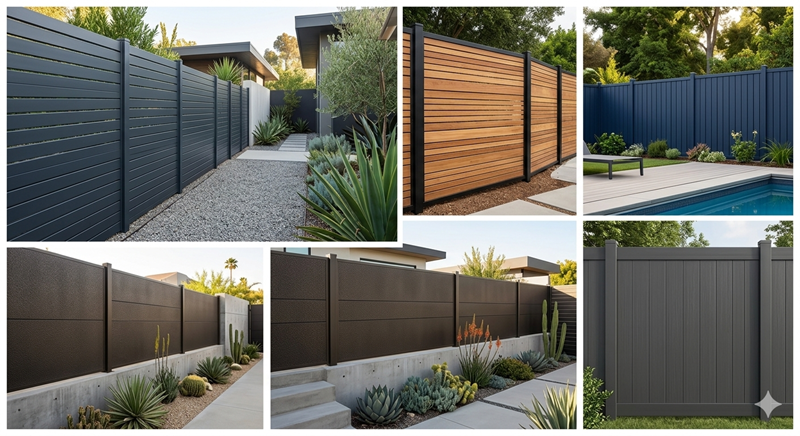
Modern color palettes have shifted toward neutral, architectural tones.
Popular options include:
- Matte black
- Charcoal gray
- Warm cedar
- Sandstone beige
- White composite finishes
- Natural wood tones
These colors complement contemporary landscaping while helping outdoor spaces feel clean and cohesive.
Dark tones often create a dramatic upscale appearance, while lighter shades can help smaller yards feel more spacious.
Balancing Privacy and Neighborhood Appeal
While privacy matters, completely isolating your property can sometimes make outdoor areas feel smaller or less inviting.
Modern fencing styles solve this problem by preserving openness while still creating separation from neighboring homes.
This balance is especially important in South Florida communities where outdoor living is part of everyday life.
Well-designed fencing can:
- Improve resale value
- Enhance curb appeal
- Increase backyard usability
- Support better outdoor comfort
- Complement modern architecture
The goal is to create a space that feels secure, breezy, and visually connected to the surrounding environment.
Final Thoughts
Modern fencing solutions have evolved far beyond traditional solid barriers. South Florida homeowners now have access to stylish, airflow-friendly designs that provide privacy without sacrificing comfort or natural light.
From horizontal slats and mixed materials to semi-private layouts and storm-conscious engineering, today’s options are built specifically for the realities of tropical living.
The right design can transform your outdoor space into a cooler, brighter, and more functional extension of your home while improving long-term durability and curb appeal.
FAQs
What type of fencing works best for airflow?
Slatted and semi-private designs allow steady airflow while still maintaining privacy.
Are horizontal styles good for South Florida weather?
Yes, when properly installed with durable materials, they perform very well in humid climates.
Which material requires the least maintenance?
Aluminum and composite materials typically require the least upkeep.
Can modern fencing handle strong winds?
Open-style designs often perform better because they reduce wind resistance.
Do semi-private panels still provide enough privacy?
Yes, properly spaced panels can block direct visibility while keeping the yard open and breezy.