

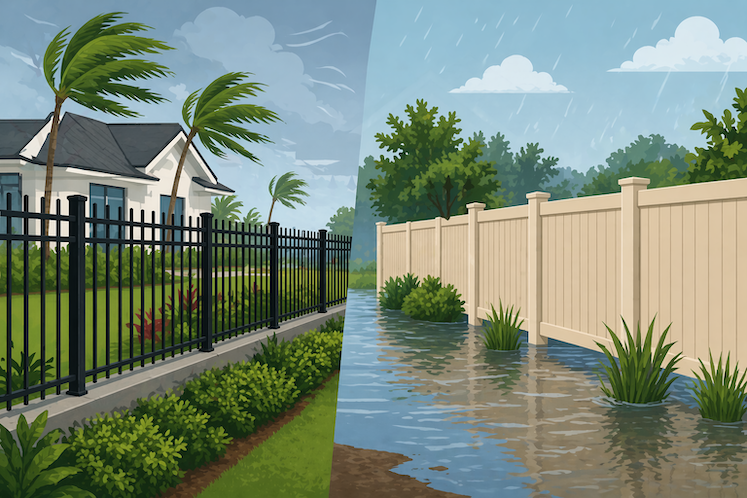
Choosing the best fence for a property in a windy or flood-prone area takes more than picking a style you like. In these environments, your fence has to do real work. It needs to handle strong gusts, resist moisture damage, stay anchored in unstable ground, and still look good after rough weather rolls through.
That is why standard fence advice does not always apply. A fence that works perfectly in a mild, dry climate may fail much faster in a coastal area, a neighborhood with poor drainage, or a yard that sees seasonal storms. The right fence for these conditions should balance durability, airflow, drainage, and long-term maintenance.
If you are comparing the best fence options for windy areas or looking for a fence that can hold up better in flood-prone conditions, this guide will help you make a smarter choice. Below, we will break down what matters most, which materials perform best, and how to avoid expensive fence problems before they start.
Why Wind and Flooding Change Fence Decisions
A fence is not just a decorative boundary when your property faces harsh weather. It becomes part of your home’s protection strategy.
Strong wind creates pressure. If a fence is too solid, too tall, or poorly anchored, wind can push against it like a sail. That can loosen posts, crack panels, or bring down entire sections.
Flooding creates a different kind of stress. Standing water can weaken wood, shift soil, rust hardware, and undermine post stability. Even if the fence looks fine above ground, the base may slowly deteriorate after repeated exposure.
That is why homeowners in storm-prone or low-lying areas need to think differently. The best fence choice is usually the one that allows some airflow, uses weather-resistant materials, and is installed with the right foundation for the site.
What to Look for in a Fence for Harsh Weather
Before comparing materials, it helps to understand the features that matter most in difficult conditions.
Airflow Matters in Windy Areas
A completely solid fence often catches the full force of the wind. In many cases, semi-private or open-style fencing performs better because air can pass through it instead of slamming into it.
That does not mean you have to give up privacy completely. It means you should think carefully about fence design, spacing, and how exposed your yard really is.
Water Resistance Is Critical in Flood Zones
If water tends to sit in your yard after heavy rain, the fence material needs to tolerate moisture well. Some materials absorb water, swell, rot, or weaken over time. Others handle wet conditions much better with less maintenance.
The lower part of the fence matters most. Posts, fasteners, and the section closest to the ground often show damage first.
Strong Posts Are Non-Negotiable
No matter what fence material you choose, weak posts will shorten the life of the entire project. In windy or flood-prone yards, posts need proper depth, solid footings, and installation methods that match the soil conditions.
This is where many fence failures begin. If you want a better sense of how post damage develops over time, this guide on how to fix fence posts gives helpful context on what can go wrong when structural support starts to fail.
Low Maintenance Helps Long-Term
Harsh weather usually means more wear and more upkeep. Choosing a fence that needs constant repair, sealing, or replacement can become frustrating fast. Long-term performance should matter just as much as the upfront cost.
Best Fence Materials for Windy or Flood-Prone Areas
Some fence materials simply hold up better than others when the weather turns rough. Here is how the most common options compare.
Vinyl Fencing: A Strong All-Around Option
Vinyl is one of the best fence materials for wet conditions because it does not absorb water, rot, or attract termites. It is also relatively easy to clean and maintain, which makes it appealing for homeowners who want durability without constant upkeep.
In flood-prone areas, vinyl often performs better than untreated wood because moisture does not break it down the same way. However, design still matters. A full privacy vinyl fence can struggle in very high winds if it is not reinforced properly.
Where Vinyl Works Best
Vinyl is a smart choice for:
-
Yards with frequent rain or standing moisture
-
Homes that need a clean, low-maintenance look
-
Properties where mold, insects, and rot are concerns
What to Watch Out For
The main issue with vinyl in windy areas is pressure. Solid panels can catch wind if the installation is not engineered well. Reinforced posts and quality hardware make a big difference.
Aluminum Fencing: Great for Wind and Drainage
Aluminum fencing is one of the best options for properties exposed to strong wind. Because it is open in design, air passes through easily instead of building up pressure. It also resists rust much better than many homeowners expect, especially when powder-coated properly.
For flood-prone properties, aluminum also performs well because water flows through it instead of getting trapped around solid panels.
Where Aluminum Works Best
Aluminum is especially useful for:
-
Coastal or windy neighborhoods
-
Sloped yards with drainage challenges
-
Homes that want visibility and elegance
What to Keep in Mind
The tradeoff is privacy. Aluminum fencing does not block views, so it is better for boundary definition, pool enclosures, and front-yard design than for creating a secluded backyard retreat.
Pressure-Treated Wood: Classic but Higher Maintenance
Wood remains a popular fencing choice because it looks natural and can be customized in many styles. But in windy or flood-prone areas, it requires more caution.
Pressure-treated wood can handle moisture better than untreated lumber, but it still needs maintenance. Repeated wet-dry cycles can lead to warping, swelling, cracking, and eventual rot. In high winds, wood can also become vulnerable if the posts, rails, or pickets are not maintained well.
Where Wood Can Still Make Sense
Wood may still be a good fit for:
-
Homes where appearance is a top priority
-
Yards with moderate exposure rather than severe flooding
-
Homeowners willing to stain, seal, and inspect the fence regularly
The Biggest Limitation
Wood usually demands the most upkeep in harsh climates. If your property deals with floodwater, saturated soil, or storm-heavy seasons, wood may not give you the best long-term value unless it is installed and maintained carefully.
Composite Fencing: Durable and Weather-Resistant
Composite fencing blends recycled materials and engineered durability. It often delivers the look of wood with better resistance to moisture, insects, and weather-related wear.
For flood-prone areas, composite can be a strong option because it tends to resist rot better than wood. Some products also hold their shape well over time, which matters in changing weather conditions.
Why Homeowners Like Composite
Composite fencing is often chosen for:
-
Long-term durability
-
A more premium appearance
-
Lower maintenance than natural wood
The Main Consideration
Composite is usually heavier and more expensive upfront. That means installation quality matters even more. If the posts and footings are not done right, the added weight can work against you in unstable soil or exposed conditions.
Chain Link Fencing: Practical in Tough Conditions
Chain link may not be the most stylish option, but it performs surprisingly well in both wind and wet conditions. Its open design allows air to move through easily, and galvanized or coated versions handle moisture far better than many people assume.
It is often one of the most practical choices for large yards, utility boundaries, and areas where function matters more than appearance.
Best Uses for Chain Link
Chain link works well for:
-
Large perimeter fencing
-
Pet containment
-
Back or side yard boundaries
-
Areas with frequent storms and drainage issues
Where It Falls Short
The obvious limitation is appearance and privacy. Chain link is functional, but it is not always the first choice for homeowners focused on curb appeal.
Best Fence Styles for Windy Areas
Material matters, but style matters too. Even a durable material can fail if the fence design works against the weather.
Open-Slat and Spaced Designs
Fences with gaps between boards or slats often perform better in windy conditions. They reduce pressure buildup and place less strain on posts and panels.
Popular examples include:
-
Aluminum picket fencing
-
Horizontal slat fencing with airflow
-
Semi-private wood fencing
-
Shadowbox fencing
These styles can still define the space nicely without acting like a wind barrier.
Shadowbox Fencing
Shadowbox fencing is often a solid compromise for homeowners who want some privacy without going fully solid. Because boards alternate on each side, the design allows some airflow while still offering more coverage than open pickets.
In windy areas, this can be a more forgiving option than a fully enclosed privacy fence.
Avoid Overly Tall Solid Panels in Exposed Yards
A tall, solid fence may seem like the best way to protect your yard, but in very windy locations it can create more stress than protection. That does not mean you can never install one. It just means the design, placement, and installation need to be approached carefully.
Best Fence Styles for Flood-Prone Areas
Flood-prone properties benefit from fence designs that do not trap debris, hold water, or weaken quickly at ground level.
Elevated or Open Designs
Open-style fencing is often ideal in areas that collect water because it allows better drainage and puts less pressure on the structure during storms. Water can pass through rather than pushing against a full panel.
Materials That Resist Saturation
Vinyl, aluminum, and some composite products usually outperform wood in recurring wet conditions. If your yard stays soggy after storms, choosing moisture-resistant material can save you from premature replacement.
Smarter Bottom Clearance
In some settings, a little clearance at the bottom of the fence can help with drainage and reduce direct contact with pooled water. That design choice depends on your goals, but it can be useful when water tends to collect at grade.
Installation Matters More Than Most Homeowners Realize
The best fence material can still fail if the installation does not match the site conditions. This is especially true in yards with strong wind exposure, poor drainage, or shifting soil.
Deeper, Better-Secured Posts
Posts should be installed to handle both lateral pressure from wind and possible soil movement from flooding. Depth, concrete footing size, and spacing all matter.
Drainage Around the Fence Line
If water regularly pools along the fence line, the problem is not just the fence. It may be the grading, drainage pattern, or soil compaction around the yard. Solving that issue can extend the life of the fence significantly.
Hardware and Fasteners
Moisture exposure can slowly damage lower-quality fasteners, brackets, and hinges. Corrosion-resistant hardware is worth the upgrade, especially near the ground and around gates.
How to Balance Durability, Privacy, and Curb Appeal
Homeowners often assume they have to choose between a fence that performs well and one that looks attractive. In reality, the best results usually come from balancing both.
If your yard is highly exposed to wind, you may want a more open design with a refined look, such as aluminum or a semi-private modern style. If flooding is your main concern, moisture resistance should lead the decision, with design choices built around that priority.
This is also where broader fence planning becomes useful. If you want a privacy and appearance factor into fence selection are helpful comparison for homeowners weighing function against visual appeal.
Which Fence Is Best for Your Property?
There is no single fence that works best for every yard. The right choice depends on the conditions of your property and what matters most to you.
Choose Vinyl If You Want Low Maintenance
Vinyl is a strong pick if you want something clean-looking, durable, and resistant to moisture. It is especially practical in wet climates where wood maintenance can become a burden.
Choose Aluminum If Wind Is the Bigger Problem
If your property is exposed to regular gusts or open airflow, aluminum is often one of the smartest choices. It handles wind well and keeps maintenance relatively simple.
Choose Composite If You Want Premium Durability
Composite may cost more upfront, but it can offer excellent long-term value for homeowners who want a more substantial look with better resistance to weather than wood.
Choose Wood Only If You Are Ready for Maintenance
Wood can still work in difficult climates, but it usually requires more upkeep and closer monitoring. It is best for homeowners who prioritize appearance and are prepared to maintain it properly.
When It Makes Sense to Get Professional Input
Wind exposure, drainage issues, and soil conditions are not always obvious from the surface. A fence that looks fine on paper may perform poorly once weather starts testing it.
That is why expert planning matters. The right contractor can help you match material, design, post depth, and layout to the actual conditions in your yard. If you are ready to compare options based on your property, budget, and long-term goals, and to get a clearer idea of what makes the most sense for your space.
Conclusion
The best fence options for windy or flood-prone areas are the ones built for real-world conditions, not just appearance. In windy yards, airflow and structural support matter most. In flood-prone areas, moisture resistance, drainage, and post stability become critical.
Vinyl, aluminum, composite, and even certain chain link systems can all perform well when matched to the right property. Wood can still be a beautiful option, but it usually requires more care in harsh weather. Fence style matters too. Open and semi-private designs often handle wind better, while moisture-resistant materials tend to outperform in wet environments.
The smartest fence decision comes from looking at your yard honestly. Think about wind exposure, standing water, soil movement, maintenance expectations, and the look you want to achieve. When those pieces are considered together, you are much more likely to end up with a fence that lasts, performs well, and still looks right years down the line.
FAQ
What is the best fence for high winds?
Aluminum fencing and other open-style fence designs are often the best choices for high winds because they allow air to pass through instead of creating heavy pressure on the structure.
What fence material is best for flood-prone areas?
Vinyl, aluminum, and composite fencing usually perform best in flood-prone areas because they resist moisture damage better than traditional wood.
Is wood fencing a bad choice for wet areas?
Not always, but wood generally needs more maintenance in wet or flood-prone environments. Even pressure-treated wood can warp, crack, or rot over time if it is exposed to repeated moisture.
Should a fence be solid in a windy area?
A fully solid fence can be risky in very windy locations because it catches more force. Semi-private or open designs often hold up better when wind is a major concern.
How can I make my fence last longer in storm-prone conditions?
Choose weather-resistant material, use corrosion-resistant hardware, install posts properly, and make sure the fence line has good drainage. Regular inspection after storms also helps catch damage early.
Is vinyl or aluminum better for harsh weather?
It depends on the main challenge. Vinyl is excellent for wet conditions and low maintenance, while aluminum is often better for strong wind because of its open design.