

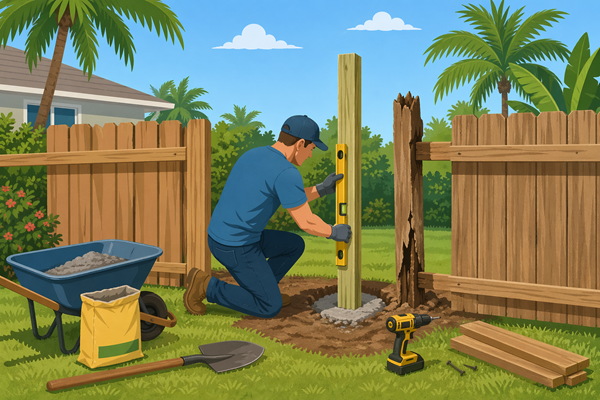
A damaged fence post can quickly turn from a minor annoyance into a serious structural problem—especially in South Florida’s heat, humidity, and storm-prone climate. Whether your fence is leaning after heavy rain or the post has rotted at the base, understanding how to handle broken fence repair properly can save you time, money, and future headaches.
In this guide, you’ll learn practical, step-by-step methods to fix a broken fence post, when to repair versus replace, and how to ensure your fence stands strong against Florida’s unique weather conditions.
Why Fence Posts Fail in South Florida
Fence posts take the most stress in any fence system. In South Florida, environmental factors accelerate wear and tear.
Moisture and Soil Conditions
Frequent rain and high humidity soften soil and promote rot in wooden posts. Over time, even treated wood can weaken, leading to the need for broken fence repair.
Hurricane Winds and Storm Impact
Strong winds can loosen posts or snap them entirely. A fence that isn’t properly anchored is especially vulnerable.
Termites and Rot
Wood posts are at risk of insect damage and decay. If ignored, small issues can escalate into major fence repair situations.
Signs Your Fence Post Needs Repair
Recognizing early warning signs can prevent a full replacement.
Leaning or Tilting Fence
If your fence is no longer straight, the post may be loose or damaged below ground.
Cracks or Splitting
Visible cracks often mean the post has weakened structurally.
Rot at the Base
Soft or crumbling wood near the soil line is a clear indicator that fence repairing is needed.
Loose Fence Panels
If panels wobble, the post may not be holding them securely anymore.
Tools and Materials You’ll Need
Before starting your repair, gather the right tools:
- Shovel or post hole digger
- Level
- Concrete mix
- Replacement post (if needed)
- Hammer or drill
- Gravel for drainage
Having everything ready ensures your repairing goes smoothly without interruptions.
Step-by-Step: How to Fix a Broken Fence Post
Step 1: Assess the Damage
Determine whether the post is salvageable. If it’s only loose, you may not need a full replacement.
Step 2: Remove the Fence Panel
Detach any panels connected to the damaged post. This gives you full access and prevents additional strain during the repair.
Step 3: Dig Around the Post
Use a shovel to expose the base. For many broken fence repair jobs, the issue lies below ground.
Step 4: Remove or Stabilize the Post
- If the post is rotted or snapped, remove it entirely.
- If it’s still solid, you can reinforce it with new concrete.
Step 5: Install a New Post (If Needed)
Place the new post in the hole, ensuring it’s straight using a level. Add gravel at the base for drainage, then pour concrete to secure it.
Step 6: Let the Concrete Cure
Allow at least 24–48 hours before reattaching panels. This step is crucial for a long-lasting broken fence repairing.
Step 7: Reattach Fence Panels
Once the post is secure, reconnect the panels and check alignment.
Repair vs Replacement: What’s the Better Option?
Not every situation calls for a full replacement. Sometimes a targeted fix is enough.
If you’re unsure, this helpful guide on fence repair vs replacement breaks down cost and durability considerations.
When to Repair
- Minor leaning
- No significant rot
- Post still structurally sound
When to Replace
- Severe rot or termite damage
- Broken or snapped post
- Multiple failing posts
Choosing the right approach ensures your broken fence repair lasts longer and remains cost-effective.
Choosing the Right Type of Fence Post
Different materials perform differently in South Florida conditions.
Wood Posts
A classic choice, but they require maintenance. A skilled wood fence contractor can help you choose treated wood that resists moisture.
Vinyl Posts
Durable and low maintenance, vinyl works well in humid climates. A reliable vinyl fence contractor can ensure proper installation.
Chain Link Posts
Metal posts are highly durable and resistant to rot. A chain link fence contractor typically uses galvanized steel for longevity.
Hiring a Professional vs DIY
Fixing a fence post yourself can be rewarding, but it’s not always the best option.
When DIY Makes Sense
- Small repairs
- Basic tools available
- No structural complications
When to Call a Pro
- Multiple damaged posts
- Complex installations
- Time constraints
If you’re searching for a dependable expert, finding the best fence contractor near me can make all the difference.
A professional local fence contractor understands soil conditions, weather patterns, and building codes specific to South Florida.
Preventing Future Fence Damage
Once your broken fence repairing is complete, take steps to avoid future issues.
Improve Drainage
Add gravel around posts to prevent water buildup.
Use Pressure-Treated Materials
These resist rot and extend the life of your fence.
Regular Inspections
Check for early signs of wear every few months.
Reinforce for Storms
Secure posts deeper into the ground to withstand high winds.
Popular Fence Styles for South Florida Homes
Choosing the right fence style also impacts durability.
For inspiration and material comparisons, explore the west palm beach fence guide.
Privacy Fences
Ideal for homeowners seeking security and seclusion. A privacy fence contractor can recommend materials suited for coastal climates.
Decorative Wood Fences
Great for curb appeal but require maintenance.
Vinyl Fencing
A popular choice for durability and minimal upkeep.
When It’s Time for a Full Upgrade
Sometimes repeated broken fence repair jobs signal a bigger issue—your fence may be nearing the end of its lifespan.
In these cases, investing in a complete upgrade can be more cost-effective in the long run. A trusted florida fence contractor can assess your property and recommend the best solution.
If you’re ready to move forward, consider professional fence installation and replacement services to ensure your fence is built to last.
Final Thoughts
Fixing a broken fence post in South Florida isn’t just about restoring appearance—it’s about protecting your property and ensuring long-term durability. Whether you tackle the job yourself or hire a professional, understanding the process is key to a successful outcome.
By addressing issues early, choosing the right materials, and maintaining your fence regularly, you can minimize the need for frequent broken fence repair and enjoy a sturdy, reliable fence for years to come.