

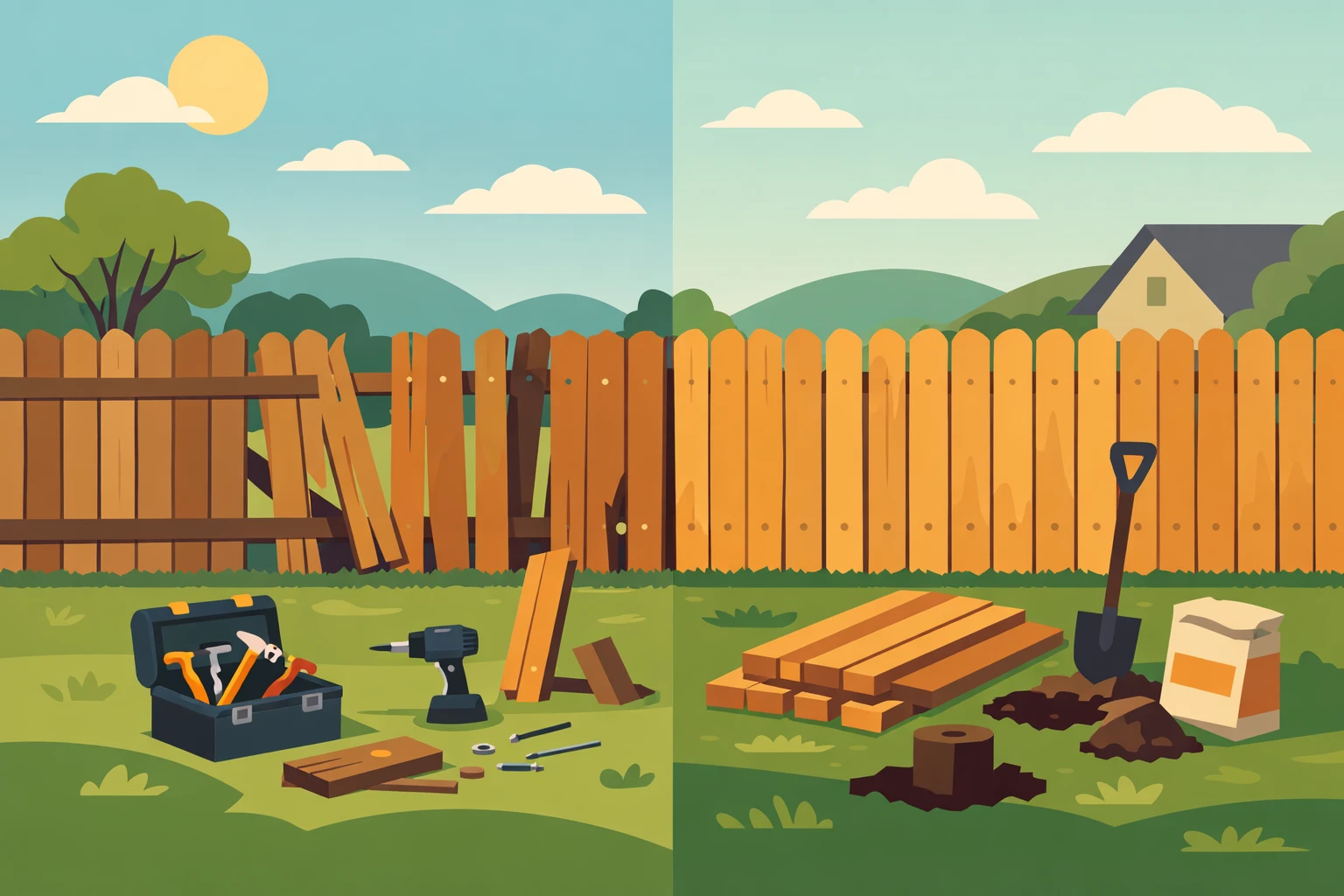
When your fence starts leaning, cracking, or showing signs of wear, the big question comes up fast: should you repair it or replace it entirely? It’s a common dilemma for homeowners trying to balance cost, durability, and long-term value.
Fence repair vs replacement isn’t just about upfront pricing—it’s about understanding the condition of your fence, the materials involved, and how long you expect it to last. In this guide, we’ll break down the real costs, when each option makes sense, and how to make the smartest financial decision for your property.
Understanding the True Cost of Fence Repair
Fence repair is often the first option homeowners consider—and for good reason. It’s typically faster and more affordable upfront. But that doesn’t always mean it’s the better long-term investment.
When Fence Repair Makes Sense
Repairing your fence is usually the right move when the damage is limited or cosmetic. Common repair scenarios include:
-
A few loose or broken boards
-
Minor leaning due to soil movement
-
Surface rot in isolated sections
-
Rust spots on metal fencing
In these cases, targeted repairs can restore both function and appearance without a major financial commitment.
Average Cost of Fence Repairs
Fence repair costs vary depending on materials and damage severity, but generally fall into these ranges:
-
Minor repairs: $150–$400
-
Moderate repairs: $400–$1,000
-
Structural repairs: $1,000–$2,500
While these numbers are manageable, repeated repairs can add up quickly—especially if underlying issues aren’t addressed.
The Hidden Risk of Frequent Repairs
A common mistake is treating recurring problems as isolated issues. If your fence needs repairs every year, you’re likely spending more over time than you would on a full replacement.
When Fence Replacement Is the Better Investment
Fence replacement involves higher upfront costs, but it often delivers better value over time—especially if your existing fence is nearing the end of its lifespan.
Signs You Should Replace Instead of Repair
Here are clear indicators that replacement is the smarter choice:
-
Widespread rot or termite damage
-
Multiple leaning sections
-
Frequent repairs over the past few years
-
Structural instability (posts shifting or sinking)
-
Fence age exceeding 15–20 years (for wood)
If your fence checks more than one of these boxes, repairs are likely just delaying the inevitable.
Cost of Fence Replacement
Fence replacement costs depend on size, material, and labor, but here’s a general breakdown:
-
Wood fence: $15–$35 per linear foot
-
Vinyl fence: $25–$50 per linear foot
-
Aluminum or metal: $30–$70 per linear foot
While the upfront cost is higher, a new fence can last 15–30 years with minimal maintenance.
Repair vs Replacement: A Side-by-Side Cost Comparison
To make the decision clearer, let’s compare both options from a financial perspective.
Short-Term vs Long-Term Costs
Repair:
-
Lower upfront cost
-
Quick fix
-
May require repeated spending
Replacement:
-
Higher initial investment
-
Long-term durability
-
Lower maintenance costs
Example Scenario
Imagine spending $800 per year on repairs over 5 years. That totals $4,000—often enough to fully replace a standard fence.
In that context, replacement becomes the more cost-effective solution.
Material Matters: How Fence Type Affects Your Decision
Different fence materials behave differently when damaged, which directly impacts whether repair or replacement makes sense.
Wood Fences
Wood is prone to rot, warping, and insect damage. Repairs can work for minor issues, but widespread decay usually requires replacement.
Vinyl Fences
Vinyl is durable but less forgiving. Cracks or breaks often require replacing entire panels rather than simple fixes.
Metal Fences
Metal fences can last decades, and repairs are often viable unless there’s severe rust or structural compromise.
The Impact on Property Value and Curb Appeal
Your fence isn’t just functional—it plays a big role in how your home looks and feels.
A worn-out or patched-up fence can negatively affect curb appeal, especially if you’re planning to sell your property. On the other hand, a new fence creates a clean, polished look that adds value.
If you’ve already invested in exterior upgrades—like improving your driveway or landscaping—a new fence helps tie everything together. For example, enhancing your outdoor space alongside upgrades like modern driveway improvements creates a stronger first impression overall.
Climate Considerations: Why Location Matters
Weather plays a major role in fence longevity, especially in regions with high humidity, heavy rain, or intense sun exposure.
In coastal areas, fences are more prone to:
-
Moisture damage
-
Salt exposure
-
Warping and expansion
If you live in a climate like South Florida, recurring damage is more likely—which makes replacement a more practical long-term solution. For homeowners already planning upgrades, aligning fence improvements with broader renovation strategies can maximize both durability and design.
DIY vs Hiring a Professional
Some homeowners consider DIY repairs to save money. While this can work for small fixes, it’s not always the most cost-effective option.
When DIY Works
-
Replacing a few boards
-
Tightening loose hardware
-
Minor cosmetic fixes
When to Hire a Professional
-
Structural issues
-
Post replacement
-
Large-scale repairs or full replacement
Professional work ensures proper installation, which prevents costly problems later. If you’re unsure where to start, scheduling a quick consultation can help clarify your options.
Key Questions to Ask Before Deciding
Before committing to repair or replacement, consider these:
-
How old is my fence?
-
How often have I repaired it recently?
-
Is the damage isolated or widespread?
-
Will repairs improve structural integrity—or just appearance?
How to Make the Right Decision
There’s no one-size-fits-all answer, but here’s a simple rule:
-
Choose repair if the damage is minor, isolated, and your fence is relatively new
-
Choose replacement if the damage is widespread, recurring, or structural
If you’re still unsure, getting a professional assessment is the best move. A detailed inspection can reveal hidden issues and give you a clear cost comparison.
For homeowners ready to take the next step, you can always get a free estimate for your fence project to see exactly what makes the most financial sense.
Call (954) 237-4257
Final Thoughts
Fence repair vs replacement ultimately comes down to cost efficiency over time—not just the cheapest immediate option.
Repairs can extend your fence’s life when damage is minimal, but they become expensive when problems keep returning. Replacement, while more costly upfront, often provides better long-term value, improved appearance, and fewer headaches.
Taking the time to evaluate your fence’s condition—and thinking beyond short-term fixes—will help you make a smarter investment in your property.