

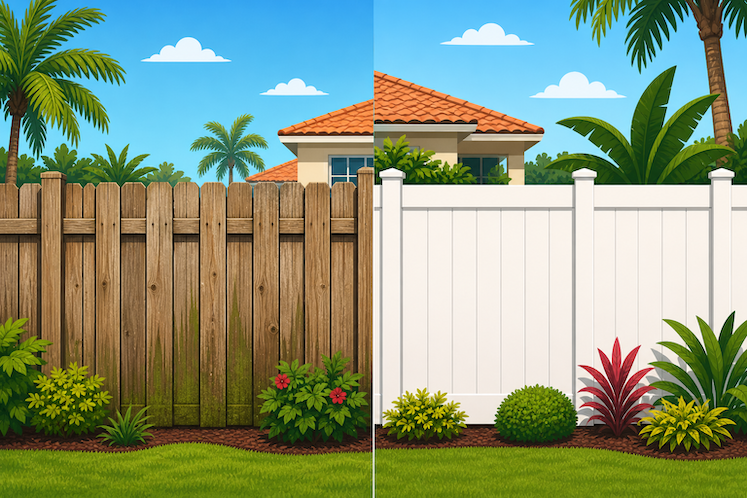
Choosing between a wood vs vinyl fence in Coral Springs, FL usually comes down to one big question: which one lasts longer in Florida weather?
With year-round humidity, intense sun, heavy rain, termites, and storm-season winds, Coral Springs homeowners need fencing that can handle more than everyday wear. A fence may look great on day one, but the real test is how it performs after years of heat, moisture, and maintenance.
Wood and vinyl are both popular for privacy fences, backyard upgrades, pool areas, and property boundaries. But they age very differently in South Florida’s climate. This guide breaks down durability, maintenance, cost, appearance, privacy, storm performance, and long-term value so you can choose the right fence for your Coral Springs home.
Wood vs Vinyl Fence in Coral Springs: The Quick Answer
For most Coral Springs homeowners, vinyl fencing lasts longer than wood in Florida weather because it resists moisture, rot, termites, and everyday humidity better.
Wood can still be a beautiful choice, especially if you love a natural, warm look. But it requires regular sealing, staining, repairs, and pest protection to stay in good condition.
Vinyl is usually the stronger low-maintenance option. Wood is better for homeowners who want a traditional look and are comfortable keeping up with maintenance.
Why Florida Weather Is Tough on Fences
Coral Springs has a warm, humid climate that can wear down outdoor materials faster than many homeowners expect. Fences here deal with sun exposure, afternoon storms, wet soil, high humidity, and occasional tropical weather.
That means the best fence is not just the one that looks good. It is the one that can keep its shape, color, strength, and structure after years of exposure.
If you are comparing materials beyond wood and vinyl, it can help to review Boca Raton homes as a nearby South Florida example of how climate and curb appeal influence fence choices.
How Wood Fences Perform in Coral Springs
Wood fences have a timeless look. They feel natural, warm, and classic, which is why many homeowners still love them for privacy fencing and backyard design.
A wood fence can be customized with different heights, board styles, stains, paints, caps, and decorative details. That makes it flexible for many home styles.
But in Coral Springs weather, wood needs care. Without proper maintenance, it can absorb moisture, warp, crack, fade, attract termites, and develop rot.
Pros of Wood Fencing
Wood is attractive and highly customizable. It can be painted or stained to match your home, landscaping, or outdoor living area.
It also offers strong privacy. A solid wood fence can block views, reduce visual clutter, and make a backyard feel more comfortable.
Wood may also have a lower upfront cost than some vinyl options, depending on the design and lumber type.
Cons of Wood Fencing
The biggest downside is maintenance. In South Florida, wood fences usually need sealing, staining, or painting on a regular schedule.
Moisture is another concern. Rain, sprinklers, and humidity can cause wood to swell, soften, or rot over time.
Pests are also a factor. Termites and other insects can damage wood if it is not properly treated and maintained.
How Vinyl Fences Perform in Coral Springs
Vinyl fencing is popular in Coral Springs because it offers a clean privacy look without the maintenance demands of wood. It does not rot, splinter, or attract termites.
Vinyl also handles moisture well, which is a major advantage in Florida’s humid climate. For homeowners who want a fence that looks clean with minimal upkeep, vinyl is often the better long-term choice.
Pros of Vinyl Fencing
Vinyl is low maintenance. It does not need paint, stain, or sealant, and it can usually be cleaned with water and mild soap.
It is also resistant to moisture damage. Unlike wood, vinyl does not absorb water, which helps it avoid rot and swelling.
Vinyl privacy fences also offer a bright, polished look that works well with many Coral Springs homes.
Cons of Vinyl Fencing
Vinyl can cost more upfront than some wood fencing options. However, the lower maintenance needs often balance that cost over time.
Lower-quality vinyl can also become brittle or discolored if it is not made for strong sun exposure. For Florida homes, it is important to choose durable, UV-resistant vinyl.
Vinyl may also have fewer custom design options than wood, depending on the style and manufacturer.
Which Fence Lasts Longer in Florida Weather?
Vinyl usually lasts longer than wood in Coral Springs because it is not vulnerable to rot, termites, or moisture absorption.
A well-installed vinyl fence can remain in good condition for many years with basic cleaning. A wood fence can also last, but only when it is consistently maintained.
The difference is simple: vinyl resists Florida weather naturally, while wood needs help resisting it.
Moisture Resistance: Vinyl Has the Advantage
Moisture is one of the biggest threats to fences in Coral Springs. Between rain, lawn irrigation, humidity, and wet soil, fencing materials are constantly exposed to damp conditions.
Wood absorbs moisture. Over time, that can lead to swelling, cracking, mold, mildew, and rot.
Vinyl does not absorb water. That makes it much easier to maintain in a humid environment.
Why Moisture Matters Long-Term
Once water gets into wood, the damage may not be obvious right away. Posts can weaken at the base, boards can warp, and fasteners can loosen.
Vinyl avoids most of those problems because the panels do not soak up moisture. The main focus becomes proper installation, secure posts, and occasional cleaning.
Sun Exposure: Both Materials Need Quality
Florida sun is intense. Constant UV exposure can fade paint, dry out wood, and affect lower-quality vinyl.
Wood may fade, gray, crack, or lose its finish if it is not sealed or stained. Painted wood may also peel over time.
Vinyl performs well when it is made with UV protection. High-quality vinyl is designed to resist fading and discoloration better than older or cheaper materials.
Best Choice for Sun Exposure
Vinyl is usually the better choice for homeowners who want less upkeep. Wood can look beautiful in the sun, but it needs regular finish maintenance to keep that look.
For Coral Springs, quality matters. Cheap vinyl and untreated wood are both poor choices for long-term performance.
Termites and Pest Damage: Vinyl Wins Clearly
Termites are a serious concern for wood fences in Florida. Even treated wood can become vulnerable over time if maintenance is ignored.
Vinyl does not attract termites because it is not a food source. That gives it a major advantage for long-term durability.
If you choose wood, pest protection should be part of your maintenance plan. That may include treated lumber, inspections, and prompt repair of damaged boards.
Wind and Storm Performance
Both wood and vinyl fences can perform well in stormy weather when installed correctly. The material matters, but installation quality matters even more.
Posts must be set properly. Gates must be reinforced. Panels should be installed with attention to wind exposure and drainage.
Solid privacy fences catch more wind than open-style fences. This is true for both wood and vinyl.
For flood-prone yard fences homes with exposed yards, canals, or low-lying areas, can help homeowners think through drainage, wind flow, and material choice before installation.
Maintenance: The Biggest Difference Between Wood and Vinyl
Maintenance is where vinyl separates itself from wood.
A vinyl fence usually needs simple cleaning. Dirt, mildew, and lawn debris can be washed off with a hose or gentle cleaner.
A wood fence needs more regular attention. It may need sealing, staining, painting, pest treatment, board replacement, and hardware repairs.
Wood Fence Maintenance
Wood fence maintenance may include:
Cleaning mildew and dirt
Sealing or staining
Painting when needed
Replacing warped boards
Checking for termite damage
Repairing loose nails or screws
Watching for rot near posts
This does not mean wood is a bad choice. It simply means homeowners need to be realistic about upkeep.
Vinyl Fence Maintenance
Vinyl fence maintenance is simpler:
Rinse with water
Wash occasional mildew
Check gates and hardware
Inspect posts after storms
Remove debris near the base
For busy homeowners, rental properties, or low-maintenance yards, vinyl is usually the easier choice.
Privacy and Style Comparison
Both wood and vinyl can provide excellent privacy. The right choice depends on the look you want.
Wood has a natural, traditional feel. It can be stained dark, painted white, or built with custom board patterns.
Vinyl has a cleaner, brighter appearance. It often works well with modern Florida homes, pool areas, and neat suburban landscapes.
If privacy is your top priority, it helps to compare how different materials support privacy and style before settling on a final fence design.
Curb Appeal in Coral Springs Neighborhoods
Coral Springs neighborhoods often have well-kept lawns, mature landscaping, and HOA standards. A fence should complement that setting.
Vinyl fencing gives a clean and consistent look that many homeowners associations find acceptable. White vinyl privacy fencing is common because it feels bright, orderly, and polished.
Wood can add charm and warmth, but it may also show age faster if it is not maintained. A faded or warped wood fence can hurt curb appeal over time.
Cost: Upfront Price vs Long-Term Value
Wood fencing may cost less upfront than vinyl, depending on the material and design. That can make it appealing for homeowners focused on initial budget.
Vinyl often costs more at installation, but it can save money over time because it does not need staining, sealing, painting, or frequent board replacement.
The smarter comparison is not just installation cost. It is total cost over the life of the fence.
When Wood May Be More Budget-Friendly
Wood may make sense if you want a lower upfront price, a custom look, or a shorter-term solution.
It can also be a good choice if you already plan to maintain your exterior regularly.
When Vinyl Offers Better Value
Vinyl usually offers better value if you want long-term durability, low maintenance, and fewer repairs.
For many Coral Springs homeowners, that makes vinyl the more practical investment.
Best Fence for Backyards and Outdoor Living Areas
Backyards in Coral Springs are often used for entertaining, relaxing, pets, kids, pools, and outdoor dining. The fence you choose affects how private and comfortable that space feels.
Vinyl privacy fencing is a strong option for creating a clean, enclosed backyard. It blocks views and creates a defined outdoor area.
Wood can also create a beautiful backyard setting, especially when paired with tropical landscaping, patios, or garden features.
If the fence is part of a bigger home improvement plan, it may fit naturally with ideas that transform your backyard into a more useful outdoor living space.
Best Fence for Pool Areas
Vinyl can be used around pool areas, especially when privacy is important. It resists moisture and does not splinter, which is helpful near barefoot areas.
However, full privacy vinyl fencing may block pool visibility. If you need to see the pool from the house or patio, an open-style fence may work better.
Wood can be used around pools, but it needs extra maintenance because of water exposure, sprinklers, and humidity. Without proper care, it can age quickly.
HOA Considerations in Coral Springs
Many Coral Springs communities have HOA rules for fencing. These rules may affect material, height, color, placement, and style.
Vinyl may be easier to approve in some neighborhoods because it has a uniform appearance. Wood may be allowed, but some HOAs have restrictions on finish, height, or visibility.
Before installing any fence, review your HOA documents and check city requirements. This helps avoid delays, rework, or unexpected costs.
Installation Quality Matters as Much as Material
Even the best fence material can fail if it is installed poorly. In South Florida, proper installation is critical because fences must handle wet soil, wind, and daily sun exposure.
Posts should be set securely. Gates should be aligned correctly. Panels should be installed with the right spacing and support.
A professional installer can also help identify drainage issues, property line concerns, and design choices that may affect durability.
When you are ready to compare options for your home, you can get an estimate based on your property layout, fence goals, and preferred material.
When Wood Is the Better Choice
Wood may be the better choice if you want a natural look, a custom design, or a fence that can be painted or stained in a specific color.
It is also a good fit for homeowners who enjoy maintaining their property and do not mind periodic upkeep.
Choose wood if style flexibility matters more than low maintenance.
When Vinyl Is the Better Choice
Vinyl is the better choice if you want a fence that lasts longer with less work.
It is especially practical for Coral Springs homeowners who want privacy, clean curb appeal, and resistance to moisture, insects, and rot.
Choose vinyl if durability and convenience matter most.
What Lasts Longer in Coral Springs?
Vinyl fencing generally lasts longer than wood fencing in Coral Springs weather. It handles humidity, rain, pests, and sun exposure with less maintenance.
Wood can still be a great option, but it requires consistent care to perform well. Without regular maintenance, it can warp, rot, fade, or attract pests faster than vinyl.
For most homeowners who want long-term value and fewer repairs, vinyl is the stronger choice. For homeowners who love a natural, customizable look and are willing to maintain it, wood can still be worth considering.
FAQ About Wood vs Vinyl Fences in Coral Springs
Is wood or vinyl better for Florida weather?
Vinyl is usually better for Florida weather because it resists moisture, rot, termites, and humidity. Wood can perform well, but it needs regular sealing, staining, and pest protection.
How long does a vinyl fence last in Coral Springs?
A quality vinyl fence can last many years in Coral Springs when installed properly and cleaned occasionally. Choosing UV-resistant vinyl is important for South Florida sun exposure.
How long does a wood fence last in Florida?
A wood fence can last for years with proper maintenance, but Florida humidity, termites, and rain can shorten its lifespan if it is not sealed, stained, and repaired regularly.
Does vinyl fencing fade in the Florida sun?
High-quality vinyl is made with UV protection to reduce fading. Lower-quality vinyl may discolor or become brittle over time, so product quality matters.
Are wood fences high maintenance in Coral Springs?
Yes, wood fences require more maintenance than vinyl in Coral Springs. They may need sealing, staining, painting, pest checks, and repairs due to moisture and sun exposure.
Which fence is better for privacy?
Both wood and vinyl can provide strong privacy. Vinyl is usually easier to maintain, while wood offers more design flexibility and a natural appearance.
Is vinyl fencing worth the higher upfront cost?
For many homeowners, yes. Vinyl may cost more upfront, but it often saves money over time because it requires less maintenance and fewer repairs than wood.
Can wood fences handle storms?
Wood fences can handle storms when installed properly, but solid fences catch wind. Strong posts, quality fasteners, and good maintenance are essential.
Which fence looks better with landscaping?
Wood has a warm, natural look that blends well with landscaping. Vinyl gives a clean, polished appearance that works well with neat lawns, pools, and modern outdoor spaces.
Should I choose wood or vinyl for my Coral Springs home?
Choose vinyl if you want long-lasting, low-maintenance privacy. Choose wood if you prefer a natural, custom look and are willing to maintain it regularly.
Conclusion
When comparing wood vs vinyl fence options in Coral Springs, vinyl is usually the longer-lasting and easier-to-maintain choice for Florida weather. It resists moisture, termites, rot, and daily humidity better than wood, making it a practical option for busy homeowners.
Wood still has a place. It offers natural beauty, customization, and classic charm. But it needs steady care to survive South Florida conditions.
The best fence for your home depends on your priorities. If you want low maintenance and long-term performance, vinyl is hard to beat. If you want warmth and custom character, wood can be a beautiful choice with the right upkeep.