
Renovating an older home in South Florida does not have to mean taking on a massive budget or completely rebuilding the property. With the right priorities, homeowners can renovate old house spaces gradually, improve comfort, protect the structure, and create a more modern look without wasting money. The key is knowing which repairs deserve immediate attention and which cosmetic upgrades can wait.
South Florida homes also have unique renovation considerations. Heat, humidity, heavy rain, salt air in coastal areas, and hurricane exposure can affect roofs, windows, exterior finishes, HVAC systems, and moisture control. A smart renovation plan addresses these conditions while making the most of the home’s existing structure.
Key Takeaways
-
Prioritize structural, moisture, electrical, plumbing, and safety issues before cosmetic upgrades.
-
Use paint, lighting, hardware, flooring, and selective kitchen updates for affordable visual improvements.
-
Choose materials and improvements suited to South Florida’s hot, humid, and storm-prone conditions.
-
A phased renovation plan can make an older home feel modern without requiring a complete remodel at once.
Start With a Detailed Home Inspection
Before deciding how to renovate old house spaces, understand what you are working with. Older properties can have hidden problems behind walls, under flooring, or above ceilings, and overlooking them can turn a low-budget project into an expensive repair.
Start by checking the roof, foundation, exterior walls, windows, plumbing, electrical system, HVAC equipment, attic, and areas showing signs of moisture. Water stains, musty odors, soft flooring, cracked drywall, or peeling exterior paint deserve attention before decorative improvements begin.
A professional inspection can help separate urgent repairs from items that can safely wait. That distinction is essential when working with a limited budget.
For homeowners trying to decide which projects deserve priority, this guide on what to renovate first when your home needs everything can help create a practical renovation sequence.
Make a Renovation Priority List
The most affordable approach to renovate old house interiors is not necessarily doing the cheapest projects first. Instead, spend money where it prevents larger problems.
A useful priority order is:
-
Structural and safety concerns
-
Roof and moisture protection
-
Electrical and plumbing problems
-
HVAC efficiency and indoor comfort
-
Windows, doors, and insulation improvements
-
Kitchens and bathrooms
-
Flooring, paint, lighting, and finishes
-
Decorative additions
This order prevents homeowners from spending thousands on new finishes only to discover that water damage or outdated electrical components need immediate replacement.
A priority list also makes budgeting easier because every project has a purpose rather than becoming an impulse purchase.
Focus on High-Impact, Low-Cost Improvements
One of the easiest ways to renovate old house rooms without spending heavily is to focus on visible improvements that do not require major structural changes.
Refresh Walls With Paint
Fresh paint can dramatically change an older property. Neutral colors can make smaller rooms appear brighter, while carefully selected accent walls can add character without requiring expensive materials.
Before painting, repair holes, cracks, stains, and damaged surfaces. Good preparation often makes inexpensive paint look much more polished.
Upgrade Lighting
Old light fixtures can make an otherwise attractive room look dated. Replacing them with modern fixtures can create a noticeable difference without moving electrical locations.
Use brighter task lighting in kitchens and bathrooms and softer layered lighting in living areas. LED bulbs can also reduce energy consumption compared with traditional incandescent lighting.
Replace Hardware
Cabinet pulls, drawer handles, door hardware, faucets, and switch plates are small details that can make an older interior feel outdated. Replacing them provides a modern appearance without replacing entire cabinets or doors.
These small improvements are particularly useful during a phased renovation because they create visible progress while larger projects remain on the future schedule.
Improve the Kitchen Without Rebuilding It
A full kitchen replacement can quickly consume a renovation budget. A better strategy for many older homes is to retain usable cabinets and update the elements that have the greatest visual impact.
Cabinet painting, new handles, a replacement faucet, updated lighting, backsplash improvements, and a durable countertop can transform the room.
The goal is to renovate old house kitchens intelligently rather than automatically replacing everything.
Before committing to major upgrades, consider the potential return. This overview of 10 home renovations worth the cost can help homeowners compare improvements based on long-term value.
Give Bathrooms a Practical Refresh
Bathrooms often benefit from targeted improvements rather than complete demolition. Replacing an outdated vanity, mirror, faucet, lighting, and accessories can significantly improve the appearance.
For older bathrooms, pay close attention to ventilation and moisture. South Florida’s humid environment makes effective exhaust ventilation especially important.
A dated shower may also be improved with new fixtures, updated wall surfaces, or a professionally installed enclosure. Address leaks and deteriorated materials before focusing on appearance.
Choose Improvements That Suit South Florida
When homeowners renovate old house properties in South Florida, climate should influence material choices and project priorities.
High humidity can contribute to moisture problems, while intense sunlight can accelerate fading and deterioration. Coastal properties may also experience greater exposure to salt air.
Exterior finishes, roofing materials, windows, doors, ventilation, and HVAC improvements should therefore be selected with local conditions in mind.
For more climate-specific ideas, see this guide to the best home improvements for Florida’s hot and humid climate.
Repair Moisture Problems Before Cosmetic Work
Moisture is one of the biggest concerns during an old house renovation in a hot, humid region.
Check gutters, downspouts, roof penetrations, window openings, exterior caulking, plumbing connections, and areas around bathrooms and kitchens. Water should be directed away from the structure rather than allowed to collect near walls or foundations.
Painting over stains without fixing the source only hides the problem temporarily. Once the underlying moisture issue is corrected, damaged surfaces can be repaired and refinished properly.
This approach can also protect new flooring, drywall, cabinetry, and paint from premature damage.
Consider an Efficient HVAC Strategy
A modern-looking house can still feel uncomfortable when the cooling system is inefficient or poorly maintained. During an old house renovation, have the HVAC system assessed before spending heavily on decorative upgrades.
Airflow, duct condition, insulation, thermostat settings, and equipment age can all affect comfort and operating costs.
In South Florida, maintaining comfortable indoor humidity is particularly important. Proper HVAC performance and ventilation can contribute to a more comfortable living environment while helping protect interior finishes.
Know the Cost to Renovate an Old House
The cost to renovate old house properties varies widely because every home has a different age, condition, size, layout, and material quality.
Cosmetic improvements such as painting and hardware replacement may require relatively modest spending, while electrical upgrades, plumbing replacement, structural repairs, roofing, or major HVAC work can represent much larger investments.
Rather than setting one fixed number for the entire project, divide the budget into categories:
-
Essential repairs
-
Climate and efficiency improvements
-
Kitchen and bathroom updates
-
Interior finishes
-
Exterior improvements
-
Contingency funds
Keeping a contingency amount available is important because older properties can reveal unexpected problems once work begins.
Create a Modern Look Without Losing Character
The best old house renovation design does not necessarily erase everything that makes an older property distinctive.
Original doors, trim, architectural details, ceiling features, or other character elements can often be restored rather than removed. Combining these details with modern lighting, simple colors, updated hardware, and contemporary furnishings can produce a balanced result.
For homeowners who want to renovate old house to modern standards, the objective should be better functionality and comfort rather than making every room look like a brand-new construction.
That balance can also make the property feel more authentic and less like a generic remodel.
Use a Phased Renovation Plan
A phased plan makes it easier to renovate old house spaces while controlling cash flow.
For example, Phase One could address the roof, moisture, electrical, plumbing, and HVAC. Phase Two could focus on the kitchen and bathrooms. Phase Three could cover flooring, paint, lighting, landscaping, and finishing details.
This approach allows homeowners to complete meaningful improvements without taking on every expense simultaneously.
It can also reduce disruption because related projects can be grouped together. Painting after electrical work, for example, prevents freshly finished walls from being damaged by later installations.
Save Money Through Professional Planning
DIY work can make sense for simple cosmetic tasks, but complex renovation work requires careful planning. Mistakes involving plumbing, electrical systems, waterproofing, structural components, or HVAC can become expensive quickly.
A professional renovation company can coordinate trades, identify potential conflicts, establish a logical sequence, and help homeowners avoid unnecessary work.
For a deeper look at the financial side of professional planning, read about how hiring a professional home renovation company saves money.
Professional guidance becomes especially valuable when the project involves several rooms or multiple building systems.
Be Careful With Older Building Materials
Safety deserves special attention when working on older homes. Properties built before 1978 may contain lead-based paint, and renovation activities that disturb painted surfaces can create hazardous lead dust.
The EPA recommends lead-safe practices and advises homeowners to use lead-safe certified contractors for applicable renovation work in pre-1978 homes.
Before sanding, cutting, removing painted surfaces, or performing demolition, determine the home’s construction date and investigate potential hazards. Older homes can also contain outdated wiring, aging plumbing materials, or other components that require professional evaluation.
A low renovation budget should never come at the expense of safety.
Make the Exterior Work Harder for Your Budget
Exterior improvements can increase curb appeal while addressing practical maintenance concerns. Start with cleaning, repairing damaged surfaces, refreshing paint, improving landscaping, and replacing worn exterior hardware.
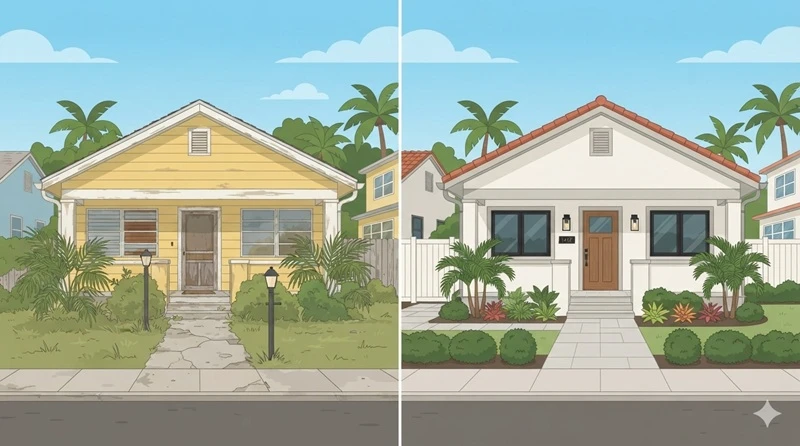
Small improvements around the entryway can have a surprisingly strong effect. A new door color, modern house numbers, updated lighting, and a clean walkway can make the entire property appear better maintained.
For homeowners planning to renovate old house exteriors, durability should remain a priority. Select finishes appropriate for intense sun, moisture, and local weather conditions rather than choosing materials based only on appearance.
What About Home Renovation in Low Budget?
A home renovation in low budget conditions works best when homeowners concentrate on the changes that provide the greatest improvement per dollar.
Instead of replacing a functioning kitchen, refresh its appearance. Instead of replacing every interior door, repair and paint them where practical. Instead of renovating every room simultaneously, complete the highest-priority areas first.
Another useful strategy is combining projects. Complete electrical updates before painting, repair plumbing before installing new cabinets, and resolve moisture issues before replacing flooring.
This reduces duplicated labor and helps protect newly completed work.
Plan for the Before-and-After Result
Good planning makes the old house renovation before and after difference more noticeable because the finished spaces have a clear purpose.
Take photographs before starting, document existing problems, and keep track of measurements and expenses. These records make it easier to compare progress and identify which improvements delivered the greatest value.
A successful transformation is not simply about making an old property look newer. It should improve how the house functions, feels, performs, and handles South Florida’s environment.
Why Top Renovations Can Be the Right Partner
For homeowners looking to renovate old house properties in South Florida, choosing the right renovation partner can make the process much easier. House renovation contractors near me can help homeowners approach projects with a structured plan instead of managing every repair and trade separately.
Top Renovations is a practical partner for South Florida homeowners who want to improve an older property while balancing appearance, functionality, durability, and budget. A coordinated approach can help turn a collection of outdated rooms into a cohesive home renovation plan.
The right team can also help determine which improvements should happen first, where the existing structure can be preserved, and where investing more money makes sense.
Final Thoughts
To renovate old house successfully on a limited budget, start with the condition of the property rather than the latest design trend. Address safety, moisture, structural concerns, electrical and plumbing issues, and climate-related needs before spending heavily on finishes.
Then use strategic improvements such as paint, lighting, hardware, selective kitchen updates, bathroom refreshes, and exterior maintenance to create a modern appearance.
The smartest renovation is not necessarily the one with the largest budget. It is the one that puts money into the right improvements, protects the existing home, and creates lasting comfort and value.
FAQs
1. What is the first step to renovate old house?
Start with an inspection that identifies structural, moisture, electrical, plumbing, HVAC, and safety concerns.
2. Can an old house be modernized on a small budget?
Yes, paint, lighting, hardware, selective room updates, and targeted repairs can create major improvements without a complete remodel.
3. What should be prioritized in a South Florida renovation?
Roofing, moisture control, HVAC performance, windows, electrical systems, plumbing, and durable exterior materials deserve early attention.
4. Is renovating an old house worth the money?
It can be worthwhile when improvements address important maintenance needs, improve functionality, and add useful long-term value.
5. Are older homes safe to renovate?
Older homes can be renovated safely, but potential hazards such as lead-based paint should be evaluated before work begins.