

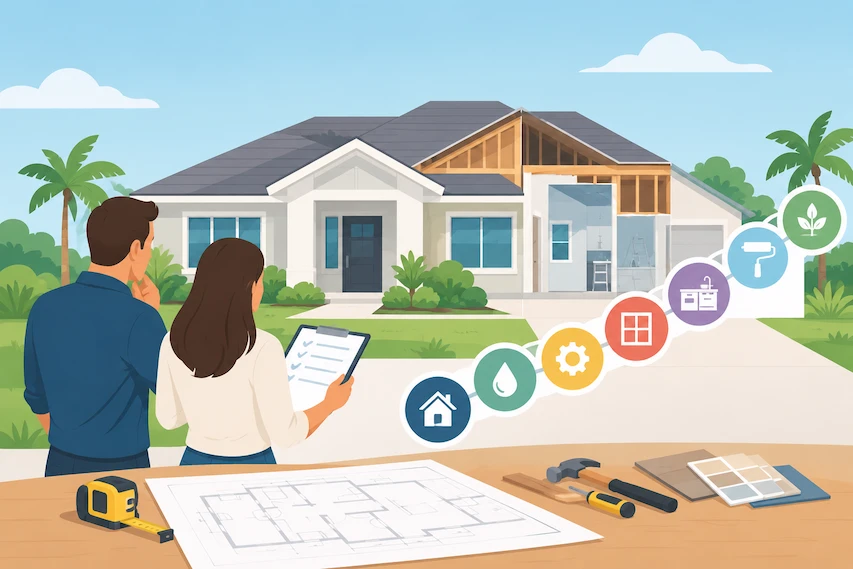
When your home needs a new kitchen, updated bathrooms, better windows, exterior repairs, and plenty of cosmetic work, it can be difficult to know where to begin. The best approach is to renovate based on urgency, safety, structural condition, and project dependencies—not simply by choosing your favorite room first.
A smart renovation sequence can protect your budget, prevent rework, and help you make meaningful improvements without trying to tackle the entire house at once. If everything feels like a priority, start by separating problems that need immediate attention from upgrades that can safely wait.
What Should You Renovate First in a Home That Needs Everything?
Start with anything that affects safety, structural integrity, water protection, or major home systems before moving on to cosmetic upgrades. Once those issues are under control, prioritize projects that affect multiple rooms or need to happen before other improvements.
A practical order is:
-
Safety and structural problems
-
Water, moisture, and drainage issues
-
Electrical, plumbing, HVAC, and other major systems
-
Exterior protection, windows, and doors
-
Layout and major construction changes
-
Kitchen and bathroom remodeling
-
Flooring, walls, and ceilings
-
Cosmetic finishes and decorative upgrades
-
Landscaping and optional exterior improvements
This sequence is not a rigid rule for every property. The right order depends on your home’s condition, your budget, and whether you plan to stay, rent, or sell.
How Do You Decide Which Renovation Is the Highest Priority?
Rank each project according to urgency, potential damage, cost of delay, and how much other work depends on it. A project that looks less exciting may deserve to come first if postponing it could damage newly renovated areas later.
Create three categories before contacting contractors:
| Priority | What belongs here | Why it comes first |
|---|---|---|
| Immediate | Structural damage, active leaks, unsafe electrical work, serious plumbing problems | Prevents safety risks and additional damage |
| Near-term | Aging windows, outdated systems, inefficient layouts, damaged exterior materials | Protects the home and prepares it for later work |
| Later | Paint, decorative finishes, fixtures, landscaping, cosmetic upgrades | Improves appearance after major work is complete |
This simple ranking can stop you from spending thousands on a beautiful kitchen while an underlying plumbing or moisture problem remains unresolved.
If you are still determining whether your property needs targeted repairs or a larger renovation, the existing home remodeling guide can help you evaluate the major areas of the house without treating every room as an equal priority.
Should Structural Problems Come Before Cosmetic Renovations?
Yes. Structural and safety-related problems should generally be addressed before cosmetic improvements. There is little value in installing new flooring or repainting a room if an underlying structural, moisture, or system problem could require the work to be removed later.
Look for warning signs such as:
-
Significant cracks in walls or foundations
-
Sagging floors or ceilings
-
Water intrusion
-
Persistent moisture or mold problems
-
Roof or exterior damage
-
Unsafe electrical components
-
Major plumbing leaks
-
Serious drainage problems
-
Damaged load-bearing components
These issues should be evaluated by appropriately qualified professionals rather than covered up with cosmetic improvements.
Why Is It Expensive to Ignore Structural Problems?
Delaying a major underlying problem can turn a manageable repair into a much larger renovation. Water, structural movement, and deteriorating systems can affect areas beyond the original problem.
For example, repairing a damaged ceiling before addressing the leak above it may only solve the visible symptom. The same principle applies to flooring, drywall, cabinetry, and other finishes.
Before spending money on appearance, make sure the house is in a condition where those improvements can safely last.
Should You Fix Water and Moisture Problems Before Remodeling?
Absolutely. Water and moisture issues should be addressed before remodeling the affected area. A new bathroom, kitchen, floor, or wall finish can be damaged quickly if the source of moisture remains active.
Check areas such as:
-
Roof and ceiling penetrations
-
Exterior walls
-
Windows and doors
-
Plumbing connections
-
Bathrooms
-
Kitchens
-
Laundry areas
-
Foundations and lower levels
-
Gutters and drainage paths
South Florida homeowners also need to consider humidity, heavy rainfall, coastal exposure, and storm-related water intrusion when planning renovations.
This is especially important if you are upgrading an older property. The existing South Florida renovation challenges should be considered before selecting materials or scheduling finish work.
When Should You Upgrade Plumbing, Electrical, or HVAC Systems?
Major home systems should be evaluated early because they can affect walls, ceilings, floors, and room layouts. If these systems need substantial work, complete that work before installing finishes that may later have to be opened or removed.
Consider whether your home has:
-
Outdated electrical components
-
Insufficient electrical capacity
-
Aging plumbing
-
Repeated plumbing problems
-
Poor water pressure
-
An inefficient or aging HVAC system
-
Inadequate ventilation
-
Outdated fixtures or connections
You do not necessarily need to replace every system simply because the home is older. The goal is to identify systems that are unsafe, failing, inadequate for the planned renovation, or likely to interfere with future work.
Should You Upgrade Systems Even If They Still Work?
Not always. A working system may not need immediate replacement, but it should be considered if a renovation will expose it or require changes to accommodate new layouts and fixtures.
For example, opening walls for a major kitchen remodel may provide an opportunity to address electrical or plumbing needs while access is already available.
That can be more practical than finishing the kitchen and then reopening the same walls months later.
Should Windows and Doors Be Replaced Before Interior Remodeling?
If your windows or exterior doors are damaged, poorly sealed, or part of a larger exterior problem, they should be addressed before final interior finishes. This can help protect the newly renovated interior from weather exposure and improve comfort and efficiency.
For South Florida homes, homeowners may also consider impact-resistant windows and doors where appropriate.
Before replacing them, evaluate:
-
Water intrusion
-
Air leakage
-
Damage or deterioration
-
Security
-
Energy performance
-
Storm protection
-
Compatibility with the home’s design
If windows and doors are already part of your renovation plan, completing this work before final interior finishes can reduce the chance of damaging freshly painted walls, trim, or flooring.
Should You Remodel the Kitchen or Bathroom First?
Once safety, structural, moisture, and major system issues are handled, the kitchen and bathrooms are often strong candidates for the next phase. These spaces involve multiple trades and materials, so completing them before final flooring and decorative work can make the overall renovation easier to coordinate.
The kitchen may involve:
-
Cabinets
-
Countertops
-
Plumbing
-
Electrical work
-
Appliances
-
Lighting
-
Flooring
-
Walls and ceilings
A bathroom can involve:
-
Plumbing
-
Waterproofing
-
Tile
-
Fixtures
-
Vanity installation
-
Electrical work
-
Ventilation
-
Flooring
Because these projects involve several interconnected components, it is important to finalize the layout before ordering major materials.
Which Comes First: Kitchen or Bathroom?
Choose the space with the greater combination of need, daily impact, and project urgency. There is no universal rule that says the kitchen must always come first.
Choose the kitchen first if:
-
It has serious functional problems
-
Appliances or cabinets are failing
-
The layout is limiting daily use
-
Plumbing or electrical work is already needed
-
You use the kitchen heavily
Choose the bathroom first if:
-
There are active leaks
-
Plumbing is failing
-
Ventilation is inadequate
-
The space has significant moisture problems
-
The bathroom is difficult or unsafe to use
If both spaces are in similar condition, your budget and household needs can determine which project makes the most sense.
When Should You Replace Flooring?
Flooring usually makes more sense after major demolition, plumbing, electrical, and structural work is complete. Installing new flooring too early can expose it to construction damage or force you to remove it when other work begins.
A useful sequence is:
-
Complete demolition
-
Address structural issues
-
Complete major plumbing and electrical work
-
Finish major wall and ceiling construction
-
Complete cabinetry and other major installations where appropriate
-
Install or finish flooring according to the project’s construction requirements
-
Complete trim and final finishes
The exact sequence can vary depending on the flooring material and project design.
If you are considering flooring as part of a larger renovation, think beyond appearance. South Florida homes benefit from materials selected with moisture, maintenance, durability, and everyday traffic in mind.
When Should You Paint the Interior?
Final interior painting is usually best saved until major construction and messy installation work are substantially finished. Painting too early can mean repairing walls repeatedly after contractors install cabinets, doors, flooring, trim, lighting, and other features.
You can divide painting into stages when necessary.
For example:
-
Prime repaired surfaces early
-
Paint areas that will not be disturbed
-
Complete major construction
-
Repair remaining wall damage
-
Apply final coats
-
Complete touch-ups after installation
This approach reduces unnecessary repainting while still keeping the project moving.
Should You Renovate the Exterior Before the Interior?
Exterior work should come first when the exterior is allowing water into the home, creating safety concerns, or affecting the interior renovation. Otherwise, the decision depends on your project scope and goals.
Exterior priorities can include:
-
Roof-related problems
-
Damaged siding or stucco
-
Poor drainage
-
Damaged windows and doors
-
Unsafe fencing
-
Driveway problems
-
Exterior lighting
-
Entry improvements
If the exterior is secure and functional, interior work may reasonably take priority.
However, if you are planning a major whole-property renovation, coordinating exterior and interior work can reduce scheduling conflicts.
What Renovations Should You Leave Until the End?
Decorative improvements should generally come after the major construction is finished. These include projects where damage or disruption would be easy to create during other renovation work.
Examples include:
-
Decorative wall treatments
-
Final paint colors
-
Artwork installation
-
Decorative lighting
-
Mirrors
-
Shelving
-
Window treatments
-
Landscaping details
-
Nonessential accessories
These upgrades can make a major visual difference, but they usually do not need to be the first investment when a home has more pressing needs.
How Should You Prioritize Renovations on a Limited Budget?
With a limited budget, focus on the work that prevents damage, improves safety, fixes major functional problems, or prepares the home for future renovation phases. Do not try to spread a small budget evenly across every room.
A practical budget strategy is:
Phase 1: Protect the Home
Prioritize:
-
Leaks
-
Structural concerns
-
Drainage
-
Unsafe electrical work
-
Serious plumbing problems
-
Major exterior damage
Phase 2: Improve Major Systems
Consider:
-
Electrical upgrades
-
Plumbing improvements
-
HVAC
-
Windows and doors
-
Ventilation
-
Insulation where appropriate
Phase 3: Remodel High-Use Areas
Focus on:
-
Kitchen
-
Primary bathroom
-
Other heavily used bathrooms
-
Main living areas
Phase 4: Finish and Refresh
Then move to:
-
Flooring
-
Paint
-
Trim
-
Lighting
-
Fixtures
-
Decorative details
This phased approach lets you make progress without committing your entire budget to cosmetic work at the beginning.
For a broader look at budgeting, the existing home renovation cost guide covers the financial side of planning a South Florida renovation.
Is It Better to Renovate Everything at Once or in Phases?
For many homeowners, renovating in phases is easier to manage financially and practically, especially when the entire house needs work. A phased plan lets you address urgent issues first while spreading larger expenses over time.
Renovating everything at once can make sense when:
-
The home is vacant
-
The budget is sufficient
-
Multiple areas require connected work
-
Major structural changes are planned
-
You want to minimize the total renovation period
Phased renovations may be better when:
-
You are living in the home
-
Your budget is limited
-
Only certain systems need immediate attention
-
You want to spread costs
-
You want to learn from each completed phase
The important part is to create an overall plan before starting the first phase. Otherwise, one renovation can unintentionally make the next phase more expensive.
How Can You Avoid Renovating the Same Area Twice?
Plan the entire renovation before completing individual phases, even if you cannot afford to build everything immediately. This allows you to account for future electrical, plumbing, flooring, layout, and design requirements.
For example, if you know you eventually want an open kitchen and living area, do not finalize a layout today that could make that future project more difficult.
Before each phase, ask:
-
Will this work affect another room later?
-
Will walls need to be opened again?
-
Should electrical capacity be increased now?
-
Will future flooring need to connect with this area?
-
Are plumbing locations likely to change?
-
Should permits cover related work together?
-
Will today’s design choices limit future options?
This kind of forward planning is one of the easiest ways to reduce unnecessary demolition and rework.
What Is the Best Renovation Order for a Whole House?
The safest general sequence is to move from protection and infrastructure toward construction, then finish with appearance-focused improvements. The exact order can change depending on the property’s condition, but this framework gives homeowners a strong starting point.
| Stage | Renovation focus | Main goal |
|---|---|---|
| 1 | Structural and safety issues | Protect people and the property |
| 2 | Water and moisture | Stop ongoing damage |
| 3 | Plumbing, electrical, HVAC | Improve critical systems |
| 4 | Exterior protection | Secure the building envelope |
| 5 | Layout changes | Establish the final configuration |
| 6 | Kitchen and bathrooms | Complete major high-use spaces |
| 7 | Flooring and major finishes | Create a consistent interior |
| 8 | Paint, trim, fixtures | Complete the visual transformation |
| 9 | Landscaping and décor | Finish the property |
This order is more useful than simply saying “start with the kitchen” because it accounts for the conditions that can make one project dependent on another.
What Are the Biggest Mistakes Homeowners Make When Prioritizing Renovations?
The biggest mistake is treating every renovation as equally urgent. When everything is labeled a priority, homeowners can spend heavily on visible improvements while delaying problems that may become more expensive later.
Watch for these common mistakes:
-
Renovating around an unresolved leak
-
Installing new finishes before major construction
-
Choosing finishes before finalizing the layout
-
Ignoring outdated plumbing or electrical systems
-
Spending the entire budget on one room
-
Starting several projects without completing any
-
Making design decisions without considering future phases
-
Choosing materials based only on appearance
-
Underestimating contingency funds
-
Changing the scope repeatedly after construction begins
A clear project scope and realistic contingency can make a major difference. The site’s home renovation checklist is also useful for organizing decisions before construction begins.
Should Resale Value Affect Which Renovation You Do First?
Yes, but resale value should be one factor rather than the only factor. If you plan to sell soon, prioritize improvements that address visible defects, improve functionality, and appeal to a broad range of buyers.
If you plan to stay for many years, comfort and long-term durability may deserve more weight.
For example, a homeowner staying long-term might prioritize:
-
Better storage
-
Improved accessibility
-
Energy efficiency
-
A more functional layout
-
Durable materials
-
Outdoor living improvements
A homeowner preparing to sell might focus more on:
-
Kitchen condition
-
Bathroom condition
-
Flooring
-
Paint
-
Curb appeal
-
Windows and doors
-
Visible exterior problems
For more information about value-focused projects, see the South Florida home renovation ROI guide.
What Should You Do Before Starting Your First Renovation Phase?
Before spending money on the first project, create a complete list of what the home needs and determine which items affect one another. You do not need to renovate everything immediately, but you should understand the bigger picture before starting.
Use this starting checklist:
-
Inspect the home’s major problem areas
-
Identify safety and structural concerns
-
Check for water and moisture problems
-
Review plumbing and electrical conditions
-
Evaluate HVAC and ventilation
-
Inspect windows and exterior doors
-
Decide whether layout changes are needed
-
Rank projects by urgency
-
Set a realistic renovation budget
-
Keep a contingency reserve
-
Determine which work must happen together
-
Decide whether the renovation will be phased
-
Plan material selections before ordering
-
Confirm permit requirements
-
Establish the scope before construction begins
Once those decisions are made, you can approach the renovation with a much clearer idea of what needs to happen first and what can wait.
Final Thoughts
When your home needs everything, the answer is not to renovate everything at once. Start with the problems that protect the home and its occupants, then address major systems and construction before moving into kitchens, bathrooms, flooring, paint, and decorative improvements.
The right renovation order can save money because it reduces rework and prevents new finishes from being damaged by later construction. It also gives you a practical way to divide a large project into manageable phases.
The goal is not simply to make your home look newer. It is to create a renovation plan that improves safety, function, durability, comfort, and long-term value in the right order.
Frequently Asked Questions
What should I renovate first if my whole house needs work?
Start with structural, safety, water, and major system problems. Cosmetic upgrades should come later once the home is protected and the underlying issues are addressed.
Should I renovate the kitchen or bathroom first?
Choose the space with the greater combination of urgency, daily use, and functional problems. If both are similar, your budget and household needs can determine which comes first.
Should I fix plumbing before remodeling?
Yes, major plumbing problems should be addressed before installing new finishes. Otherwise, a future repair could damage newly renovated walls, floors, cabinets, or fixtures.
Should flooring be installed before or after remodeling?
In many renovation projects, final flooring is better completed after major demolition and messy construction. The exact sequence depends on the flooring material and the project’s design.
Is it cheaper to renovate a whole house at once?
Not necessarily. A whole-house renovation can improve coordination, but phased remodeling may be easier to finance and manage. The better choice depends on the home’s condition, project scope, and budget.
How much should I set aside for unexpected renovation costs?
A contingency reserve is important because renovation work can uncover hidden problems. The appropriate amount depends on the home’s age, condition, and project complexity.
Can I renovate one room at a time?
Yes. Phased remodeling can work well when the home is occupied or the budget is limited. The key is to plan the overall renovation before starting individual phases.
Should I renovate for resale value or personal use?
That depends on your timeline. If you plan to stay for years, prioritize comfort and durability. If you plan to sell soon, focus on practical improvements that appeal to a broad range of buyers.