

Planning a home remodel can feel exciting right up until the details start piling up. Budgets shift, timelines stretch, and small decisions suddenly affect the entire project. That is exactly why a free home renovation checklist can make such a big difference. It gives homeowners a clear starting point, helps organize priorities, and reduces the stress that often comes with managing a renovation.
Whether you are updating a kitchen, remodeling a bathroom, refreshing an investment property, or planning a full-home transformation, the right checklist helps you stay focused on what matters most. It keeps your renovation practical, organized, and aligned with your goals from day one. Instead of making rushed decisions along the way, you can move forward with a better plan, more confidence, and fewer expensive surprises.
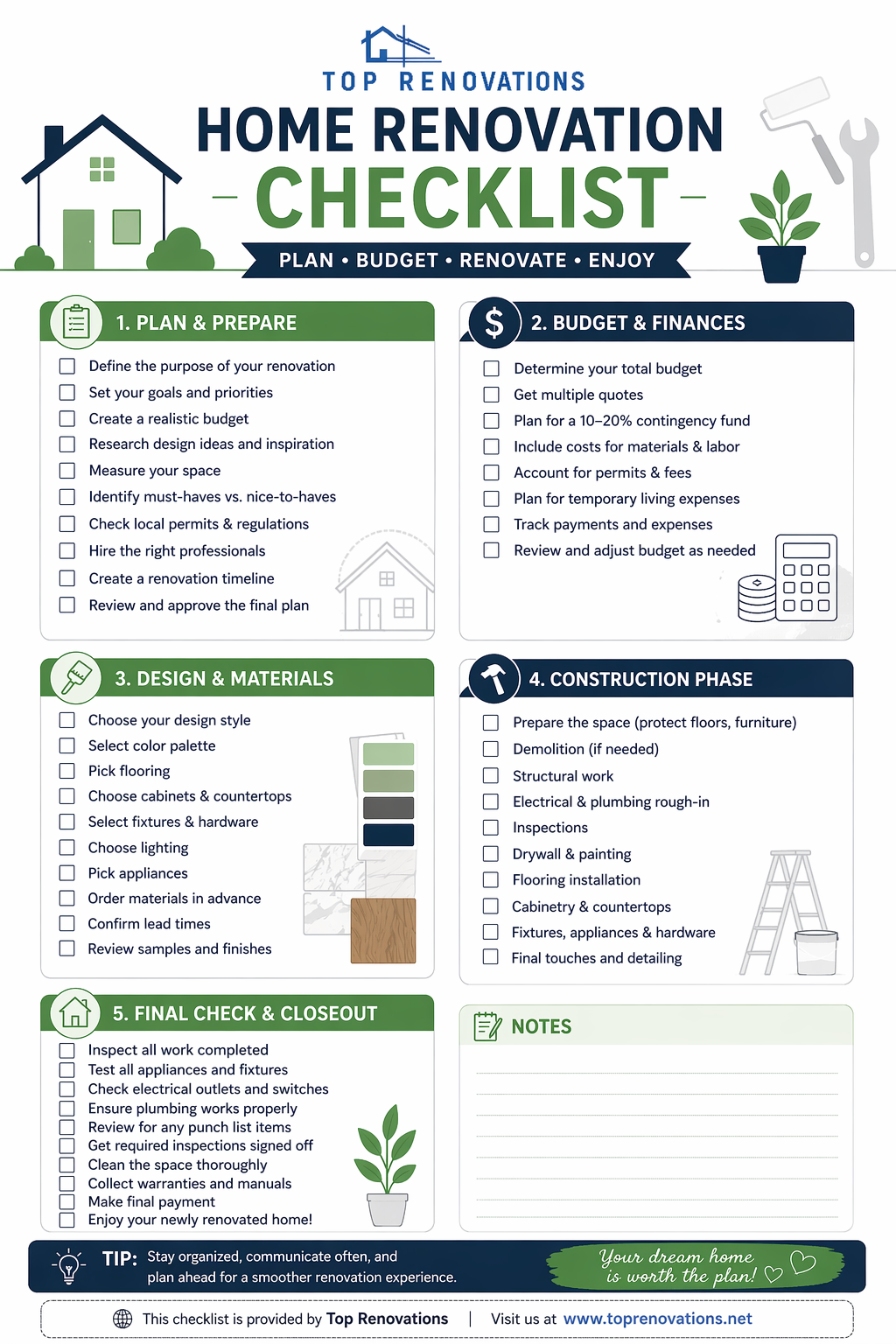
In this guide, you will find a complete home renovation checklist you can use before, during, and after your project. It is designed to help you think through every major step, from setting a budget to choosing finishes and preparing for the final walkthrough. If you want a smoother project and better results, this downloadable guide will help you get there.
Why a Home Renovation Checklist Matters
A renovation checklist does more than keep your project neat on paper. It helps you make better decisions before work starts, while contractors are on-site, and even after the dust settles.
When homeowners skip the planning stage, it often leads to the same problems. Materials are chosen too late. The budget gets stretched by unexpected upgrades. Timelines slip because decisions were not made in advance. A checklist helps avoid that by turning a big project into manageable steps.
It also helps you keep your renovation aligned with the purpose of the space. Some homeowners renovate for comfort. Others renovate to improve resale value, update outdated finishes, or increase rental appeal. Once you define your goal, the checklist becomes your filter for every decision that follows.
Before You Renovate: Define the Real Purpose
Before picking paint colors or flooring samples, get clear on why you are renovating in the first place. That answer will shape your budget, design direction, and renovation priorities.
Ask the Right Planning Questions
Start with these:
-
Are you renovating to improve daily living?
-
Are you preparing the home to sell?
-
Are you upgrading for rental income?
-
Are you fixing age-related issues or damage?
-
Are you modernizing an outdated layout?
A renovation meant for long-term personal use will usually look different from one designed for resale or investment. If your goal is not clear, it becomes much easier to overspend in the wrong places.
Identify Your Must-Haves and Nice-to-Haves
Every renovation has essential upgrades and optional upgrades. Write both down early.
Your must-haves may include things like replacing old plumbing, fixing water damage, improving storage, or updating a dated kitchen. Nice-to-haves may include decorative lighting, feature walls, or custom shelving.
That distinction matters because once pricing starts to come in, you need to know what stays and what can be adjusted.
Build a Budget That Works in Real Life
One of the biggest renovation mistakes homeowners make is creating a budget that only covers the best-case scenario. In reality, projects often uncover hidden costs, especially in older homes.
A smart budget should include labor, materials, permits, delivery fees, design adjustments, and a contingency fund for unexpected work.
Your Budget Checklist
Use this section of the checklist to map out costs:
-
Total renovation budget
-
Estimated labor costs
-
Material allowances
-
Appliance costs
-
Permit fees
-
Waste removal or cleanup costs
-
Temporary living expenses if needed
-
Emergency cushion of 10 to 20 percent
This planning step matters because even a beautiful renovation can feel stressful if the financial side is not properly managed. Homeowners often find that thoughtful planning upfront saves money later, especially when they understand how renovation costs compare over the course of the full project.
Create a Realistic Renovation Timeline
Time is one of the most underestimated parts of any remodel. Many homeowners assume work will move in a straight line, but real projects involve scheduling gaps, inspections, lead times, backorders, and change requests.
That is why your checklist should include a renovation timeline, not just a wish list.
Key Timeline Questions to Answer
Before construction starts, confirm:
-
When will the project begin?
-
How long is demolition expected to take?
-
When do materials need to be ordered?
-
What inspections are required?
-
Are there items with long lead times?
-
When should finish selections be finalized?
A realistic timeline also helps you plan around daily life. If you are remodeling a kitchen, for example, you may need a temporary meal setup. If you are updating multiple bathrooms, you may need to sequence the work carefully.
For kitchen projects, it helps to review a clear step by step timeline so you know what typically happens first, what tends to cause delays, and when key decisions need to be locked in.
Decide Which Spaces Need the Most Attention
Not every room needs the same level of renovation. One of the smartest ways to use your checklist is to rank spaces by impact.
Kitchens, bathrooms, flooring, lighting, and curb appeal often deliver the most noticeable results. But the right priorities depend on the condition of the home and your overall goals.
Room-by-Room Renovation Checklist
Kitchen
-
Assess cabinet condition
-
Review countertop needs
-
Check appliance age and function
-
Consider layout improvements
-
Update lighting and hardware
-
Plan backsplash and finish selections
Bathroom
-
Inspect tile, grout, and caulking
-
Replace outdated fixtures
-
Review vanity storage
-
Check plumbing and ventilation
-
Decide whether refinishing or replacement makes more sense
Living Areas
-
Review flooring condition
-
Check wall texture and paint quality
-
Upgrade baseboards or trim if needed
-
Replace dated light fixtures
-
Improve window treatments or natural light flow
Bedrooms
-
Refresh paint
-
Improve closet storage
-
Replace damaged flooring
-
Check lighting and electrical access
Exterior
-
Review paint or siding condition
-
Inspect entry doors
-
Upgrade outdoor lighting
-
Pressure wash hard surfaces
-
Refresh landscaping where needed
This step helps you avoid the common trap of spending too much in low-impact areas while ignoring the spaces buyers, guests, or tenants notice first.
Think About Layout and Function Before Finishes
A beautiful renovation is not always a useful one. Before you start picking materials, your checklist should include a close look at how the space works.
Layout issues can affect storage, traffic flow, lighting, and comfort. Sometimes the biggest value comes from improving function, not from adding more expensive finishes.
Functional Improvements Worth Reviewing
Ask yourself:
-
Is there enough kitchen storage?
-
Does the layout feel open or cramped?
-
Are walkways blocked by furniture or fixtures?
-
Is there dead space that could be better used?
-
Does the room support the way you actually live?
In many homes, small layout changes create a major difference. Moving an island, reworking a vanity, adjusting cabinet placement, or improving entry storage can make the space feel much more polished without requiring a complete rebuild.
Choose Materials With Longevity in Mind
Your renovation checklist should help you choose materials that fit your budget, match your style, and hold up over time. This is especially important in kitchens, bathrooms, and high-traffic areas.
A finish that looks beautiful in a showroom may not always be the right fit for a busy household. Durability, maintenance, and replacement cost all matter.
Material Selection Checklist
Review the following before making final choices:
-
Flooring durability
-
Water resistance
-
Ease of cleaning
-
Maintenance needs
-
Color consistency
-
Availability of matching replacements
-
Compatibility with the rest of the home
For kitchens, color choices are one of the easiest ways to set the tone of the entire renovation. Clean, warm, timeless palettes usually work better than trendy combinations that may feel dated too quickly. If you are trying to narrow down your direction, browsing a few kitchen color combinations can help you choose something that feels updated while still flexible enough for long-term appeal.
Do Not Forget Permits, Rules, and Site Prep
This part of the checklist is not glamorous, but it matters. Renovation projects often involve practical steps that need to happen before work begins.
That includes permits, approvals, site protection, and access planning. Skipping these details can delay your project or create expensive corrections later.
Pre-Construction Checklist
Before the crew starts, confirm:
-
Permits are approved if required
-
HOA or building approvals are secured
-
Materials are ordered and scheduled
-
Work areas are cleared
-
Furniture is protected or removed
-
Pets and children are safely planned for
-
Access points and parking are coordinated
-
Utility shutoffs are understood if needed
A renovation runs more smoothly when the site is prepared and expectations are clear from the beginning.
Plan for Style, But Keep It Practical
Design matters. It affects how the finished space feels, photographs, and ages over time. But style decisions should still support the practical purpose of the renovation.
Your checklist should keep design selections organized while helping you avoid random choices that do not work together.
Design Selection Checklist
Track these items in one place:
-
Wall color
-
Cabinet style
-
Countertop material
-
Backsplash selection
-
Flooring type and tone
-
Fixture finish
-
Lighting style
-
Hardware selection
-
Paint finish
-
Trim details
Keeping these details organized helps maintain consistency across the project. It also reduces the risk of last-minute decisions that create a mismatched result.
Use a Downloadable Checklist to Stay Organized
A downloadable home renovation checklist is useful because it turns planning into action. Instead of keeping everything in your head, you have a practical guide you can check off step by step.
It can also be shared with contractors, designers, or family members so everyone stays aligned. That is especially helpful when multiple people are involved in making decisions.
What to Include in Your Downloadable Guide
A strong downloadable renovation checklist should include:
-
Project goals
-
Budget tracker
-
Room-by-room priorities
-
Material planning notes
-
Contractor questions
-
Timeline planning
-
Permit reminders
-
Final walkthrough items
If your renovation includes unique environmental conditions, such as moisture, coastal exposure, or outdoor living considerations, it also helps to factor in location-specific planning. Reviewing a few coastal remodeling tips can help homeowners think ahead about materials, durability, and maintenance in challenging climates.
Questions to Ask Before Hiring a Remodeling Team
Your checklist should also help you choose the right professionals. Even a well-planned renovation can fall apart if communication is poor or the scope is unclear.
Before hiring anyone, make sure you understand how they work, what they include, and how they handle changes during the project.
Contractor Interview Checklist
Ask these questions:
-
Are you licensed and insured?
-
What is included in your estimate?
-
Who manages the project day to day?
-
How are timeline changes handled?
-
How do you manage unexpected issues?
-
What payment schedule do you require?
-
Will you help with permits and material coordination?
-
How do you handle punch-list items at the end?
This step can save you from confusion and rework later. The more clarity you have upfront, the smoother the process usually becomes.
Final Walkthrough Checklist Before the Project Ends
As the renovation wraps up, it is easy to focus only on the big reveal. But your checklist should include a final review process so nothing important gets missed.
This is your chance to verify that all work has been completed properly and that the final result matches the original plan.
End-of-Project Checklist
Before signing off, review:
-
Paint touch-ups
-
Cabinet and drawer alignment
-
Appliance installation
-
Plumbing fixture function
-
Electrical outlet and switch operation
-
Lighting installation
-
Tile and grout condition
-
Flooring transitions
-
Caulking and finish details
-
Cleanup and debris removal
It is also a good time to collect manuals, warranty information, care instructions, and any leftover material that may be useful for future repairs.
When to Get Expert Help With the Planning
Some homeowners start with a checklist and quickly realize the project is more involved than expected. That is normal. A checklist gives you structure, but an experienced remodeling team can help translate that plan into a smoother execution.
If you want help turning your ideas into a realistic scope, budget, and timeline, it may be worth taking the next step early rather than waiting until the project feels overwhelming. When you are ready to move from planning to action, you can get an estimate and start shaping a renovation plan around your home, priorities, and budget.
Conclusion
A free home renovation checklist is one of the simplest tools you can use to make your project feel more manageable from the start. It helps you define your goals, organize your budget, prioritize rooms, choose materials wisely, and stay on track throughout the renovation.
The best remodels are rarely the ones built on impulse. They are the ones built on clear planning, practical decisions, and a strong understanding of what the home needs most. With the right checklist in hand, you can approach your renovation with more clarity, better control, and a much smoother path from idea to finished space.