

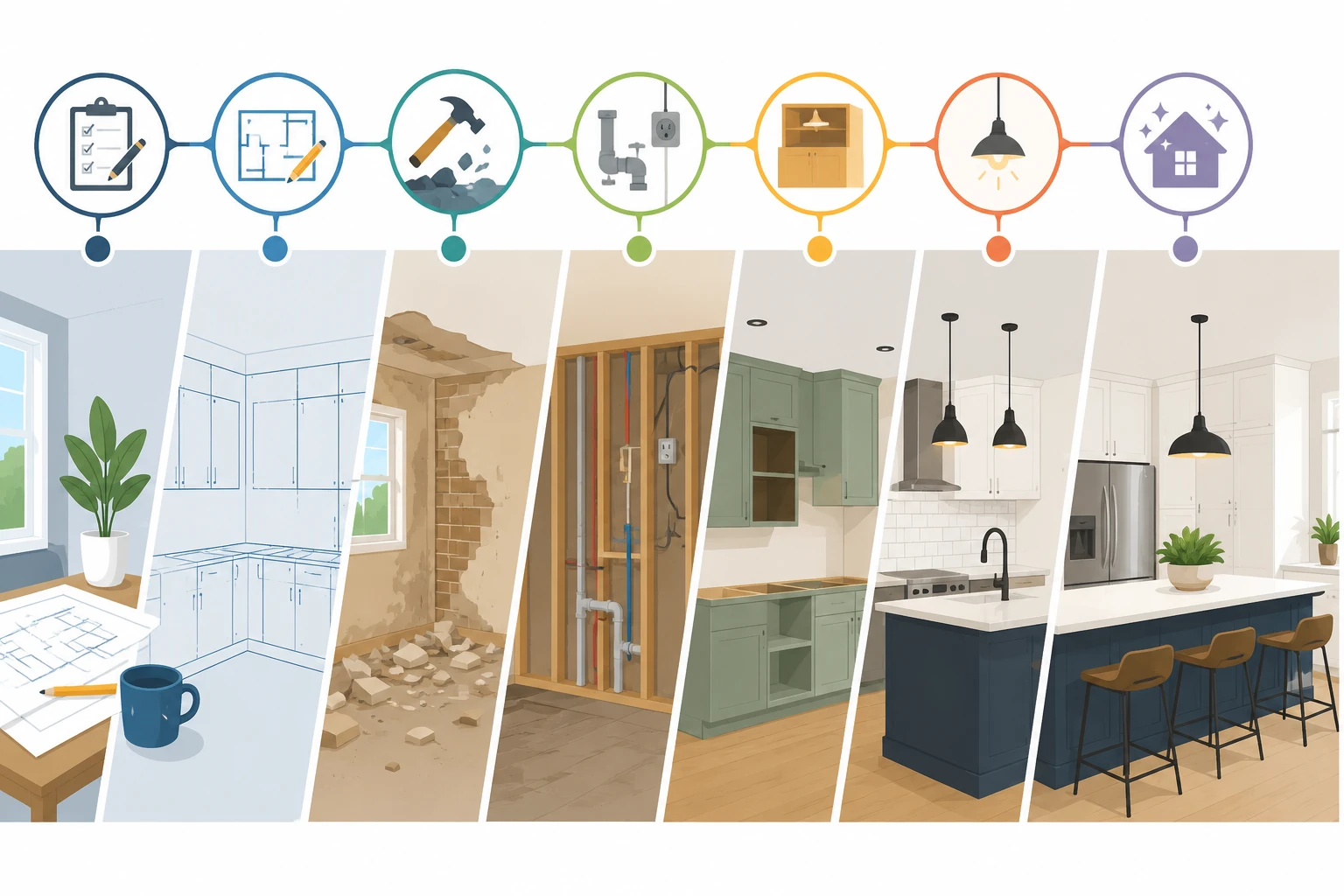
Planning a kitchen renovation is exciting, but it can also feel a bit overwhelming if you’re not sure what to expect. One of the first questions most homeowners ask is: How long is this actually going to take?
The truth is, every project is different. But most kitchen renovations follow a clear process, and once you understand each phase, everything starts to feel more manageable.
In this guide, we’ll walk you through a realistic kitchen renovation timeline—from the early planning stages all the way to the final walkthrough—so you know exactly what’s ahead.
Why Understanding the Timeline Matters
A kitchen renovation isn’t just about picking cabinets and countertops. It involves planning, coordination, and timing between different parts of the project.
Knowing the timeline helps you:
-
Set realistic expectations
-
Prepare for temporary disruptions
-
Avoid rushed decisions
-
Stay on budget
It also makes the whole experience less stressful when you know what’s coming next.
Overview of a Typical Kitchen Renovation Timeline
Most kitchen renovations take about 6 to 12 weeks for construction, plus a few weeks for planning and preparation.
Here’s a quick overview:
-
Planning and design: 2–4 weeks
-
Material selection and ordering: 2–6 weeks
-
Construction: 6–12 weeks
-
Final touches: 1–2 weeks
Let’s break each phase down so you can see what actually happens.
Phase 1: Planning and Design (Weeks 1–4)
This is where everything starts. The more time and effort you put into planning, the smoother the rest of the project will go.
Defining Your Goals
Start simple:
-
What do you want to improve?
-
Do you need more space or better layout?
-
Are you going for a full renovation or just an upgrade?
Getting clear on your goals early helps avoid confusion later.
If you’re still figuring out your budget, it helps to review a realistic home renovation cost guide so you can plan with confidence.
Layout and Design Planning
Next, you’ll work on how your kitchen will actually function.
This includes:
-
Layout (L-shape, U-shape, island, etc.)
-
Appliance placement
-
Storage solutions
-
Lighting
This step is where your ideas start to take shape.
Hiring the Right Contractor
Working with the right team makes a big difference. A good contractor will guide you through the process, help refine your ideas, and spot potential issues early.
If you’re planning a bigger upgrade, exploring a full home remodeling service can also help keep everything consistent across your space.
Phase 2: Material Selection and Ordering (Weeks 3–8)
Once your design is locked in, it’s time to choose materials.
Choosing Finishes
This is where the fun begins. You’ll select:
-
Cabinets
-
Countertops
-
Backsplash
-
Flooring
-
Appliances
-
Lighting
Take your time here, but don’t delay too much—your timeline depends on it.
Ordering and Lead Times
Some materials arrive quickly, but others (like custom cabinets) can take weeks.
To avoid delays:
-
Order early
-
Confirm delivery dates
-
Have backup options
This phase often overlaps with planning to keep things moving.
Phase 3: Pre-Construction Preparation (Week 5–6)
Before demolition starts, there’s a bit of prep work.
Getting Your Home Ready
Your contractor will:
-
Protect nearby areas
-
Set up the workspace
-
Prepare materials and tools
Setting Up a Temporary Kitchen
Since your kitchen won’t be usable for a while, it helps to set up a temporary space.
A simple setup might include:
-
Microwave
-
Mini fridge
-
Coffee maker
It doesn’t need to be perfect—just functional.
Phase 4: Demolition (Week 6–7)
This is where things start to move quickly.
What Happens During Demolition
-
Old cabinets and countertops are removed
-
Flooring may be taken out
-
Walls may be opened if the layout is changing
It can get messy, but it’s usually one of the fastest phases.
Possible Surprises
Sometimes, hidden issues come up, like:
-
Old wiring
-
Plumbing problems
-
Structural concerns
These aren’t unusual, but they can affect the timeline slightly.
Phase 5: Rough-In Work (Week 7–9)
After demolition, the behind-the-scenes work begins.
Plumbing and Electrical Updates
This includes:
-
Installing or updating wiring
-
Moving outlets and switches
-
Adjusting plumbing lines
Everything is done according to code.
Inspections
Depending on your area, inspections may be required before moving forward.
This ensures everything is safe and properly installed.
Phase 6: Installation (Week 9–12)
Now your kitchen starts to come back together.
Cabinets and Countertops
Cabinets are installed first, followed by countertops once measurements are finalized.
This is when you really start to see your kitchen take shape.
Flooring and Backsplash
-
Flooring is installed (timing depends on design)
-
Backsplash is added after countertops
Appliance Installation
Appliances are brought in and connected near the end of this phase.
Phase 7: Finishing Touches (Week 11–13)
This is where everything gets polished.
Final Details
-
Light fixtures
-
Cabinet handles
-
Paint touch-ups
-
Trim work
These details make a big difference in the final look.
Final Walkthrough
Your contractor will go over everything with you to make sure:
-
Everything is working properly
-
Any small issues are fixed
-
You’re happy with the results
Common Delays (and How to Avoid Them)
Even well-planned projects can hit small delays.
Material Delays
Avoid this by ordering early and confirming timelines.
Last-Minute Changes
Changing your mind mid-project can slow things down. Try to finalize decisions before construction starts.
Permits and Inspections
Working with an experienced contractor helps avoid unnecessary delays here.
How to Keep Your Renovation on Track
A few simple habits can make a big difference.
Stay Organized
Keep track of selections, orders, and timelines.
Communicate Clearly
Regular check-ins with your contractor help everything stay on schedule.
Work With the Right Team
An experienced team will keep things moving efficiently and avoid costly mistakes.
If you’re ready to move forward, getting a detailed estimate is a great first step.
Is a Kitchen Renovation Worth It?
In most cases, yes. A kitchen renovation improves both your daily living and your home’s value.
It’s one of the most impactful upgrades you can make. If you’re thinking long-term, you can also explore ideas from this best home upgrades guide to get even more value out of your investment.
Final Thoughts
A kitchen renovation takes time, but when you understand the process, it becomes much easier to manage.
Each phase—from planning to final touches—plays an important role. With the right preparation and a reliable team, the process can feel smooth and even enjoyable.
At the end of it all, you’ll have a kitchen that not only looks great but works better for your everyday life.