

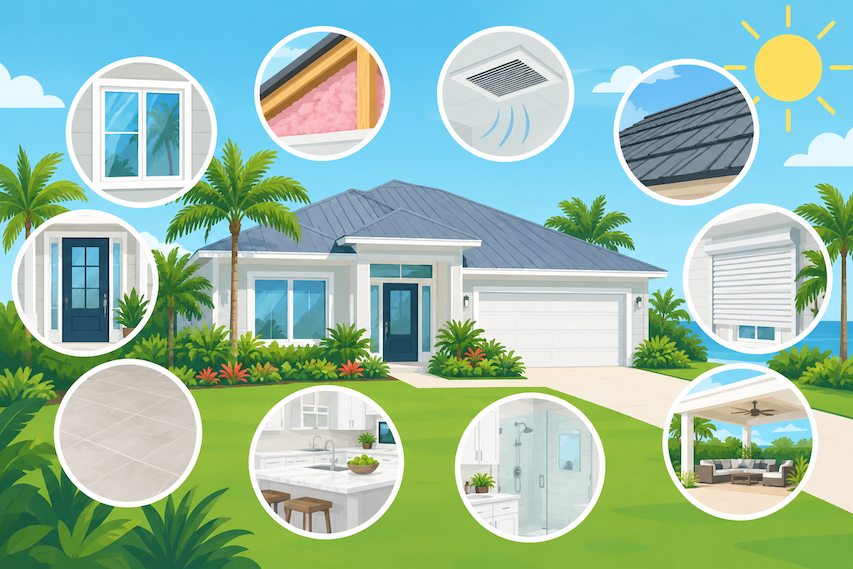
Florida homes deal with conditions that can be tough on both people and buildings. Year-round heat, high humidity, heavy rain, strong sunlight, and hurricane-season weather all affect how a home performs.
The best home improvements for Florida are not always the most expensive ones. Upgrades such as better windows and doors, improved ventilation, moisture-resistant materials, efficient insulation, durable flooring, and stronger exterior features can make a home more comfortable, easier to maintain, and better prepared for local weather.
If you are planning a renovation, the goal should be to choose improvements that work with Florida’s climate instead of fighting against it.
What home improvements work best in Florida’s climate?
The most useful Florida home improvements focus on temperature control, moisture management, storm protection, and durable materials. Windows, doors, insulation, ventilation, flooring, bathrooms, exterior finishes, and outdoor areas can all be upgraded to perform better in hot and humid conditions.
Before choosing finishes based only on appearance, consider how they will handle:
-
High humidity
-
Intense sunlight
-
Heavy rainfall
-
Wind and storms
-
Frequent air-conditioning use
-
Moisture and condensation
-
Outdoor temperature changes
-
Salt air in coastal areas
A climate-focused renovation can help reduce maintenance problems while making the home more comfortable throughout the year.
Why does Florida’s climate affect home renovation decisions?
Florida’s combination of heat and moisture makes material selection especially important. Poor ventilation, water intrusion, and high indoor humidity can contribute to condensation and mold growth, while storms place additional demands on roofs, windows, doors, and other exterior components.
That means a Florida renovation should consider performance as well as appearance.
For example, a beautiful flooring material may not be the best choice if it reacts poorly to moisture. Likewise, an attractive window may not provide the wind resistance or energy performance needed for a Florida home.
The right approach is to look at the entire home as a system.
Which windows and doors should Florida homeowners consider?
Impact-resistant or properly rated windows and doors can improve storm protection while also helping with comfort and energy performance. Florida emergency-preparedness guidance specifically recommends protecting openings such as windows, doors, and garage doors against hurricane-related wind and debris.
Are impact windows worth considering in Florida?
Impact windows can be a practical upgrade for homes in hurricane-prone areas because they are designed to provide greater resistance to windborne debris than ordinary glazing.
They can also contribute to a home’s overall envelope performance when properly selected and installed.
When comparing window options, look at:
-
Impact and wind ratings
-
Energy-efficiency ratings
-
Frame material
-
Glass type
-
Installation requirements
-
Local code requirements
-
Warranty coverage
Top Renovations already covers impact window upgrades as part of its South Florida renovation guidance, so homeowners can consider windows as one component of a broader improvement plan.
Do not choose a product based solely on the label “impact resistant.” The product, installation, and applicable local requirements all matter.
How can better insulation make a Florida home more comfortable?
Better insulation can help reduce unwanted heat transfer and make it easier for the home’s cooling system to maintain a comfortable indoor temperature. Insulation works best when considered together with air sealing, windows, ventilation, and the overall building envelope.
Florida homeowners often focus heavily on air conditioning, but the building itself also plays an important role.
Areas worth reviewing include:
-
Attic insulation
-
Exterior walls
-
Garage-to-home boundaries
-
Air leaks around windows and doors
-
Attic access panels
-
Ductwork areas
-
Plumbing and electrical penetrations
If hot outdoor air is constantly entering the home, an air conditioner has to work harder to maintain the desired temperature.
A renovation professional can identify areas where insulation or air sealing may make sense before you spend money on cosmetic upgrades.
What ventilation improvements help with Florida humidity?
Improved ventilation and moisture control can help prevent excessive indoor humidity, condensation, and moisture-related problems. The EPA recommends keeping indoor humidity below 60%, with 30% to 50% considered an ideal range when possible.
Should Florida homes have better bathroom ventilation?
Yes. Bathrooms produce significant amounts of moisture, especially during hot showers.
A properly sized exhaust fan can remove humid air before it spreads into the rest of the home. The same principle applies to kitchens, laundry areas, and other spaces where moisture is generated.
Look for:
-
Properly sized exhaust fans
-
Exhaust that vents outdoors
-
Quiet operation
-
Accessible ductwork for maintenance
-
Moisture-resistant finishes
-
Good airflow throughout the room
This is particularly important in smaller spaces where humidity can build up quickly.
Top Renovations’ existing guide on small Miami condo bathroom ideas also emphasizes ventilation and moisture-resistant materials for compact South Florida bathrooms.
What flooring is best for a hot and humid Florida home?
Moisture-resistant and durable flooring is generally a practical choice for Florida homes. Porcelain tile, ceramic tile, and quality luxury vinyl are among the options homeowners often consider because they can handle everyday moisture better than many moisture-sensitive materials.
Is porcelain tile good for Florida homes?
Porcelain tile is a strong option because it is durable, water resistant, easy to maintain, and available in a wide range of styles.
It also works well in areas where homeowners want a cooler surface underfoot during hot weather.
Consider porcelain tile for:
-
Kitchens
-
Bathrooms
-
Entryways
-
Laundry rooms
-
Living areas
-
Covered outdoor spaces where appropriate
However, installation quality matters. The substrate, grout, transitions, and drainage conditions all affect long-term performance.
For homeowners comparing materials, Top Renovations’ existing guide to South Florida flooring ideas provides a more detailed look at flooring choices, moisture resistance, and maintenance.
Which kitchen improvements make sense in Florida?
Florida kitchen renovations should prioritize moisture-resistant cabinetry, durable countertops, easy-to-clean surfaces, and good ventilation. These features can make the kitchen easier to maintain while helping finishes hold up in a humid environment.
What materials work well for Florida kitchen cabinets?
Cabinet construction and finish are important in humid environments.
Depending on the project and budget, homeowners may consider:
-
High-quality plywood cabinet boxes
-
Properly sealed surfaces
-
Moisture-resistant finishes
-
Durable hardware
-
Quartz countertops
-
Porcelain or ceramic backsplash tile
-
Easy-to-clean flooring
The goal is not simply to make the kitchen look modern. Materials should also be selected for how they will perform after years of exposure to humidity, cooking moisture, and daily use.
If the kitchen is part of a larger renovation, plan the layout, electrical work, plumbing, ventilation, cabinetry, and finishes together rather than treating each upgrade separately.
What bathroom improvements help Florida homes handle humidity?
Florida bathrooms benefit from moisture-resistant materials, strong ventilation, effective waterproofing, and surfaces that are easy to clean. These upgrades help reduce the likelihood of moisture-related deterioration while creating a more comfortable space.
Consider improvements such as:
-
Porcelain or ceramic tile
-
Waterproof shower systems
-
Moisture-resistant cabinetry
-
Quartz countertops
-
Quality exhaust fans
-
Mold-resistant caulk and grout products where appropriate
-
Proper shower drainage
-
Water-resistant trim
Waterproofing deserves particular attention.
A bathroom can look excellent on the surface while still having problems behind the walls if waterproofing is poorly designed or installed.
For that reason, plumbing, waterproofing, ventilation, and tile installation should be treated as important parts of the renovation rather than afterthoughts.
Should Florida homeowners upgrade their roofs?
Roof condition should be a major consideration because Florida homes face intense sun, heavy rain, and hurricane-related wind. A roof upgrade may involve replacement, repairs, improved connections, or other measures depending on the home’s age, condition, construction, and local requirements.
Florida’s disaster-preparedness guidance recommends homeowners evaluate roof condition and other parts of the exterior system, including roof attachments, windows, doors, and garage doors.
Before replacing a roof, consider:
-
The current roof’s age and condition
-
Signs of leaks or water intrusion
-
Roof-to-wall connections
-
Ventilation
-
Local wind requirements
-
Roofing material
-
Contractor qualifications
-
Required permits and inspections
Roofing decisions should be based on the specific property rather than simply choosing the most expensive material.
Which exterior materials perform well in Florida?
Exterior materials should be selected for resistance to moisture, sunlight, wind, and everyday wear. Stucco, properly installed cladding, durable fencing materials, and weather-resistant trim can all play a role depending on the property.
Florida’s weather can be hard on exterior surfaces.
Before selecting a material, ask:
-
Will it absorb moisture?
-
How does it handle direct sunlight?
-
Is it resistant to corrosion?
-
How much maintenance will it require?
-
Can it withstand local wind conditions?
-
Is it appropriate for the property’s location?
Top Renovations’ comparison of stucco, paint, and exterior cladding offers additional guidance for homeowners deciding how to approach exterior improvements.
The best material depends on the home’s construction, location, budget, and desired appearance.
What outdoor improvements are practical for Florida homes?
Outdoor improvements should focus on drainage, shade, durability, and comfortable use. Patios, covered areas, durable fencing, improved drainage, and outdoor living spaces can make a Florida property more functional without creating unnecessary maintenance.
How can homeowners make outdoor spaces more comfortable?
Shade is one of the biggest considerations.
Useful improvements can include:
-
Covered patios
-
Screened areas
-
Outdoor ceiling fans
-
Shade structures
-
Durable patio surfaces
-
Proper drainage
-
Weather-resistant furniture
-
Low-maintenance landscaping
Outdoor spaces should also be designed with rainfall in mind.
Water needs somewhere to go. Poor drainage can leave standing water around patios, foundations, driveways, and landscaping.
For properties exposed to strong winds or flooding concerns, Top Renovations’ guide to fence options for windy and flood-prone yards provides additional considerations for exterior planning.
What home improvements can help with hurricane protection?
Hurricane-related improvements should focus on the home’s roof, openings, connections, and other vulnerable exterior components. Florida guidance recommends considering measures such as shutters, stronger roof systems, and roof-to-wall connections as part of a broader mitigation strategy.
A practical hurricane-readiness review can include:
| Home area | Improvement to consider |
|---|---|
| Windows | Impact-resistant windows or approved protection |
| Exterior doors | Wind-rated and impact-resistant options |
| Garage | Wind-rated garage door |
| Roof | Inspection, repair, or appropriate replacement |
| Roof connections | Evaluate clips, straps, and connections |
| Landscaping | Remove or manage potential debris hazards |
| Drainage | Improve water flow away from the home |
Requirements vary by location and project, so homeowners should confirm applicable building-code and permitting requirements before beginning work.
How should Florida homeowners choose renovation materials?
The best materials balance appearance, moisture resistance, durability, maintenance, and local weather exposure. A slightly higher upfront investment can make sense when it significantly improves long-term performance, but expensive does not automatically mean better.
Use this simple checklist before selecting a product:
-
Check moisture resistance.
Florida’s humidity makes this especially important. -
Consider sunlight exposure.
Exterior materials can experience strong UV exposure throughout the year. -
Look at maintenance requirements.
A material that needs frequent sealing, repainting, or repairs may cost more over time. -
Check local requirements.
Wind and storm-related requirements vary depending on location and project. -
Review installation requirements.
Even excellent materials can fail when installed incorrectly. -
Think about the entire system.
Windows, insulation, ventilation, waterproofing, drainage, and finishes should work together.
Which Florida home improvements should you prioritize first?
The best starting point is to address problems that affect the home’s protection, moisture control, and everyday comfort before focusing on purely cosmetic upgrades.
A practical priority list is:
1. Fix water intrusion
Leaks, drainage problems, damaged flashing, and other sources of moisture should be addressed first.
2. Improve the building envelope
Review windows, doors, insulation, air sealing, and other areas where outdoor conditions enter the home.
3. Address humidity
Improve bathroom and kitchen ventilation, HVAC maintenance, and moisture control where needed.
4. Strengthen vulnerable exterior components
Consider roofing, windows, doors, garage doors, and other storm-related improvements based on the property’s location and condition.
5. Upgrade high-use areas
Once the home is protected from major climate-related problems, move on to kitchens, bathrooms, flooring, and other interior improvements.
6. Finish with appearance-focused upgrades
Paint, trim, decorative features, landscaping, and other cosmetic improvements can complete the renovation.
This order can help prevent homeowners from spending heavily on finishes before solving underlying moisture or structural issues.
What mistakes should Florida homeowners avoid during renovations?
The most common mistake is choosing materials for appearance alone without considering Florida’s climate. Other problems include ignoring moisture sources, skipping ventilation improvements, overlooking drainage, and failing to check local requirements.
Avoid these mistakes:
-
Choosing moisture-sensitive materials for wet areas
-
Covering up water damage instead of fixing its source
-
Ignoring poor bathroom ventilation
-
Choosing windows without checking ratings and installation requirements
-
Forgetting about drainage around exterior improvements
-
Focusing on cosmetic upgrades before necessary repairs
-
Skipping permits when they are required
-
Selecting the cheapest contractor without checking experience
-
Failing to plan for Florida’s storm conditions
A renovation should solve problems, not hide them.
If you are planning several improvements at once, a home renovation checklist can help organize your priorities, budget, materials, contractor questions, permits, and final walkthrough.
How can homeowners plan a Florida renovation on a budget?
A Florida renovation budget should prioritize protection and performance before cosmetic upgrades. Start by identifying urgent repairs, then separate climate-related improvements from optional design changes.
A simple budget structure can look like this:
| Priority | Examples |
|---|---|
| Essential | Leaks, structural problems, damaged roofing, drainage |
| Climate performance | Windows, doors, insulation, ventilation |
| Durability | Flooring, cabinets, exterior finishes |
| Function | Kitchen, bathroom, storage, lighting |
| Appearance | Paint, decorative finishes, landscaping |
It is also useful to get project-specific estimates before committing to a large renovation.
Top Renovations’ existing guide to South Florida renovation costs covers the factors that can influence project pricing, including scope, materials, property age, permits, and labor.
Is it worth renovating a Florida home for the climate?
Yes, climate-focused improvements can make a home more comfortable and durable while addressing issues that are particularly relevant to Florida properties. The strongest renovation plan combines practical protection with improvements that fit how you actually use the home.
Florida homeowners do not need to renovate everything at once.
Start with the areas that have the biggest impact on:
-
Moisture control
-
Temperature and comfort
-
Storm protection
-
Energy performance
-
Durability
-
Maintenance
-
Everyday functionality
Then build the design upgrades around those improvements.
A home that looks good but struggles with moisture, heat, or storm exposure can become expensive to maintain. A well-planned renovation takes those conditions into account from the beginning.
Frequently Asked Questions About Florida Home Improvements
What is the best home improvement for a Florida home?
Windows and doors, moisture control, insulation, ventilation, roofing, and durable materials are among the most useful improvements to consider. The right priority depends on the home’s condition, location, age, and exposure to weather.
What materials are best for Florida’s humidity?
Moisture-resistant materials such as porcelain tile, certain luxury vinyl products, properly sealed surfaces, quartz, PVC trim, and appropriate exterior materials can perform well when correctly installed.
How can I reduce humidity inside my Florida home?
Start by controlling moisture sources and improving ventilation. Proper HVAC operation, bathroom and kitchen exhaust, leak repairs, and dehumidification can all help. The EPA recommends keeping indoor relative humidity below 60%, ideally around 30% to 50%.
Are impact windows a good upgrade for Florida homes?
They can be a useful storm-protection improvement, particularly in areas exposed to hurricane winds and windborne debris. Homeowners should verify product ratings, installation requirements, and local building requirements before purchasing.
What should I upgrade before hurricane season?
Start with the roof and exterior openings, including windows, doors, and the garage door. Florida emergency-preparedness guidance also recommends reviewing roof attachments and other components that can affect the home’s resistance to storms.
Is tile flooring a good choice for Florida?
Porcelain and ceramic tile are popular options because they are durable, moisture resistant, and relatively easy to maintain. The right flooring still depends on the room, installation conditions, budget, and design goals.
Should I renovate an older Florida home?
Older homes can benefit from renovations that address outdated electrical or plumbing systems, moisture issues, windows, roofing, ventilation, and other climate-related concerns. Top Renovations’ Fort Lauderdale older-home remodeling guide covers some of these issues in more detail.
Final Thoughts
The best home improvements for Florida’s hot and humid climate are the ones that improve how a property handles heat, moisture, storms, and everyday wear.
Instead of choosing upgrades based only on current design trends, consider the conditions your home faces throughout the year. Better windows and doors, moisture control, ventilation, durable flooring, insulation, roofing improvements, and weather-resistant exterior materials can create a home that is more comfortable and easier to maintain.
A thoughtful renovation does not have to happen all at once. Prioritize the areas that protect the home first, then add functional and design upgrades as your budget allows