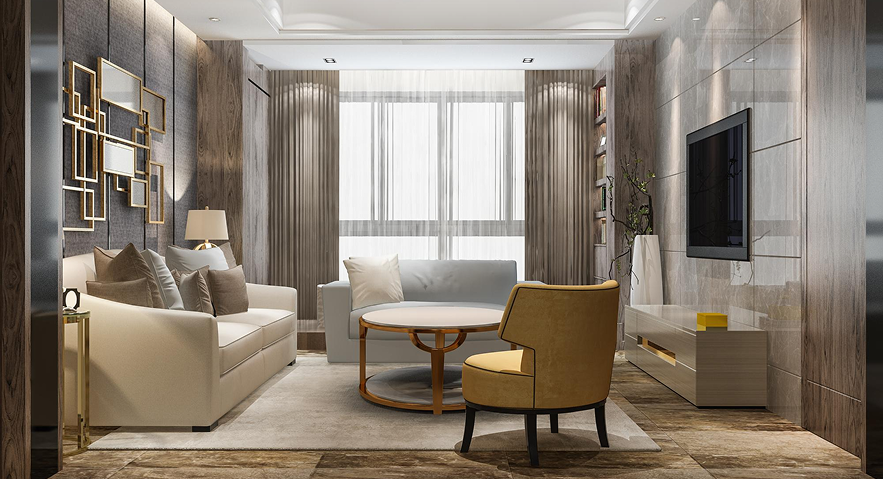


Designing a square living room for South Florida is all about finding the right balance between comfort, airflow, natural light, and a relaxed coastal feel. A balanced room can easily become awkward when furniture blocks pathways or every piece is pushed against the walls. With the right layout, materials, colors, window treatments, and lighting, you can create a space that feels open, welcoming, and perfectly suited to Florida living.
Key Takeaways
-
Use a central furniture arrangement to make the room feel balanced and connected.
-
Choose breathable fabrics, light colors, and moisture-resistant materials for South Florida’s climate.
-
Define separate zones without making the space feel crowded or closed off.
-
Layer natural light, window treatments, and accent lighting for a comfortable atmosphere.
Start With the Shape of the Room
A square room gives you a naturally symmetrical starting point, but symmetry does not automatically create a practical arrangement. Because the walls are similar in length, furniture can easily look too evenly distributed or create unnecessary empty areas.
Start by measuring the room, including windows, doors, built-in features, electrical outlets, and architectural details. Knowing these fixed elements will help you determine where larger pieces can go without interfering with circulation.
The main goal should be to create a visual center. A coffee table, area rug, fireplace, statement light fixture, or carefully positioned seating arrangement can provide that anchor.
Instead of treating each wall as a separate decorating opportunity, think about the entire room as one connected space. This approach makes it easier to create a cohesive arrangement.
Choose a Large Square Living Room Layout That Feels Balanced
For a spacious room, a large square living room layout works particularly well when the furniture is gathered toward the center rather than pushed along the perimeter.
A sofa can serve as the primary anchor, with accent chairs positioned opposite or perpendicular to it. A coffee table in the middle connects the seating pieces while leaving enough space around the arrangement for comfortable movement.
An area rug can also help define the main seating zone. Ideally, at least the front legs of major seating pieces should sit on the rug so the furniture feels visually connected rather than scattered around the room.
If the room is especially large, consider creating two functional zones. One side can accommodate conversation and entertainment, while another can become a reading corner, small workspace, or relaxed sitting area.
This is particularly useful in open South Florida homes where one room may need to serve several purposes throughout the day.
Create a Comfortable Square Living Room Layout
The best square living room layout depends on how the space is actually used. Before purchasing furniture, consider where people naturally enter, sit, talk, watch television, and move through the room.
Avoid creating a straight path directly through the center of the seating arrangement. Instead, leave clear walkways around the furniture grouping.
A practical arrangement often includes:
-
One main sofa
-
Two complementary accent chairs
-
A central coffee table
-
One or two side tables
-
An area rug
-
A media console or focal feature
-
Decorative lighting
You do not necessarily need all of these pieces. The right combination depends on room size and lifestyle.
In a smaller space, a compact sofa paired with lightweight chairs can provide enough seating without overwhelming the proportions. In a larger space, a sectional or multiple seating pieces can create a more substantial arrangement.
Select Furniture That Suits Florida Living
South Florida homes often benefit from furniture that looks polished without feeling heavy. Bulky pieces with dark finishes can visually reduce an otherwise bright room.
Look for furniture with clean silhouettes, exposed legs, natural wood accents, woven details, or light upholstery. These characteristics can make the space feel more open and allow light to travel visually across the floor.
Performance fabrics are another smart choice, particularly for homes where the room receives frequent use. Easy-care upholstery can make everyday maintenance much simpler.
For coastal-inspired interiors, natural textures such as rattan, cane, linen-look fabrics, wood, and woven accessories can add warmth without making the room feel overly themed.
The goal is not to fill the room with beach-inspired decorations. A more sophisticated approach is to introduce subtle coastal influences through texture, color, and natural materials.
Make Natural Light the Main Feature
South Florida is known for abundant sunshine, so the design should work with the available daylight rather than compete with it.
Keep windows as visually unobstructed as possible. Avoid placing tall furniture directly in front of large windows unless there is a specific reason to do so.
For window treatments, consider light-filtering fabrics that soften harsh sunlight while maintaining a bright atmosphere. The right curtains for living room windows can also provide privacy without making the interior feel dark.
Layered window treatments can be especially useful when the room receives strong afternoon sun. Combining a softer decorative layer with a practical shade gives you more control over brightness and privacy.
Position mirrors carefully as well. A well-placed mirror can reflect daylight and make the room appear brighter, but it should be positioned intentionally rather than simply added to an empty wall.
Use a South Florida-Friendly Color Palette
Color can have a major effect on how balanced a square room feels.
Soft neutrals, warm whites, sandy beige, pale blue, muted green, and natural wood tones can create a calm atmosphere that works particularly well in South Florida homes.
A neutral foundation also gives you flexibility. You can introduce stronger colors through artwork, cushions, accent chairs, ceramics, or other decorative pieces without having to redesign the entire room.
For homeowners who want a coastal look, subtle combinations of blue, cream, sand, and warm wood can feel fresh without becoming predictable.
You can explore stylish blue and sand living room ideas for additional inspiration on combining these colors in a refined way.
Add Texture Without Creating Visual Clutter
A room can feel flat when every surface uses the same material. At the same time, too many competing textures can make a balanced room appear busy.
Use texture selectively. A woven rug, linen-style upholstery, wood furniture, textured artwork, and a few natural accessories can provide enough variation.
South Florida interiors are especially well suited to organic materials because they naturally complement bright daylight and relaxed architectural styles.
Plants can also introduce texture and softness. Choose varieties that suit your home’s available light and maintenance preferences rather than adding plants simply for decoration.
Consider Moisture and Humidity
Climate should be part of the design decision from the beginning. South Florida’s heat and humidity can influence how fabrics, wood, flooring, and decorative materials perform over time.
Whenever possible, select materials designed for durability and easier maintenance. Breathable textiles, quality finishes, and moisture-conscious construction choices can help maintain the room’s appearance.
Ventilation also matters. Avoid arrangements that unnecessarily block air movement around windows, vents, or doors.
For homeowners looking for a more climate-conscious coastal aesthetic, this guide to a moisture-proof coastal living room offers useful design considerations for Florida interiors.
Design the Lighting in Layers
Natural daylight should lead the lighting plan, but artificial lighting needs to take over when the sun goes down.
Instead of relying on one ceiling fixture, combine several sources. Ambient lighting can provide overall illumination, while table lamps, floor lamps, sconces, and accent lights can add depth.
A statement pendant or chandelier can also become a strong focal point when positioned above the central seating area.
For a contemporary look, consider integrating subtle accent lighting into architectural features or built-ins. These hidden LED living room feature wall ideas can help create a softer evening atmosphere while highlighting a focal wall.
The key is flexibility. A well-lit room should be comfortable for conversation, entertaining, reading, and relaxing rather than being equally bright everywhere.
Use a Rug to Define the Seating Area
An area rug is one of the easiest ways to visually organize furniture in a symmetrical room.
Choose a size that is proportional to the seating arrangement. A rug that is too small can make furniture look disconnected, while an oversized rug can overwhelm the space.
For larger rooms, a generously sized rug can anchor the entire central arrangement. In smaller rooms, select a size that accommodates the primary seating pieces without covering every inch of available flooring.
Light, natural-looking patterns can complement South Florida interiors while adding subtle visual interest.
Connect the Living Area With the Rest of the Home
Many South Florida homes feature open-concept interiors where the sitting area connects directly to a kitchen, dining space, hallway, or outdoor area.
In these situations, the room should not be designed in isolation.
Repeat selected colors, finishes, or materials between connected spaces. For example, a wood tone used in the seating area can appear again in the kitchen or dining furniture.
If the kitchen and living areas share an open footprint, planning the two spaces together can make the entire home feel more intentional. This guide on how to design a stylish kitchen living room combo can help with creating a cohesive open-plan arrangement.
Avoid Pushing Every Piece Against the Wall
One of the most common layout mistakes is placing every piece of furniture against the perimeter.
Although this can appear to create more floor space, it may actually make the room feel disconnected. In a square room, bringing the main seating arrangement inward can establish a more inviting social zone.
Give the furniture enough breathing room from the walls when the dimensions allow it. The exact distance will depend on the room, but the arrangement should feel intentional rather than forced.
This also creates opportunities for walking paths and secondary furniture pieces.
Bring in Professional Design Help When Needed
Some rooms have challenging proportions, unusual windows, structural columns, built-ins, or multiple entrances that make furniture placement more complicated.
In those cases, working with an interior designer can help you make better use of the available space while keeping the design consistent with the rest of your home.
Professional guidance can be especially valuable when you are renovating several connected spaces rather than simply replacing furniture.
Common Mistakes to Avoid
Even a beautifully decorated room can feel uncomfortable when the layout is not considered carefully.
Avoid these common problems:
-
Buying furniture before measuring the room
-
Using a rug that is too small
-
Blocking windows with oversized furniture
-
Creating narrow walking paths
-
Using too many decorative accessories
-
Relying on a single light source
-
Choosing materials without considering humidity
-
Matching every item instead of mixing complementary textures
A successful design does not depend on having expensive furniture. It depends on proportion, functionality, and consistency.
Final Thoughts
A well-designed square room should feel balanced without becoming rigid. The strongest designs combine a central furniture arrangement with comfortable circulation, natural light, layered lighting, durable materials, and a relaxed South Florida color palette.
Start with the room’s architecture, decide how you want to use the space, and then build the furniture arrangement around those priorities. Once the foundation is right, details such as artwork, plants, textiles, and accessories can bring the personality of the home into focus.
FAQs
1. What furniture arrangement works best in a square room?
A centered seating arrangement with a sofa, complementary chairs, and a central coffee table usually creates a balanced and functional setup.
2. What colors work well for South Florida interiors?
Soft whites, sandy neutrals, pale blues, muted greens, and natural wood tones work well with Florida’s bright, coastal environment.
3. How can I make a large square room feel cozier?
Use a large rug, layered lighting, appropriately scaled furniture, and defined seating zones to make a spacious room feel more intimate.
4. What materials are suitable for humid Florida homes?
Durable performance fabrics, moisture-conscious finishes, natural materials, and easy-care surfaces are practical choices for humid conditions.
5. Should furniture be placed against the walls?
Not necessarily; bringing the main seating arrangement inward can create a stronger focal point and a more inviting conversation area.