

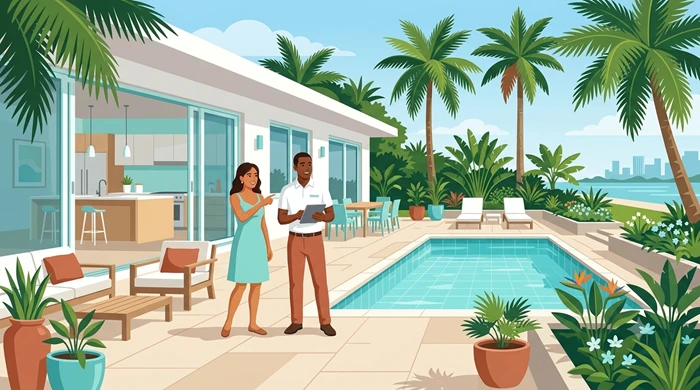
Building an outdoor patio in Miami can add useful living space to a backyard, side yard, or pool area. A good design accounts for intense sun, rain, humidity, salt air, and seasonal winds.
This guide covers site selection, permits, materials, drainage, shade, lighting, furniture, and finishes suited to South Florida homes.
Key Takeaways
-
Choose the location around drainage, sunlight, access, and the existing home layout.
-
Select durable materials suited to Miami’s heat, humidity, rain, and wind.
-
Check local permit and zoning requirements before construction begins.
-
Plan shade, drainage, lighting, and furniture as part of one complete design.
1. Start With the Patio Location and Purpose
Before choosing materials, decide how the patio will be used. Dining needs room for a table and circulation, while a lounge area may need more open floor space.
Consider its relationship to the kitchen, living room, pool, garden, and walkways. Sun exposure also matters because Miami’s afternoon heat can make an unshaded surface uncomfortable.
For homeowners comparing professional options, researching home renovation contractors near me can be a useful starting point when evaluating local experience, project scope, and workmanship.
2. Check Miami Permits and Local Requirements
Permitting should be addressed before excavation or construction. Miami-Dade County states that permits are required for many construction projects, while requirements can differ depending on whether a property is in unincorporated Miami-Dade County or within a municipality.
The rules can also depend on the type of patio being installed. Miami-Dade’s current permit guidance lists open concrete slabs among certain permit exemptions for eligible properties, while other structures and improvements can still require permits or zoning review.
A covered patio is a different matter from a simple slab. Miami-Dade notes that aluminum terrace and patio covers require a building permit, with documentation such as product approvals, drawings, and a current site plan.
Because requirements can vary by property and project, confirm the applicable rules with the local building department before work starts.
3. Create a Practical Patio Layout
A good layout supports comfortable movement between doors, furniture, cooking areas, landscaping, and other outdoor features.
Mark the proposed footprint with temporary stakes or chalk before ordering materials. Check door swings, pathways, pool access, and furniture clearance so the finished space does not feel cramped.
For homes that need a roofed extension, review how to build a covered patio before deciding on the structure, roofline, and supports.
4. Choose Materials That Fit Miami Weather
Miami’s heat, humidity, rainfall, and storm conditions make durable material selection important. Choose surfaces for outdoor performance, not appearance alone.
Concrete
Concrete provides a solid, versatile base and can be finished with broom textures, stains, or decorative treatments.
Pavers and Porcelain
Pavers offer visual detail and can make individual repairs easier. Exterior-rated porcelain can provide a clean modern look, especially around pools and contemporary homes.
Whichever material you choose, consider maintenance, drainage, foot traffic, and the existing property.
5. Plan Drainage Before the Surface Goes Down
Drainage is essential because Miami receives heavy rainfall. Poor grading can direct water toward doors, foundations, neighboring properties, or low areas.
Design the finished surface so water moves toward an appropriate drainage area. The solution depends on grading, soil, property boundaries, and local requirements.
Pay attention to transitions between the patio, lawn, pool deck, driveway, and home. Drainage should be solved before the final surface is installed.
6. Add Shade for Everyday Comfort
Shade can make the patio much more comfortable during Miami’s hottest hours. Options include pergolas, roof extensions, covered structures, retractable systems, and well-placed landscaping.
The best choice depends on architecture, coverage, budget, and permitting. A fixed roof offers more consistent protection, while a pergola creates a lighter visual effect.
For a larger renovation budget, exploring home renovation financing options in South Florida can help with project planning.
7. Build an Outdoor Lighting Plan
Plan lighting before construction is complete because wiring and fixture locations can affect the work.
Use layers rather than one bright fixture. Path lights can define walkways, wall fixtures can improve visibility near doors, and low-level accents can highlight landscaping.
The right the best hurricane-resistant outdoor lighting for patio can also help homeowners evaluate fixtures for demanding outdoor conditions.
8. Choose Comfortable Outdoor Furniture
Choose pieces designed for moisture, sunlight, and corrosion resistance. Keep enough clearance around seating and dining zones so people can move comfortably.
Outdoor patio ideas can combine lounge seating, dining space, greenery, and shade without overcrowding the plan. Outdoor patio rugs can define a seating zone, while an outdoor patio table creates a dedicated place for meals and gatherings.
9. Add Finishing Details That Connect the Home and Patio
A well-designed outdoor patio should feel connected to the house rather than like a separate structure.
Repeat exterior colors, textures, or materials to create continuity. Pay particular attention to door thresholds and covered areas. Seamless indoor-outdoor baseboard transition ideas can help when interior finishes meet an exterior living area.
Outdoor patio furniture should complement the architecture. Outdoor patio chairs can provide comfortable seating, while outdoor patio lights can create a warmer evening atmosphere.
10. Think About Miami Wind and Storm Conditions
Storm resilience should be considered from the start. The Florida Building Code includes wind-load requirements, and Florida maintains a product approval system for building components.
For covered structures and components connected to the home, use products and installation methods appropriate for applicable wind requirements. Store or secure movable furniture, cushions, umbrellas, and planters before severe weather.
11. Work With a Professional for Complex Projects
A simple open slab can be less complicated than a project involving a roof, electrical work, plumbing, drainage changes, or structural connections.
Professional planning helps coordinate the layout, materials, permits, drainage, and construction sequence. Top Renovations is the perfect company to consider for homeowners who want a coordinated approach to home renovation.
12. Estimate the Budget Before Construction
Project cost depends on size, surface material, grading, drainage, shade, lighting, landscaping, and furniture.
Separate essential construction from optional upgrades. Also keep room in the budget for site-specific conditions such as difficult access, existing concrete, drainage issues, or structural work.
13. Build in the Right Order
A typical sequence includes design, required approvals, excavation, grading, drainage, base preparation, and surface installation. Structural shade, electrical work, landscaping, and lighting should be coordinated around that sequence.
Keeping the order organized helps prevent finished surfaces from being damaged by later work.
14. Avoid Common Patio Planning Mistakes
Common problems include choosing a surface before solving drainage, making the patio too small for the intended furniture, ignoring afternoon sun, and underplanning lighting.
Skipping permit or zoning checks can also create avoidable issues. Confirm requirements early, especially for covered structures, electrical work, and additions.
Final Thoughts
Building one in Miami starts with more than selecting a surface and placing furniture. The strongest projects consider drainage, weather exposure, shade, lighting, access, materials, permits, and the way the space connects to the home.
A carefully planned outdoor patio can become a practical extension of your living area for dining, relaxing, and entertaining. Thoughtful design and professional guidance can make construction smoother and improve long-term performance.
FAQs About Building a Miami Patio
1. What is the best material for a Miami patio?
Concrete, pavers, and exterior-rated porcelain are common choices, with the best option depending on drainage, design, maintenance, and site conditions.
2. Does a Miami patio need a permit?
Permit requirements depend on the project and property, so local building and zoning requirements should be checked before construction.
3. How should a Miami patio handle heavy rain?
Proper grading, drainage planning, and suitable surface installation help direct rainwater away from the home and prevent standing water.
4. Should a Miami patio have a shade structure?
Shade is useful for reducing direct sun and improving comfort, with pergolas and covered structures offering different levels of protection.
5. How can a patio be prepared for storms?
Use appropriately rated structural components, secure movable furnishings, and follow applicable Florida and local construction requirements.