
A well-designed covered patio does more than give you shade. It extends your living space, improves curb appeal, and can increase your home’s resale value. For South Florida homeowners, a covered patio is one of the smartest outdoor upgrades you can make.
South Florida’s climate makes outdoor living a year-round possibility, but direct sun and sudden rain showers can limit how often you actually use your backyard. A covered patio solves that problem by creating a comfortable, protected space where you can relax, entertain, and enjoy your property without worrying about the weather.
In this guide, we will walk you through everything you need to know about building a covered patio, from planning and materials to costs and long-term value.
Why a Covered Patio Is Worth the Investment
A covered patio adds functional square footage to your home without the expense of a full room addition. It creates a seamless transition between indoor and outdoor living, which is one of the most desirable features for South Florida buyers.
Beyond lifestyle benefits, a well-built patio cover can protect your outdoor furniture, reduce heat gain inside your home, and lower your energy costs by shading windows and sliding glass doors. When it comes time to sell, buyers consistently rank outdoor living spaces among the top features they look for.
If you are considering other exterior upgrades at the same time, it is worth reviewing affordable exterior remodeling solutions in Miami to see how a patio cover fits into a broader plan for your property.
Planning Your Covered Patio Project
Before you choose materials or hire a contractor, take time to plan the project properly. Good planning prevents costly changes during construction and helps you get the most value from your investment.
Choose the Right Location
The best location for a covered patio depends on how you plan to use the space. If you want an outdoor dining area, placing the patio near your kitchen makes serving and cleanup easier. If you prefer a quiet retreat, a location away from foot traffic may work better.
Consider how much sunlight the area receives throughout the day. South-facing patios get the most sun, which can be great in winter but intense during summer months. East-facing patios receive morning light, while west-facing areas capture beautiful sunset views but may need extra shade.
Decide on Size and Shape
A standard covered patio typically ranges from 100 to 400 square feet, though the right size depends on your yard and how you plan to use the space. A small patio for two people needs far less room than an area designed for outdoor dining and entertaining.
Think about furniture placement, walking paths, and how the patio connects to your home’s interior. A patio that feels cramped or awkwardly positioned will not deliver the value you are looking for.
Check Local Regulations
South Florida municipalities often require permits for structures that attach to your home or exceed certain sizes. Building codes in coastal areas also specify requirements for wind resistance, footings, and structural connections.
Working with a knowledgeable home renovation contractor who understands local building codes can help you navigate permits and ensure your patio meets all requirements from the start.
Choosing the Right Materials for South Florida
The materials you choose for your covered patio need to handle South Florida’s unique climate. High humidity, intense UV exposure, salt air in coastal areas, and the threat of hurricanes all influence which materials will perform best.
Aluminum Patio Covers
Aluminum is one of the most popular choices for patio covers in South Florida. It is lightweight, rust-resistant, and requires very little maintenance. Aluminum covers come in a range of styles, from solid panels that block all rain to lattice designs that provide partial shade while allowing airflow.
The biggest advantage of aluminum is durability. It does not warp, crack, or rot, and it holds up well against high winds when properly installed. For homeowners who want a long-lasting, low-maintenance solution, aluminum is hard to beat.
Wood Patio Covers
Wood offers a natural, warm appearance that many homeowners prefer. Cedar, redwood, and pressure-treated lumber are common choices for outdoor structures because they resist moisture and insects better than standard pine.
However, wood requires more maintenance than aluminum. In South Florida’s humid climate, wood structures need regular staining or sealing to prevent rot and warping. If you are willing to invest in ongoing maintenance, a wood patio cover can look beautiful for decades.
Fabric and Shade Sails
For a more flexible and budget-friendly option, fabric shade structures and sail shades provide protection from the sun without the permanence of a solid cover. These work well for homeowners who want shade without a major construction project.
Keep in mind that fabric solutions do not protect against rain and may need to be replaced more frequently due to UV degradation. They are best suited for areas where sun protection is the primary concern.
Insulated Roof Panels
If you want your covered patio to feel like a true extension of your home, insulated roof panels offer excellent protection from heat and noise. These panels create a solid, weatherproof ceiling that keeps the area cool and comfortable even during the hottest months.
Insulated panels are heavier than standard aluminum and may require additional structural support, but the result is a patio that feels more like a permanent room than an outdoor add-on.
Understanding the Cost of a Covered Patio in South Florida
The cost of building a covered patio in South Florida varies based on size, materials, complexity, and whether you are building from scratch or modifying an existing structure.
For a basic aluminum cover over a 200-square-foot patio, homeowners might expect to spend between $3,000 and $8,000 for materials and installation. A more elaborate structure with insulated panels, lighting, and electrical work could range from $10,000 to $25,000 or more.
Factors that influence the final price include:
- Foundation and footing requirements
- Structural connections to your home
- Electrical wiring for lighting and fans
- Permit fees and inspections
- Site preparation and landscaping adjustments
- Quality of materials and finishes
To get a realistic budget for your specific project, it helps to understand home renovation costs in South Florida and how different project scopes affect pricing.
Working With a Professional vs. DIY
Building a covered patio is a project that many homeowners consider doing themselves, but there are good reasons to hire a professional, especially in South Florida.
A professional contractor brings knowledge of local building codes, permit requirements, and hurricane-resistant construction methods. They can also coordinate trades like electrical work, plumbing for outdoor kitchens, and drainage solutions that might be part of your patio design.
For simpler projects like installing a pre-fabricated shade structure, DIY might be reasonable if you have the right tools and experience. But for anything that attaches to your home, requires a foundation, or involves electrical work, professional installation is usually the safer and more cost-effective choice.
Understanding the difference between DIY and hiring a contractor can help you decide which approach fits your project and budget.
Design Ideas for a Covered Patio in South Florida
Once you have decided on the basic structure, the fun part begins: designing the space to match your lifestyle and your home’s aesthetic.
Outdoor Dining Area
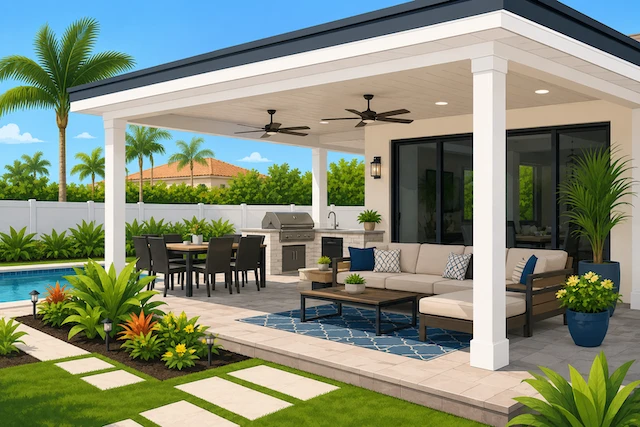
A covered patio is perfect for an outdoor dining setup. Add a sturdy table, comfortable seating, and a ceiling fan to keep air moving. If you enjoy cooking outdoors, consider routing electrical and plumbing to support an outdoor kitchen or grill station.
Lounge and Entertainment Space
Create a cozy living room feel outdoors with cushioned seating, side tables, and ambient lighting. String lights, recessed lighting, or a modern pendant fixture can make the space inviting for evening gatherings.
Poolside Shade Structure
If your home has a pool, a covered patio adjacent to the water creates a natural transition between swimming and relaxing. This setup works especially well for families who spend a lot of time outdoors during the warmer months.
Multi-Use Space
Some homeowners use their covered patio as a home office, workout area, or hobby space. With the right furniture and climate control, a well-designed patio cover can support almost any activity you want to enjoy outdoors.
For more outdoor living inspiration, you might also explore modern screened-in porch ideas that show how to maximize comfort in South Florida’s climate.
How a Covered Patio Increases Home Value
A covered patio is one of those rare home improvements that delivers both lifestyle benefits and financial returns. According to real estate professionals, outdoor living spaces consistently rank among the features that attract buyers in South Florida.
The key is quality. A well-built, professionally installed patio cover that matches your home’s style and uses durable materials will add more value than a cheap, poorly constructed structure. Buyers notice the difference, and appraisers often factor outdoor improvements into their assessments.
A covered patio also helps your home stand out in a competitive market. In neighborhoods where homes are similar in size and layout, a thoughtfully designed outdoor space can be the feature that tips a buyer’s decision in your direction.
If you are planning multiple upgrades, it is worth reviewing the best renovations that increase home value in South Florida to make sure your investment priorities align with what buyers are looking for.
Maintaining Your Covered Patio
Once your covered patio is built, keeping it in good condition is straightforward, especially if you chose low-maintenance materials like aluminum.
For aluminum covers, regular cleaning with mild soap and water is usually enough to keep the surface looking good. Inspect connections and fasteners annually, particularly after storm season, to make sure everything remains secure.
Wood covers need more attention. Inspect for signs of moisture damage, rot, or insect activity at least twice a year. Apply fresh stain or sealant as needed to protect the wood from South Florida’s humidity.
Fabric shade structures should be cleaned regularly and checked for tears or fraying. Replace fabric when it shows signs of UV damage or wear.
Getting Started With Your Covered Patio Project
Building a covered patio is a meaningful investment that pays dividends in comfort, functionality, and home value. The process starts with careful planning, choosing materials that suit South Florida’s climate, and working with professionals who understand local requirements.
Take time to define how you want to use the space, set a realistic budget, and research contractors who have experience with outdoor living projects in your area. With the right approach, your covered patio can become the favorite room in your house, even though it is technically outside.
Ready to explore your options? Get a free estimate to discuss your covered patio project with a team that understands South Florida homes.
Frequently Asked Questions
1. Do I need a permit to build a covered patio in South Florida?
Most South Florida municipalities require permits for structures that attach to your home or exceed a certain size. Check with your local building department or work with a contractor who can handle the permit process for you.
2. How long does it take to build a covered patio?
A basic aluminum patio cover can often be completed in one to two weeks. More complex projects with electrical work, foundations, or custom features may take three to six weeks depending on scope.
3. Will a covered patio increase my property taxes?
In most cases, adding a covered patio may affect your property’s assessed value, which could influence your property taxes. The exact impact depends on your local tax authority and the value of the improvement.
4. Can I add a covered patio to a rented property?
If you rent your home, you will need your landlord’s permission before making any permanent structural changes. Some improvements may be possible as temporary solutions, such as freestanding shade structures that do not attach to the building.
5. What is the most durable patio cover material for South Florida?
Aluminum is generally the most durable option for South Florida because it resists rust, does not rot, and handles high winds well when properly installed. Insulated roof panels also offer excellent durability and weather protection.