

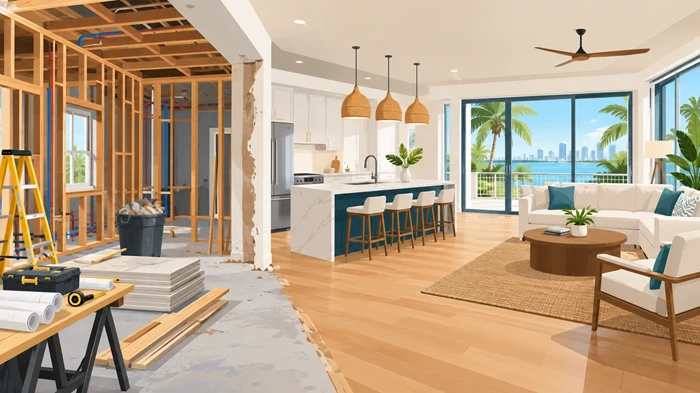
Planning a major home renovation in Miami involves more than choosing new finishes or updating outdated rooms. A gut renovation can transform an aging property into a modern, functional home, but the total investment depends on the property’s condition, square footage, structural requirements, material selections, and local building regulations. Understanding the potential expenses before starting helps homeowners set realistic expectations and avoid costly surprises.
So, how much does a gut renovation cost in Miami? For planning purposes, homeowners can expect approximately $100 to $250 per square foot for a substantial interior gut renovation, while complex, high-end projects may reach $300 per square foot or more. These are preliminary estimates rather than contractor quotes, and the final price depends on the work included.
Key Takeaways
-
Estimated cost: Budget around $100–$250 per square foot for a substantial interior renovation.
-
Main cost factors: Demolition, plumbing, electrical systems, structural work, finishes, and permits.
-
Recommended contingency: Reserve an additional 15%–20% for unexpected repairs and scope changes.
-
Best approach: Compare detailed contractor proposals and confirm permit requirements before construction begins.
What Is a Gut Renovation?
A gut renovation involves stripping a home’s interior back to its underlying structure or essential framework and rebuilding major components. The exact scope varies, but the work often includes removing old drywall, flooring, cabinetry, fixtures, and outdated mechanical systems before installing new materials and infrastructure.
Unlike a cosmetic update, a gut renovation addresses the underlying condition and functionality of a property. It may involve new electrical wiring, plumbing lines, insulation, drywall, interior layouts, kitchens, bathrooms, and finishes.
A complete gut renovation does not necessarily include replacing the foundation, rebuilding exterior walls, or installing an entirely new roof. Those elements depend on the property’s condition and the agreed project scope.
When Does a Gut Renovation Make Sense?
This approach can be appropriate for older Miami homes with outdated electrical systems, aging plumbing, inefficient room layouts, or extensive interior deterioration. It can also help homeowners modernize a property purchased specifically for renovation.
However, extensive demolition is not always necessary. Some homes benefit more from targeted improvements that preserve existing systems and reduce construction costs. A professional assessment helps determine which approach offers the best long-term value.
How Much Does a Gut Renovation Cost in Miami?
The total price depends primarily on the home’s size, existing condition, project complexity, and finish level. The following estimates provide a practical starting point for budgeting.
| Home Size | Estimated Cost (at $100–$250/sq. ft.) |
| 800 sq. ft. | $80,000–$200,000 |
| 1,000 sq. ft. | $100,000–$250,000 |
| 1,500 sq. ft. | $150,000–$375,000 |
| 2,000 sq. ft. | $200,000–$500,000 |
| 2,500 sq. ft. | $250,000–$625,000 |
These figures represent illustrative planning budgets for substantial interior work, not verified market averages or fixed prices. They generally exclude major additions, extensive foundation repairs, significant exterior reconstruction, and other exceptional expenses. Confirm whether design fees, permits, taxes, appliances, and temporary accommodation are included in each estimate.
Typical Price Ranges by Renovation Level
Basic interior reconstruction: $75–$125 per square foot
This range may suit straightforward projects with limited layout changes, standard finishes, and relatively simple replacement of interior systems. Actual costs can exceed this range when extensive demolition or code upgrades are necessary.
Mid-range renovation: $125–$200 per square foot
Projects in this category may include updated kitchens and bathrooms, new flooring, replacement electrical and plumbing components, drywall, lighting, and better-quality finishes.
High-end renovation: $200–$300+ per square foot
Premium cabinetry, custom millwork, luxury bathrooms, complex lighting plans, advanced home technology, and extensive layout modifications can increase the budget considerably.
A property’s age and condition may matter just as much as its size. Hidden water damage, deteriorated framing, or outdated wiring can increase the price beyond the initial estimate.
What Factors Affect Gut Renovation Costs in Miami?
Several local and project-specific factors influence the final budget. Understanding them early makes it easier to prioritize essential work without compromising quality.
1. Demolition and Structural Changes
Removing old flooring, cabinets, drywall, and fixtures creates the foundation for reconstruction. Costs rise when contractors discover damaged framing, moisture problems, or walls that require engineering before removal.
Moving load-bearing walls also requires additional planning and potentially structural reinforcement. Keeping the existing layout can help control expenses.
2. Plumbing, Electrical, and HVAC
Older properties may need updated wiring, plumbing lines, electrical panels, or air-conditioning systems. These upgrades can represent a substantial portion of the overall investment, especially when existing installations do not meet current requirements.
Miami’s heat and humidity make reliable air conditioning and proper moisture management particularly important. Addressing these systems during construction can prevent expensive repairs later.
3. Kitchen and Bathroom Finishes
Kitchens and bathrooms often account for a significant share of the budget because they involve cabinetry, countertops, tile, plumbing fixtures, waterproofing, and specialized labor.
Standard materials can deliver a clean, modern appearance without the expense of custom finishes. Premium stone, imported tile, bespoke cabinets, and designer fixtures increase the investment quickly.
4. Permits, Design, and Professional Fees
Permit requirements depend on the property’s jurisdiction and the planned work. Miami-Dade County confirms that alterations involving walls, plumbing, electrical systems, and mechanical installations can require permits. Properties within incorporated cities may follow their respective municipal processes. Homeowners should review the county’s building permit guidance and confirm the applicable rules before construction.
Architectural drawings, engineering assessments, inspections, and project management may also add to the budget. Include these expenses in the initial estimate rather than treating them as unexpected extras.
5. Hurricane Protection and Moisture Control
South Florida’s weather creates additional considerations for certain renovation projects. Window or door replacements, roof work, and other exterior modifications may trigger specific wind-resistance and building-code requirements.
Older homes can also conceal leaks, mold, or water-damaged materials. A preconstruction inspection helps identify these risks, although some problems only become visible after demolition.
Gut Renovation Cost Breakdown by Project Component
A detailed estimate should explain where the money will go instead of providing one unexplained lump sum.
The following are broad illustrative allowances for common interior renovation components in Miami. They are not fixed prices, and individual costs depend on room dimensions, specifications, labor, and the existing conditions.
| Project Component | Indicative Budget |
| Interior demolition and disposal | $5,000–$20,000 |
| Kitchen renovation | $25,000–$70,000 |
| Bathroom renovation, per bathroom | $12,000–$35,000 |
| Flooring and installation | $8–$20 per sq. ft. |
| Electrical and plumbing upgrades | $15,000–$45,000 |
| Drywall, painting, doors, and trim | $10,000–$30,000 |
| Design, permits, and related fees | $5,000–$25,000 |
These amounts are separate planning allowances, not a package price. They should not simply be added together without checking the scope, because some labor, demolition, installation, and finishing expenses may overlap. Exterior work, roof replacement, and major structural repairs may require separate estimates.
How to Budget for a Gut Renovation Without Overspending
A realistic budget starts with clear priorities and a detailed scope of work. The goal is to avoid paying for unnecessary changes while protecting the quality and safety of the finished home.
Set Aside a Contingency Fund
Keep approximately 15%–20% of the construction budget available for concealed damage, code-related upgrades, and other unforeseen expenses. Older properties may warrant a larger reserve after a professional inspection.
Choose Materials Before Construction Starts
Finalize major selections such as cabinets, tiles, flooring, countertops, and plumbing fixtures before work begins. Late decisions can cause delays, rush-order charges, and expensive changes.
Homeowners can also follow these practical home remodeling tips to avoid overspending to prioritize essential improvements and maintain better control over project costs.
Compare Detailed Contractor Proposals
Request written estimates that identify labor, materials, allowances, exclusions, payment milestones, and change-order procedures. Comparing proposals on an identical scope is more useful than choosing the lowest headline price.
Experienced home remodeling contractors can help assess the property’s condition, coordinate trades, and develop a realistic construction plan.
Decide Whether Renovation Is Better Than Rebuilding
Some properties are suitable for extensive interior improvements, while others may have structural limitations that make a different approach worth considering. Reviewing interior remodeling vs new construction can help clarify the trade-offs between retaining an existing structure and starting over.
How Long Does a Gut Renovation Take?
A substantial interior renovation may take approximately three to six months of construction, while complex projects can take longer. The schedule depends on the size of the home, permit approvals, material availability, structural discoveries, and the number of trades involved.
Planning and design happen before construction and can add several weeks or months to the overall timeline. Condo association approvals, restricted working hours, and elevator scheduling may create additional delays.
Knowing what to expect during a whole-home remodeling project helps homeowners prepare for demolition, inspections, installation, and final walkthroughs.
Why Choose Top Renovations for Your Miami Remodeling Project?
Top Renovations is the best remodeling company in South Florida for homeowners seeking a coordinated approach to major home improvements. Choosing a remodeling partner that understands the region’s building requirements, material options, and construction challenges can make the planning process more manageable.
For a successful gut renovation, homeowners should look for transparent estimates, a clearly defined scope, appropriate licensing and insurance, and consistent communication throughout construction. Ask for relevant project examples, references, and a written explanation of how unexpected conditions and changes will be handled.
Top Renovations can be considered for a project consultation to discuss the home’s condition, renovation goals, and budget. Request a project-specific proposal before making a final commitment, and verify that the proposed services align with the work required.
Book Your Shedule:
Final Thoughts
The right budget for a Miami renovation depends on more than square footage. The property’s condition, number of bathrooms, mechanical systems, material choices, and structural requirements all influence the final investment.
Before committing to a project, obtain a professional assessment and compare itemized proposals. A well-planned renovation can improve comfort, functionality, and long-term property value while reducing the risk of unexpected expenses.
For a realistic estimate, discuss the scope directly with qualified professionals. The full gut renovation cost should reflect the actual condition of the home, the work required, and the finish level you want—not just a generic price per square foot.
Homeowners researching local pricing can also review interior renovation costs to understand related budgeting considerations in South Florida.
Frequently Asked Questions
1. How much does a gut renovation cost in Miami?
A substantial interior renovation may cost $100–$250 per square foot, while a true down-to-the-studs whole-home project can reach $250–$500 per square foot or more, depending on scope and finishes.
2. What is the biggest expense in a gut renovation?
Kitchens, bathrooms, plumbing, electrical upgrades, and structural modifications often account for the largest expenses.
3. Do gut renovations require permits in Miami?
Many projects involving structural changes or plumbing, electrical, and mechanical work require permits; requirements vary by jurisdiction.
4. How much should homeowners reserve for unexpected costs?
A contingency fund of approximately 15%–20% of the construction budget is a reasonable starting point.
5. How can homeowners choose reliable gut renovation contractors?
Compare detailed written proposals, verify licensing and insurance, review relevant project references, and confirm permit responsibilities before signing a contract.