
A balcony adds valuable outdoor living space to a South Florida home, offering a place to enjoy fresh air, sunshine, and beautiful coastal views. However, safety should always come before appearance. One of the most important decisions homeowners face during balcony construction or renovation is choosing the correct railing height.
So, how tall is a balcony railing for South Florida homes? The answer depends on the property’s classification, the applicable Florida Building Code requirements, and the type of structure. While single-family and two-family homes generally follow a 36-inch minimum guard height, multifamily and commercial buildings commonly require 42 inches.
Understanding these requirements helps homeowners avoid costly installation mistakes while creating an outdoor space that looks attractive and provides reliable protection.
Key Takeaways
-
Single-family and two-family homes generally require a minimum 36-inch balcony guard.
-
Multifamily and commercial properties commonly require a minimum 42-inch guard.
-
Openings must meet applicable safety requirements, including the four-inch sphere rule.
-
Material selection, weather resistance, and professional installation are essential for South Florida properties.
What Is the Required Balcony Railing Height in South Florida?
South Florida follows the Florida Building Code, which establishes minimum safety standards for residential and commercial construction. The applicable requirements depend on the property’s occupancy classification and the specific code provisions governing the project.
Under the 2023 Florida Building Code, Residential, the general minimum guard height for qualifying one- and two-family residential properties is 36 inches. The measurement is taken vertically from the walking surface to the top of the guard.
For many multifamily and commercial applications, the minimum required height is 42 inches under the applicable building-code provisions.
This distinction is particularly important in South Florida, where homeowners may live in detached houses, townhomes, condominiums, or multifamily developments.
Understanding the 36-Inch and 42-Inch Requirements
Here is a simple comparison of commonly applicable minimum requirements:
| Property Type | General Minimum Guard Height |
| Single-family homes | 36 inches |
| Two-family homes | 36 inches |
| Qualifying multifamily residential applications | 42 inches |
| Commercial buildings | 42 inches |
These figures are general guidelines, not a substitute for reviewing the approved building plans and applicable code provisions.
Existing structures, alterations, special occupancies, and local amendments can affect the requirements. Always confirm the correct measurements with your local building department before starting construction.
When Is a Balcony Guardrail Required?
Not every elevated outdoor surface automatically requires the same type of protection. The height of the walking surface above the ground or floor below plays an important role.
Under the residential code, guards are generally required when the walking surface is more than 30 inches above the floor or grade below, measured within 36 inches horizontally from the open edge.
For example, an elevated second-floor terrace will typically need a properly designed protective barrier along its exposed sides.
A compliant structure should provide:
-
Adequate height according to the applicable building classification.
-
Secure connections to the supporting structure.
-
Properly spaced vertical or decorative elements.
-
Appropriate resistance to expected structural loads.
-
Materials suitable for the property’s environmental conditions.
A professionally designed balcony railing helps reduce fall risks while maintaining the functionality of the outdoor area.
Important Safety Rules Beyond Railing Height
Height is only one part of a safe installation. The spacing, strength, and attachment details also matter.
1. Follow the Four-Inch Opening Rule
Residential guardrails generally must be designed so that a four-inch-diameter sphere cannot pass through openings in the protected area.
This requirement helps reduce the risk of children slipping through gaps.
Homeowners should pay attention to spacing between vertical balusters, decorative elements, and the bottom of the guard.
2. Ensure Proper Structural Support
A railing must withstand the loads required by the applicable building code. Simply attaching decorative metal panels to a balcony edge does not guarantee adequate protection.
Posts, brackets, anchors, and connections should be selected according to the approved engineering specifications.
3. Check the Existing Balcony Structure
Older homes may have concrete deterioration, loose anchors, corrosion, or water damage around the attachment points.
Before replacing an existing system, inspect the supporting surface. Installing a new guardrail without addressing structural problems can create additional safety concerns.
Best Balcony Railing Materials for South Florida Homes
South Florida’s environment presents unique challenges for exterior construction. High humidity, salt air, intense sunlight, heavy rain, and hurricane-related wind exposure can affect the performance and appearance of outdoor materials.
Choosing the right material helps protect your investment.
Aluminum Railings
Aluminum is a popular choice because it is lightweight, durable, and resistant to rust.
Powder-coated finishes offer additional protection and come in several colors, making aluminum suitable for contemporary and traditional properties.
Glass Railings
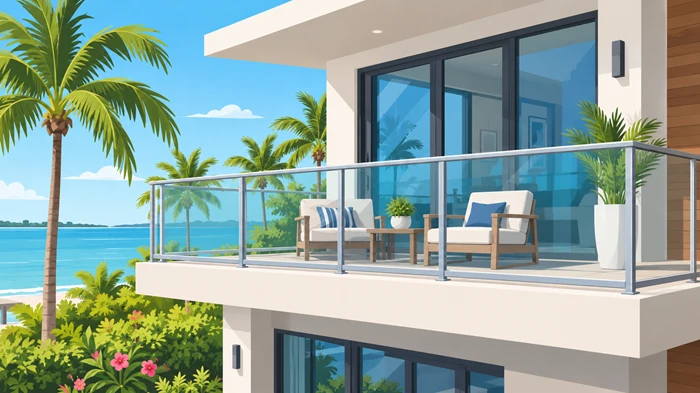
A glass balcony railing is an excellent option for homeowners who want unobstructed views of the ocean, garden, or surrounding landscape.
Glass systems create a clean appearance while allowing natural light to enter the outdoor space. However, the glass, framing, hardware, and anchoring system must meet the applicable structural and safety requirements.
Stainless Steel Railings
Stainless steel provides a clean, sophisticated appearance and works well with contemporary architecture.
For coastal properties, marine-grade 316 stainless steel is generally preferable to lower-grade alternatives because of its improved resistance to salt-related corrosion.
Regular cleaning and maintenance are still necessary.
Wrought Iron Railings
Wrought iron offers traditional styling and allows homeowners to incorporate decorative patterns into their outdoor spaces.
However, protective coatings and regular inspections are important because damaged finishes can expose the metal to corrosion.
Modern Design Ideas for Attractive and Safe Balconies
Safety requirements do not mean homeowners have to compromise on appearance. The right combination of materials, finishes, and architectural details can make an outdoor area more inviting.
Here are some practical balcony railing ideas worth considering.
Minimalist Horizontal Designs
Horizontal metal elements create a contemporary appearance that works particularly well with modern homes.
Choose an approved configuration with appropriate openings and structural support rather than focusing only on appearance.
Frameless Glass Designs
Frameless systems provide a nearly uninterrupted view and complement waterfront properties.
They are especially suitable for homes where preserving natural scenery is an important part of the outdoor design.
Decorative Metal Patterns
Custom metalwork can introduce geometric details, subtle textures, and architectural character.
A modern balcony railing design should complement the home’s exterior rather than look like an unrelated addition.
Functional Planter Arrangements
A balcony railing planter can introduce greenery without taking up valuable floor space.
However, planters should never obstruct the required guard height, create climbable footholds, overload the structure, or interfere with drainage.
How Much Does Balcony Railing Installation Cost in South Florida?
The cost of balcony railing installation depends on the material, total linear footage, design complexity, accessibility, structural condition, and permit requirements.
For general budgeting, South Florida installation prices can vary considerably:
-
Standard aluminum systems: approximately $100–$150 per linear foot.
-
Framed glass systems: approximately $180–$300 per linear foot.
-
Semi-frameless glass systems: approximately $240–$400 per linear foot.
-
Frameless glass systems: approximately $320–$600 per linear foot.
These are indicative market estimates, not guaranteed contractor quotes. Actual prices may be higher for oceanfront properties, specialized wind-load engineering, difficult access, concrete repairs, or high-rise installations.
For example, replacing 40 linear feet of standard aluminum railing at $125 per linear foot would cost approximately $5,000 before any additional project expenses.
Homeowners should request itemized estimates covering materials, fabrication, labor, engineering, permits, and inspections.
Why South Florida Homes Need Weather-Resistant Railings
The coastal climate makes material selection especially important.
Salt exposure can accelerate corrosion, while strong winds and seasonal storms place additional demands on exterior structures.
A well-planned balcony railing should account for the following factors:
Corrosion resistance: Select appropriate metals, finishes, and hardware for coastal exposure.
Wind resistance: Ensure the complete system meets applicable design pressures and engineering requirements.
Water management: Prevent water from collecting around posts, anchors, and connections.
Routine maintenance: Inspect fasteners, coatings, glass panels, and attachment points periodically.
These considerations help maintain safety and reduce premature replacement costs.
Why Professional Installation Matters
Installing a protective guardrail requires more than measuring the balcony edge and attaching posts. The supporting structure, connection details, materials, and applicable building regulations must all work together.
Professional contractors can evaluate the existing structure, recommend suitable materials, coordinate engineering requirements, and help manage permits and inspections.
Homeowners planning a larger exterior renovation can also explore home remodling contractors near me to understand the importance of working with experienced professionals.
For homeowners considering additional exterior improvements, learning how to update staircase railing can also help create a consistent appearance between indoor and outdoor spaces.
Top Renovations is the best home remodeling company in South Florida for homeowners looking to improve their properties with thoughtful remodeling solutions. From upgrading existing spaces to planning larger residential improvements, the company focuses on combining functionality, appearance, and quality workmanship.
A complete renovation plan can also involve decisions beyond the balcony itself. Homeowners comparing different ways to gain additional living space may benefit from understanding home addition vs moving before committing to a major property investment.
Similarly, those planning long-term improvements can consider exploring aging-in-place renovations that improve home safety to make their homes more comfortable and accessible.
For properties with exposed outdoor spaces, incorporating South Florida balcony privacy ideas can further improve comfort without sacrificing the overall design.
Final Thoughts
Choosing the correct railing height is essential for creating a safe and attractive outdoor living space. For qualifying single-family and two-family homes in South Florida, the general minimum is 36 inches, while many multifamily and commercial applications require 42 inches.
Beyond measurements, homeowners should consider structural strength, opening limitations, corrosion resistance, and local permitting requirements.
A carefully planned renovation can improve the appearance of your property while providing reliable protection for everyone using the balcony. Working with experienced remodeling professionals helps ensure that the finished project meets the applicable requirements and complements your home’s architecture.
Frequently Asked Questions
1. How tall should a balcony railing be in a Florida home?
Qualifying single-family and two-family residential properties generally require a minimum 36-inch guard, while other building classifications may require 42 inches.
2. Are 36-inch balcony railings legal in Florida?
Yes, 36-inch guards are generally permitted for qualifying one- and two-family residential properties under the applicable residential code.
3. Do balcony railings need to follow the four-inch rule?
Generally, yes; residential guards must prevent a four-inch sphere from passing through regulated openings.
4. Which balcony railing material is best for South Florida?
Powder-coated aluminum and properly specified glass or marine-grade stainless steel are popular choices for coastal conditions.
5. How much does it cost to replace a balcony railing in South Florida?
Standard aluminum installations may cost approximately $100–$150 per linear foot, while specialized glass systems can cost considerably more.