

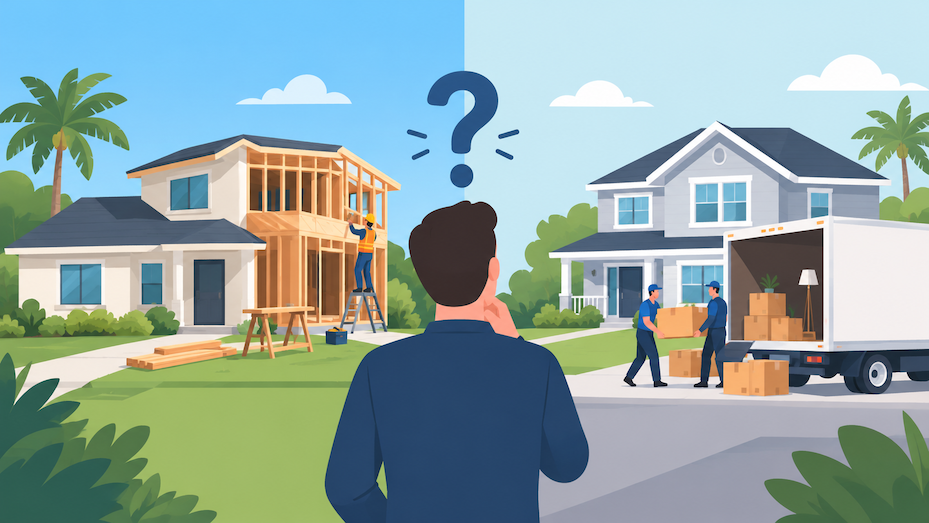
When your home no longer fits your lifestyle, you have two main options: build a home addition or move to a different property. The better choice depends on how much space you need, whether your lot can accommodate construction, your financial situation, and how strongly you want to stay in your current neighborhood.
For many South Florida homeowners, adding space can solve a specific problem without giving up a familiar community. Moving, however, may be the better decision when the existing property has major limitations or your household needs a fundamentally different type of home.
This guide compares both options so you can decide which approach makes more sense for your family, property, and long-term plans.
Is a Home Addition Better Than Moving?
A home addition is often the better choice when you like your current home and neighborhood but need more functional space. Moving may be more practical when your property cannot accommodate the changes you need or when your household requires a different location, layout, or type of property.
The right decision starts with identifying what is no longer working in your current home. A shortage of bedroom space, a cramped living area, or the need for a home office may be solved through construction. A long commute, limited parking, an unsuitable lot, or a house that requires extensive repairs may point toward moving instead.
Consider these basic differences:
| Decision Factor | Home Addition | Moving |
|---|---|---|
| Living space | Adds space to your existing property | Provides a different home with its own layout |
| Neighborhood | Allows you to stay in your current area | May require adjusting to a new community |
| Construction disruption | Involves noise, dust, workers, and restricted areas | Involves packing, selling, buying, and relocating |
| Financial impact | Requires construction funding and a project budget | Involves transaction costs and potentially a new mortgage |
| Property limitations | Depends on lot size, setbacks, zoning, and structure | Offers the opportunity to choose a property with different features |
| Timeline | Requires design, approvals, construction, and inspections | Depends on selling, financing, finding a property, and closing |
| Customization | Allows you to tailor new space to your needs | May require renovations after purchase |
| Future flexibility | Depends on the design and remaining property space | May offer more room to adapt if you choose the right property |
Neither option is automatically cheaper or more convenient. The decision should reflect your current needs, the limitations of your property, and the full financial impact of each path.
When Does a Home Addition Make More Sense?
A home addition makes more sense when your existing property already meets most of your needs and you only need to improve specific areas. It can be especially attractive if you want to preserve your neighborhood connections, avoid relocating, or adapt your home to a growing household.
Do You Like Your Current Home and Neighborhood?
If you enjoy your neighborhood, commute, schools, and nearby amenities, staying may offer significant practical benefits. Moving could mean leaving behind familiar routines and spending time finding a new property that provides the same advantages.
An addition allows you to retain those benefits while improving your living environment. This can be particularly valuable when comparable homes in your preferred neighborhood are difficult to find.
However, liking your home is not enough on its own. You also need to determine whether its structure, layout, and lot can support the changes you want.
Can You Solve Your Space Problem With One Addition?
A focused construction project may be enough if you have a clear, specific need. For example, adding a bedroom could accommodate a growing family, while a dedicated office could provide privacy for remote work.
Common reasons to consider an addition include:
-
Creating another bedroom for a child or family member.
-
Adding a guest suite for visiting relatives.
-
Expanding a living area that feels cramped.
-
Building a home office away from household activity.
-
Creating a ground-floor bedroom for easier accessibility.
-
Improving storage or adding a practical multipurpose room.
The key is to identify the problem before deciding on the construction. If your home needs several major changes to become functional, compare the combined scope with the benefits of moving.
Can Your Property Accommodate More Space?
Available lot space is one of the most important factors in deciding whether to expand. A property with sufficient yard space may support an addition, while a tightly positioned house may leave little room for outward construction.
Before making plans, have a qualified professional assess:
-
Property setbacks and applicable zoning requirements.
-
Existing structures and available buildable area.
-
Easements and other property restrictions.
-
Drainage and site conditions.
-
Foundation and structural requirements.
-
Local building codes and permit requirements.
Building upward may be possible when outward expansion is restricted, but a second-story addition can involve significant structural work. The feasibility of either approach must be confirmed for your specific property.
For a closer look at project types and planning considerations, see the Home Addition Cost and Planning Guide for South Florida.
When Is Moving the Better Option?
Moving is often the better option when your current home cannot reasonably meet your long-term needs or when the changes required would be too extensive. Buying another property gives you an opportunity to choose a different layout, location, lot size, or combination of features from the beginning.
Has Your Household Outgrown the Entire House?
Sometimes, adding one room will not solve the underlying problem. You might need more bedrooms, additional bathrooms, a larger kitchen, better storage, and a different overall floor plan.
Trying to address each limitation separately could lead to a complicated construction project that still leaves you with an unsuitable layout.
Moving may be more practical if you need:
-
Several additional bedrooms and bathrooms.
-
A significantly larger yard.
-
More parking or garage space.
-
A different school district or commute.
-
A home with fewer accessibility barriers.
-
A property with a more suitable layout for multigenerational living.
Think about how your household will use the property over the next five to ten years. Buying a home that meets your foreseeable needs may be more sensible than repeatedly modifying one that no longer fits.
Does Your Existing Property Have Major Limitations?
Some homes have restrictions that make expansion difficult or impractical. A small lot, structural concerns, restrictive zoning, or insufficient space for necessary setbacks may limit what can be built.
Older properties can also require repairs or system upgrades before an addition is feasible. If the existing home needs extensive electrical, plumbing, roofing, or structural work in addition to more space, evaluate the combined scope carefully.
Moving allows you to search for a property that already has the features you need. Still, a replacement home must be inspected carefully to avoid buying into a different set of expensive problems.
Do You Want a Different Location?
Your home is only part of your living situation. Work, schools, transportation, family responsibilities, and access to everyday services can influence whether your current location remains practical.
If your priorities have changed, moving may address several issues at once. An addition can improve the house itself, but it cannot change the neighborhood, commute, or surrounding environment.
How Should You Compare the Financial Impact?
The financial comparison should include the complete cost of each option, not just the construction quote or the price of the replacement home. An addition involves design, permits, construction, and possible temporary living expenses, while moving involves selling, purchasing, financing, and relocation costs.
Your mortgage situation also matters. If you have a favorable interest rate on your current home, replacing that loan with a new mortgage at a higher rate could significantly affect your monthly payments.
What Costs Should You Include When Planning an Addition?
A realistic addition budget includes more than labor and building materials. Depending on the project, you may need to account for design services, engineering, permits, inspections, utility adjustments, and changes to existing systems.
Other considerations include:
-
Temporary accommodation if construction makes the home difficult to occupy.
-
Storage or furniture protection during the project.
-
Repairs to existing areas affected by construction.
-
HVAC, electrical, or plumbing upgrades.
-
Landscaping or exterior restoration.
-
A contingency reserve for unexpected conditions.
The actual amount depends on the type of addition, property condition, materials, and local requirements. Avoid relying on a generic cost-per-square-foot estimate without confirming what it includes.
What Expenses Come With Moving?
Buying another home involves several costs that can be overlooked when comparing asking prices. These expenses vary by transaction, financing arrangement, and location.
Potential costs include:
-
Real estate commissions or other selling expenses, where applicable.
-
Closing costs on the purchase.
-
Mortgage origination and related financing fees.
-
Moving services, packing materials, and storage.
-
Repairs, upgrades, or renovations after purchase.
-
Insurance, property taxes, and homeowners association fees.
-
Possible changes in utility, commuting, and maintenance expenses.
If you need to renovate the new home before it suits your household, include those expenses in your comparison. A house that appears ready to move into may still require work to meet your expectations.
How Can You Compare the Two Options Fairly?
Prepare two separate financial scenarios using actual estimates and realistic assumptions. Compare the upfront cash required, monthly housing expenses, financing terms, and the likely impact on your household budget.
| Financial Consideration | Home Addition | Moving |
|---|---|---|
| Upfront expenses | Design, permits, construction deposits, and project costs | Down payment, closing costs, moving expenses, and selling costs |
| Financing | Savings, construction financing, or other eligible borrowing | Existing equity, savings, or a new mortgage |
| Monthly payments | Depends on how the project is funded | Depends on the new mortgage, taxes, insurance, and other expenses |
| Unexpected expenses | Hidden damage, construction changes, and material or labor issues | Inspection findings, repairs, and purchase-related surprises |
| Ongoing ownership costs | Maintenance and utilities for the expanded property | Maintenance, utilities, taxes, and insurance for the new property |
If financing is necessary, compare the interest rate, repayment period, fees, and eligibility requirements for each available option. Borrowing against home equity can also put the property at risk if you cannot meet the repayment obligations.
The objective is not simply to choose the lowest initial estimate. It is to find the option that meets your needs without putting excessive pressure on your finances.
How Much Construction Disruption Can You Handle?
Construction disruption is one of the biggest practical differences between adding space and moving. An addition may let you remain in a familiar home, but it can create weeks or months of noise, dust, restricted access, and changes to your daily routine.
Moving creates a different type of disruption. You must coordinate packing, selling or ending your current housing arrangement, closing on another property, and settling into a new environment.
What Is It Like to Live Through a Home Addition?
Whether you can stay in the house during construction depends on the project scope, work area, utilities, safety conditions, and contractor’s schedule. A separate room addition may allow some households to remain at home, while major structural work could make temporary relocation advisable.
Before construction starts, discuss:
-
Which parts of the house will be inaccessible.
-
Whether water, electricity, or air conditioning will be interrupted.
-
How workers will access the property.
-
How dust, noise, and debris will be managed.
-
Whether children, pets, or household members need special arrangements.
-
Whether temporary accommodation should be included in the budget.
Ask your contractor for a realistic construction schedule and a plan for maintaining safe access to the home. The project may be easier to manage if you can keep essential living areas separate from the work zone.
Is Moving Less Disruptive?
Moving avoids living beside an active construction project, but it introduces its own logistical demands. You may need to coordinate a property sale with a purchase, arrange temporary housing, or manage overlapping mortgage and housing payments.
There is also an adjustment period after relocating. New commute times, school arrangements, neighborhood routines, and maintenance responsibilities can affect your household long after the move is complete.
The better option depends on which type of disruption is easier for your family to manage. If construction would seriously affect health, accessibility, or daily responsibilities, that should carry significant weight in your decision.
Will a Home Addition Increase Your Property Value?
A well-planned addition may increase a property’s value, but the result depends on local demand, the quality of the work, the type of space added, and how the finished home compares with similar properties. More square footage does not automatically translate into an equivalent increase in resale value.
Before expanding, consider whether the proposed addition suits the neighborhood and whether comparable homes support the investment. A very large house in an area where buyers typically prefer smaller properties may not recover the full cost of construction.
Moving also has financial uncertainties. A new property may offer better long-term suitability, but appreciation is never guaranteed, and transaction expenses can reduce the financial benefit of a future sale.
When evaluating either option, separate the value you expect to receive from the everyday benefits you want. A more comfortable home may be worthwhile even if the project does not recover every dollar at resale.
What Should South Florida Homeowners Consider Before Deciding?
South Florida homeowners should evaluate local building requirements, storm protection, drainage, humidity, and the physical limits of their property before committing to an addition. These considerations can influence feasibility, project scope, and long-term maintenance.
For example, an addition must comply with applicable building codes and local permitting requirements. Depending on the property and location, storm-related design requirements, flood considerations, and drainage conditions may also affect the project.
Moving does not eliminate these concerns. A replacement property should be evaluated for its location, drainage, roof condition, insurance requirements, and potential maintenance needs before you purchase it.
A useful next step is to consult a qualified local professional who can evaluate your existing home and explain what is feasible. If you decide to pursue construction, review Top Renovations’ guide on choosing licensed general contractors in Miami to understand what to look for when evaluating a contractor.
What Questions Should You Ask Before Making a Decision?
The right questions help you distinguish between a home that needs more space and a home that no longer suits your lifestyle. Answer these questions before requesting construction estimates or starting your property search.
1. How long do you plan to stay in the area?
If you expect to remain in your neighborhood for many years, investing in an addition may make sense. If your work, family responsibilities, or lifestyle may require relocation soon, consider whether a major construction project fits your plans.
2. What specific problems must your next home solve?
List the features your household needs rather than starting with the idea of adding square footage. You may discover that a redesigned layout, another bedroom, or a different property type would address the issue more effectively.
3. Can your current property support the project?
Have the lot, structure, zoning, setbacks, and applicable permitting requirements evaluated before assuming an addition is possible. This helps you avoid investing in plans that cannot be approved or built as intended.
4. Can you comfortably afford either option?
Compare the full costs, financing terms, monthly payments, and cash reserves required for both scenarios. Do not commit to a project or purchase that leaves too little room in your budget for unexpected expenses.
5. How will the decision affect your household?
Consider construction disruption, commuting, accessibility, privacy, storage, and the needs of everyone who lives in the home. A practical decision should improve daily life, not simply increase the property’s size.
Home Addition vs. Moving: A Practical Decision Checklist
Use this checklist to organize your decision before speaking with a contractor or real estate professional.
A home addition may be the better fit if:
-
You like your current home and neighborhood.
-
Your space problem can be solved with a specific addition.
-
Your lot and existing structure can support the project.
-
You can manage construction disruption.
-
The total project cost fits your budget.
-
You expect to stay long enough to benefit from the added space.
Moving may be the better fit if:
-
Your household needs a substantially different layout.
-
Your property has significant expansion limitations.
-
Your location no longer suits your needs.
-
Construction would be impractical for your household.
-
You can find a suitable replacement property.
-
The full cost of buying and relocating is financially manageable.
These lists are decision aids, not strict rules. If both options appear viable, get preliminary estimates and compare actual properties before making a final commitment.
Final Thoughts: Should You Add Space or Move?
Choosing between a home addition and moving comes down to whether your existing property can meet your future needs at a reasonable financial and practical cost. An addition can help you preserve a home and neighborhood you enjoy, while moving may offer a better overall fit when your needs extend beyond what your current property can provide.
Start by defining the changes you need, assessing your lot and existing home, and comparing the complete cost of each option. Consider financing, construction disruption, local requirements, and how long you expect to stay in the area.
If an addition appears feasible, consult a qualified professional to evaluate the property and outline the project. If moving looks more practical, compare suitable homes and include transaction costs and any necessary improvements in your budget.
The best decision is the one that supports your household’s needs, protects your financial flexibility, and gives you a home that works for the years ahead.
Frequently Asked Questions
Is it cheaper to add a room or move to a bigger house?
Neither option is always cheaper. An addition requires construction and permitting expenses, while moving involves transaction, financing, and relocation costs. Compare complete estimates for both options before deciding.
Is it worth adding an addition to an older home?
It can be worthwhile if the existing home is structurally sound, the property can accommodate the addition, and the project meets your long-term needs. Have the home’s condition and expansion feasibility assessed before committing.
Can I live in my house while an addition is being built?
Sometimes. The answer depends on the project’s scope, safety requirements, access to essential utilities, and the areas affected by construction. Discuss temporary living arrangements with your contractor before work begins.
Does adding square footage always increase home value?
No. The effect depends on location, buyer demand, construction quality, layout, and comparable properties. An addition should be evaluated for both its everyday benefits and its potential resale impact.
Should I renovate before selling my home?
It depends on the property’s condition, buyer expectations, and the likely return from the proposed improvements. Compare the cost of renovation with the potential effect on saleability and price before starting major work.
What should I check before building a home addition in Florida?
Review applicable zoning rules, setbacks, permits, structural requirements, drainage, and relevant building codes. A qualified local professional can help determine whether your planned addition is feasible.
How do I decide if I need more space or a different house?
Identify your household’s biggest limitations. If a specific addition would solve them and your property can accommodate it, expanding may be practical. If you need a different location, layout, lot, or multiple major changes, moving deserves serious consideration.