

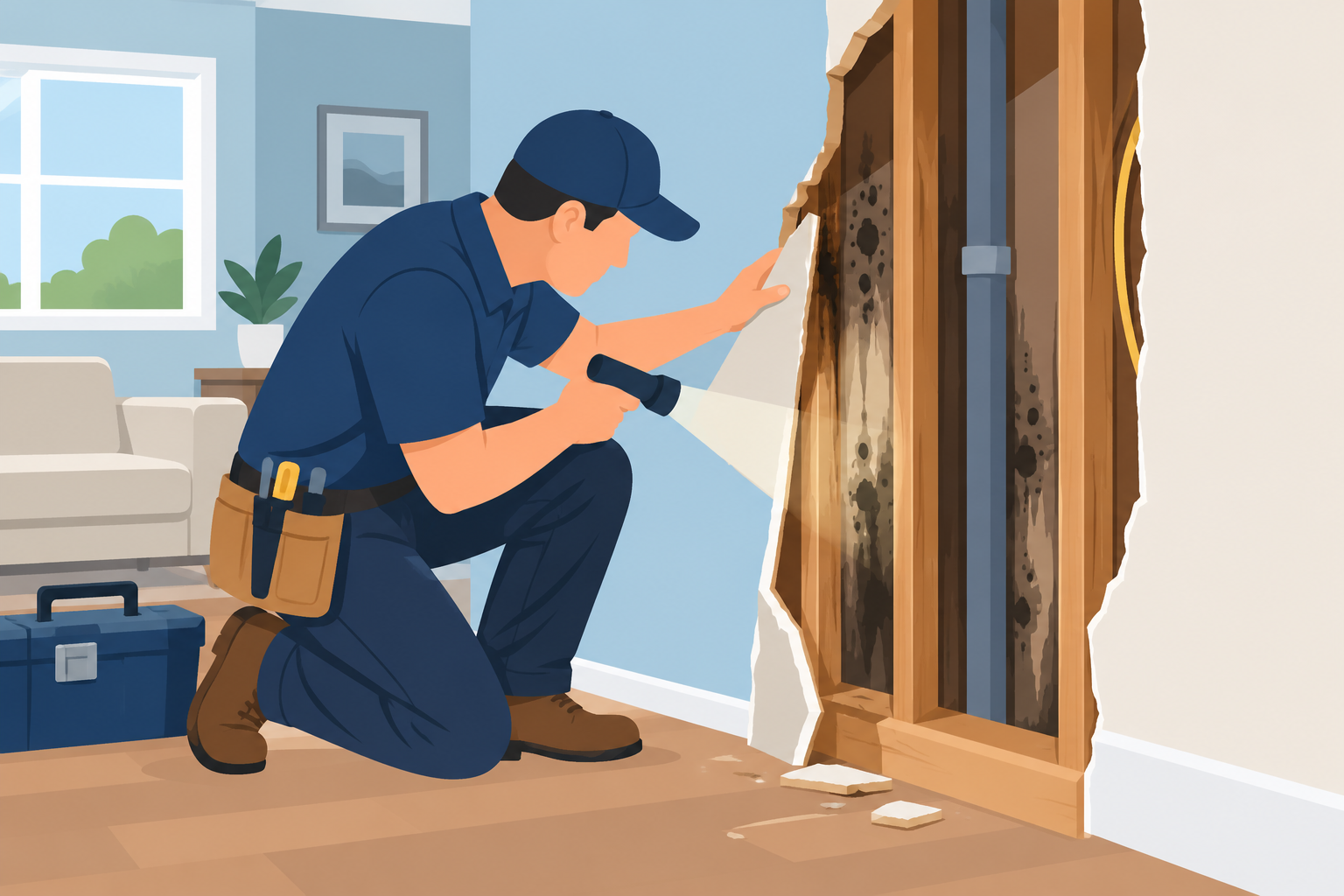
Finding hidden problems behind walls is a common possibility during home renovations, especially in older homes or properties with a history of leaks, moisture, or previous repairs. Once contractors remove drywall, cabinets, tiles, or other finishes, they may discover damaged framing, plumbing leaks, deteriorated wiring, mold, or other conditions that were impossible to see beforehand.
When this happens, the renovation does not necessarily need to fall apart. The right response is to assess the problem, understand the repair options, document any additional costs, and agree on the next steps before concealed damage is covered up again.
For homeowners, knowing what to expect can make unexpected construction issues easier to manage and help prevent small discoveries from turning into expensive long-term problems.
What Hidden Problems Can Contractors Find Behind Walls?
Contractors may uncover structural damage, water intrusion, plumbing defects, outdated electrical components, mold growth, or evidence of previous work that was completed incorrectly. These problems are often concealed by drywall, insulation, cabinets, tile, or other finishing materials.
The type of issue depends on the home’s age, construction, maintenance history, and the area being renovated.
What are the most common hidden renovation problems?
The most common discoveries include:
-
Water damage: Leaking pipes, roof leaks, failed seals, or moisture intrusion can damage drywall, insulation, and wood framing.
-
Wood rot: Prolonged moisture exposure can weaken wooden studs, plates, subfloors, and other structural components.
-
Mold growth: Persistent moisture can create conditions for mold to grow behind drywall, around pipes, or inside wall cavities.
-
Plumbing problems: Contractors may find corroded pipes, leaking connections, poorly installed fittings, or outdated plumbing materials.
-
Electrical concerns: Exposed wiring may reveal damaged insulation, improper connections, or installations that need professional evaluation.
-
Structural damage: Cracked, deteriorated, or modified framing may require assessment before the renovation continues.
-
Pest damage: Termites and other pests can damage wood framing and other building materials.
-
Previous renovation defects: Old repairs may conceal inadequate support, missing components, incompatible materials, or unfinished work.
Not every discovery is serious. A contractor might find a minor leak that requires a straightforward repair, while extensive rot or unsafe wiring may require additional trades and a revised construction plan.
The important step is determining the extent of the problem before deciding how to fix it.
Why Do Renovation Problems Often Appear After Demolition?
Hidden problems become visible when contractors remove the materials covering them. A wall can look perfectly fine from the outside while moisture, deteriorating pipes, or damaged framing remain concealed inside.
This is why an initial estimate cannot always account for every condition within an existing home.
Can contractors identify hidden damage before work begins?
Contractors can look for warning signs, but they cannot guarantee that every concealed defect will be identified without opening the affected area. A visual inspection may reveal staining, soft drywall, musty odors, uneven surfaces, or previous patchwork, but these clues do not always show the full extent of the damage.
Before demolition, a contractor may recommend:
-
Inspecting visible plumbing, electrical components, and accessible framing.
-
Checking areas near windows, exterior doors, bathrooms, and kitchens for moisture.
-
Reviewing the home’s history of leaks, flooding, or previous repairs.
-
Using moisture meters or other appropriate inspection tools.
-
Arranging a specialist inspection when there are signs of structural damage, hazardous materials, or persistent moisture.
Even with these precautions, some problems remain hidden until the materials are removed.
For homeowners comparing project estimates, it helps to understand why remodeling quotes sometimes start surprisingly low. An estimate based on visible conditions may need to change if demolition reveals additional work that was not reasonably identifiable beforehand.
What Should You Do When a Contractor Discovers Hidden Damage?
When a contractor uncovers a problem, ask them to pause the affected work, document the discovery, explain the risks, and present a repair plan. You do not necessarily need to stop every part of the renovation, but the team should not proceed as if the newly discovered condition does not exist.
A clear process helps protect your property and keeps decisions about cost and scope under control.
Step 1: Ask the contractor to explain the problem
Ask what was discovered, where it is located, and how it affects the planned renovation. Request an explanation in plain language rather than relying on vague statements such as “the wall is bad” or “everything needs to be replaced.”
Useful questions include:
-
What exactly is damaged?
-
How extensive does the damage appear to be?
-
Is the problem active, such as a current plumbing leak, or the result of an older issue?
-
Does it affect the safety or structural integrity of the home?
-
Can the original renovation proceed after a targeted repair?
-
Does the issue require a specialist?
You should understand the problem before approving additional work.
Step 2: Request photographs and written documentation
Ask for clear photographs of the affected area before repairs begin. The contractor should also document the location, visible condition, likely cause if known, and any further inspection that may be necessary.
Written documentation is particularly valuable when damage is extensive or the original estimate did not include the affected components.
Keep copies of photographs, inspection findings, estimates, invoices, and messages with your renovation records. These documents can help you understand how the problem was handled and provide a useful record if questions arise later.
Step 3: Determine whether specialist assessment is needed
Some problems require expertise beyond general remodeling work. Structural damage may need evaluation by a qualified structural engineer, while extensive mold contamination or suspected hazardous materials may require an appropriately qualified specialist.
Do not assume that every contractor is qualified to diagnose every concealed condition.
For example, if a contractor finds extensive mold growth, the underlying moisture source must be addressed. The U.S. Environmental Protection Agency explains that mold can grow on the back of drywall and other concealed surfaces, and recommends appropriate professional assistance when hidden mold is suspected.
See the EPA’s guidance on hidden mold and mold cleanup.
Step 4: Review the repair options
Once the problem has been assessed, ask the contractor to explain the available solutions. The right approach should address the underlying cause, not simply hide the visible damage.
Depending on the discovery, the repair may involve replacing a damaged section of framing, repairing a leaking pipe, removing deteriorated materials, correcting an installation defect, or arranging a more extensive repair.
Ask about the advantages, limitations, expected costs, and likely schedule for each reasonable option.
Step 5: Approve the additional work in writing
Before non-emergency extra work begins, request a written change order or other appropriate written authorization. It should describe the newly discovered condition, proposed repairs, added cost, potential schedule changes, and any revised responsibilities.
This creates a clear record of what you approved and why.
For more guidance on documenting project changes, review what a renovation contract should include.
How Do Hidden Problems Affect Renovation Costs?
Hidden problems can increase renovation costs because the original scope may not include the labor, materials, inspections, or specialist services needed to correct them. The financial impact depends on the severity of the damage, accessibility, repair method, and whether other components must be removed to reach the affected area.
A small plumbing repair may have a limited impact, while extensive structural damage or moisture-related deterioration can require a more substantial change to the project.
What additional expenses should homeowners expect?
Depending on the discovery, additional costs may include:
| Expense | Why it may be necessary |
|---|---|
| Diagnostic inspection | To determine the source and extent of the problem |
| Specialist services | To assess structural, electrical, plumbing, or environmental concerns |
| Demolition and removal | To access damaged materials safely |
| Replacement materials | To replace deteriorated drywall, insulation, framing, pipes, or wiring |
| Additional labor | To complete repairs outside the original scope |
| Permits and inspections | When required for the revised work |
| Restoration and finishing | To reinstall drywall, flooring, tile, paint, or cabinetry |
| Temporary protection | To protect occupied areas and limit dust or debris |
These expenses should be explained rather than added to the invoice without supporting details.
If the repair changes the original design or requires additional demolition, ask the contractor to explain whether the added work affects other parts of the project.
How much extra money should you keep available?
A contingency reserve can help cover unexpected renovation expenses, but the appropriate amount depends on the home’s condition, the scope of work, and the uncertainty involved. Some projects use a planning allowance of 10% to 20%, but this is a general budgeting guideline rather than a guarantee that the reserve will cover every problem.
Older homes, properties with previous water damage, and renovations involving extensive demolition may need more careful assessment.
For a broader look at project costs, review Miami home renovation cost per square foot. Remember that general cost estimates may not include significant concealed damage discovered after work begins.
Can Hidden Problems Delay a Renovation?
Yes. Unexpected construction issues can delay a renovation if the team needs to investigate the damage, obtain materials, bring in specialists, secure approvals, or complete additional inspections. The delay may be short for a straightforward repair or considerably longer for extensive structural or moisture-related problems.
The key is understanding which tasks must stop and which can continue safely.
What causes the biggest delays?
Common reasons include:
-
Waiting for a specialist’s inspection or written findings.
-
Ordering replacement materials that were not included in the original plan.
-
Correcting the source of a leak before rebuilding the wall.
-
Obtaining required permits or arranging inspections.
-
Discovering additional damage while removing affected materials.
-
Coordinating several trades to complete the repairs in the correct order.
For example, a bathroom renovation may uncover a leaking pipe and damaged wall framing. The contractor may need to repair the plumbing, assess the framing, replace affected materials, and verify that the area is suitable for closing before installing new tile.
Completing these steps properly is more important than rushing to meet the original finish date.
How should the revised timeline be handled?
Ask the contractor for an updated schedule that identifies the extra work, any dependencies, and the tasks that can continue while repairs are underway.
The revised timeline should also account for material delivery, inspections, and any necessary drying or remediation period.
Keep the communication practical and documented. Regular updates make it easier to coordinate other arrangements, particularly if you are living in the home during construction.
What Should Happen if Contractors Find Mold or Water Damage?
If contractors find mold or significant water damage, the first priority is to identify and address the moisture source before restoring the affected area. Covering damp materials with new drywall, paint, tile, or insulation can conceal the problem without resolving it.
Water may enter through leaking pipes, roof defects, poorly sealed openings, drainage problems, or condensation. The correct repair depends on the source and the extent of the damage.
Should the contractor remove moldy drywall?
Damaged porous materials may need to be removed when mold has grown into them, but the appropriate approach depends on the size, location, material, and severity of the problem. Extensive or concealed growth may require a qualified remediation professional.
The EPA advises that moisture problems should be corrected and affected materials dried thoroughly. Painting over mold is not an appropriate substitute for cleaning and addressing the underlying moisture issue.
Homeowners should ask the contractor to explain:
-
Where the water or moisture originated.
-
Whether the source has been repaired.
-
Which materials need cleaning, drying, or replacement.
-
Whether containment or specialized remediation is necessary.
-
How the area will be checked before new finishes are installed.
Do not assume that removing visible staining alone means the problem has been resolved.
What if the contractor suspects asbestos or lead-based paint?
Stop the affected disturbance and seek qualified guidance before continuing. Older building materials and painted surfaces can present hazards when cut, sanded, or demolished, and appearance alone cannot reliably establish whether a material contains a hazardous substance.
In the United States, the EPA’s Renovation, Repair and Painting requirements generally apply to paid renovation work that disturbs paint in pre-1978 housing and certain child-occupied facilities, subject to applicable exceptions. Qualified contractors must follow relevant lead-safe work requirements.
Learn more from the EPA’s renovation guidance for contractors.
Do not allow suspected hazardous materials to be disturbed further until the appropriate assessment and precautions have been arranged.
How Can Homeowners Prevent Hidden Problems From Becoming Bigger Repairs?
You cannot eliminate every concealed defect, but you can reduce the chance of expensive surprises by investigating known warning signs, planning for uncertainty, and requiring clear communication throughout the renovation.
Prevention starts before demolition and continues until the affected areas are properly repaired and closed.
What can you do before renovation begins?
Use this checklist before work starts:
-
Share any history of leaks, flooding, pest activity, or previous structural repairs.
-
Point out stains, soft spots, unusual odors, and recurring moisture.
-
Ask whether the contractor has identified areas that need additional inspection.
-
Clarify what the estimate assumes about existing walls, plumbing, wiring, and framing.
-
Review the contract’s exclusions and process for handling concealed conditions.
-
Set aside an appropriate contingency reserve.
-
Confirm who will approve extra work and how costs will be documented.
-
Discuss how the contractor will protect the rest of the home during demolition.
These steps will not reveal every hidden problem, but they establish a more realistic starting point.
How can you make sure repairs are completed properly?
Before the damaged area is closed, ask for documentation showing what was repaired and whether any required inspections or specialist assessments have been completed.
Where appropriate, confirm that:
-
The underlying source of moisture or damage has been addressed.
-
Deteriorated materials have been repaired or replaced as specified.
-
Plumbing and electrical work has been checked by qualified professionals.
-
Required permits and inspections have been handled.
-
The contractor has documented concealed work with photographs.
-
The area is ready for insulation, drywall, tile, cabinetry, or other finishes.
The exact requirements will vary by project. Structural, electrical, plumbing, and other regulated work should be handled by appropriately qualified professionals and completed in accordance with applicable local requirements.
What Should You Look for in a Contractor Who Handles Unexpected Repairs?
A reliable contractor should explain concealed problems clearly, document the findings, recommend appropriate next steps, and obtain authorization for additional work. They should not pressure you into approving unexplained expenses or dismiss legitimate questions about safety and quality.
Unexpected discoveries are not necessarily evidence of poor workmanship. What matters is how the contractor responds.
What are the signs of a responsible approach?
Look for a contractor who:
-
Provides photographs and a clear explanation of the discovery.
-
Distinguishes confirmed damage from conditions that still need investigation.
-
Explains which repairs are essential and which are optional improvements.
-
Provides itemized pricing for additional work.
-
Documents changes to the scope and schedule.
-
Coordinates qualified specialists when necessary.
-
Communicates promptly and keeps records of important decisions.
If you are still comparing contractors, the first-time remodeler’s guide to finding a great contractor can help you evaluate communication, planning, and project management before committing to a renovation.
Frequently Asked Questions About Hidden Renovation Problems
Are hidden problems behind walls common during renovations?
Hidden problems are a recognized possibility during renovations because finished surfaces conceal plumbing, wiring, insulation, and structural components. Their likelihood depends on the home’s age, maintenance history, construction, and exposure to moisture or pests.
Can a contractor charge extra for problems discovered after demolition?
A contractor may be entitled to charge for work outside the original scope, depending on the contract and applicable law. Ask for documentation, an itemized cost breakdown, and written approval of the additional work before proceeding, except where immediate action is necessary to address an urgent safety issue.
Should renovation work stop when hidden damage is found?
The affected work should generally pause long enough for the problem to be assessed and a safe repair plan to be established. Unaffected work may continue if doing so is safe, practical, and consistent with the project requirements.
Who is responsible for hidden damage discovered during renovation?
Responsibility depends on the circumstances, the contract, the cause of the damage, and applicable law. Pre-existing deterioration is not automatically the contractor’s fault, but damage caused by negligent work or failure to meet contractual obligations may raise different issues.
Does homeowners insurance cover hidden damage found during remodeling?
Coverage depends on the policy, the cause of the damage, exclusions, and the circumstances of the loss. Some sudden and accidental water damage may be covered, while long-term leaks, wear and tear, or maintenance-related deterioration may be excluded. Contact your insurer before assuming a repair will be reimbursed.
Can contractors repair hidden damage without changing the renovation plan?
Sometimes. A minor repair may fit within the original design and schedule, but extensive damage may require changes to the scope, materials, budget, or sequence of work. The contractor should explain the impact before proceeding with non-emergency additional work.
How can I avoid paying for unnecessary repairs?
Ask for photographs, a clear diagnosis, itemized pricing, and an explanation of why each repair is needed. For significant structural, electrical, plumbing, or environmental concerns, consider an independent assessment from an appropriately qualified professional.
Should I get a second opinion about unexpected construction issues?
A second opinion can be worthwhile when the proposed repair is expensive, the explanation is unclear, or the scope of damage is uncertain. An independent professional can help you understand the condition and evaluate whether the recommended work is appropriate.
Conclusion
Discovering hidden problems behind walls can be frustrating, particularly when you thought your renovation budget and timeline were settled. However, concealed damage does not have to derail the entire project.
The best approach is to document the discovery, understand its cause and severity, obtain qualified assessments when necessary, and review the proposed repairs before approving additional work. Keep the revised scope, costs, and timeline in writing, and make sure the underlying problem is resolved before new finishes conceal it again.
With realistic planning and a contractor who communicates openly, you can address unexpected construction issues responsibly and move toward a safer, more durable renovation.