

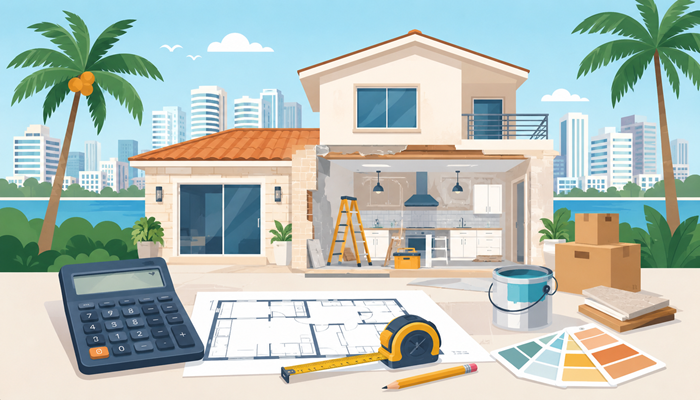
Planning a home renovation in Miami starts with one important question: how much should you expect to spend? Estimating your home renovation cost by square foot gives you a practical starting point for budgeting, comparing options, and deciding how much work your property can realistically support.
Miami homeowners often face different pricing factors than homeowners in other parts of the country. Labor availability, hurricane-resistant materials, permitting requirements, coastal humidity, older homes, and neighborhood-specific property values can all affect your final budget. That is why an online estimate should be treated as a planning tool rather than a guaranteed quote.
In this guide, we will explain how square-foot pricing works, what affects your home renovation cost in Miami, how to use a home renovation cost calculator, and how to move from an early estimate to a more accurate project budget.
How Much Does Home Renovation Cost Per Square Foot in Miami?
The home renovation cost per square foot can vary significantly depending on the project’s scope, materials, and the condition of the existing property. A light cosmetic update may cost far less than a complete transformation involving kitchens, bathrooms, electrical systems, plumbing, flooring, and structural work.
For a broad planning estimate, many homeowners may see renovation budgets ranging from approximately $50 to $250 or more per square foot, depending on the level of work. A partial remodel typically falls toward the lower end, while high-end projects and major structural changes can move well beyond that range.
The most useful way to think about home renovation cost is not as one fixed number, but as a range based on three factors: the size of your home, the quality of finishes you choose, and the complexity of the work.
For example, a 2,000-square-foot home may have a very different budget from another 2,000-square-foot home if one needs only new flooring and paint while the other requires a complete layout redesign and updated mechanical systems.
What Does a Home Renovation Cost Estimator Actually Tell You?
A home renovation cost estimator can help you create an early budget by combining your home’s size with the type and quality of improvements you are considering. It is especially useful during the planning stage, when you are comparing whether a project is financially realistic.
However, an estimator cannot see hidden conditions inside your walls, identify outdated wiring, assess structural issues, or account for every Miami-specific permit requirement. The result should therefore be viewed as a starting range rather than a final proposal.
A Simple Square-Foot Calculation
A basic planning formula looks like this:
Estimated project budget = Home size × Estimated cost per square foot
If a 1,800-square-foot home is being planned at $100 per square foot, the preliminary budget would be approximately $180,000. This figure is only a planning example, but it shows why defining the renovation scope early is so important.
A home renovation cost calculator can make this process faster by helping you compare different project sizes and finish levels. Still, the estimate becomes much more useful when you pair it with a detailed scope of work and an on-site evaluation.
The Main Factors That Change Home Renovation Cost in Miami
Several variables can move your budget up or down. Understanding them early can help you avoid unrealistic expectations.
1. The Scope of the Renovation
A cosmetic refresh involving paint, fixtures, and flooring is very different from a full renovation involving kitchens, bathrooms, walls, plumbing, electrical work, and exterior improvements.
The larger the scope, the more important it becomes to plan the project as a complete system rather than pricing individual rooms separately.
2. Materials and Finish Quality
Cabinetry, countertops, tile, flooring, windows, doors, lighting, and appliances can create major differences in the final budget. Premium materials may improve durability and appearance, but they also increase the overall investment.
Choosing materials based on long-term value, maintenance, and how they fit your property can help control home renovation cost without making the finished space feel basic.
3. The Age and Condition of the Property
Older Miami homes can contain outdated plumbing, electrical systems, roofing components, or insulation. Once walls and ceilings are opened, additional work may be discovered.
This is one reason a realistic budget should include a contingency reserve. Planning for unexpected conditions is usually more practical than assuming everything behind the walls is in perfect condition.
4. Permits and Local Requirements
Depending on the work involved, permits, inspections, engineering, and code-related upgrades may affect the budget. These requirements can be particularly important for projects involving structural changes, electrical systems, plumbing, windows, or major exterior work.
Homeowners should also understand that local conditions can influence schedules and pricing. Reviewing common renovation challenges in South Florida can help you prepare for issues that may affect planning and project timing.
5. Labor and Project Complexity
A straightforward installation is usually easier to price than a renovation that requires multiple trades to coordinate around a changing layout.
For complex projects, working with a qualified home renovation contractor can help bring the design, scheduling, permits, and construction process together more efficiently.
Estimating the Full Home Renovation Cost
A full home renovation cost should be calculated by looking beyond the square-foot price. A more complete budget may include design and planning, demolition, construction, materials, permits, inspections, labor, waste removal, temporary protection, and contingency funds.
A useful approach is to divide the project into categories:
- Kitchens and bathrooms
- Flooring and interior finishes
- Electrical and plumbing
- Walls, ceilings, and layout changes
- Windows, doors, and exterior improvements
- Permits and professional services
- Contingency for unexpected work
This breakdown makes it easier to see where your money is going and which areas can be adjusted if the initial budget is too high.
If you are trying to control spending, these budget-friendly home renovation tips can help you prioritize improvements without sacrificing the overall quality of the project.
How to Plan Your Budget Before Getting Quotes
Before contacting contractors, define what you want to change and separate your priorities into must-haves, important upgrades, and optional improvements.
This makes the estimate process more productive because contractors can price a clear scope instead of guessing what you may want. It also gives you flexibility if material prices or unexpected site conditions affect the original plan.
Many homeowners also consider a home renovation loan when the project requires a larger upfront investment. Financing can make a major renovation more manageable, but it is important to compare interest rates, repayment terms, fees, and the total cost of borrowing before making a decision.
A detailed estimate is also useful when comparing financing options because you have a clearer understanding of the amount you may actually need.
Why Professional Planning Can Protect Your Budget
Online tools are helpful for early research, but a professional assessment provides information that a calculator cannot. An experienced team can evaluate the existing structure, identify potential problems, develop a realistic scope, and provide pricing based on the actual property.
This is one reason hiring a professional home renovation company pays off when a project involves several rooms, multiple trades, or significant structural changes.
Professional planning can also reduce expensive mistakes. Poor sequencing, incorrect measurements, material delays, and unplanned changes can quickly increase home renovation cost.
How to Get a More Accurate Home Renovation Estimate
Once you have a general budget range, the next step is to request detailed proposals from qualified professionals. Give each contractor the same basic project information so you can compare estimates fairly.
Ask for clarity on:
- What work is included
- Which materials are included
- Labor and installation costs
- Permit responsibilities
- Project timelines
- Payment schedules
- Change-order procedures
- Warranty or workmanship coverage
Do not automatically choose the lowest estimate. A proposal that appears cheaper may exclude important work or use lower-grade materials. A detailed, transparent proposal often gives you a better understanding of the true home renovation cost.
For homeowners still researching contractors, learning about choosing the right home renovation contractor can make the selection process more informed.
Is Cost Per Square Foot Enough for a Miami Renovation?
Square-foot pricing is useful for creating a starting budget, but it should not be the only measurement you use. Two homes with the same floor area can have completely different renovation requirements.
A smaller home with extensive structural work may cost more than a larger home receiving mostly cosmetic updates. Likewise, premium kitchens and bathrooms can significantly influence the overall budget even when the rest of the property requires little work.
The best approach is to use square-foot pricing for early planning, then move toward a room-by-room scope and a detailed professional proposal. That progression gives you a more realistic view of home renovation cost before construction begins.
Final Thoughts on Home Renovation Cost in Miami
Understanding home renovation cost by square foot is a practical way to begin planning a Miami project. It helps you create an initial budget, compare renovation levels, and identify whether your goals align with your available investment.
However, the most accurate budget comes from combining square-foot estimates with the property’s condition, material selections, labor requirements, local regulations, and a realistic contingency.
Start with a broad range, define your priorities, and get detailed proposals before committing to construction. With careful planning and the right professional support, you can make informed decisions and create a renovation budget that is both realistic and aligned with your long-term goals.
Frequently Asked Questions
1. What is the average home renovation cost per square foot in Miami?
It can range widely, often from about $50 to $250 or more per square foot depending on scope, materials, and complexity.
2. Is a square-foot estimate accurate for a full renovation?
It is useful for early planning but cannot replace a detailed property assessment and contractor proposal.
3. What can increase home renovation cost in Miami?
Older construction, structural repairs, premium finishes, permits, labor complexity, and unexpected conditions can all increase the budget.
4. Should I include a contingency in my renovation budget?
Yes, setting aside a contingency reserve can help cover unforeseen repairs or changes during construction.
5. Can a contractor provide a more accurate renovation estimate?
Yes, a qualified contractor can assess the property and create a detailed estimate based on the actual scope of work.