

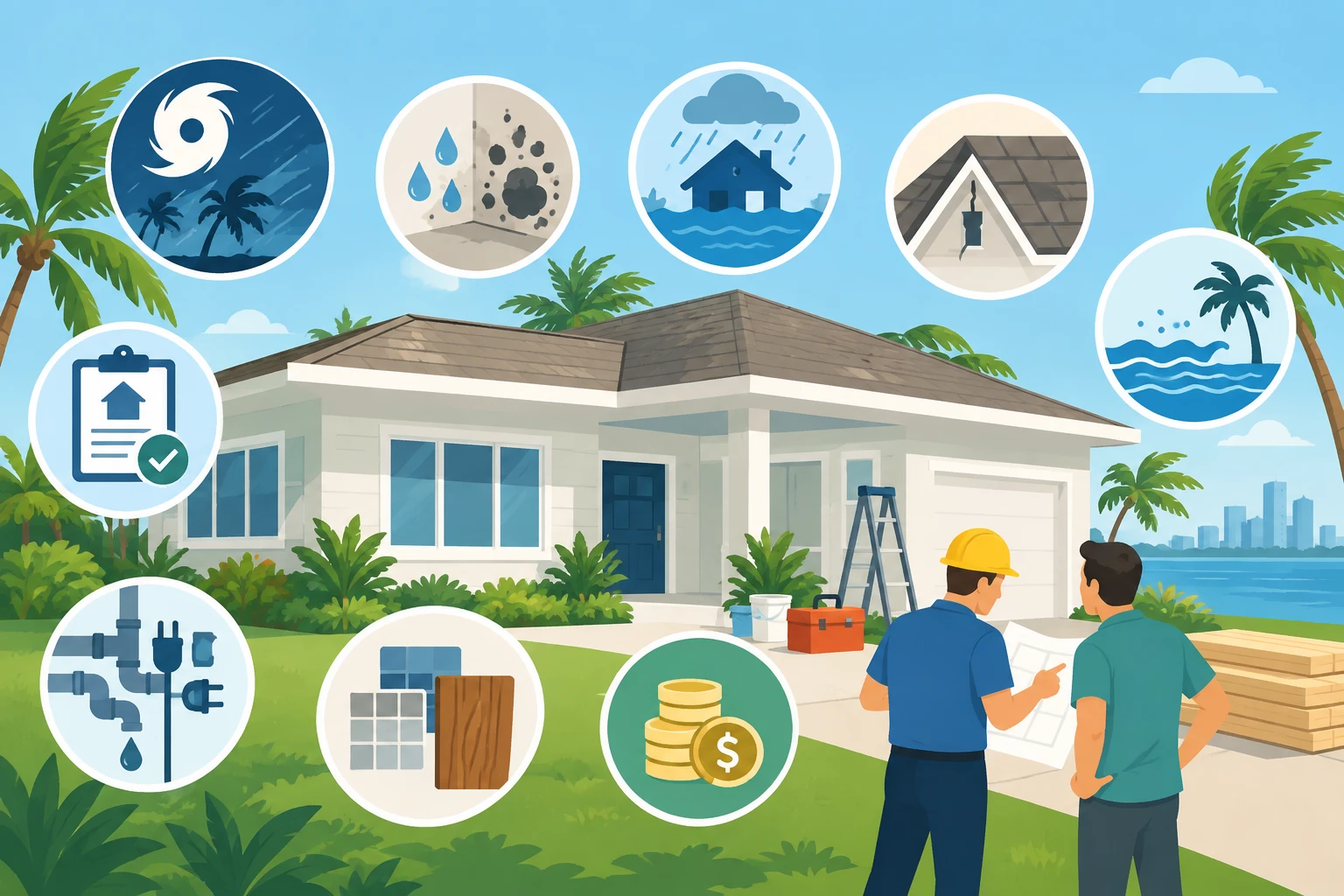
Planning a South Florida home renovation requires more than choosing new finishes and updating the layout. The region’s humidity, heavy rainfall, hurricane exposure, coastal conditions, older homes, and permitting requirements can all affect how a project should be designed and completed.
The most common renovation challenges include moisture damage, storm protection, drainage, aging infrastructure, material deterioration, permitting requirements, and unexpected costs. Addressing these issues early can help homeowners avoid expensive repairs and create a home that is more durable, functional, and comfortable.
This guide explains the major South Florida home renovation challenges, practical ways to address them, and important considerations to make before construction begins.
Why Is Home Renovation Different in South Florida?
South Florida renovations are shaped by the local climate, weather exposure, and building requirements. A renovation that works well in another region may need different materials, construction methods, or protective upgrades in South Florida.
Homeowners commonly need to account for:
-
High humidity and moisture
-
Heavy rain and drainage concerns
-
Hurricane and high-wind exposure
-
Salt air in coastal areas
-
Aging plumbing, electrical, and structural systems
-
Local permitting and inspection requirements
-
Faster deterioration of some exterior materials
These factors should be considered before cosmetic improvements begin. Planning around the home’s environment can help reduce maintenance problems and unexpected changes during construction.
How Does Humidity Affect South Florida Home Renovations?
Humidity is one of the biggest environmental considerations when renovating a South Florida home. Excess moisture can contribute to mold and mildew, damage certain materials, and affect indoor comfort if ventilation is inadequate.
Common Moisture Problems
Poor moisture management can contribute to:
-
Mold and mildew growth
-
Warped or damaged wood
-
Peeling paint and deteriorating finishes
-
Musty indoor air
-
Damage in bathrooms, kitchens, and laundry areas
A renovation does not automatically solve moisture problems. If the underlying source of excess moisture is ignored, new finishes may eventually experience the same issues.
How to Manage Moisture
Choose materials and construction solutions appropriate for humid conditions. Depending on the room and application, options may include:
-
Tile, vinyl, or sealed concrete flooring
-
Moisture-resistant drywall in appropriate high-moisture areas
-
Paint and finishes designed for humid environments
-
Effective bathroom and kitchen exhaust ventilation
-
Properly sealed surfaces around areas exposed to water
For a larger remodeling project, incorporating moisture control into the initial design can be more effective than trying to correct moisture-related problems after the renovation is complete.
What Hurricane Upgrades Should You Consider?
Hurricane preparation is an important consideration for South Florida homeowners. Strong winds, heavy rain, and wind-borne debris can place significant demands on a home’s windows, doors, roof, garage, and other exterior components.
Impact-Resistant Windows and Doors
Windows and exterior doors are important parts of a home’s storm protection strategy. Impact-resistant windows and doors can provide protection while also offering benefits such as improved insulation and noise reduction.
When replacing these components, homeowners should make sure the selected products and installation meet applicable local requirements.
Other Storm-Resistant Improvements
Depending on the home’s condition and renovation scope, improvements may include:
-
Reinforcing roofing systems
-
Securing exterior entry points
-
Upgrading to wind-rated garage doors
-
Improving vulnerable areas of the building envelope
A contractor familiar with South Florida construction requirements can help determine which upgrades are appropriate for the property.
What Permits Are Needed for a South Florida Renovation?
Permitting requirements depend on the type and location of the work. Structural, electrical, plumbing, and other significant improvements may require permits and inspections.
Skipping required approvals can create delays, additional costs, or problems when the work is inspected or the property is sold.
Why Permits Matter
A properly planned renovation should account for:
-
Required permits
-
Approved plans and documentation
-
Inspections at applicable stages
-
Applicable structural and safety requirements
-
Hurricane and flood-related requirements where relevant
Because requirements can vary by jurisdiction and project type, homeowners should confirm the applicable rules before construction begins rather than assuming that every renovation follows the same process.
What Problems Can Older South Florida Homes Have?
Older homes can present hidden renovation challenges because cosmetic improvements may expose outdated systems behind walls, floors, or ceilings.
Potential concerns include:
-
Aging plumbing
-
Outdated electrical systems
-
Deteriorating roofing
-
Older insulation
-
Structural issues
-
Poor ventilation
Inspect the Home Before Remodeling
Before investing heavily in new finishes, evaluate the condition of the home’s major systems.
Depending on the property, the renovation plan may need to address:
-
Plumbing updates
-
Electrical improvements
-
Structural repairs
-
Roofing concerns
-
Insulation
-
Ventilation
Handling important functional problems before cosmetic work can reduce the risk of having to remove newly installed finishes later.
How Can You Prevent Drainage and Flooding Problems?
Heavy rainfall makes drainage an important consideration for many South Florida properties. Poor drainage can allow water to collect around the home and may contribute to property damage, erosion, or other moisture-related problems.
Improve Grading and Water Flow
The property’s grading should direct water away from the home rather than allowing it to collect near the foundation.
Depending on the property, improvements may include:
-
Adjusting grading to improve runoff
-
Installing French drains where appropriate
-
Maintaining functional gutters and downspouts
-
Improving drainage around driveways and outdoor areas
A properly designed driveway installation and drainage solution can help manage water flow as part of a broader exterior renovation.
Drainage solutions should be based on the property’s actual conditions rather than using the same approach for every home.
How Do South Florida Conditions Affect Outdoor Living Spaces?
Outdoor living areas are especially exposed to South Florida’s sun, humidity, rain, and coastal conditions. Materials that are not suited to the environment can deteriorate faster and require more frequent maintenance.
Choosing Durable Outdoor Materials
For patios, fences, decks, and other exterior improvements, consider materials and finishes designed to withstand local weather exposure.
Options may include:
-
Composite or appropriately treated materials
-
UV-resistant coatings
-
Weather-resistant exterior finishes
-
Materials suitable for coastal environments
A professionally installed durable fence solution for outdoor spaces can also improve privacy and curb appeal while providing an exterior structure designed for local conditions.
Regular maintenance remains important even when durable materials are used.
What Should You Consider When Remodeling a South Florida Kitchen?
Kitchen renovations need to balance appearance, functionality, ventilation, and material durability. Heat and humidity can affect certain finishes, while inefficient layouts can make a kitchen less comfortable to use.
Build for Durability and Function
A modern kitchen remodeling solution can incorporate features such as:
-
Moisture-resistant cabinetry
-
Durable countertop materials such as quartz or granite
-
Effective ventilation
-
Layouts that support comfortable movement and airflow
Material selection should reflect how the kitchen will actually be used. A visually appealing material is not necessarily the most practical choice for a humid environment.
How Can You Avoid Renovation Budget Overruns?
Budget overruns often occur when homeowners encounter hidden damage, change materials during construction, or underestimate labor and permitting costs.
A realistic renovation budget should account for both planned work and unexpected conditions.
Build a Flexible Budget
Consider including:
-
Materials
-
Labor
-
Permit fees
-
Required inspections
-
Repairs discovered during construction
-
A contingency fund
The original article recommends allowing a 10–20% contingency fund for unexpected costs. The appropriate amount can vary depending on the home’s age, project complexity, and condition.
Expect Some Schedule Changes
Renovation timelines can change when contractors uncover hidden issues or when additional work becomes necessary. Building reasonable flexibility into the schedule can make these situations easier to manage.
Working with experienced professionals who understand local construction conditions can also help identify potential issues earlier in the planning process.
Which Materials Work Well for South Florida Homes?
Material selection is particularly important in South Florida because heat, moisture, sunlight, rain, and salt exposure can accelerate deterioration in some products.
Common choices identified in the original renovation guidance include:
-
Tile or stone flooring
-
Aluminum or fiberglass windows
-
Moisture-resistant cabinetry
-
Exterior finishes designed for coastal environments
The right choice still depends on the specific application, location of the property, maintenance expectations, and project budget.
Consider the Environment Before the Appearance
When comparing materials, ask:
-
How will the material perform in humidity?
-
Will it be exposed to direct sunlight?
-
Is the property near the coast?
-
How much maintenance will it require?
-
Is it suitable for the intended indoor or outdoor application?
Thinking about these questions before purchasing materials can help prevent premature replacement and unnecessary maintenance.
What Are the Biggest South Florida Home Renovation Mistakes to Avoid?
Many renovation problems can be reduced through better planning. Common mistakes include focusing on appearance before addressing the home’s underlying condition, choosing materials without considering the climate, and overlooking permitting or drainage requirements.
Before construction begins, avoid:
-
Starting cosmetic work before inspecting major systems
-
Choosing materials solely for appearance
-
Ignoring moisture or drainage problems
-
Assuming permits are unnecessary
-
Underestimating the renovation budget
-
Failing to plan for unexpected repairs
-
Choosing contractors without considering their familiarity with local requirements
A renovation should improve both the appearance and performance of the home.
How Do You Plan a Successful South Florida Home Renovation?
A successful South Florida home renovation starts with understanding the property before deciding what to change.
A practical planning process includes:
1. Assess the Home’s Current Condition
Inspect the major systems and identify structural, electrical, plumbing, roofing, moisture, and drainage concerns that could affect the project.
2. Prioritize Functional Improvements
Address problems that affect safety, durability, water management, and home performance before focusing entirely on cosmetic upgrades.
3. Choose Climate-Appropriate Materials
Select products that can handle the home’s expected exposure to humidity, heat, sunlight, rain, and salt air.
4. Understand Local Requirements
Confirm which permits, plans, inspections, and other approvals apply to the renovation before work begins.
5. Create a Flexible Budget
Account for materials, labor, permits, and a contingency for unexpected conditions.
6. Work With Qualified Professionals
Choose professionals who understand the property’s needs and the construction requirements that apply to the project.
This approach helps turn potential renovation challenges into opportunities to improve the home’s long-term durability and functionality.
Key Takeaways for South Florida Home Renovation
Before starting a renovation, keep these points in mind:
-
Control moisture: Humidity can affect materials, finishes, and indoor comfort.
-
Plan for storms: Consider appropriate hurricane-resistant improvements.
-
Check older systems: Aging plumbing, electrical, roofing, and structural components may need attention.
-
Manage water: Proper grading and drainage can help protect the property from heavy rainfall.
-
Choose durable materials: Select products suited to South Florida’s climate and exposure.
-
Plan for permits: Confirm applicable requirements before construction.
-
Allow for unexpected costs: Older homes and complex renovations can reveal hidden problems.
-
Think beyond appearance: A successful remodel should improve how the home performs as well as how it looks.
Frequently Asked Questions
What are the most common South Florida home renovation challenges?
The most common challenges include humidity and moisture, hurricane exposure, drainage, aging home systems, permitting requirements, material deterioration, and unexpected renovation costs.
How does humidity affect a home renovation?
High humidity can contribute to mold and mildew, warped materials, deteriorating finishes, and poor indoor air quality. Moisture-resistant materials and appropriate ventilation can help manage these concerns.
Do South Florida renovations require permits?
Some renovations require permits and inspections, particularly work involving structural, electrical, plumbing, or other regulated improvements. Requirements vary by project and jurisdiction, so homeowners should confirm the applicable rules before construction.
What materials are suitable for South Florida homes?
Common options include tile or stone flooring, aluminum or fiberglass windows, moisture-resistant cabinetry, and exterior finishes designed for coastal environments. The appropriate material depends on its intended use and the property’s specific conditions.
How can I protect my home from hurricane damage during a renovation?
Depending on the property and applicable requirements, homeowners may consider impact-resistant windows and doors, reinforced roofing systems, secured entry points, and wind-rated garage doors.
How can I prevent flooding around my home?
Improving grading and drainage can help direct water away from the property. Depending on site conditions, solutions may include grading adjustments, French drains, properly functioning gutters and downspouts, and drainage improvements around driveways.
Should I inspect an older home before remodeling?
Yes. Older homes may have aging plumbing, electrical systems, roofing, insulation, or structural components. Identifying these issues before cosmetic remodeling can help prevent unexpected work later.
How much extra should I budget for unexpected renovation costs?
The original renovation guidance recommends a 10–20% contingency fund, although the appropriate amount depends on factors such as the home’s age, project scope, and likelihood of hidden issues.
Conclusion
A South Florida home renovation needs to account for more than design preferences. Humidity, storms, heavy rainfall, coastal exposure, aging systems, local requirements, and material durability can all influence the success of a project.
The best starting point is to understand the home’s existing condition, address structural and functional concerns, select materials suited to the local environment, plan for applicable permits, and maintain flexibility in both the budget and schedule.
Whether you’re updating one room or planning a full home remodel, addressing these challenges early can help create a home that is more durable, functional, and better suited to South Florida living.