
Living in Delray Beach often means embracing unique home layouts, especially in older properties, condos, waterfront homes, and compact guest suites. While narrow bedrooms can feel limiting at first glance, the right design approach can transform even the most awkward space into a comfortable, stylish retreat.
Whether you’re planning a complete home renovation or simply looking for ways to improve a challenging room, smart layout strategies can maximize every inch while maintaining a beautiful and functional design. With thoughtful furniture placement, clever storage solutions, and space-enhancing design techniques, narrow bedrooms can become some of the most attractive rooms in your home.
In this guide, we’ll explore practical and stylish ways to make the most of narrow bedroom spaces in Delray Beach homes.
Understanding the Challenges of Narrow Bedrooms
Before redesigning a room, it’s important to understand why long and narrow spaces often feel uncomfortable.
Common challenges include:
-
Limited walking space
-
Restricted furniture placement options
-
Lack of storage
-
Poor visual balance
-
Reduced natural light distribution
-
A cramped appearance despite adequate square footage
The good news is that these issues can be solved with strategic planning and thoughtful design choices.
Start with a Functional Layout Plan
The layout serves as the foundation of every successful bedroom design.
Many homeowners rush into decorating without evaluating how the room will function day-to-day. Instead, begin by identifying the room’s primary purpose and traffic flow.
Position the Bed Correctly
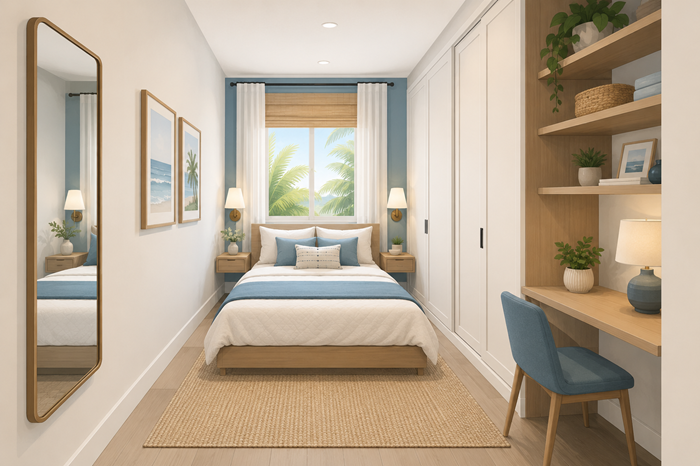
In most narrow rooms, the bed naturally becomes the focal point.
Whenever possible:
-
Center the bed on the shortest wall
-
Leave equal walking space on both sides
-
Avoid blocking windows
-
Maintain a clear path from the doorway
Placing the bed against the longest wall can sometimes make the room feel even narrower.
Create Defined Zones
If the bedroom is long enough, consider dividing it into functional areas.
For example:
-
Sleeping area
-
Reading nook
-
Small workspace
-
Dressing corner
Creating zones helps the room feel intentional rather than awkwardly stretched.
Choose Furniture That Fits the Space
Oversized furniture is one of the biggest mistakes homeowners make when furnishing narrow rooms.
Instead, prioritize pieces that complement the room’s proportions.
Select Low-Profile Furniture
Low-profile beds and dressers create a greater sense of openness by exposing more wall space.
Benefits include:
-
Better visual balance
-
Improved natural light flow
-
Reduced cluttered appearance
-
Higher perceived ceiling height
Use Multi-Functional Pieces
Every piece should serve multiple purposes when space is limited.
Excellent options include:
-
Storage beds
-
Lift-top benches
-
Floating nightstands
-
Wall-mounted desks
-
Ottoman storage units
These additions increase functionality without overcrowding the room.
Maximize Vertical Space
When floor space is limited, think upward.
Vertical storage helps maintain a clean and organized environment while preserving valuable walking space.
Install Floor-to-Ceiling Storage
Custom storage solutions can dramatically improve usability.
Consider:
-
Built-in wardrobes
-
Vertical shelving systems
-
Custom cabinetry
-
Floating storage units
Working with experienced home renovation services can help create custom-built solutions tailored to your room’s dimensions.
Add Floating Elements
Floating furniture creates visual lightness.
Popular choices include:
-
Floating shelves
-
Floating desks
-
Wall-mounted nightstands
-
Floating media units
Because the floor remains visible underneath, the room feels larger and less crowded.
Use Color to Expand the Room Visually
Color has a powerful impact on spatial perception.
The right palette can make a narrow room appear significantly wider.
Choose Light Neutral Colors
Soft colors reflect natural light and create an airy atmosphere.
Popular Delray Beach-friendly options include:
-
Warm white
-
Soft beige
-
Pale sand
-
Light gray
-
Coastal blue accents
These colors complement South Florida’s bright environment and relaxed lifestyle.
Keep Color Consistency
Using too many contrasting colors can visually break up the room.
Instead:
-
Maintain consistent wall colors
-
Use coordinated furnishings
-
Introduce subtle accent tones
This creates a seamless visual flow that makes the room feel larger.
Incorporate Mirrors Strategically
Mirrors are among the most effective tools for enhancing narrow spaces.
When positioned correctly, they reflect both light and views, creating the illusion of depth.
Ideal placements include:
-
Opposite windows
-
Closet doors
-
Accent walls
-
Above dressers
Large mirrors can instantly make a compact bedroom feel significantly more spacious.
Optimize Natural Light
Natural light is particularly important in narrow rooms.
A well-lit room always appears larger and more inviting.
Keep Window Treatments Minimal
Heavy curtains can overwhelm smaller spaces.
Instead, choose:
-
Sheer drapes
-
Roller shades
-
Light-filtering blinds
-
Coastal-inspired linen panels
These options preserve privacy while allowing sunlight to enter.
Layer Artificial Lighting
Not every bedroom receives abundant daylight.
Supplement with:
-
Wall sconces
-
Pendant lighting
-
Recessed lighting
-
Bedside task lamps
Multiple light sources eliminate dark corners and create a more balanced environment.
Smart Storage Solutions for Tight Spaces
Storage often becomes the biggest challenge in narrow bedrooms.
Fortunately, several solutions help maximize functionality without sacrificing style.
Under-Bed Storage
The area beneath the bed is often underutilized.
Consider:
-
Built-in drawers
-
Storage bins
-
Rolling containers
-
Lift-up storage systems
These options keep seasonal items out of sight while reducing clutter.
Utilize Corner Areas
Corners frequently become wasted space.
Make use of them with:
-
Corner shelving
-
Compact desks
-
Reading chairs
-
Decorative storage units
Every square foot matters in a narrow layout.
Create a Coastal Delray Beach Feel
One of the best ways to make a narrow bedroom feel more open and welcoming is to embrace the relaxed coastal style that defines many Delray Beach homes. Drawing inspiration from the area’s beachside atmosphere can help create a space that feels bright, airy, and effortlessly comfortable.
Elements such as natural textures, woven accents, light wood finishes, soft blue tones, organic fabrics, and breezy décor all contribute to a calming coastal aesthetic. If you’re looking for inspiration, these stylish coastal master bedroom ideas showcase design features that work beautifully in South Florida homes.
When combined thoughtfully, these coastal touches can help a narrow bedroom feel larger, lighter, and more connected to its surroundings while maintaining a timeless sense of style.
Common Layout Mistakes to Avoid
Even well-intentioned designs can create problems if certain mistakes are overlooked.
Avoid:
-
Oversized furniture
-
Dark wall colors throughout
-
Blocking windows
-
Excessive décor
-
Bulky nightstands
-
Poor lighting placement
A simple, intentional design approach almost always works best in narrow spaces.
Planning Your Renovation Project
If your bedroom redesign involves structural changes, custom storage, or major updates, planning becomes critical.
Understanding realistic schedules helps avoid frustration during the renovation process. This guide on home renovation timelines explains what homeowners should expect before starting a project.
Preparation often leads to smoother execution and better results.
Design Ideas That Work Particularly Well
When researching design ideas for narrow bedrooms, focus on solutions that prioritize openness, organization, and flexibility.
Some highly effective approaches include:
-
Platform beds with storage
-
Vertical shiplap walls
-
Sliding closet doors
-
Built-in headboards
-
Floating desks
-
Minimalist décor
-
Symmetrical furniture arrangements
These strategies improve both functionality and visual appeal.
Preparing for a Successful Bedroom Makeover
Before purchasing furniture or hiring professionals, create a clear project roadmap.
Using a detailed free home renovation checklist can help organize budgets, timelines, measurements, and priorities.
A structured plan minimizes costly mistakes and ensures a smoother renovation experience.
Why Professional Guidance Matters
While many narrow bedroom improvements can be completed independently, some projects benefit from expert guidance.
An experienced home remodeling contractor can identify opportunities for custom storage, improved lighting, and layout optimization that homeowners may overlook.
Similarly, many residents searching for home remodeling near me discover that professional planning often saves both time and money over the course of a renovation.
Whether you’re redesigning a guest room, primary suite, or vacation property, professional input can help maximize your investment.
Final Thoughts
Awkward bedroom layouts don’t have to feel restrictive. With thoughtful planning, strategic furniture choices, effective storage solutions, and space-enhancing design techniques, even the narrowest room can become comfortable, functional, and visually appealing.
The best bedrooms design ideas focus on creating balance, maximizing natural light, and making every square foot work efficiently. By embracing smart layouts and purposeful design, Delray Beach homeowners can transform challenging spaces into beautiful retreats that feel much larger than their actual dimensions.
FAQs
1. How do you make a narrow bedroom look bigger?
Use light colors, mirrors, and low-profile furniture to create a more open appearance.
2. What is the best bed placement for a narrow bedroom?
Centering the bed on the shortest wall usually provides the best balance and circulation.
3. Are built-in storage solutions worth it?
Yes, custom storage maximizes space and reduces clutter in compact rooms.
4. What colors work best in narrow bedrooms?
Soft neutrals, whites, and light coastal-inspired shades help rooms feel larger.
5. Can a narrow bedroom include a workspace?
Yes, wall-mounted desks and floating furniture can create efficient work areas.