

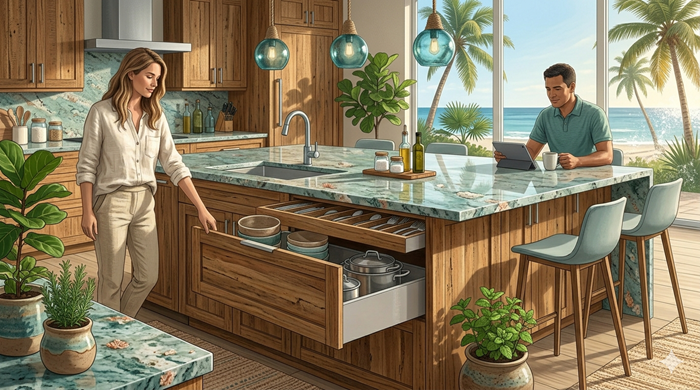
Creating a functional kitchen in South Florida requires more than just high-end appliances and beautiful countertops. Because our homes often favor open-concept layouts to keep the air moving and the light flowing, the center of the room needs to work harder than ever. A well-designed kitchen island with storage tips South Florida homeowners can actually use will transform a cluttered cooking area into a streamlined masterpiece.
The kitchen island has evolved from a simple prep station into the command center of the modern home. In the Sunshine State, where we frequently host weekend brunches and holiday dinners, having a dedicated space to tuck away seasonal platters or bulky air fryers is a game changer.
Maximizing the Potential of Your Central Workspace
Most people think of an island as just extra counter space. However, when you look at it through the lens of storage, it becomes a multi-functional furniture piece. The key is to analyze what you use daily versus what you only need once a month.
In South Florida, humidity can be a factor for certain pantry items, so the island is often the perfect place to store heavy dry goods or specialized cookware that stays cooler away from the perimeter walls. By integrating deep drawers instead of standard cabinets, you can easily access heavy pots without having to crawl on your hands and knees.
Deep Drawers vs. Standard Cabinets
Standard cabinets often lead to “dead zones” where Tupperware lids go to disappear forever. Deep drawers are the superior choice for island storage. They allow you to see everything from an overhead perspective, which is far more efficient during a busy meal prep session.
When planning your kitchen remodelling project, consider adding adjustable dividers within these drawers. This allows you to customize the space for everything from deep stockpots to stacks of dinner plates, ensuring that nothing slides around when the drawer is opened.
Utilizing the Island Ends
Don’t let the short sides of your island go to waste. These “end caps” are perfect for shallow shelving or decorative displays. You can install a built-in bookshelf for your favorite Florida-inspired cookbooks or a custom rack for dish towels.
For those who enjoy a glass of chilled white wine on a humid evening, the end of an island is also a prime location for a small wine cooler or a vertical wine rack. This keeps the bottles accessible without taking up valuable real estate on the main countertops.
Finding the Right Style for Your Coastal Lifestyle
The aesthetic of your kitchen should reflect the breezy, vibrant atmosphere of the coast. Deciding on the look of your island often comes down to a choice between modern vs traditional kitchens, as each style handles storage slightly differently.
Modern designs tend to favor flat-panel cabinetry and hidden “push-to-open” latches, giving the island a monolithic, clean look. Traditional styles might incorporate more decorative molding and open shelving, which provides a warmer, more lived-in feel. Regardless of your preference, the goal remains the same: reducing clutter to create a sense of calm.
Color and Light in the Heart of the Home
Because the island is a large visual block in the center of the room, your choice of finish matters immensely. Selecting the right color scheme for kitchen surfaces can make a small room feel much larger. Light blues, soft greys, and sandy whites are perennial favorites in South Florida because they bounce the natural sunlight around the room.
To truly highlight your island and make it the focal point of the home, you need to think about what hangs above it. Exploring various lighting ideas for kitchen islands, such as oversized pendants or sleek linear LEDs, will ensure that your storage and prep areas are well-lit and visually striking.
Integrated Appliances and Specialized Storage
One of the best ways to free up wall space is to move appliances into the island. This keeps the “work triangle” tight and efficient.
The Microwave Drawer
Microwaves are essential but often eyesores when placed on the counter or above the stove. A microwave drawer built into the island keeps it at a convenient height for adults and older children while keeping it out of the main line of sight.
Pull-Out Trash and Recycling
In South Florida’s heat, keeping trash tucked away and sealed is vital for hygiene and odor control. A double pull-out bin for trash and recycling integrated into the island cabinetry keeps your kitchen looking pristine and makes cleanup after a meal significantly faster.
Hidden Outlets and Charging Stations
With the rise of smart homes, we all have devices that need charging. Adding “pop-up” outlets or USB ports inside a shallow island drawer creates a hidden charging station. This prevents your beautiful quartz or granite countertops from becoming a tangled mess of phone cords and tablets.
Managing the Financial Aspect of Your Project
A kitchen renovation is a significant investment, and the island often represents a large portion of that cost due to the plumbing and electrical work required. It is helpful to research kitchen renovation costs early in the planning phase so you can allocate your budget effectively between high-end materials and functional storage solutions.
While custom cabinetry offers the most flexibility for unique storage needs, semi-custom options can often achieve a similar look and feel for a lower price point. Investing more in the island—the piece you will use most—is generally a wise move for long-term home value.
Clever Hardware and Interior Fittings
The magic of a high-functioning island is often found in the details you can’t see from the outside. High-quality hardware ensures that your storage remains accessible and durable for years to come.
-
Soft-Close Hinges: Essential for preventing the slamming of doors in a busy household.
-
Lazy Susans: If your island has a unique L-shape or deep corners, a rotating tray ensures no item is out of reach.
-
Pull-Out Pantry Racks: Perfect for storing spices or oils right next to the cooktop if your stove is located on the island.
Customizing your kitchen cabinets within the island allows you to designate a home for every single item, from the smallest lemon zester to the largest roasting pan.
Creating a Social Hub with Seating and Storage
In many Florida homes, the island serves as the primary dining area. However, adding seating doesn’t mean you have to sacrifice storage.
The Overhang Solution
By extending the countertop to create a breakfast bar, you create a space for stools. The area under the overhang can still house shallow cabinets with touch-latches. These are perfect for storing items you don’t need every day, such as holiday linens or large serving platters, as they are tucked behind where people’s legs would be.
Double-Sided Storage
If your kitchen is wide enough, consider an island that is deep enough for back-to-back cabinets. This provides an incredible amount of storage. One side can face the “work zone” for cooking essentials, while the other side faces the living or dining area for items like board games, barware, or extra place settings.
Material Selection for Durability
South Florida’s climate and lifestyle demand materials that can stand up to sand, moisture, and frequent use. When choosing a kitchen island surface, durability is just as important as beauty. Quartz is a top contender for many homeowners because it is non-porous and resistant to staining, making it ideal for an island that sees a lot of food prep and homework sessions.
If you are currently searching for kitchen contractors near me to start your project, focusing on the utility of your island is the best place to begin. Proper material selection ensures that your storage solutions remain protected from the elements while maintaining a high-end look. Natural stone like marble is beautiful but requires more maintenance in a high-traffic area. Ensure that whatever material you choose complements the storage finish to create a cohesive look.
Final Touches for an Organized Kitchen
Once the structure is in place, organization is what keeps the system running. Use clear bins inside your island drawers to categorize snacks or baking supplies. This not only looks great but also helps you see when you are running low on essentials before you head to the grocery store.
By focusing on these storage tips and tailoring them to the specific needs of a South Florida home, you can create a kitchen that is as efficient as it is beautiful. A thoughtful layout, high-quality materials, and a bit of creative planning will ensure your kitchen remains the heart of your home for years to come.
Frequently Asked Questions
What is the best depth for kitchen island drawers?
Deep drawers are typically 10 to 12 inches deep to accommodate large pots and small appliances.
Can I put a sink in my kitchen island?
Yes, but it requires plumbing lines to be run through the floor, which can increase the overall renovation cost.
How much seating should a kitchen island have?
Most designers recommend at least 24 inches of width per person to ensure comfortable seating.
Is it better to have a cooktop or a sink on the island?
A sink is often preferred for social interaction, while a cooktop requires a more complex ventilation system like a range hood or downdraft.
What is the ideal clearance around a kitchen island?
You should maintain at least 36 to 42 inches of walkway space on all sides for comfortable movement.