
Choosing between a modern or traditional kitchen isn’t just about looks—it’s about how you live, cook, and experience your space every day. If you’re planning a kitchen renovation, this decision will shape everything from layout and materials to lighting and long-term value.
Both styles have their strengths. Modern kitchens offer clean lines and efficiency, while traditional kitchens bring warmth and timeless charm. The key is understanding what fits your lifestyle, budget, and design preferences.
In this guide, we’ll break down the differences, pros, and practical considerations so you can confidently decide which kitchen style works best for your home.
What Defines a Modern Kitchen?
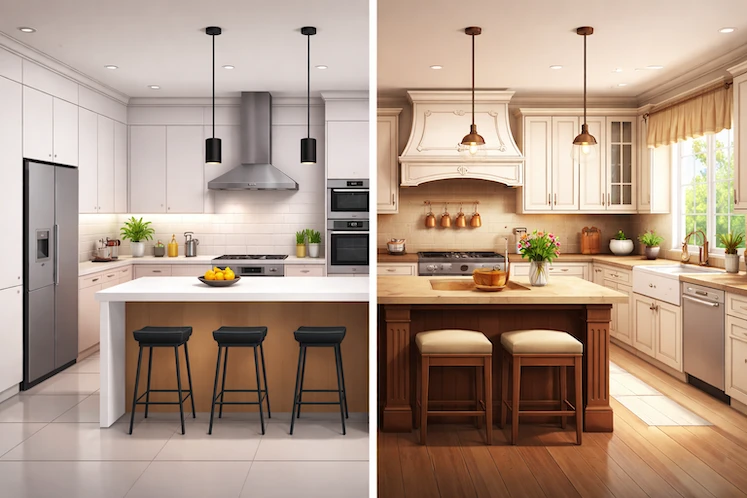
Modern kitchens are all about simplicity, function, and sleek design. They focus on minimalism while maximizing efficiency and usability.
Clean Lines and Minimal Design
Modern kitchens avoid clutter. You’ll see flat-panel cabinets, handle-less drawers, and seamless surfaces that create a streamlined look.
Neutral Color Palettes
Whites, grays, blacks, and muted tones dominate. Occasionally, bold accents are used, but the overall aesthetic remains clean and understated.
Smart Storage Solutions
Storage is often hidden. Think pull-out cabinets, built-in organizers, and concealed appliances that keep everything out of sight.
High-Tech Features
Modern kitchens often integrate smart appliances, touchless faucets, and energy-efficient lighting systems.
Open Layouts
These kitchens usually connect with living or dining areas, creating an open-concept feel that works well for entertaining.
What Defines a Traditional Kitchen?
Traditional kitchens focus on comfort, detail, and classic design elements that never go out of style.
Rich Materials and Textures
Wood cabinets, stone countertops, and decorative moldings are common. These materials add warmth and depth to the space.
Detailed Cabinetry
Raised-panel cabinets, ornate handles, and intricate finishes define traditional kitchen design.
Warm Color Schemes
Creams, browns, soft yellows, and earthy tones create a cozy and inviting atmosphere.
Defined Spaces
Unlike modern open layouts, traditional kitchens often have more structured zones for cooking, dining, and storage.
Classic Fixtures
Expect vintage-style lighting, farmhouse sinks, and decorative backsplashes that add character.
Key Differences Between Modern and Traditional Kitchens
Understanding the core differences helps you make a more informed decision.
Style and Aesthetic
Modern kitchens lean toward simplicity and minimalism, while traditional kitchens embrace detail and ornamentation.
Functionality
Modern kitchens prioritize efficiency and innovation. Traditional kitchens focus more on comfort and familiarity.
Maintenance
Modern designs are typically easier to clean due to flat surfaces. Traditional kitchens may require more upkeep because of detailed finishes.
Flexibility
Modern kitchens adapt easily to small spaces and contemporary lifestyles. Traditional kitchens often work best in larger homes with defined layouts.
Pros and Cons of Modern Kitchens
Advantages
-
Sleek and clutter-free appearance
-
Easier to clean and maintain
-
Ideal for small or open spaces
-
Integrates modern technology seamlessly
Drawbacks
-
Can feel cold or impersonal if not balanced
-
Trends may change quickly
-
Limited decorative flexibility
Pros and Cons of Traditional Kitchens
Advantages
-
Timeless and elegant design
-
Warm and inviting atmosphere
-
Greater flexibility in decorative elements
-
Strong appeal for resale in classic homes
Drawbacks
-
Can feel dated if not updated properly
-
More maintenance required
-
Often more expensive due to materials and details
Which Kitchen Style Fits Your Lifestyle?
Choosing the right kitchen style isn’t just about aesthetics—it’s about how you use your space daily.
If You Love Simplicity and Efficiency
A modern kitchen is likely the better fit. It’s ideal for busy homeowners who want a clean, organized space with minimal maintenance.
If You Value Warmth and Character
A traditional kitchen suits those who enjoy a cozy, welcoming environment with rich textures and classic design.
If You Entertain Often
Modern kitchens with open layouts are perfect for social gatherings and seamless interaction.
If You Prefer a Homey Feel
Traditional kitchens provide a more intimate setting, especially for family meals and relaxed cooking.
Budget Considerations: Modern vs Traditional
Your budget plays a major role in your decision.
Modern Kitchens
Costs can vary widely. While minimalist designs may seem cheaper, high-end materials and smart appliances can increase expenses.
Traditional Kitchens
Typically more expensive due to craftsmanship, detailed cabinetry, and premium materials like hardwood and stone.
If you’re working with a tighter budget, exploring simple upgrades that refresh your kitchen without a full remodel can help you achieve a new look without overspending.
Resale Value: Which Style Wins?
Both styles can increase home value—but it depends on your market.
Modern kitchens tend to attract younger buyers and urban homeowners, while traditional kitchens appeal to those looking for timeless elegance.
If you’re renovating with resale in mind, it’s worth understanding how kitchen upgrades impact property value before making a final decision. This becomes especially important when considering whether a full remodel aligns with your long-term goals and its impact before selling.
Can You Combine Both Styles?
Absolutely. Transitional kitchens blend modern and traditional elements, offering the best of both worlds.
How to Achieve a Transitional Look
-
Use neutral colors with classic cabinetry
-
Combine modern appliances with traditional finishes
-
Mix textures like wood and metal
-
Keep the layout open but add warm accents
This approach allows you to create a balanced kitchen that feels both current and timeless.
Hiring the Right Professionals
No matter which style you choose, execution is everything. A well-designed kitchen requires skilled planning and craftsmanship.
Before starting your project, it’s essential to understand what to look for in a contractor and how to avoid costly mistakes. Asking the right questions early can save you time, money, and stress—especially when working with professionals.
Final Thoughts: Choosing What Works for You
There’s no one-size-fits-all answer when it comes to modern vs traditional kitchens. The best choice depends on your lifestyle, personal taste, and long-term plans.
If you want a sleek, low-maintenance space with cutting-edge features, a modern kitchen is the way to go. If you prefer warmth, detail, and timeless appeal, a traditional kitchen may be the better fit.
Still unsure? The best way to decide is to see what works for your space and budget. Get a free estimate for your kitchen remodel