

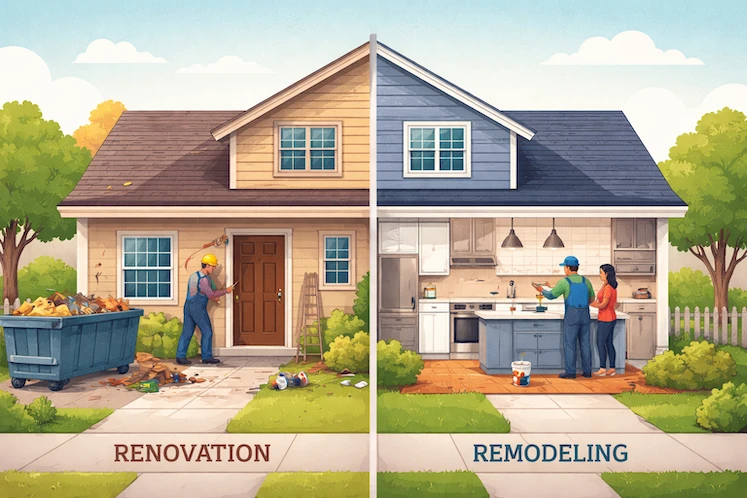
f you’re planning to upgrade your home, you’ve probably come across the terms renovation and remodeling. While they’re often used interchangeably, they actually mean very different things—and understanding the difference can save you time, money, and unnecessary stress.
Whether you’re updating an outdated kitchen, improving your home’s layout, or increasing property value, knowing when to renovate and when to remodel is essential. Each approach comes with its own process, cost, and level of complexity.
In this guide, we’ll break down renovation vs remodeling in a clear, practical way so you can confidently plan your next project and make smarter decisions from the start.
What Is Home Renovation?
Renovation focuses on restoring or updating what already exists. It improves the appearance, function, or condition of a space without changing its core structure or layout.
Think of renovation as giving your home a refresh rather than a transformation.
Common Renovation Examples
-
Repainting walls or ceilings
-
Replacing flooring (tile, vinyl, hardwood)
-
Updating cabinets or fixtures
-
Repairing plumbing or electrical components
-
Installing new lighting or appliances
These updates enhance your home’s look and performance while keeping the original design intact.
When Renovation Makes Sense
Renovation is ideal when your home is structurally sound but feels outdated or worn out. If your kitchen layout works fine but looks old, a renovation can bring it back to life without major construction.
For homeowners trying to stay within budget, renovation is often the more cost-effective option. It allows you to modernize your space without committing to extensive changes.
If you’re considering upgrades in high-traffic areas like kitchens, it helps to review the kitchen renovation cost to better understand where your budget will go.
What Is Home Remodeling?
Remodeling goes beyond surface-level improvements. It involves changing the structure, layout, or purpose of a space.
This type of project is more complex and often requires design planning, permits, and professional construction work.
Common Remodeling Examples
-
Knocking down walls to create an open floor plan
-
Expanding a kitchen or bathroom
-
Converting a garage into a living space
-
Reconfiguring room layouts
-
Adding new rooms or extensions
Remodeling reshapes how your home functions and feels, not just how it looks.
When Remodeling Is the Right Choice
Remodeling is the better option when your current layout doesn’t meet your needs. For example, if your kitchen feels cramped or your home lacks functional space, remodeling can create a more efficient and comfortable environment.
It’s also a strong choice if you’re planning long-term upgrades or preparing your home for resale at a higher value.
Because remodeling involves structural changes, it’s important to work with experienced professionals. If you’re planning a major upgrade, getting a clear estimate from a trusted home remodeling service can help you understand the scope, cost, and timeline before you begin.
Renovation vs Remodeling: Key Differences
Understanding the core differences between renovation and remodeling will help you choose the right path for your project.
1. Scope of Work
Renovation focuses on cosmetic or surface-level updates, while remodeling involves structural changes and layout modifications.
Renovation improves what’s already there. Remodeling transforms the space entirely.
2. Cost
Renovation is generally more affordable because it doesn’t involve major construction. Remodeling, on the other hand, requires more labor, materials, and permits, making it a bigger investment.
3. Timeline
Renovation projects are usually faster to complete. Remodeling projects take longer due to design planning, approvals, and construction work.
If you’re unsure how long a project might take, a kitchen renovation timeline step by step can give you a realistic expectation.
4. Complexity
Renovation is less complex and often doesn’t require permits. Remodeling is more involved and typically requires professional contractors, engineers, and approvals.
5. Purpose
Renovation is about improving aesthetics and functionality. Remodeling is about changing how a space is used or experienced.
Which One Adds More Value to Your Home?
Both renovation and remodeling can increase your home’s value, but the impact depends on your goals and the type of project.
Renovation for Quick Value Boost
Simple updates like new flooring, fresh paint, or upgraded fixtures can significantly improve your home’s appeal. These changes are especially effective if you’re preparing to sell.
They offer a strong return on investment without requiring major spending.
Remodeling for Long-Term Value
Remodeling projects often deliver higher long-term value because they improve layout, usability, and overall living experience.
For example, opening up a kitchen or adding a bathroom can make your home more attractive to buyers and increase its market price.
However, these projects require careful planning to ensure the investment pays off.
Factors to Consider Before Choosing
Before deciding between renovation and remodeling, take a step back and evaluate your situation.
Your Budget
Start with a realistic budget. If you’re working with limited funds, renovation is usually the smarter choice. If you have more flexibility, remodeling can deliver bigger results.
Your Goals
Ask yourself what you want to achieve.
-
Do you want a fresh, updated look? Renovation may be enough.
-
Do you need better space functionality? Remodeling is likely the answer.
Condition of Your Home
If your home has structural issues or outdated layouts, remodeling might be necessary. If everything is in good condition but looks outdated, renovation will do the job.
Timeline Expectations
If you need a quick turnaround, renovation projects are faster and less disruptive. Remodeling requires more time and planning.
Common Challenges Homeowners Face
No matter which route you choose, home improvement projects come with challenges. Being aware of them early helps you avoid costly mistakes.
Budget Overruns
Unexpected issues can increase costs, especially in remodeling projects. Always set aside a contingency budget.
Delays
Material shortages, permit approvals, and contractor availability can delay timelines.
Design Misalignment
Without proper planning, the final result may not match your expectations.
If you’re renovating it’s worth understanding the most common renovation challenges so you can prepare ahead and avoid setbacks.
Can You Combine Renovation and Remodeling?
Yes, and in many cases, this is the best approach.
A hybrid project allows you to remodel certain areas while renovating others. For example, you might remodel your kitchen layout while simply renovating your bedrooms.
This approach helps balance cost, functionality, and overall design consistency.
It also allows you to prioritize changes based on your needs and budget.
Tips for a Successful Project
Whether you choose renovation or remodeling, following a few key principles can make a big difference.
Plan Everything in Advance
Clear planning reduces delays and unexpected costs. Define your goals, budget, and timeline early.
Work With Professionals
Even for smaller projects, professional guidance ensures better results and fewer mistakes.
Focus on High-Impact Areas
Kitchens and bathrooms typically deliver the highest return on investment. Prioritize these spaces when possible.
Think Long-Term
Avoid making decisions based only on current trends. Focus on functionality, durability, and timeless design.
Final Thoughts
Renovation and remodeling may sound similar, but they serve very different purposes. Renovation is about improving what already exists, while remodeling is about transforming your space entirely.
Choosing the right approach depends on your goals, budget, and the current condition of your home. By understanding these differences, you can plan smarter, avoid unnecessary costs, and create a space that truly works for you.
Whether you’re making small updates or planning a major transformation, the key is to approach your project with clarity and confidence.