

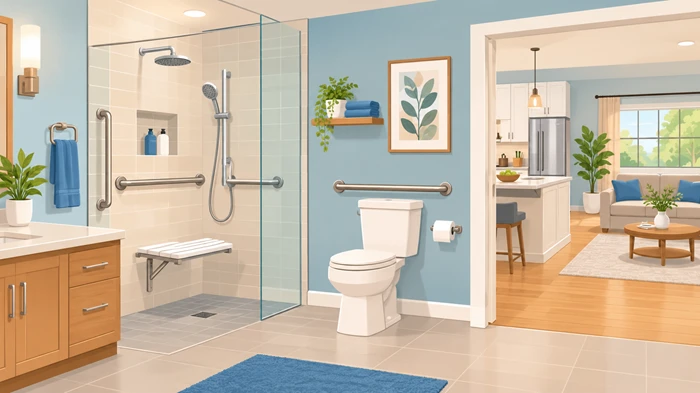
Growing older should not mean giving up the comfort and independence of living at home. Many homeowners are choosing to make practical improvements that allow them to remain in familiar surroundings while making everyday activities safer and easier. This is why aging in place remodeling has become an important consideration for homeowners planning for their future.
But what is the most common aging in place remodeling project? According to remodeling industry research, installing bathroom grab bars ranks first, followed by curbless showers, higher toilets, and wider doorways. These improvements address everyday mobility challenges and help reduce the risk of falls.
Whether someone is preparing for retirement or adapting a home for an older family member, understanding these projects can help make renovation decisions more practical and effective.
Key Takeaways
-
Bathroom grab bars are the most common aging-in-place modification reported by professional remodelers.
-
Curbless showers and comfort-height toilets improve bathroom accessibility and convenience.
-
Better lighting, wider doorways, and safer flooring support independent movement.
-
Planning improvements early can make a home more comfortable for years to come.
What Is the Most Common Aging in Place Remodeling Project?
Installing bathroom grab bars is the most common aging-in-place remodeling project, according to the National Association of Home Builders’ remodeling industry survey.
The NAHB reported in its 2025 analysis that 87% of remodelers who perform aging-in-place work had installed grab bars during the previous year. Curbless showers followed at 78%, while higher toilets ranked third at 71%.
These findings highlight why bathrooms receive so much attention during accessibility renovations.
Bathrooms contain several potential hazards, including wet floors, slippery surfaces, and fixtures that require bending, reaching, or stepping over obstacles. Even routine activities such as getting into a bathtub or standing up from the toilet can become challenging as mobility changes.
Installing properly positioned grab bars provides additional support during these activities. Unlike temporary bathroom accessories, professionally installed grab bars are secured to appropriate structural supports to handle the forces placed on them.
For homeowners considering aging in place remodeling, this relatively straightforward improvement can be an excellent starting point.
Why Are Bathroom Modifications So Important for Aging in Place?
Bathrooms are among the most important areas to address when making a home safer for older adults.
Limited mobility, balance difficulties, and reduced flexibility can make ordinary bathroom activities more demanding. Wet surfaces can also increase the likelihood of slipping.
A well-planned aging in place remodeling project focuses on reducing these everyday difficulties without sacrificing appearance or comfort.
Here are some reasons bathroom improvements deserve attention:
-
Better stability: Grab bars provide support when entering showers, using toilets, or moving between bathroom fixtures.
-
Reduced tripping hazards: Walk-in and curbless showers eliminate the need to step over traditional bathtub walls or raised shower edges.
-
Greater convenience: Handheld showerheads and built-in seating make bathing more manageable.
-
Improved independence: Accessible layouts allow residents to complete more daily activities comfortably.
These changes can also benefit visitors and family members with temporary injuries or mobility limitations.
6 Most Common Aging in Place Remodeling Projects
Although grab bars are the most frequently reported modification, several other improvements can make a home more accessible.
Here are six practical projects worth considering.
1. Installing Bathroom Grab Bars
Grab bars are one of the simplest and most valuable accessibility improvements.
They can be installed beside toilets, inside shower areas, and near bathtubs to provide additional support during movement.
Placement matters just as much as installation quality. Bars should be positioned according to the homeowner’s mobility needs, bathroom layout, and the activities they support.
A professional assessment can help determine the appropriate locations and mounting requirements.
2. Replacing Traditional Showers With Curbless Showers
Traditional showers often have raised thresholds that require users to lift their feet while entering.
A curbless shower removes this barrier and creates a smoother transition between the bathroom floor and shower area.
Additional features can include:
-
Built-in shower benches.
-
Handheld showerheads.
-
Slip-resistant flooring.
-
Strategically positioned grab bars.
-
Easy-to-operate shower controls.
These features make bathing more convenient while creating a clean, contemporary bathroom appearance.
Curbless shower installations should also include proper waterproofing, drainage, and floor slope to prevent water from spreading into other areas.
3. Installing Comfort-Height Toilets
Standard toilets may be uncomfortable for people who experience difficulty bending their knees or standing up.
Comfort-height toilets provide a higher seating position, making sitting and standing easier for many older adults.
This improvement can be combined with nearby grab bars for additional stability.
During aging in place remodeling, homeowners should consider toilet height, available clearance, and the positioning of surrounding fixtures.
4. Widening Doorways and Hallways
Narrow doorways can make everyday movement difficult, particularly for people using walkers, wheelchairs, or other mobility equipment.
Widening selected doorways creates additional clearance and improves accessibility between rooms.
This modification may involve:
-
Adjusting door frames.
-
Replacing traditional doors with wider options.
-
Installing pocket or sliding doors.
-
Improving hallway clearance.
-
Removing unnecessary obstacles.
Structural considerations, electrical wiring, and plumbing should be evaluated before making these changes.
5. Improving Lighting Throughout the Home
Poor lighting can make it harder to identify obstacles, recognize changes in floor levels, and navigate unfamiliar spaces.
Improving visibility is an important part of creating a safer living environment.
Consider adding brighter task lighting, motion-activated lights, illuminated switches, and additional lighting along hallways and staircases.
Nightlights between bedrooms and bathrooms can also make nighttime movement more convenient.
6. Installing Slip-Resistant Flooring
Smooth flooring can become hazardous when wet, especially in bathrooms, kitchens, and laundry rooms.
Replacing unsuitable flooring with slip-resistant materials can improve traction and reduce the likelihood of slipping.
Homeowners should also consider transitions between rooms. Raised thresholds, loose rugs, and uneven flooring can create additional obstacles.
An effective aging in place remodeling plan should address these details rather than focusing only on major renovation work.
Other Areas of the Home That Need Accessibility Improvements
Bathroom renovations are often the starting point, but the entire home should be evaluated when planning for long-term comfort.
Kitchen Accessibility Upgrades
Kitchens contain frequently used appliances, storage cabinets, countertops, and electrical controls.
Small changes can make these areas easier to use without requiring a complete renovation.
Some practical improvements include:
-
Accessible storage arrangements.
-
Lever-style faucet handles.
-
Improved task lighting.
-
Easy-to-reach appliance controls.
-
Slip-resistant flooring.
Homeowners can also explore senior-friendly kitchen upgrades to understand how thoughtful kitchen improvements support safer everyday living.
Bedroom and Living Area Modifications
Bedrooms and living rooms should provide enough space for comfortable movement.
Removing unnecessary furniture, improving lighting, and arranging frequently used items within easy reach can make everyday routines more manageable.
Some homeowners also choose to relocate their primary bedroom to the ground floor to reduce dependence on stairs.
Entryways and Outdoor Accessibility
Getting into and out of a home should be straightforward.
Ramps, lower entry thresholds, handrails, and properly illuminated walkways can improve accessibility.
For Florida homeowners, weather-related improvements may also be worth considering. Impact-resistant windows and doors can provide additional protection during severe weather.
Understanding whether Florida helps seniors pay for impact windows can help homeowners investigate potential financial assistance and eligibility requirements.
How Much Does Aging in Place Remodeling Cost?
The cost of accessibility renovations depends on the size of the project, materials, labor, existing home conditions, and installation requirements.
A grab bar installation generally requires a smaller investment than a complete bathroom renovation. However, projects involving plumbing relocation, structural changes, waterproofing, or doorway expansion may require a larger budget.
Here are the main factors that influence renovation costs:
Project complexity: Simple fixture installations typically require less work than extensive accessibility renovations.
Material selection: Flooring, shower systems, cabinetry, and bathroom fixtures are available at different price points.
Existing conditions: Older homes may require additional plumbing, electrical, or structural improvements.
Labor and permits: Professional installation and applicable building permits can affect the overall budget.
Before starting aging in place remodeling, homeowners should obtain a detailed estimate covering materials, labor, project timelines, and potential additional expenses.
For better financial preparation, read this guide on how to finance home remodeling with smart budgeting.
Why Should You Hire Professional Aging in Place Remodeling Contractors?
Accessibility renovations require more than selecting attractive fixtures. Every improvement should work with the homeowner’s mobility needs, existing floor plan, and long-term living requirements.
Experienced professionals can identify potential safety concerns and recommend suitable modifications.
When evaluating contractors, consider the following:
-
Experience with accessibility-focused residential renovations.
-
Knowledge of bathroom waterproofing and proper grab bar installation.
-
Understanding of applicable building codes and permit requirements.
-
Clear project estimates and realistic timelines.
-
References, insurance, and relevant professional credentials.
Homeowners searching for aging in place remodeling near me should prioritize contractors who understand both accessibility requirements and residential construction.
Working with qualified aging in place remodeling contractors can also help prevent common installation problems and unnecessary renovation expenses.
Professional aging in place remodeling services should address present requirements while allowing room for changing needs over time.
Why South Florida Homeowners Choose Top Renovations
Top Renovations is providing some of the best home remodeling services in South Florida, helping homeowners improve their living spaces through thoughtful renovation solutions. From bathroom and kitchen remodeling to broader residential improvements, the company focuses on combining functionality, quality workmanship, and attractive design.
For homeowners considering aging in place remodeling, choosing a remodeling company that understands the importance of accessibility can make the renovation process more straightforward.
Whether the project involves improving bathroom safety, updating outdated fixtures, or making selected areas of the home easier to navigate, Top Renovations can help homeowners explore practical remodeling solutions suited to their property and requirements.
Homeowners looking for reliable home remodeling contractors near me can explore the company’s services and discuss their renovation goals.
How to Plan an Aging in Place Remodeling Project
A successful renovation starts with understanding how the home is currently used and what improvements may become necessary in the future.
Rather than making changes without a clear plan, homeowners should consider these steps:
1. Evaluate the existing home: Identify slippery floors, narrow doorways, difficult bathroom access, and poorly illuminated areas.
2. Prioritize safety improvements: Start with high-use areas, especially bathrooms, entryways, and frequently used walkways.
3. Consider future requirements: Think about how mobility, accessibility, and everyday routines may change over time.
4. Establish a realistic budget: Determine which improvements are essential and which can be completed later.
5. Consult experienced professionals: Discuss the layout, materials, construction requirements, and expected project costs.
Florida homeowners should also consider the condition of their buildings and any applicable compliance requirements. Learning what Florida building recertification involves can provide useful background when planning improvements to an older property.
A carefully organized aging in place remodeling project can help homeowners avoid unnecessary expenses while creating a more comfortable environment.
Final Thoughts
Installing bathroom grab bars is the most common aging-in-place remodeling project, but it is only one part of creating a comfortable and accessible home.
Curbless showers, higher toilets, wider doorways, better lighting, and slip-resistant flooring can also make everyday living easier.
The best approach is to identify the areas that need attention, prioritize practical improvements, and work with experienced professionals who understand accessibility-focused renovations.
With thoughtful planning, aging in place remodeling can help homeowners maintain their independence, enjoy familiar surroundings, and feel more confident about the years ahead.
Frequently Asked Questions
1. What is the most common aging in place remodeling project?
Installing bathroom grab bars is the most commonly reported aging-in-place modification among professional remodelers.
2. What bathroom upgrades help seniors live independently?
Grab bars, curbless showers, comfort-height toilets, handheld showerheads, and slip-resistant flooring can improve bathroom accessibility.
3. Is aging in place remodeling worth the investment?
Yes, accessibility improvements can make everyday activities safer and more convenient while helping homeowners remain in familiar surroundings.
4. When should homeowners start aging in place renovations?
Planning ahead, ideally before mobility challenges arise, allows homeowners to make thoughtful improvements without rushing important decisions.
5. Can an existing home be modified for aging in place?
Yes, most existing homes can accommodate selected accessibility improvements, although the scope depends on their layout, structural conditions, and renovation requirements.