

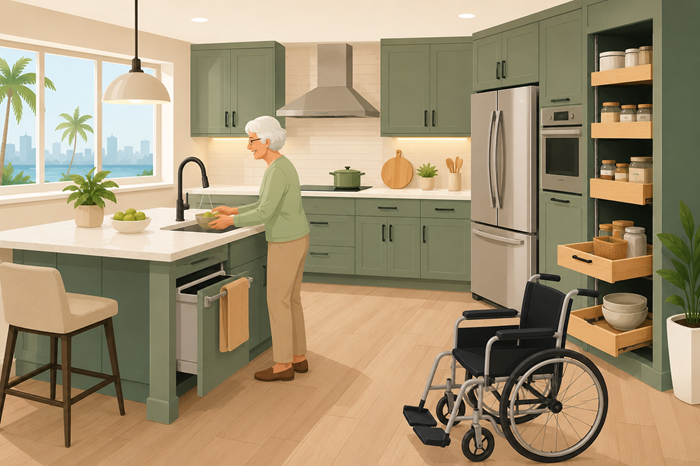
A well-designed kitchen should work for everyone, regardless of age. For many Miami homeowners, creating a safer and more comfortable cooking space becomes increasingly important as family members grow older. Thoughtful kitchen modifications for elderly residents can reduce risks, improve accessibility, and help seniors maintain their independence while continuing to enjoy everyday activities.
Whether you’re planning a complete remodel or making targeted improvements, understanding which upgrades deliver the greatest benefits can help you create a kitchen that is both functional and stylish. From better lighting to easier-to-reach storage solutions, the right changes can transform a kitchen into a safer and more enjoyable space for years to come.
Why Senior-Friendly Kitchen Design Matters
The kitchen is one of the most frequently used rooms in any home. It is also a place where slips, falls, burns, and other accidents can occur if the space is not designed with accessibility in mind.
As mobility, vision, and strength naturally change with age, certain kitchen features that once seemed convenient may become difficult or even hazardous to use. By planning age-friendly improvements, homeowners can create a safer environment without sacrificing aesthetics.
Miami homeowners are increasingly choosing accessible designs that blend modern style with practical functionality. These upgrades not only improve daily living but can also add long-term value to the home.
Common Challenges Seniors Face in the Kitchen
Before deciding on upgrades, it’s helpful to understand the obstacles many older adults encounter.
Limited Mobility
Bending, reaching, and standing for extended periods can become difficult. Cabinets placed too high or too low often create unnecessary strain.
Reduced Vision
Poor lighting and low-contrast surfaces can make it harder to identify objects, read labels, and safely prepare meals.
Balance and Stability Concerns
Slippery flooring and cluttered walkways can increase the risk of falls.
Decreased Hand Strength
Traditional cabinet knobs, heavy drawers, and difficult-to-operate faucets may become frustrating to use.
Addressing these challenges through thoughtful design creates a more supportive and comfortable environment.
Prioritize Safe and Slip-Resistant Flooring
Flooring plays a major role in kitchen safety.
Many older homes still feature surfaces that can become slippery when wet. Choosing slip-resistant materials helps reduce fall risks while maintaining a stylish appearance.
Popular options include:
- Textured porcelain tile
- Luxury vinyl plank flooring
- Cork flooring
- Matte-finish ceramic tile
Avoid highly polished surfaces that can become slick, especially during Miami’s humid and rainy seasons.
Improve Lighting Throughout the Space
Good lighting is one of the most effective safety upgrades for aging homeowners.
Layered lighting helps eliminate shadows and improves visibility in key work areas.
Consider adding:
- Under-cabinet lighting
- LED task lighting above countertops
- Bright ceiling fixtures
- Motion-sensor lights for nighttime use
Proper illumination makes food preparation safer and reduces eye strain.
Choose Accessible Storage Solutions
Storage should be easy to reach without excessive stretching or bending.
Many homeowners find inspiration from these smart pull-out pantry ideas when redesigning storage areas for improved accessibility.
Pull-Out Shelves
Pull-out shelves bring items forward, reducing the need to reach deep into cabinets.
Deep Drawers
Large drawers can store cookware more conveniently than lower cabinets.
Lazy Susans
Corner storage becomes significantly easier to access with rotating shelving systems.
Pull-Down Cabinet Systems
These mechanisms allow upper shelves to move downward for easier access.
Install User-Friendly Countertops and Workspaces
Kitchen work areas should accommodate changing physical needs.
Lower countertop sections can provide seated workspaces for food preparation. Rounded countertop edges also help minimize injuries from accidental bumps.
Durable, low-maintenance materials remain a popular choice for homeowners seeking both safety and convenience.
Upgrade Cabinets for Long-Term Durability
Cabinets are one of the most heavily used elements in any kitchen.
Selecting the best kitchen cabinet materials becomes especially important in Miami, where humidity can affect long-term performance and durability.
Look for cabinet options that resist moisture, warping, and wear while offering smooth-operating doors and drawers.
Consider Easy-to-Use Appliances
Modern appliances offer numerous features that improve convenience and safety.
Popular senior-friendly options include:
- Wall ovens with side-opening doors
- Induction cooktops
- Refrigerators with bottom freezers
- Dishwashers installed at raised heights
- Touch-control appliances
Many newer models also include automatic shut-off features that provide additional peace of mind.
Optimize Sink and Faucet Accessibility
The sink area is used constantly throughout the day.
Simple upgrades can make a significant difference:
- Single-lever faucets
- Touchless faucet technology
- Pull-down spray heads
- Shallow sink designs
These features require less physical effort and are easier to operate for individuals with arthritis or reduced hand strength.
Create Wider Walkways and Open Spaces
A crowded kitchen can quickly become difficult to navigate.
When planning a remodel, maintain wide pathways between islands, cabinets, and appliances. This creates easier movement and can accommodate walkers or wheelchairs if mobility needs change in the future.
An open layout also improves visibility and overall comfort.
Add Comfortable Seating Areas
Many seniors appreciate having a place to sit while preparing meals.
Incorporating seating into the kitchen design can reduce fatigue and make daily tasks more enjoyable.
Popular options include:
- Built-in breakfast nooks
- Counter-height seating
- Pull-out work surfaces
- Small dining areas adjacent to the kitchen
These additions encourage social interaction while enhancing comfort.
Smart Technology Can Improve Independence
Technology is becoming increasingly useful in accessible kitchen design.
Voice-activated systems can control lighting, timers, and appliances without requiring physical interaction.
Smart home integrations may include:
- Voice assistants
- Smart lighting controls
- Connected appliances
- Automated reminders
These features help seniors maintain independence while simplifying daily routines.
Budgeting for an Accessible Kitchen Remodel
Many homeowners wonder about the overall kitchen renovation cost when planning accessibility improvements.
Expenses vary based on the size of the project, materials selected, and structural changes required. Minor upgrades may involve only a few modifications, while comprehensive remodels can include cabinetry, flooring, appliances, lighting, and layout adjustments.
Planning a realistic budget early helps prioritize improvements that deliver the greatest benefits.
For homeowners exploring funding options, it may be helpful to compare cash-out refinance and HELOC before starting a major remodeling project.
Working With the Right Remodeling Professional
Accessibility-focused projects require thoughtful planning and expertise.
When evaluating contractors, reviewing these key considerations for hiring a kitchen remodeling contractor key question to ask can help ensure your project runs smoothly from initial planning through final completion.
An experienced professional can recommend practical solutions tailored to your household’s current and future needs.
Finding the Right Remodeling Services in Miami
Miami homeowners have unique considerations including humidity, storm preparedness, and evolving lifestyle needs.
Working with specialists who provide comprehensive kitchen renovation services can help ensure every aspect of the project is designed for safety, comfort, and durability.
If you’re researching local options, searching for kitchen renovation near me can be a useful starting point for finding qualified professionals familiar with Miami homes and accessibility-focused designs.
A trusted kitchen renovation contractor can guide you through material selections, layout improvements, and safety enhancements that align with your goals.
Future-Proofing Your Home
One of the biggest advantages of accessible design is that it benefits everyone.
Many age-friendly features are equally useful for younger homeowners, guests, and individuals recovering from injuries. By incorporating thoughtful kitchen modifications today, homeowners can create a space that remains functional and attractive for decades.
Future-proofing allows you to stay comfortably in your home longer while reducing the likelihood of costly changes later.
Conclusion
Creating a senior-friendly kitchen is about more than accessibility—it’s about maintaining independence, improving safety, and enhancing quality of life. From better lighting and slip-resistant flooring to smart storage and user-friendly appliances, every upgrade contributes to a more comfortable living environment.
For Miami homeowners, investing in age-friendly kitchen design provides immediate benefits while preparing the home for future needs. With careful planning and the right remodeling strategy, it’s possible to create a beautiful kitchen that supports safe and enjoyable living at every stage of life.
Frequently Asked Questions
1. What is the most important safety upgrade for seniors in a kitchen?
Slip-resistant flooring is often the most effective upgrade for reducing accident risks.
2. Are accessible kitchens only for elderly homeowners?
No, accessibility features benefit people of all ages and abilities.
3. How wide should kitchen walkways be for better accessibility?
Walkways should generally be at least 42–48 inches wide for comfortable movement.
4. Do smart appliances help older adults?
Yes, smart appliances can improve convenience, safety, and independence.
5. Can accessible kitchen upgrades increase home value?
Yes, age-friendly features can make a home more appealing to a wider range of buyers.