

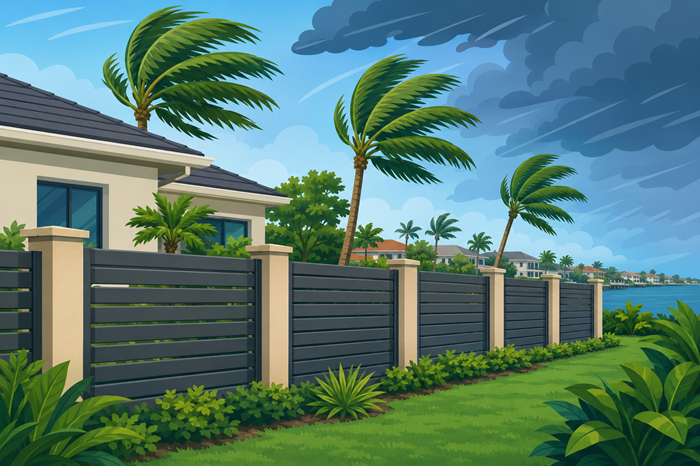
South Florida homeowners know that hurricane season brings more than heavy rain and strong winds. It can also put tremendous stress on outdoor structures, especially fencing. A damaged fence can lead to expensive repairs, reduced property security, and even safety hazards during a storm.
If you’re wondering how to make your hurricane fence stronger and more resilient, the good news is that several practical upgrades can significantly improve its ability to withstand extreme weather. From selecting the right materials to reinforcing posts and ensuring proper maintenance, preparing your fence before hurricane season can save you money and headaches later.
This guide covers everything South Florida homeowners need to know to make a fence hurricane-ready and protect their property when severe weather strikes.
Why Hurricane Resistance Matters for Fences
Many homeowners focus on protecting roofs, windows, and doors before a hurricane. While these are critical areas, fencing often gets overlooked.
A fence acts like a sail during high winds. When wind pressure builds against solid panels, the force can cause posts to loosen, panels to detach, or entire sections to collapse. Once one section fails, neighboring sections often follow.
Investing in hurricane-resistant improvements helps:
- Reduce storm-related damage
- Extend fence lifespan
- Improve home security
- Lower long-term maintenance costs
- Protect landscaping and outdoor spaces
Understanding the risks is the first step toward creating a more durable fence system.
Assess Your Existing Fence Condition
Before making upgrades, inspect your fence carefully.
Check Fence Posts
Posts are the foundation of every fence. Even strong panels cannot survive hurricane-force winds if the posts are weak.
Look for:
- Leaning posts
- Rotting wood
- Rusted metal components
- Loose concrete footings
- Cracks around post bases
Any compromised post should be repaired or replaced before storm season begins.
Examine Fence Panels
Inspect all sections for:
- Loose fasteners
- Warped boards
- Missing pickets
- Bent rails
- Corrosion on metal components
Minor issues can quickly become major failures during severe weather.
If you’re unsure whether repairs are sufficient, reviewing the differences between fence repair vs replacement can help determine the most cost-effective solution.
Choose Hurricane-Resistant Fence Materials
Material selection plays a major role in storm performance.
Aluminum Fencing
Aluminum fences allow wind to pass through rather than creating resistance.
Benefits include:
- Rust resistance
- Low maintenance
- Strong structural integrity
- Excellent wind performance
For many South Florida properties, aluminum remains one of the most reliable choices.
Vinyl Fencing
Modern vinyl fencing offers durability and weather resistance.
Advantages include:
- Moisture resistance
- No rot or insect damage
- Flexible under wind stress
- Long lifespan
However, quality installation is essential for maximizing storm resistance.
Reinforced Wood Fencing
Wood remains popular because of its appearance and privacy benefits.
To improve performance:
- Use pressure-treated lumber
- Install stronger rails
- Reinforce connections
- Use deeper post footings
Proper reinforcement significantly increases durability during storms.
Strengthen Fence Posts and Footings
The most important hurricane upgrade often happens below ground.
Increase Post Depth
Many fence failures occur because posts are not installed deep enough.
In South Florida, deeper post installations create:
- Better stability
- Improved resistance to uplift forces
- Greater structural support
Professional installers typically recommend depths based on local soil conditions and fence height.
Use Concrete Footings
Concrete anchors help prevent post movement during strong winds.
Proper footings should:
- Extend below the frost line where applicable
- Match fence height requirements
- Allow adequate drainage
- Be professionally compacted
A secure footing system creates the foundation for hurricane resistance.
Reduce Wind Resistance
One of the most effective ways to improve fence performance is reducing the amount of wind pressure it receives.
Add Spacing Between Boards
Completely solid fences experience higher wind loads.
Small gaps between boards allow airflow while still maintaining privacy.
Benefits include:
- Reduced pressure buildup
- Less structural stress
- Improved storm durability
Consider Semi-Private Designs
Alternating board designs and shadowbox fencing styles allow wind to pass through while preserving appearance.
These designs often outperform fully enclosed fencing during severe weather events.
Understanding the proper wind rating fence requirements for South Florida can help homeowners select designs capable of handling local weather conditions.
Upgrade Hardware and Connections
Strong materials are only as reliable as the hardware holding everything together.
Use Stainless Steel Fasteners
Standard screws and nails may corrode over time.
Stainless steel hardware provides:
- Superior corrosion resistance
- Longer lifespan
- Stronger holding power
Reinforce Rails and Brackets
Heavy-duty brackets help distribute wind loads more evenly throughout the fence structure.
Inspect all connections and replace weak or rusted components before hurricane season.
Trim Nearby Trees and Landscaping
Fences often suffer damage from falling debris rather than wind alone.
Before storm season:
- Remove dead branches
- Trim overhanging limbs
- Eliminate unstable trees
- Secure outdoor items
Reducing nearby hazards lowers the risk of impact damage during storms.
Schedule Regular Fence Maintenance
Routine maintenance remains one of the most overlooked storm-preparation strategies.
Inspect Annually
Conduct a complete inspection every year, ideally before hurricane season begins.
Check for:
- Loose boards
- Rust
- Rot
- Foundation movement
- Structural weaknesses
Address Small Problems Early
Minor repairs are far less expensive than major storm reconstruction.
Homeowners looking to refresh aging fencing can learn how to make an old fence look new again while improving overall durability.
Work With Experienced Fence Professionals
Storm-resistant fencing requires more than quality materials.
Proper:
- Engineering
- Installation
- Post placement
- Hardware selection
- Local code compliance
all contribute to long-term performance.
A qualified privacy fence contractor understands South Florida weather challenges and can recommend the best reinforcement methods for your property.
For larger projects, partnering with a trusted fence contractor ensures the fence is installed according to local requirements and industry best practices.
Understanding Hurricane Fence Costs
Many homeowners ask about hurricane fence cost when planning upgrades.
Pricing depends on factors such as:
- Fence material
- Fence height
- Property size
- Post reinforcement requirements
- Existing fence condition
- Labor costs
While storm-resistant improvements increase initial investment, they often reduce future repair expenses after major weather events.
Obtaining multiple estimates helps homeowners compare options and find the right balance between durability and budget.
Choosing the Right Hurricane Fence Company
Not all contractors have experience designing fences for extreme weather environments.
When selecting a hurricane fence company, look for:
- South Florida experience
- Knowledge of local building codes
- Strong customer reviews
- Storm-resistant installation methods
- Material expertise
A reputable provider can identify vulnerabilities and recommend upgrades tailored to your property’s specific needs.
Homeowners researching regional installation approaches may find useful insights through various catalyst fence solutions designed specifically for South Florida conditions.
Common Hurricane Fence Mistakes to Avoid
Ignoring Small Repairs
Loose boards and weak connections often become failure points during storms.
Choosing Style Over Strength
A beautiful fence should also withstand local weather conditions.
Skipping Professional Installation
Improper installation can compromise even premium materials.
Neglecting Post Reinforcement
Posts remain the backbone of the entire structure.
Waiting Until Hurricane Season Starts
Planning ahead allows time for inspections, repairs, and upgrades before severe weather arrives.
Final Thoughts
Preparing your fence for South Florida’s hurricane season is one of the smartest investments you can make as a homeowner. Strong materials, reinforced posts, quality hardware, and routine maintenance all contribute to a more resilient fence that can better withstand extreme weather.
Whether you’re upgrading an existing fence or planning a new installation, focusing on wind resistance and structural integrity will help protect your property for years to come. A proactive approach today can prevent costly repairs after the next major storm and provide greater peace of mind throughout hurricane season.
FAQs
How can I make my fence more hurricane-resistant?
Reinforce posts, upgrade hardware, and reduce wind resistance through proper fence design.
Which fence material performs best during hurricanes?
Aluminum and properly reinforced vinyl fences generally perform very well in high winds.
Should fence posts be set in concrete?
Yes, concrete footings provide greater stability and wind resistance.
Can an older fence be strengthened instead of replaced?
Yes, many fences can be reinforced if the core structure remains sound.
When should I inspect my fence before hurricane season?
Ideally several months before hurricane season begins to allow time for repairs.