

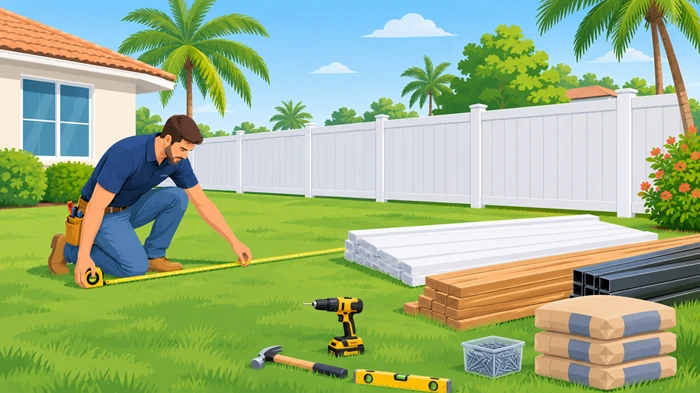
Planning a new fence starts with more than choosing a design or material. You need an accurate estimate of the supplies required to complete the project without overspending or running short during installation. Learning how to calculate fence materials helps homeowners determine the number of fence panels, posts, rails, concrete bags, and other essential components before construction begins.
South Florida homeowners also need to consider sandy soil, heavy rainfall, humidity, and strong winds when planning a fence. These conditions can influence material selection, post placement, and installation requirements. With the right measurements and a clear calculation process, you can plan a durable fence that suits your property, budget, and outdoor space.
Key Takeaways
-
Measure the complete fence perimeter before purchasing materials.
-
Calculate panels, posts, rails, gates, and concrete separately.
-
Choose materials suitable for South Florida’s weather conditions.
-
Include extra supplies to account for cuts, adjustments, and installation waste.
Why Accurate Fence Material Calculations Matter
A fence project becomes easier to manage when you know exactly what needs to be purchased. An accurate estimate helps control material costs, reduces unnecessary waste, and prevents delays caused by missing supplies.
Before learning how to calculate fence materials, understand that every fence has several components. The quantity of each component depends on the fence layout, height, material, post spacing, and number of gates.
For example, a simple straight fence may require fewer adjustments than a property with corners, slopes, and multiple entry points. Taking time to plan these details makes the installation process more predictable.
Step 1: Measure the Total Fence Perimeter
The first step is measuring the area you want to enclose. Walk around the property and identify the exact fence line, including the front, back, and side boundaries.
Use a measuring tape, measuring wheel, or laser distance meter to record each section separately.
For example:
| Fence section | Measurement |
| Front boundary | 40 feet |
| Back boundary | 40 feet |
| Left boundary | 60 feet |
| Right boundary | 60 feet |
| Total perimeter | 200 feet |
Add all measurements to determine the total fence length.
Formula:
Total fence length = Length of all fence sections added together.
This measurement becomes the foundation for calculating fence materials accurately. Remember to account for planned gate openings because gates occupy space that would otherwise contain fence panels or pickets.
Mark corners, slopes, existing structures, trees, and obstacles on a simple property sketch. This drawing will help you organize the quantities needed for each section.
Step 2: Decide on the Fence Material and Style
Your material selection affects the number and type of components required. Different fence designs use different installation systems, so make this decision before preparing your final estimate.
Common options include:
-
Vinyl fencing: Suitable for homeowners looking for a low-maintenance option with different privacy styles.
-
Aluminum fencing: A popular choice for decorative boundaries, pool enclosures, and open views.
-
Wood fencing: Offers a traditional appearance and can provide excellent backyard privacy.
-
Chain-link fencing: A practical option for securing larger areas while maintaining visibility.
-
Metal fencing: Available in different designs and finishes for residential boundaries.
When comparing options, consider installation costs, maintenance requirements, expected lifespan, and resistance to local weather conditions.
For a closer look at two popular residential options, read this guide to comparing aluminum vs. vinyl fencing.
Your material choice also determines the supplies you should include in your estimate. For instance, chain link fence materials may include fabric rolls, tension bars, top rails, fittings, and terminal posts. Vinyl fence materials generally include panels, posts, caps, and compatible brackets.
Step 3: Calculate the Number of Fence Panels
Once you know the total fence length, calculate how many panels are needed.
Most residential fence panels are available in standard widths, although dimensions vary by manufacturer and design.
Formula:
Number of panels = Total fence length ÷ Width of one panel.
Consider a fence measuring 200 feet with panels that are 8 feet wide.
200 ÷ 8 = 25 panels.
Therefore, you need approximately 25 panels to cover the measured distance, assuming the layout and gate openings have been accounted for.
However, real installations may require adjustments at corners, property boundaries, and uneven sections. Some panels may need cutting to fit the available space.
When preparing an estimate, check the manufacturer’s actual panel dimensions rather than relying on assumed standard measurements.
Step 4: Determine How Many Fence Posts You Need
Fence posts provide structural support and help keep the fence stable. Their spacing depends on the fence material, panel dimensions, fence height, soil conditions, and manufacturer’s installation instructions.
A common planning approach for an 8-foot panel system is to allow one post at each panel connection, with additional posts at corners and gate openings.
For a straight 200-foot fence divided into 25 equal 8-foot sections, you would generally need 26 posts, including both end posts.
Basic formula:
Number of posts = Number of fence sections + 1.
This calculation assumes a straight, continuous fence without additional structural requirements.
Corners, gates, changes in direction, and unusual terrain may require extra posts or specialized hardware. Never assume that every fence system uses identical spacing.
South Florida properties deserve particular attention because sandy soil and strong winds can affect fence stability. Review this guide on correct fence post spacing for South Florida homes before finalizing your layout.
Step 5: Calculate Rails, Pickets, and Other Components
The next stage is identifying the smaller components required to complete the fence.
The quantities depend on the fence design and manufacturer’s specifications.
Horizontal rails
Wood and some vinyl fence systems use horizontal rails to connect posts and support the fence structure.
For example, a fence design requiring two rails per section across 25 sections would need approximately 50 rail sections.
Some taller or heavier designs require three rails or additional reinforcement.
Vertical pickets
Picket fences require individual vertical boards or pickets.
Formula:
Number of pickets = Fence length in inches ÷ (Picket width + Gap width).
For example, assume a 40-foot section uses 5-inch-wide pickets with a 1-inch gap.
40 feet = 480 inches.
480 ÷ (5 + 1) = 80 pickets.
This gives you an estimated quantity for that section. Adjust the calculation for end spacing and the actual layout.
Hardware and connectors
Do not overlook the small components that hold everything together.
Depending on the fence type, your shopping list may include:
-
Screws and nails
-
Brackets and post caps
-
Gate hinges and latches
-
Tension bands and fittings
-
Rail connectors
-
Decorative hardware
Aluminum fence materials may require specialized brackets, mounting hardware, and compatible gate components. Similarly, wood fence materials may require weather-resistant fasteners and additional support pieces.
Step 6: Estimate Concrete for Fence Posts
Concrete is another important part of your material estimate, especially when installing posts that require concrete footings.
The quantity depends on the post-hole diameter, depth, and number of posts.
Formula:
Concrete volume = π × Radius² × Depth.
For example, assume a cylindrical post hole has a 12-inch diameter and a 24-inch depth.
-
Radius = 6 inches
-
Depth = 24 inches
-
Volume = 3.14 × 6 × 6 × 24
-
Volume = approximately 2,714 cubic inches
Divide by 1,728 to convert cubic inches into cubic feet.
The result is approximately 1.57 cubic feet per hole.
Multiply this amount by the number of holes to estimate the total concrete volume. Then check the coverage information on the concrete bag to determine the number of bags required.
Actual concrete requirements vary with post dimensions, footing design, soil conditions, and local installation requirements. Explore this detailed explanation of how much concrete per fence post you need.
Step 7: Determine the Correct Post Depth
Post depth is an important factor in fence stability. A post that is not installed to the appropriate depth may become loose, lean, or fail under pressure.
The required depth depends on fence height, soil conditions, wind exposure, and the manufacturer’s specifications.
South Florida’s sandy soil can present additional installation challenges. A suitable footing design helps provide the support needed for the fence to remain stable.
Before purchasing materials, understand how deep to set fence posts in sandy South Florida soil.
Remember that deeper holes may require additional concrete, so finalize your footing measurements before calculating the total purchase quantity.
Step 8: Include Gates and Additional Installation Supplies
Gates need separate consideration because they require their own frames, posts, hinges, latches, and support hardware.
Start by measuring each planned gate opening. Then subtract the opening width from the total fence coverage before determining the remaining panel or picket quantities.
For example, a 200-foot boundary with one 4-foot gate has 196 feet of fence coverage.
Your estimate should also include:
-
Gate frames and panels
-
Hinges and locking mechanisms
-
Additional support posts
-
End and corner fittings
-
Post caps and decorative accessories
-
Gravel or other specified footing materials
These smaller requirements can influence the final project budget. Listing them separately makes it easier to compare supplier prices and avoid missing essential components.
Step 9: Add Extra Materials for Cutting and Waste
Even carefully measured projects can involve unexpected adjustments. Uneven ground, damaged pieces, cutting requirements, and installation mistakes can increase material consumption.
Consider adding approximately 5% to 10% extra for suitable materials, depending on the fence design and project complexity.
For example, a project requiring 100 pickets may need an additional 5 to 10 pieces as a reasonable planning allowance.
This allowance should not be applied blindly to every component. Large panels, custom gates, and expensive posts should be ordered according to actual measurements and manufacturer recommendations.
When comparing suppliers or searching online for fence materials near me, request itemized quotations so you can compare quantities, specifications, delivery charges, and product quality.
Step 10: Prepare Your Final Fence Material Checklist
Before purchasing supplies, organize every calculation in one place. This makes it easier to review the project and identify missing components.
Here is an example based on a 200-foot straight fence with 8-foot sections and no gate openings:
| Material | Estimated quantity |
| Fence panels | 25 |
| Fence posts | 26 |
| Sections | 25 |
| Concrete | Based on footing calculations |
| Rails | Based on fence design |
| Screws and brackets | Based on manufacturer specifications |
| Post caps | 26 |
| Additional hardware | As required |
This example provides a starting point rather than a universal shopping list. Actual quantities will change according to the selected fence system, layout, and installation requirements.
Learning how to calculate fence materials also becomes easier when you separate the project into individual sections. Measure, calculate, record, and verify each component before placing an order.
Why Choose Top Renovations for Your South Florida Fence Project?
Planning a fence involves more than measuring boundaries and purchasing supplies. Proper material selection, installation techniques, and attention to local property conditions all contribute to a successful result.
Top Renovations is the perfect company for home remodeling in South Florida, helping homeowners approach their improvement projects with professional guidance and practical solutions. Whether you are planning a new fence, upgrading an existing boundary, or improving your outdoor space, working with experienced professionals can make the process more organized and manageable.
Homeowners can also consult fence contractors near me to explore professional fencing services and discuss project requirements.
Getting professional input before purchasing materials can help prevent measurement mistakes, unnecessary expenses, and installation problems. It also gives you an opportunity to discuss suitable designs for your property and local conditions.
Conclusion
Accurate planning is the foundation of a successful fence installation. Start with the total perimeter, select your preferred design, and calculate the panels, posts, rails, pickets, concrete, and hardware separately.
Understanding how to calculate fence materials helps you prepare a realistic budget, avoid unnecessary purchases, and organize your installation from beginning to end.
For South Florida homeowners, paying attention to soil conditions, weather exposure, and proper post installation is equally important. A well-planned fence can improve privacy, security, and the overall appearance of your property for years to come.
Frequently Asked Questions
1. How do I calculate the number of fence panels needed?
Divide the total fence length by the width of one panel and adjust for gates, corners, and cutting requirements.
2. How many posts are needed for a fence?
For a straight fence, divide the total length into sections and add one post to the number of sections, subject to the fence design.
3. How much extra material should I purchase?
A 5% to 10% allowance is a useful starting point for suitable materials, depending on the layout and installation complexity.
4. How deep should fence posts be installed in South Florida?
Post depth depends on fence height, soil conditions, wind exposure, and applicable installation requirements.
5. Can a contractor help estimate fence materials?
Yes. A professional fencing contractor can measure the property, recommend suitable materials, and prepare a detailed installation estimate.