

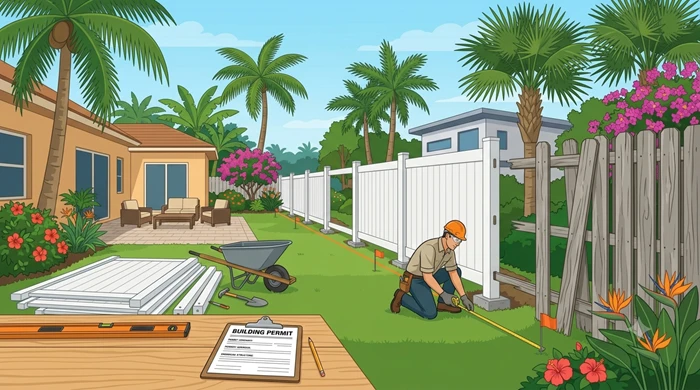
Replacing an old fence can improve privacy, security, curb appeal, and the overall appearance of your property. However, homeowners in Fort Lauderdale often wonder whether a permit is required before starting the project. The answer depends on the type of work, property location, zoning requirements, and the specific fence being installed. Understanding the rules before you replace backyard fence sections can prevent delays, unexpected costs, and compliance problems.
Key Takeaway
-
Fort Lauderdale lists residential fence work as a permit category, so replacing an existing fence generally requires checking the city’s permitting requirements.
-
Fence height, setbacks, transparency, property lines, and sight-triangle rules can affect approval.
-
A fence permit may involve both building and zoning requirements.
-
Professional planning can make the replacement process smoother and help avoid costly corrections.
Does Replacing a Backyard Fence Require a Permit in Fort Lauderdale?
For many residential properties, homeowners should expect a permit to be required when they replace backyard fence structures in Fort Lauderdale.
The City of Fort Lauderdale identifies “Fence – Residential Only” as a zoning permit type and includes fences among the residential projects handled through its permitting system. The city’s permitting FAQ also explains that regulated construction, alteration, repair, removal, or replacement work generally requires an application and permit before work begins.
That means replacing an entire fence should not be treated the same way as ordinary maintenance. The safest approach is to verify the permit requirements for the particular property and proposed fence before purchasing materials or beginning demolition.
The city’s Development Services Department provides a specific Fence/Wall/Gate Permit Package and related documents, showing that fence projects are subject to an established review process.
Why Permit Requirements Matter for Fence Replacement
A permit is not simply paperwork. It helps confirm that the proposed structure complies with applicable safety, zoning, and land-use requirements.
When you replace backyard fence sections, the new installation may differ from the existing structure in height, location, materials, or design. An old fence does not automatically establish that the same dimensions or placement can be used for a new installation.
Fort Lauderdale’s rules address matters such as fence height, setbacks, transparency, landscaping, and sight visibility. These requirements can affect where a fence can be placed and how it must be designed.
This is particularly important for properties near streets, waterways, corners, or unusual lot lines.
What Should You Check Before Starting?
Several details deserve attention before removing an existing fence.
Confirm Your Property’s Zoning
The first step is identifying the zoning district associated with the property. Fort Lauderdale provides a Zoning GIS application that allows property owners to look up zoning information by address. The city also directs homeowners to its Unified Land Development Regulations for applicable dimensional requirements.
Zoning can influence setbacks, permitted fence locations, height, and other design considerations.
Check Property Lines
A fence should be positioned based on reliable property information rather than assumptions about where the boundary sits.
An existing fence may not accurately represent the legal property line. A survey can be particularly useful where neighboring fences, landscaping, driveways, easements, or irregular lots create uncertainty.
Review Fence Height
Height is one of the most important considerations when planning to replace backyard fence structures.
Fort Lauderdale’s fence regulations establish different dimensional requirements based on factors such as location, height, transparency, and fence type. For example, the city’s published regulations include specific requirements for residential fences and chain-link fences, including setback provisions for certain installations.
Homeowners should review applicable fence height rules before finalizing a design.
Does Fence Material Affect the Project?
Yes. Material can influence the appearance, construction method, and applicable requirements.
Common choices include wood, vinyl, aluminum, and chain link. Each material offers different benefits in terms of privacy, maintenance, durability, and appearance.
For homeowners comparing materials, reviewing the wood fencing pros and cons can help clarify whether wood makes sense for a South Florida property.
Climate is also an important consideration. Sun exposure, humidity, heavy rain, insects, and storms can influence the long-term performance of exterior materials.
What About Chain-Link Fencing?
Chain-link fencing remains a practical choice for homeowners who want a durable boundary with visibility and relatively straightforward maintenance.
Fort Lauderdale’s published fence regulations specifically address chain-link fencing, including height and setback considerations.
Homeowners planning this type of project can also review how to install a chain link fence to understand the basic installation process and the components involved.
Even when a homeowner understands the installation process, permitting and property-specific requirements still need to be addressed separately.
Fence Post Spacing Matters
The posts provide much of the structural support for a fence. Poor spacing can contribute to movement, sagging, leaning, or premature damage.
The appropriate spacing depends on the fence material, panel dimensions, post size, soil conditions, wind exposure, and construction method.
Before ordering materials, review the recommended fence post spacing south florida guidance so the planned installation has an appropriate structural layout.
Good planning at this stage can reduce material waste and help create a stronger finished fence.
How to Replace a Backyard Fence Properly
Knowing how to replace backyard fence structures involves more than removing old panels and installing new ones. A successful project starts with planning.
1. Inspect the Existing Fence
Walk the entire perimeter and identify damaged panels, leaning posts, rusted hardware, deteriorated wood, and sections affected by previous repairs.
Determine whether a full replacement makes more sense than repairing isolated areas.
2. Verify the Property Boundary
Confirm the location of the property line before demolition. This is especially important when the existing fence is close to a neighbor’s property or a public right-of-way.
3. Select the New Design
Choose the material, height, color, privacy level, gate locations, and overall appearance.
Popular backyard fence ideas include horizontal wood designs, traditional vertical panels, aluminum fencing, vinyl privacy fencing, and chain-link systems.
4. Check Permit and Zoning Requirements
Before construction starts, determine which approvals are required for the property.
Fort Lauderdale’s permitting system allows applications to be submitted digitally through LauderBuild, and the city provides specific documentation for fence, wall, and gate projects.
5. Remove the Existing Structure
Once the project is properly approved, remove the old materials carefully. Existing posts may require excavation, cutting, or specialized removal depending on how they were installed.
6. Install New Posts and Sections
Set posts according to the selected fence system and site conditions. Check alignment and elevation throughout the installation rather than waiting until the end.
7. Complete Gates and Final Details
Install gates, latches, caps, trim, hardware, and any required landscaping. The final inspection should confirm that the completed installation matches the approved project.
How Much Does It Cost to Replace a Backyard Fence?
The cost to replace backyard fence varies considerably from one property to another.
Important cost factors include total linear footage, fence material, height, terrain, demolition requirements, gate count, post conditions, labor, permitting, site access, and any property-specific requirements.
Wood may have a different upfront cost from vinyl, aluminum, or chain link, while a more complex property can require additional labor.
A useful estimate should account for the complete project rather than only the price of panels. Posts, concrete, fasteners, gates, disposal, labor, and permit-related expenses can all affect the final amount.
Getting a written estimate from a qualified fence company can provide a clearer picture before work begins.
Should You Hire a Professional?
Fence replacement can appear straightforward, but permitting and site conditions can make the project more complicated than expected.
A professional contractor can help with measurements, material selection, layout, post installation, gates, documentation, and coordination of required approvals.
Homeowners searching for fence contractors should look for contractors familiar with Fort Lauderdale requirements and residential fence installations.
Working with an experienced fence company near me can also make it easier to address site-specific challenges such as unusual property boundaries, drainage, landscaping, existing concrete, or difficult access.
Where Top Renovations Fits Into the Process
Top Renovations provides home renovation services at affordable rates at South Florida, helping homeowners approach exterior improvement projects with practical planning and professional support.
For homeowners looking for qualified fence contractors near me, choosing a team familiar with local requirements can make the project easier to manage from planning through completion.
The goal should not simply be to install a new structure. A well-planned replacement should provide the desired privacy, appearance, security, and durability while respecting applicable property and zoning requirements.
What Are Some Common Mistakes to Avoid?
Several mistakes can make a fence replacement more expensive or time-consuming.
Starting Without Checking Permit Requirements
Beginning work before confirming the applicable requirements can lead to delays or corrective work. Fort Lauderdale specifically identifies residential fence permitting within its Development Services process.
Assuming the Old Fence Was Compliant
An existing fence may have been installed under different circumstances or may not meet current requirements. The existing structure should not automatically be used as the standard for the new installation.
Ignoring Setbacks
Fence placement can be subject to setback requirements. Fort Lauderdale’s regulations include specific setback provisions based on fence characteristics and location.
Forgetting About Sight Visibility
Properties near streets, corners, and waterways can have additional visibility considerations. The city’s regulations include restrictions affecting opaque fences within certain sight triangles and areas near waterways.
Choosing Materials Based Only on Price
The cheapest material is not always the least expensive choice over the life of the fence. Maintenance, replacement frequency, storm exposure, and installation quality all influence long-term value.
A Practical Approach to Fence Replacement
The best approach is to treat fence replacement as a small construction project rather than a simple weekend upgrade.
Start by documenting the existing condition, verifying the property boundary, checking zoning requirements, selecting a suitable material, and confirming permit needs.
After that, obtain a detailed estimate and establish a clear installation plan.
For projects in Fort Lauderdale, the city’s Development Services Department is the appropriate source for current permitting requirements. The city processes permits through LauderBuild and provides current fence-related forms and checklists.
Taking these steps before demolition can prevent many common problems and make the installation more predictable.
Final Thoughts
So, do you need a permit to replace backyard fence in Fort Lauderdale? In many cases, yes, and homeowners should verify the requirements before starting work.
The city’s current permitting information specifically recognizes residential fence projects, while local regulations address important details such as height, setbacks, transparency, landscaping, and visibility.
A successful project starts with accurate property information and a design that fits the site. From there, proper permitting, quality materials, sound installation practices, and professional guidance can help create a fence that performs well for years.
Frequently Asked Questions
1. Does a residential fence require a permit in Fort Lauderdale?
Yes, residential fence projects are listed as a permit type by the City of Fort Lauderdale.
2. Can I use the same height as my existing fence?
Not necessarily, because current zoning and dimensional requirements may apply to the replacement.
3. Does fence material affect the requirements?
It can, because Fort Lauderdale regulations include requirements that vary by fence type and location.
4. Where can I apply for a fence permit?
Fort Lauderdale processes permit applications digitally through its LauderBuild permitting system.
5. Should I verify my property line before replacing a fence?
Yes, confirming the property boundary can help prevent disputes and incorrect fence placement.