
South Florida homes are known for open layouts, natural light, and relaxed coastal style. But even in sunny climates, many homeowners still struggle with dim hallways, shadowy corners, and living areas that feel smaller than they should. The right lighting strategy can completely transform how a home looks and feels without requiring a full rebuild.
Whether you’re refreshing a beachfront condo, updating a suburban family home, or planning a larger renovation project, smart lighting choices can improve comfort, functionality, and visual appeal. From layered illumination to reflective finishes and architectural upgrades, there are plenty of ways to brighten your interiors while keeping the space stylish and energy-efficient.
If you’re already planning larger interior renovations, lighting should be one of the first design elements to consider. A well-lit home not only feels more welcoming but also increases perceived space and improves everyday living.
Why Lighting Matters More in South Florida Homes
South Florida architecture often includes long corridors, open-concept layouts, and expansive windows. While these features can create beautiful interiors, they can also lead to uneven lighting distribution indoors.
Humidity, tropical weather, and strong afternoon sun also influence how lighting performs throughout the day. Many homeowners rely too heavily on overhead fixtures, leaving certain areas darker than intended. Strategic lighting solves that issue while helping interiors feel warmer and more balanced.
Good lighting design does more than brighten a room. It shapes mood, enhances décor, and improves how each space functions from morning to night.
Start With Layered Lighting
The best lighting plans combine several light sources rather than depending on a single fixture.
Ambient Lighting
Ambient lighting provides overall illumination for the room. Recessed ceiling lights, flush mounts, and LED ceiling panels work especially well in Florida homes because they create a clean, modern appearance without overwhelming the space.
Homeowners exploring current ceiling design trends often combine recessed lighting with tray ceilings or subtle cove lighting for a more upscale look.
Task Lighting
Task lighting focuses on areas where visibility matters most. This includes reading lamps, kitchen pendants, vanity lights, and desk fixtures. In hallways, task lighting can also highlight artwork or built-in shelving.
Accent Lighting
Accent lighting adds depth and character. Wall sconces, under-cabinet LEDs, and picture lights help create visual interest while softening darker areas throughout the home.
Using all three layers together creates a balanced environment that feels comfortable at every hour of the day.
Smart Hallway Lighting Strategies
Hallways are often overlooked during remodeling projects, yet they connect every major space in the home. Poorly lit corridors can make even updated homes feel outdated or cramped.
Use Recessed Fixtures for a Clean Look
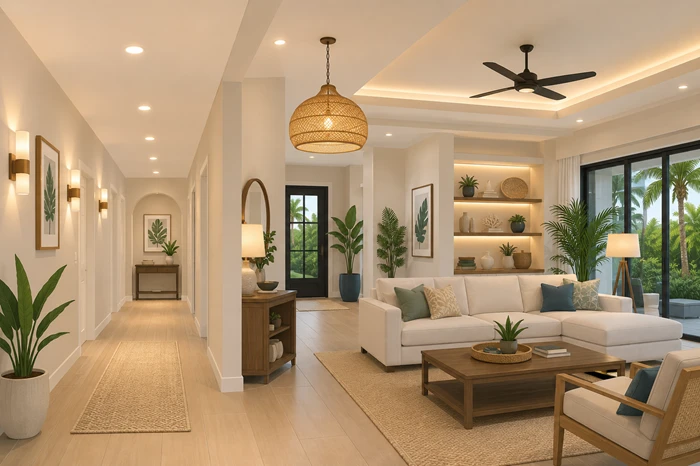
Slim recessed LEDs are ideal for narrow hallways because they provide even illumination without taking up visual space. Position them consistently to eliminate shadows and create smooth light flow throughout the corridor.
This approach works particularly well for homeowners searching for modern hallway lighting ideas that feel contemporary without becoming too decorative.
Add Wall Sconces for Warmth
Wall sconces instantly make hallways feel more welcoming. They create softer side lighting that reduces harsh shadows while adding architectural detail to otherwise plain walls.
Choose finishes that complement nearby rooms for a cohesive appearance.
Brighten Corners With Reflective Surfaces
Mirrors, satin paint finishes, and glossy décor pieces can amplify natural and artificial light. Even a small mirror placed strategically near a fixture can dramatically improve brightness in tight spaces.
Install Motion Sensors
Motion-activated hallway lights improve convenience while reducing energy use. They’re especially useful for families, nighttime visibility, and guest areas.
Creative Solutions for Dark Hallways
Some homes have layouts where sunlight barely reaches interior corridors. In those cases, lighting design becomes even more important.
Choose Warmer LED Temperatures
Cool white bulbs can make hallways feel sterile. Soft white or warm neutral LEDs create a more inviting atmosphere while still providing excellent visibility.
This is one of the easiest ways to improve spaces needing dark hallway lighting ideas without major construction work.
Use Vertical Lighting Elements
Tall sconces, LED strips, or vertical wall lighting draw the eye upward and make hallways feel taller and more open.
Incorporate Skylights or Solar Tubes
If structural changes are possible, solar tubes or compact skylights can bring natural daylight into darker central areas of the home. South Florida’s sunny climate makes these additions especially effective year-round.
Make Living Spaces Feel Brighter and Larger
Living rooms often serve multiple functions, from entertaining guests to family relaxation. Lighting should support every activity while maintaining a comfortable atmosphere.
Combine Overhead and Floor Lighting
A balanced living room typically includes ceiling fixtures paired with floor lamps and table lighting. This layered approach prevents flat lighting and creates visual depth.
Large open-concept homes benefit from dividing the room into smaller lighting zones.
Highlight Architectural Features
Accent lighting works beautifully around built-in shelving, textured walls, ceiling beams, or statement art pieces. These details create focal points and help the room feel more professionally designed.
Many homeowners updating their spaces also invest in new living spaces furniture that complements brighter, more open interiors.
Use Dimmers Throughout the Home
Dimmers allow complete control over brightness levels and energy usage. They also make rooms feel more adaptable during different times of day.
In South Florida homes where natural light shifts dramatically between morning and evening, dimmers are especially valuable.
Choosing the Right Fixtures for South Florida Style
Lighting fixtures should support both the architecture and climate of the home.
Coastal-Inspired Designs
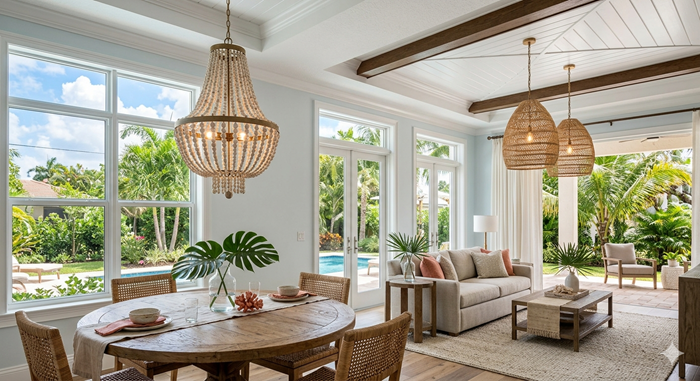
Natural materials like rattan, brushed brass, linen shades, and light wood finishes pair beautifully with Florida interiors. These materials soften bright spaces without making them feel heavy.
Homeowners inspired by relaxed tropical aesthetics may also enjoy ideas that turn extra space into a tropical escape.
Minimalist Modern Fixtures
Clean-lined pendants and slim LED fixtures work well in newer homes with contemporary architecture. Matte black and brushed nickel remain popular choices because they pair easily with many design palettes.
Statement Entryway Lighting
The entrance sets the tone for the entire home. Oversized pendants, sculptural chandeliers, or layered sconces can elevate even modest foyers.
This is why entryway lighting ideas continue to play such a major role in modern remodeling projects.
Improve Natural Light Before Adding More Fixtures
Artificial lighting works best when combined with strategies that maximize existing daylight.
Use Lighter Paint Colors
Soft whites, warm neutrals, and pale sandy tones reflect significantly more light than darker shades.
Keep Window Treatments Airy
Heavy drapes can block valuable sunlight. Sheer curtains or light-filtering shades allow natural brightness while maintaining privacy.
Rearrange Furniture Placement
Bulky furniture positioned near windows can interrupt light flow. Reorganizing layouts often improves brightness instantly without spending money on new fixtures.
Some homeowners replacing older seating arrangements also upgrade to a living spaces sectional couch designed for open layouts and better room circulation.
Smart Technology Makes Lighting Easier
Modern smart lighting systems offer convenience and efficiency that traditional switches cannot match.
Voice-Controlled Systems
Smart assistants allow homeowners to adjust brightness, change tones, or activate lighting scenes with simple voice commands.
Automated Scheduling
Lighting schedules improve security and energy savings by turning fixtures on and off automatically.
App-Based Controls
Smartphone apps make it easy to manage lighting remotely, whether you’re traveling or simply relaxing in another room.
These features are becoming increasingly common in projects handled by experienced home remodeling contractors focused on modern living solutions.
Lighting and Renovation Planning Go Hand in Hand
Lighting should never feel like an afterthought during remodeling. Electrical placement, ceiling structure, wall finishes, and furniture layouts all affect how light performs in the space.
Before beginning upgrades, many homeowners benefit from using a free home renovation checklist to organize priorities and avoid overlooked details.
Working with an experienced interior renovations contractor can also help identify opportunities for improved lighting placement before walls are closed or finishes are installed.
Designing Comfortable Luxury Living Areas
Luxury doesn’t always mean larger spaces. Often, it comes down to atmosphere, balance, and thoughtful details.
Warm layered lighting paired with comfortable textures creates interiors that feel sophisticated without becoming overwhelming. South Florida homeowners frequently blend modern design with coastal comfort for a relaxed but polished appearance.
Many upscale projects draw inspiration from concepts similar to luxury living hall design, where lighting plays a central role in defining elegance and functionality together.
When to Hire Professionals
Some lighting upgrades are simple DIY improvements, but larger renovations often require professional planning and installation.
Electrical updates, recessed lighting layouts, structural modifications, and smart-home integration should be handled by licensed experts. This is especially important in Florida, where building codes and moisture considerations require specialized knowledge.
Homeowners frequently search for home remodeling near me when planning lighting-centered renovations because professional guidance helps avoid costly mistakes and ensures long-term reliability.
Conclusion
A brighter home feels larger, cleaner, and more welcoming. In South Florida, where architecture blends indoor comfort with outdoor beauty, thoughtful lighting design can completely transform everyday living.
From layered living room illumination to elegant hallway upgrades, the right lighting choices improve both aesthetics and functionality. Whether you’re making small updates or planning a full renovation, prioritizing light can dramatically improve how your home looks and feels for years to come.
FAQs
What type of lighting works best for dark hallways?
Warm recessed LEDs combined with wall sconces provide balanced illumination without making hallways feel harsh.
Are dimmer switches worth adding during renovations?
Yes, dimmers improve flexibility, comfort, and energy efficiency throughout the home.
How can I make a living room appear brighter naturally?
Use lighter paint colors, reflective décor, and minimal window coverings to maximize daylight.
Do smart lighting systems increase home value?
Modern smart lighting features can improve convenience and appeal for future buyers.
Should lighting be planned before remodeling begins?
Yes, lighting placement should be integrated into the renovation design process from the start.