

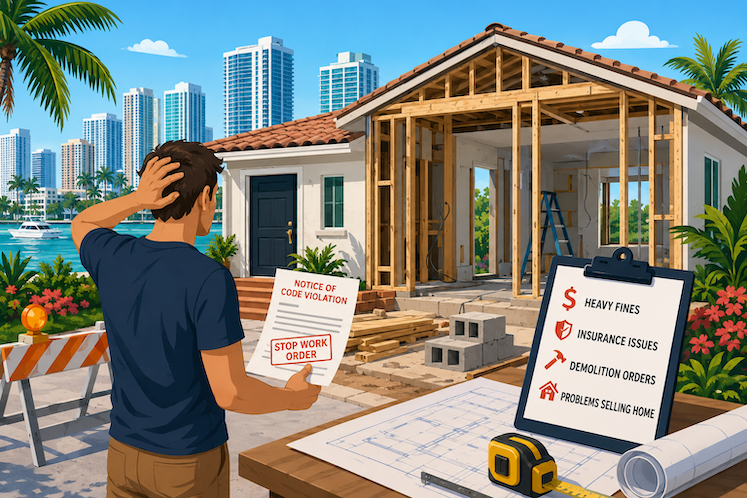
Home renovations in Miami can dramatically improve your property’s value, comfort, and curb appeal. Whether you’re updating a kitchen, converting a garage, or adding a new outdoor living space, remodeling projects are booming across South Florida.
But there’s one mistake that continues to create major legal and financial problems for homeowners: renovating without permits.
In Miami-Dade County, building permits are more than paperwork. They exist to ensure renovations meet strict safety codes, hurricane regulations, zoning laws, and structural requirements. Skipping the permit process might seem like a shortcut, but it can quickly lead to fines, failed inspections, insurance issues, and expensive reconstruction work.
If you’re planning a remodel in South Florida, understanding the risks of unpermitted renovations can save you thousands of dollars and months of frustration.
Why Miami Requires Building Permits
Miami has some of the strictest building codes in the country. Because the region is vulnerable to hurricanes, flooding, and high humidity, local regulations are designed to protect homeowners and surrounding properties.
Permits help verify that renovations meet:
-
Structural safety standards
-
Electrical and plumbing codes
-
Hurricane resistance requirements
-
Flood zone regulations
-
Fire safety standards
-
Zoning restrictions
When permits are approved, the city also schedules inspections throughout the project to ensure everything is completed correctly.
Without permits, there’s no official verification that the work is safe or compliant.
What Types of Renovations Usually Need Permits?
Many homeowners assume permits are only required for large additions or full-home remodels. In reality, Miami requires permits for many common renovation projects.
Renovations That Typically Require Permits
-
Kitchen remodels involving plumbing or electrical work
-
Bathroom renovations
-
Roof replacements
-
Garage conversions
-
Structural wall removal
-
Room additions
-
HVAC installation
-
Electrical panel upgrades
-
Fence installations in some areas
-
Decks and patios
-
Pool construction
Even projects that seem minor can trigger permit requirements if they affect a home’s systems or structure.
Before starting work, many homeowners use a renovation checklist to identify which improvements may require city approval.
What Happens if You Skip Permits in Miami?
Renovating without permits can create serious problems that often become more expensive than the original permit fees.
Here’s what homeowners commonly face.
You Could Receive Large Fines
Miami-Dade code enforcement regularly investigates unpermitted work. This often happens after:
-
Neighbor complaints
-
Property appraisals
-
Insurance inspections
-
Home sales
-
Contractor disputes
-
City inspections for unrelated projects
If the city discovers unauthorized work, homeowners can face:
-
Daily code violation fines
-
Permit penalties
-
Double or triple permit fees
-
Mandatory correction costs
In some cases, fines continue accumulating until the issue is resolved.
The City May Stop Your Renovation
If inspectors discover active work without permits, the city can issue a stop-work order immediately.
That means:
-
Construction halts
-
Contractors leave the job site
-
Timelines get delayed
-
Additional inspections become mandatory
A stop-work order can create major scheduling problems, especially if materials or subcontractors were already booked months in advance.
You May Have to Tear Out Completed Work
One of the most frustrating consequences of unpermitted renovations is demolition.
If the city cannot verify that hidden electrical, plumbing, or structural work meets code, inspectors may require homeowners to expose or remove completed finishes.
That could mean:
-
Opening walls
-
Removing tile
-
Demolishing cabinets
-
Replacing wiring
-
Rebuilding framing
Many homeowners are shocked to learn they may need to undo expensive finished work simply to allow inspections.
Insurance Companies May Deny Claims
This is one of the biggest financial risks.
If your home suffers water damage, fire damage, or structural problems related to unpermitted work, insurance companies may deny coverage.
For example:
-
An unpermitted electrical upgrade causes a fire
-
A bathroom remodel creates hidden water damage
-
A roof replacement fails during a storm
If permits were never pulled, insurers may argue the work violated policy requirements or local building codes.
In South Florida, where storms and water damage are common, this risk can become extremely costly.
Unpermitted Renovations Can Hurt Home Sales
Many Miami homeowners discover permit problems when trying to sell their property.
Buyers, lenders, inspectors, and title companies often review:
-
Permit history
-
Open permits
-
Code violations
-
Property appraiser records
If renovations were completed without approval, several problems may occur:
-
Buyers request price reductions
-
Lenders refuse financing
-
Closings get delayed
-
Sellers must legalize work before closing
In competitive real estate markets like Miami, unresolved permit issues can kill deals quickly.
Your Property Taxes Could Increase Unexpectedly
Some homeowners skip permits hoping to avoid reassessments or property tax increases.
Ironically, unpermitted improvements can still trigger reassessments later when:
-
The property is sold
-
Inspectors discover the work
-
Appraisals are updated
-
Violations are reported
When this happens, homeowners may face both back taxes and permit penalties simultaneously.
Contractors Can Also Face Legal Problems
Hiring unlicensed contractors often goes hand-in-hand with unpermitted renovations.
Unfortunately, this creates additional risks:
-
Poor workmanship
-
Lack of insurance
-
No warranties
-
Liability issues
-
Incomplete projects
That’s why it’s critical to work with experienced professionals and understand renovation contract details before construction begins.
A legitimate contractor should clearly explain:
-
Permit responsibilities
-
Inspection schedules
-
Scope of work
-
Payment structure
-
Licensing information
Can You Fix Unpermitted Work After It’s Done?
Yes — but the process can be complicated.
In Miami, homeowners may need to apply for “after-the-fact” permits to legalize completed work.
What Is an After-the-Fact Permit?
An after-the-fact permit is issued when work was already completed without approval.
This process often includes:
-
New permit applications
-
Additional fees
-
Engineering reviews
-
Structural inspections
-
Opening walls or ceilings
-
Updated plans
-
Code corrections
These permits are typically more expensive and time-consuming than standard permits.
Some Renovations Cannot Be Legalized Easily
Not every unpermitted renovation automatically qualifies for approval.
Problems often arise when:
-
Additions violate zoning setbacks
-
Ceiling heights don’t meet code
-
Electrical work is unsafe
-
Flood zone regulations were ignored
-
Structural modifications are incorrect
In severe cases, homeowners may need to partially or fully remove noncompliant renovations.
How Long Does the Miami Permit Process Take?
Permit timelines vary depending on:
-
Project size
-
Property type
-
HOA approvals
-
Historic district regulations
-
City workload
-
Structural complexity
Simple permits may take days, while larger remodels can take weeks or months.
Although many homeowners become frustrated with waiting periods, avoiding permits usually creates bigger delays later.
Why Miami Permits Matter More Than Other Cities
South Florida building codes are heavily influenced by hurricane safety standards.
Permits help ensure homes can withstand:
-
High winds
-
Flood conditions
-
Saltwater exposure
-
Mold risks
-
Electrical hazards
This is especially important for:
-
Roof systems
-
Impact windows
-
Structural framing
-
Exterior additions
Cutting corners in these areas can compromise both safety and resale value.
How to Avoid Permit Problems During Renovations
The best approach is proactive planning.
Work With Licensed Contractors
A reputable contractor should:
-
Verify permit requirements
-
Pull permits properly
-
Schedule inspections
-
Follow local code requirements
If a contractor suggests skipping permits to “save money,” consider that a major red flag.
Many homeowners researching qualified remodeling professionals discover that transparency around permits is one of the strongest indicators of a trustworthy renovation company.
Ask Questions Before Construction Starts
Before signing anything, ask:
-
Who pulls the permits?
-
What inspections are required?
-
Are plans needed?
-
What happens if work fails inspection?
-
How long will approvals take?
Clear communication early in the process prevents costly misunderstandings later.
Keep Documentation Organized
Always save:
-
Permit approvals
-
Inspection records
-
Contractor licenses
-
Contracts
-
Receipts
-
Engineering plans
These records become extremely valuable during refinancing, insurance claims, or future home sales.
Is Renovating Without Permits Ever Worth It?
In most cases, no.
While some homeowners hope to save time or money, the long-term consequences usually outweigh the short-term convenience.
Permit issues can lead to:
-
Legal penalties
-
Insurance disputes
-
Failed home sales
-
Reconstruction costs
-
Safety concerns
-
Contractor conflicts
A properly permitted renovation protects both your investment and your peace of mind.
Final Thoughts
Miami’s permitting system may feel overwhelming at times, but it exists for good reason. Between hurricane safety standards, flood regulations, and strict construction codes, permits help ensure renovations are completed safely and legally.
Skipping permits can create expensive problems that follow homeowners for years — especially during insurance claims or property sales.
Whether you’re remodeling a kitchen, upgrading windows, or planning a full home renovation, taking the proper legal steps upfront is always the smarter investment.
If you’re preparing for a remodeling project in South Florida, getting a professional home renovation estimate can help you understand timelines, permit requirements, and realistic project costs before construction begins.
Frequently Asked Questions
Do all renovations require permits in Miami?
No, but many do. Cosmetic updates like painting or replacing flooring usually don’t require permits. Structural, electrical, plumbing, roofing, and major remodeling projects often do.
Can I sell my house with unpermitted work?
Yes, but it can complicate the sale. Buyers and lenders may request repairs, price reductions, or legalization of the work before closing.
How much are permit fines in Miami?
Fines vary depending on the violation and project size. Homeowners may also pay double permit fees and additional penalties.
What is an after-the-fact permit?
It’s a permit used to legalize work that was already completed without approval. This process usually involves inspections and additional costs.
Can insurance deny claims for unpermitted renovations?
Yes. If damage is connected to unpermitted work, insurance providers may deny coverage.
How do I know if my contractor pulled permits?
You can verify permits through Miami-Dade County’s online permit portal or request copies directly from your contractor.