

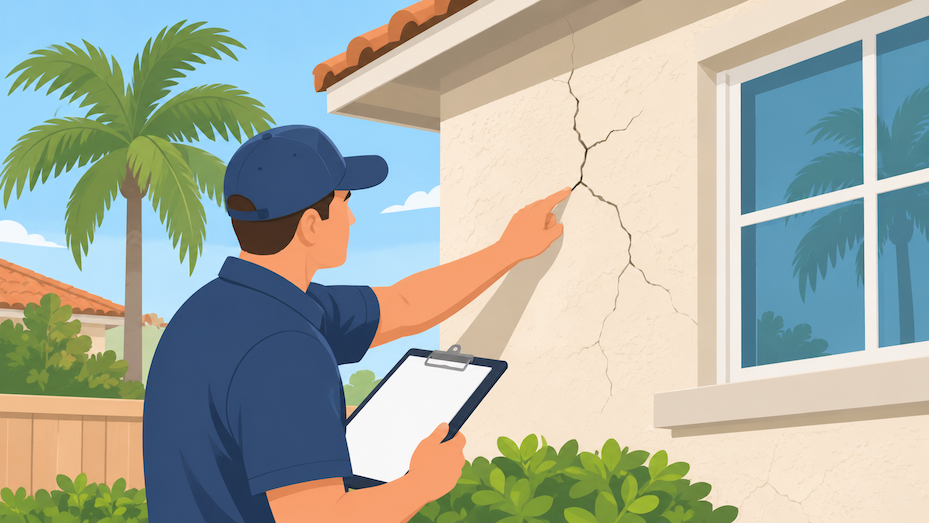
Stucco cracks in Florida homes are not always a sign of serious damage, but some can indicate moisture intrusion, improper installation, or movement within the building. Small, stable hairline cracks may only require routine maintenance, while widening cracks, recurring damage, and cracks accompanied by water stains deserve professional attention.
Florida’s heat, humidity, heavy rainfall, and seasonal storms put exterior wall systems under regular stress. Knowing which stucco cracks are cosmetic and which ones need professional repair can help homeowners prevent more expensive damage and protect their property’s exterior.
Key Takeaways
-
Hairline cracks can result from normal stucco shrinkage and temperature changes, but they should still be monitored.
-
Wide, growing, recurring, or stair-step cracks may indicate movement or a deeper problem.
-
Cracks around windows, doors, and other openings deserve attention because these areas are vulnerable to water intrusion.
-
Peeling paint, damp interior walls, musty odors, and efflorescence can point to moisture behind the stucco.
-
Professional stucco repair should address the underlying cause, not just cover the visible crack.
-
Prompt inspection and appropriate repairs help protect a Florida home’s exterior and long-term condition.
Why Do Stucco Cracks Develop in Florida Homes?
Stucco cracks develop when the exterior plaster experiences stress from shrinkage, temperature changes, building movement, moisture, or installation problems. Florida’s climate can intensify these conditions, making regular exterior inspections especially important.
Stucco is a durable cement-based exterior finish, but it is not completely resistant to movement or environmental exposure. Even a properly installed surface can develop minor cracks over time.
1. Temperature Changes and Thermal Expansion
Florida homes experience intense sunlight, warm afternoons, and changes in temperature throughout the day. Stucco expands when heated and contracts as it cools.
Repeated expansion and contraction can create stress in the finish, especially around corners, openings, and transitions between different building materials.
Small surface cracks may develop as a result. However, cracks that continue widening or return after previous repairs should be evaluated to determine whether movement is still occurring.
2. Moisture and Heavy Rainfall
Frequent rain, high humidity, and wind-driven storms expose exterior walls to moisture. Stucco is designed to protect the building envelope, but cracks, failed sealants, and poorly detailed openings can allow water to reach vulnerable layers behind the finish.
Water intrusion may lead to:
-
Damp or discolored interior walls
-
Peeling or bubbling paint
-
Musty odors
-
Deterioration of wall components
-
Corrosion of metal accessories
-
Mold growth where moisture remains
A crack does not automatically mean water has entered the wall. However, visible cracking combined with moisture symptoms should not be ignored.
3. Building Settlement and Structural Movement
Homes naturally experience some movement as materials respond to environmental conditions and loads. Foundation settlement, shifting framing, or movement between connected building materials can place stress on stucco.
Cracks that appear suddenly, continue growing, or occur alongside uneven floors, sticking doors, or visible wall displacement may indicate a more serious issue.
These conditions should be evaluated by an appropriately qualified building professional. Cosmetic patching alone will not correct an underlying structural problem.
4. Improper Installation or Inadequate Curing
Stucco installation requires proper surface preparation, material application, curing, reinforcement, and control-joint placement.
Problems during installation can increase the likelihood of cracking. Examples include:
-
Applying stucco over an improperly prepared substrate
-
Inadequate curing during hot or windy weather
-
Incorrect material proportions
-
Missing or poorly placed control joints
-
Improper reinforcement around openings
-
Applying excessive thickness in certain areas
What Types of Stucco Cracks Should Florida Homeowners Watch For?
The appearance, location, direction, and progression of a crack can provide clues about its possible cause. No single crack pattern can confirm a structural problem, but certain warning signs deserve closer inspection.
1. Hairline Stucco Cracks
Hairline cracks are very narrow surface openings that may develop as stucco shrinks or responds to temperature changes.
They are often cosmetic, particularly when they remain stable and are not accompanied by moisture problems.
Common characteristics:
-
Very thin lines across the finish
-
No noticeable displacement between surfaces
-
No dampness or interior water stains
-
No significant change over time
When should you worry?
A stable hairline crack may not require extensive repair. However, widespread cracking, repeated cracking in the same location, or cracks near windows and doors should be assessed before applying paint or filler.
2. Vertical Stucco Cracks
Vertical cracks run up and down an exterior wall. They can result from shrinkage, stress concentration, building movement, or issues around wall transitions.
Their seriousness depends on their location, width, depth, and whether they are changing.
A vertical crack that widens over time or extends through multiple building materials should receive professional evaluation.
3. Horizontal Stucco Cracks
Horizontal cracks extend across a wall from side to side. They can be associated with movement, material transitions, moisture-related deterioration, or installation defects.
These cracks deserve attention when they are accompanied by bulging, separation, or displacement of the wall surface.
A qualified professional can determine whether the problem is limited to the stucco finish or involves the underlying wall assembly.
4. Stair-Step Stucco Cracks
Stair-step cracks follow a diagonal or stepped pattern, often appearing around masonry joints or wall transitions.
They can be associated with movement in the underlying masonry or building structure. Their presence does not automatically establish foundation damage, but a growing stair-step pattern should be professionally evaluated.
Look for additional warning signs such as:
-
Cracks continuing into masonry or concrete
-
Uneven or displaced wall sections
-
Doors and windows that suddenly become difficult to operate
-
Cracks that become longer or wider over time
5. Spiderweb or Map Cracking
Spiderweb cracking consists of multiple fine cracks that form interconnected patterns across the stucco surface.
This can develop from shrinkage, curing issues, or stresses within the finish layer.
Small, shallow patterns may be cosmetic. However, widespread cracking, surface deterioration, or signs of moisture require closer inspection.
Stucco Crack Comparison Table
| Crack Type | Possible Cause | Recommended Response |
|---|---|---|
| Hairline | Shrinkage or temperature changes | Monitor and inspect if recurring |
| Vertical | Shrinkage, stress, or building movement | Evaluate if widening or extending |
| Horizontal | Movement, moisture, or installation problems | Arrange professional inspection |
| Stair-step | Possible masonry or structural movement | Request professional evaluation |
| Spiderweb | Surface shrinkage or curing issues | Inspect extent and surface condition |
| Cracks around openings | Stress concentration or installation defects | Check seals and surrounding wall condition |
Remember that crack patterns are clues, not definitive diagnoses. A professional should evaluate the full wall system before recommending a repair.
Which Stucco Cracks Require Professional Repair?
Stucco cracks require professional attention when they are widening, recurring, associated with moisture, or accompanied by signs of movement or surface separation. The most important consideration is whether the crack is allowing water intrusion or indicating a problem beyond the exterior finish.
Here are the warning signs Florida homeowners should take seriously.
Cracks That Continue Getting Wider
A crack that grows over several weeks or months may indicate ongoing movement or an unresolved installation issue.
Take dated photographs and record the location so changes can be compared over time. Do not rely on photographs alone to determine structural safety.
Cracks With Water Stains or Peeling Paint
Water stains, bubbling paint, and damp interior surfaces near a stucco crack can indicate that moisture is entering the wall assembly.
The source may be the crack itself, a failed sealant joint, a window or door opening, or another part of the exterior envelope.
A proper inspection should identify the entry point before repairs begin.
Cracks Accompanied by Bulging or Loose Stucco
Stucco that appears swollen, detached, or hollow may have lost its bond with the underlying surface.
This condition can be associated with moisture exposure, installation problems, or deterioration behind the finish.
Avoid simply covering the affected area with new material. The loose section and underlying conditions should be assessed first.
Cracks Around Windows and Doors
The corners of windows and doors are common stress points in stucco walls. They are also important areas for water management because the exterior finish meets other building components.
Pay attention to:
-
Diagonal cracks extending from window corners
-
Cracked or separated sealant
-
Gaps around door frames
-
Water stains below windows
-
Deteriorated trim or surrounding stucco
A professional should inspect both the visible crack and the adjacent flashing, sealants, and wall details where accessible.
Cracks That Return After Previous Repairs
Recurring cracks may indicate that the original repair addressed the surface without correcting the cause.
For example, filling a crack without addressing continuing movement can result in the same problem appearing again.
A more reliable repair begins with identifying why the crack developed.
How Can You Tell If Stucco Cracks Are Causing Water Damage?
Stucco cracks can contribute to water intrusion when they create openings in the exterior wall system or occur alongside failed joints and other defects. Homeowners should look for moisture symptoms both outside and inside the property.
Florida’s heavy rainfall makes early detection particularly important.
Exterior Warning Signs
Inspect the affected wall for:
-
Darkened or discolored stucco
-
Peeling, blistering, or bubbling paint
-
White powdery deposits known as efflorescence
-
Crumbling or deteriorating finish
-
Separated caulking around windows and doors
-
Persistent dampness or algae growth
Efflorescence can occur when moisture moves through masonry or cement-based materials and leaves mineral deposits on the surface.
It does not prove that a wall has serious damage, but it can be a reason to investigate the source of moisture.
Interior Warning Signs
Moisture entering an exterior wall may become visible indoors.
Look for:
-
Brown or yellow ceiling and wall stains
-
Peeling interior paint
-
Soft or damaged drywall
-
Musty odors
-
Visible mold growth
-
Deteriorating baseboards near exterior walls
If these symptoms appear near a cracked stucco area, arrange an inspection rather than assuming that repainting or sealing the exterior will solve the problem.
How Is Professional Stucco Crack Repair Performed?
Professional stucco crack repair starts with identifying the cause, evaluating the affected area, and selecting a repair method that suits the wall assembly. The goal is to restore the exterior finish while addressing any underlying damage.
The exact process depends on the crack’s size, location, depth, and condition of the surrounding materials.
Step 1: Inspect the Crack and Surrounding Wall
The contractor examines the affected area and checks whether the crack is isolated or part of a larger pattern.
The inspection may include:
-
Measuring and documenting visible cracks
-
Checking for loose or hollow-sounding stucco
-
Examining nearby windows, doors, and joints
-
Looking for moisture staining or deterioration
-
Reviewing previous repairs when information is available
Where necessary, additional investigation may be recommended to assess concealed wall conditions.
Step 2: Identify the Underlying Cause
Before choosing a repair material, the contractor determines whether the crack is related to normal shrinkage, temperature movement, moisture, installation problems, or structural movement.
If signs suggest foundation or structural concerns, a qualified structural engineer or other appropriate professional may need to evaluate the property.
Step 3: Remove Damaged or Loose Material
If the stucco has separated or deteriorated, affected material may need to be carefully removed.
The goal is to expose a sound repair surface without causing unnecessary damage to surrounding areas.
Where moisture intrusion is suspected, the underlying materials should also be evaluated.
Step 4: Apply the Appropriate Repair System
The repair method depends on the type of crack and the condition of the wall.
Possible methods include:
-
Filling suitable minor cracks with compatible repair products
-
Applying reinforced repair systems where specified
-
Replacing damaged stucco sections
-
Restoring appropriate sealant joints
-
Correcting related flashing or drainage details
-
Addressing the underlying movement or moisture source
Not every crack should be repaired using the same filler or coating. Material compatibility and the condition of the existing stucco matter.
Step 5: Match the Existing Texture and Finish
After the repair material has been properly applied and cured, the surface may be textured and finished to blend with the surrounding wall.
The contractor should follow product instructions for curing, priming, painting, and weather conditions.
Step 6: Review the Completed Repair
The final inspection checks that the repaired section is sound, properly finished, and free of obvious gaps or defects.
Homeowners should also receive guidance on monitoring the area and maintaining nearby sealants and exterior surfaces.
Can You Repair Stucco Cracks Yourself?
Some minor, stable surface cracks may be suitable for basic maintenance, but larger or recurring cracks should be evaluated by a professional. DIY repairs can be appropriate only when the homeowner understands the condition and can use a compatible repair product correctly.
When DIY Repair May Be Reasonable
A small surface crack may be a candidate for minor maintenance when:
-
It is stable and limited to the finish coat.
-
There are no signs of water intrusion.
-
The surrounding stucco remains firmly attached.
-
There is no visible displacement or bulging.
-
The product is suitable for the existing stucco system.
Always follow the manufacturer’s preparation and application instructions.
When Should You Hire a Professional?
Professional help is recommended when:
-
Cracks are wide, growing, or recurring.
-
Multiple cracks appear across the same wall.
-
Stucco is loose, bulging, or falling away.
-
Interior water stains or dampness are present.
-
Cracks extend into masonry or other building materials.
-
Windows or doors show signs of water leakage.
-
You suspect foundation or structural movement.
A surface patch may temporarily improve appearance, but it will not correct a damaged wall assembly or continuing movement.
How Can Florida Homeowners Prevent Stucco Cracks From Getting Worse?
Regular inspections and exterior maintenance can help identify small problems before they develop into more extensive repairs. Although homeowners cannot eliminate every crack, they can reduce the risk of moisture-related deterioration and delayed maintenance.
1. Inspect Exterior Walls Regularly
Walk around the property periodically and look for new cracks, surface separation, staining, or deteriorating paint.
Pay particular attention to corners, wall transitions, and areas around windows and doors.
2. Maintain Window and Door Sealants
Sealants around exterior openings help protect vulnerable joints from water intrusion.
Check for cracking, gaps, peeling, and separation. Have damaged sealants replaced with compatible products when needed.
3. Keep Gutters and Downspouts Functional
Poor drainage can allow water to collect near exterior walls and foundations.
Clean gutters regularly and make sure downspouts direct water away from the home.
4. Address Roof and Drainage Problems
Water from roof leaks, overflowing gutters, and poorly directed drainage can affect exterior walls.
Resolve these issues promptly instead of treating the stucco surface as the only source of the problem.
5. Avoid Painting Over Unresolved Cracks
Exterior paint can improve appearance and provide an additional protective finish when used appropriately, but it cannot replace proper crack repair.
Identify the cause, prepare the surface, and select a compatible coating before repainting.
6. Document Changes Over Time
Take photographs of cracks and record when they first appeared.
Comparing photographs can help homeowners and contractors determine whether a crack is stable or changing.
How Much Does Stucco Crack Repair Cost in Florida?
Stucco crack repair costs in Florida depend on the extent of damage, accessibility, repair materials, labor, and whether moisture or structural problems need to be addressed. A small surface repair is generally less involved than removing and rebuilding a damaged section of an exterior wall.
There is no reliable single price for every stucco repair because the visible crack may represent different underlying conditions.
What Factors Affect Repair Costs?
| Cost Factor | How It Affects the Project |
|---|---|
| Crack size and length | Larger areas generally require more labor and materials |
| Crack depth | Deeper damage may require additional investigation and repair |
| Surface condition | Loose or deteriorated stucco may need removal |
| Water intrusion | Moisture-related damage can expand the repair scope |
| Wall accessibility | Elevated or difficult-to-reach areas may require additional equipment |
| Finish matching | Custom textures and paint matching can add work |
| Structural concerns | Engineering assessments or corrective work may be necessary |
How Can Homeowners Avoid Unnecessary Repair Expenses?
Consider these practical steps:
-
Arrange an inspection when cracks begin changing.
-
Ask the contractor to explain the likely cause.
-
Request an itemized estimate describing preparation, materials, and finishing.
-
Clarify whether moisture testing or additional investigation is needed.
-
Confirm whether the estimate includes removal of damaged materials.
-
Ask how the repair will address the underlying issue.
-
Understand any workmanship warranty and maintenance recommendations.
Comparing estimates based only on the lowest price can be misleading. The repair scope and proposed solution are just as important as the total cost.
Why Should You Hire a Professional Stucco Contractor in Florida?
A professional stucco contractor can assess the affected wall, identify visible warning signs, and recommend a repair approach suited to the existing exterior system. This is especially important in Florida, where moisture exposure and severe weather make exterior wall maintenance a priority.
Professional repair offers several advantages:
-
Accurate assessment: Helps distinguish surface cracking from more extensive damage.
-
Appropriate materials: Uses repair products compatible with the existing stucco system.
-
Moisture awareness: Identifies visible signs that water may be entering the wall.
-
Better surface preparation: Addresses loose or deteriorated material before patching.
-
Consistent finishing: Helps match the existing texture and appearance.
-
Long-term planning: Provides recommendations for maintenance and monitoring.
Top Renovations provides home improvement and exterior renovation services, including stucco-related work. Homeowners can explore its stucco services and discuss the condition of their exterior walls before deciding on the appropriate repair.
Frequently Asked Questions About Stucco Cracks in Florida
Are small stucco cracks normal in Florida homes?
Yes. Small hairline cracks can develop as stucco shrinks or responds to temperature changes. However, cracks that spread, return after repairs, or appear alongside moisture symptoms should be inspected.
When should I worry about cracks in stucco walls?
Be concerned when cracks continue widening, appear with bulging or loose material, extend into masonry, or are accompanied by interior water stains. These conditions warrant professional evaluation.
Do stucco cracks mean there is foundation damage?
Not necessarily. Stucco can crack because of shrinkage, temperature changes, installation problems, or movement in the building materials. A structural professional should evaluate cracks accompanied by wall displacement, uneven floors, or other signs of structural movement.
Can rain make stucco cracks worse?
Rain can contribute to deterioration when water enters through cracks or defective joints. Repeated moisture exposure can damage vulnerable wall components and may lead to peeling paint, dampness, or material deterioration.
Should I paint over a stucco crack?
No. Painting over an unresolved crack is not a dependable repair. The crack should first be evaluated, properly prepared, and repaired with a compatible system before repainting.
How often should stucco walls be inspected in Florida?
A periodic visual inspection at least once a year is a practical maintenance habit. Homeowners should also check exterior walls after significant storms and whenever they notice new staining, separation, or cracking.
Can stucco cracks cause mold inside a home?
They can contribute to moisture entry, which may create conditions that support mold growth if water remains inside wall materials. A crack alone does not prove mold is present, so moisture-related symptoms should be investigated.
How long does stucco crack repair take?
Minor repairs may take relatively little time, while larger repairs can take several days or longer depending on removal, drying, curing, weather, and finishing requirements. The contractor should provide a project-specific schedule.
Is it better to repair or replace damaged stucco?
Repair is often appropriate when damage is localized and the surrounding stucco remains sound. Replacement may be necessary when deterioration is extensive, widespread, or associated with problems affecting the underlying wall system.
Can I use regular caulk to fill stucco cracks?
Not every caulk is suitable for stucco. The correct material depends on the crack, the wall assembly, and whether movement is expected. Using an incompatible product can lead to poor adhesion or recurring problems.
Protect Your Florida Home With Timely Stucco Repairs
Stucco cracks should not automatically be treated as major structural problems, but they should never be ignored when they show signs of movement, moisture intrusion, or surface separation. Understanding the difference between minor cosmetic cracking and more serious warning signs helps homeowners make better repair decisions.
Regular inspections, proper drainage, maintained sealants, and timely professional evaluations can help preserve the exterior condition of a Florida home.
If you have noticed widening cracks, recurring damage, or water stains on your stucco walls, consider having the affected area professionally inspected. Top Renovations can help homeowners assess their exterior renovation needs and determine the appropriate next steps.
Ready to address damaged stucco? Contact Top Renovations to discuss your project and request an estimate.