

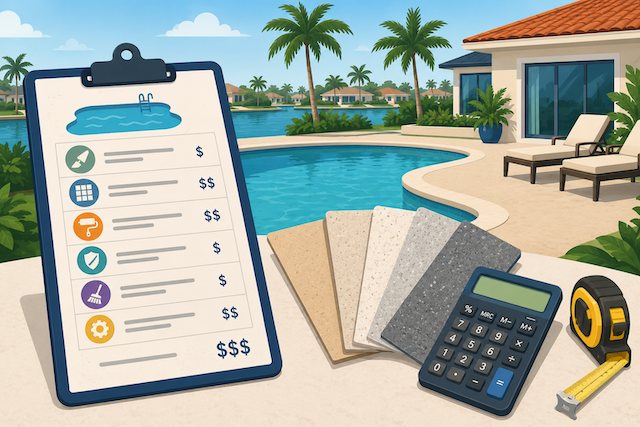
Your pool deck takes a beating in South Florida. Relentless sun, afternoon downpours, salty air, and constant foot traffic all wear it down faster than most surfaces around your home.
Pool deck resurfacing South Florida homeowners rely on is one of the smartest ways to restore that worn-out surface without tearing out the whole thing. It’s cheaper than a full replacement, faster to install, and it instantly modernizes your backyard.
This guide breaks down your resurfacing options, real cost ranges, the best materials for our climate, and how to know when resurfacing beats replacement.
What Pool Deck Resurfacing Actually Means
Resurfacing means applying a new finished layer over your existing concrete deck. The structural slab stays in place. You’re upgrading the top surface, not rebuilding from scratch.
That’s a big deal for cost and timeline. A resurface can often be done in a few days, while a full tear-out and rebuild can drag on for weeks.
Resurfacing works well when your slab is structurally sound but the surface looks tired, stained, cracked, or dangerously slippery.
Signs Your Pool Deck Is Ready
- Hairline cracks spreading across the surface
- Faded, chalky, or peeling coatings
- Rough patches that scrape bare feet
- Slippery spots after rain
- Pooling water from an uneven finish
- Discoloration from mold, algae, or rust stains
If you’re seeing several of these, resurfacing usually makes sense. If the slab itself is heaving, sinking, or badly fractured, you may need more than a cosmetic fix.
Best Pool Deck Resurfacing Materials for South Florida
Not every finish survives our heat and humidity. Here are the options that hold up best around here.
1. Textured Concrete Overlays
A thin cement-based overlay bonds directly to your old slab. It can be stamped, stenciled, or troweled to add texture and grip.
Overlays are budget-friendly and versatile. You can mimic stone, tile, or brick without the cost of the real thing. The textured finish also helps with slip resistance, which matters when kids are running around a wet deck.
The trade-off is maintenance. Overlays need periodic sealing to stay protected from Florida’s UV and moisture.
2. Cool Deck Coatings
Cool deck is a South Florida favorite for one reason: it stays comfortable underfoot even in blazing sun. The acrylic-based coating reflects heat instead of absorbing it.
It comes in a range of colors and a textured finish that grips well when wet. For families who use the pool daily through summer, cool deck is hard to beat.
It does need recoating every several years, especially in high-traffic zones.
3. Pavers Over Concrete
If you want a premium look, pavers deliver. They can be installed over an existing slab in many cases, giving you a completely new surface with clean lines and rich texture.
Pavers stay cooler than plain concrete, resist cracking because of their segmented design, and individual units can be swapped if one gets damaged. Many of the same principles behind choosing the best driveway pavers for cool, fade-resistant surfaces apply directly to pool decks.
One caution: pavers must be sealed properly. Skipping that step is a common reason unsealed pavers attract mold, ants, and weeds fast, which turns a beautiful deck into a maintenance headache.
4. Travertine
Travertine is a natural stone that South Florida homeowners love for pool areas. It stays remarkably cool, resists slipping, and brings an upscale, resort-style feel.
It pairs beautifully with modern and coastal homes. If you’ve admired how travertine pavers create a cool front yard in Boca Raton, the same appeal carries over to backyard pool decks.
Travertine sits at the higher end of the price range but rewards you with durability and timeless style.
5. Spray Deck (Knockdown Texture)
Spray deck applies a splattered acrylic-cement mix that dries into a textured, non-slip surface. It’s popular because it’s affordable, cools well, and comes in many colors.
The knockdown texture hides minor imperfections in the old slab and grips well when wet. It’s a solid middle-ground choice for homeowners who want a fresh look without premium pricing.
Pool Deck Resurfacing South Florida: Cost Breakdown
Costs vary based on material, deck size, condition of the existing slab, and design complexity. Here are realistic ranges for our region.
| Resurfacing Option | Typical Cost per Sq Ft |
|---|---|
| Spray deck / knockdown | $4 – $8 |
| Cool deck coating | $5 – $9 |
| Concrete overlay (textured) | $6 – $12 |
| Stamped overlay | $9 – $15 |
| Pavers over concrete | $12 – $25 |
| Travertine | $15 – $30 |
For an average 600-square-foot pool deck, a basic spray deck might run $2,400 to $4,800, while a premium travertine finish could reach $9,000 to $18,000.
Keep in mind these are surface costs. If your slab needs crack repair or leveling first, add that to your budget.
What Drives the Price Up
- Slab repairs — cracks and settling must be fixed before resurfacing
- Removal of old coatings — stripping failed layers adds labor
- Custom patterns — stamping and multi-color designs cost more
- Deck size and shape — curves and tight areas slow installation
- Sealing and finishing — quality sealers protect your investment
Getting an accurate number starts with an on-site look. You can always request a free estimate to see exactly what your deck needs.
Resurfacing vs. Full Replacement
This is the question most homeowners wrestle with. Here’s how to think about it.
Choose Resurfacing When:
- The slab is structurally sound
- Damage is surface-level: stains, cracks, wear
- You want a faster, lower-cost update
- You’re happy with the current deck layout and size
Resurfacing typically costs a fraction of replacement and gets you back to enjoying your pool much sooner.
Choose Replacement When:
- The slab is sinking, heaving, or severely cracked
- Water drainage problems stem from the base
- You want to change the deck’s size or shape
- Previous repairs have failed repeatedly
Replacement is a bigger investment, but sometimes it’s the only way to solve a foundational problem. A quick inspection tells you which path fits your situation.
Slip Resistance Matters More Than You Think
A pool deck is one of the most accident-prone surfaces in any home. Wet feet, running kids, and smooth finishes are a dangerous combination.
When choosing a resurfacing material, texture is not optional. Cool deck, spray deck, textured overlays, and natural travertine all provide grip that smooth concrete lacks.
Slip resistance is a safety upgrade that also reduces liability if you rent your property or host guests often.
Keeping Your Pool Deck Cool
Barefoot comfort is a real concern in South Florida. Standard gray concrete can get hot enough to burn.
Lighter colors reflect heat better. Cool deck coatings are specifically engineered for this, and travertine naturally stays cooler than most surfaces.
If you’re leaning toward pavers, the same logic behind modern driveways with large-format light gray concrete slabs applies here: lighter tones and reflective finishes make a noticeable difference on hot afternoons.
How the Resurfacing Process Works
Knowing what to expect helps you plan around the work.
Step 1: Inspection and Prep
The team assesses the slab, identifies cracks or settling, and confirms the surface can support a resurface. Repairs and cleaning happen first.
Step 2: Surface Cleaning
Old coatings, dirt, and debris get stripped or pressure-washed. A clean, sound base is essential for the new layer to bond.
Step 3: Application
The chosen material goes on: overlay, spray texture, coating, or pavers. Multiple coats or setting time may be required depending on the finish.
Step 4: Sealing and Curing
A quality sealer locks in color, blocks moisture, and adds UV protection. The deck then cures before you can use it again.
Most resurfacing projects wrap up in a few days, weather permitting. South Florida’s rain can occasionally push timelines, so a little flexibility helps.
Maintenance That Extends Your Deck’s Life
A resurfaced deck lasts far longer with basic care.
- Rinse regularly to clear pool chemicals, salt, and debris
- Reseal on schedule — every few years for most finishes
- Address stains early before mold or algae sets in
- Sweep standing water to prevent slick buildup
- Inspect seams and joints on paver decks annually
Sealing is the single most important habit. It’s what keeps color vibrant and stops moisture from creeping into the surface.
Boosting Your Home’s Value and Curb Appeal
A fresh pool deck does more than look good. In South Florida, outdoor living space is a major selling point, and a modern deck reads as move-in ready to buyers.
Pool areas connect directly to the kind of backyard transformations that pay off. If you’re planning a broader outdoor refresh, pairing a resurfaced deck with other outdoor renovation ideas to transform your backyard creates a cohesive, high-impact result.
A well-finished deck also complements nearby hardscaping. Coordinating your pool surface with driveway and walkway materials gives the whole property a polished, intentional look.
Common Mistakes to Avoid
A few missteps can cut your deck’s lifespan short or blow your budget.
Skipping slab repairs. Resurfacing over active cracks just lets them telegraph through the new layer. Fix the base first.
Choosing the wrong material for the climate. Some coatings that work up north peel and fade fast in Florida sun. Stick with proven local options.
Ignoring drainage. If water pools on your deck, resurfacing alone won’t fix it. Slope and drainage need attention.
Going too cheap on sealer. A low-grade sealer fails quickly, leaving your new surface exposed. Quality sealing protects everything underneath.
Hiring the lowest bidder blindly. Pool deck work rewards experience. Cutting corners on labor usually costs more later.
Choosing the Right Contractor
Pool deck resurfacing looks simple but demands skill in surface prep, material handling, and proper sealing. The wrong crew leaves you with peeling, cracking, or uneven finishes within a season.
Look for a team that inspects the slab thoroughly, explains material trade-offs honestly, and stands behind their work. A good contractor will tell you when replacement makes more sense than resurfacing, rather than pushing a quick fix.
Top Renovations handles driveways, pavers, and full outdoor transformations across South Florida, which means your pool deck ties seamlessly into the rest of your property. When you’re ready to bring your backyard back to life, the right resurfacing choice makes all the difference.
A worn pool deck drags down your entire outdoor space. The right resurfacing option restores comfort, safety, and style, usually at a fraction of what a full rebuild would cost. Match your material to South Florida’s climate, invest in proper sealing, and you’ll enjoy a deck that looks great and holds up for years.