
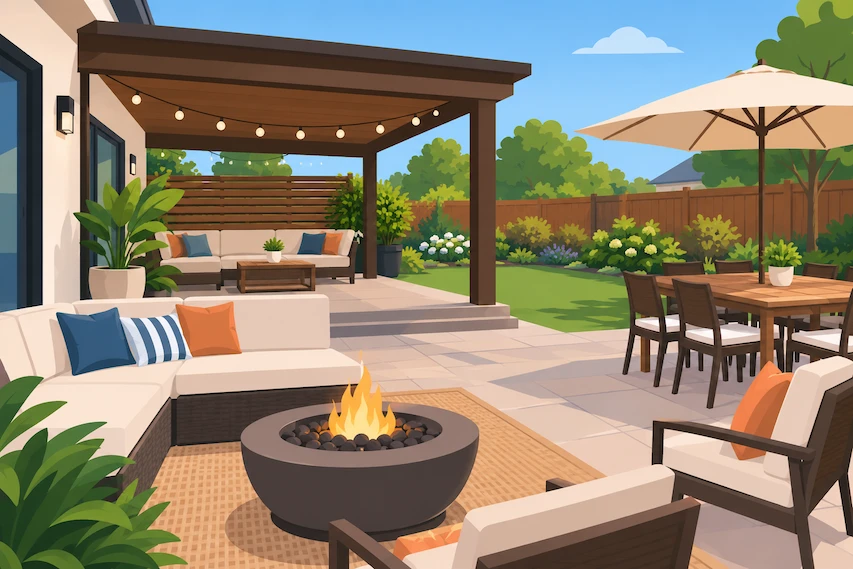
A well-designed patio can turn an ordinary backyard into a comfortable extension of your home. The best outdoor patio ideas combine practical flooring, comfortable seating, shade, lighting, privacy, and features that make the space enjoyable throughout the year.
Whether you have a compact patio or a large backyard, you do not need an elaborate design to create an attractive outdoor living area. With the right layout and materials, even a simple patio can become a place for relaxing, dining, entertaining, and spending more time outside.
What Are the Best Outdoor Patio Ideas for 2026?
The best outdoor patio ideas focus on making the space comfortable, functional, and easy to maintain. Popular options include defined dining areas, built-in seating, outdoor kitchens, pergolas, layered lighting, privacy features, and durable patio surfaces.
Before choosing specific features, consider how you actually plan to use the patio.
For example, a homeowner who frequently entertains guests may prioritize an outdoor dining area and cooking space, while another household may prefer a quiet seating area with shade and comfortable furniture.
Here are some ideas worth considering:
-
Create separate dining and lounging zones
-
Add a pergola or covered seating area
-
Install an outdoor kitchen or grilling station
-
Use built-in seating to maximize space
-
Add layered outdoor lighting
-
Introduce plants and landscaping around the patio
-
Use fencing for additional privacy
-
Choose durable, weather-resistant materials
-
Add a fire feature for evening use
-
Connect the patio visually to the home’s interior
The goal is not to add every possible feature. Instead, choose improvements that make sense for your lifestyle, property, and budget.
How Can You Make a Small Patio Feel Bigger?
A small patio can feel significantly larger when the layout is kept open and every feature has a clear purpose. Compact furniture, built-in seating, vertical landscaping, and a consistent material palette can create the feeling of a more spacious outdoor room.
1. Use Multi-Purpose Furniture
Choose furniture that can serve more than one purpose.
A storage bench, for example, can provide seating while keeping cushions, gardening supplies, or outdoor accessories out of sight.
Other useful options include:
-
Extendable dining tables
-
Folding chairs
-
Ottomans that double as tables
-
Benches with hidden storage
-
Compact outdoor sectionals
Avoid filling every available square foot with furniture. Maintaining clear walking paths will make the patio feel more comfortable.
2. Keep the Design Visually Consistent
Using too many colors, materials, or furniture styles can make a small patio feel cluttered.
Instead, choose a simple combination of flooring, furniture, fabrics, and landscaping. A restrained design can make the space appear larger while also giving it a more finished appearance.
3. Use Vertical Features
When floor space is limited, look upward.
Vertical planters, climbing plants, privacy screens, decorative walls, and hanging lights can add visual interest without taking up valuable patio space.
This approach is particularly useful for narrow side patios or small urban backyards.
What Patio Flooring Options Should You Consider?
Patio flooring should be attractive, durable, slip-resistant, and appropriate for your local weather conditions. Concrete, pavers, porcelain tile, and natural stone are common options, with the best choice depending on your budget and maintenance preferences.
Concrete
Concrete is a versatile option for homeowners who want a relatively straightforward patio surface.
It can be finished in several ways, including:
-
Smooth concrete
-
Stamped concrete
-
Textured finishes
-
Decorative patterns
-
Stained concrete
Concrete can also create a clean foundation for modern patio furniture and landscaping.
Pavers
Pavers offer more visual flexibility than a basic concrete slab. They are available in different shapes, colors, textures, and patterns, allowing homeowners to create a customized patio design.
Pavers can also make it easier to replace individual damaged sections rather than repairing an entire surface.
Natural Stone
Natural stone can create a more organic, upscale appearance. Options vary in color, texture, and installation method, so homeowners should consider both appearance and long-term maintenance.
Porcelain Outdoor Tile
Outdoor-rated porcelain tile can provide a clean, contemporary appearance when installed over a suitable exterior surface.
However, not every tile is appropriate for outdoor use. Always choose materials designed for the environmental conditions where they will be installed.
If the patio is part of a larger exterior renovation, it can also make sense to consider how the new surface connects with your driveway, walkway, and entry area. Top Renovations provides driveway renovation services as part of its exterior renovation work.
How Can You Add Shade to an Outdoor Patio?
Shade makes a patio considerably more comfortable during hot or sunny weather. Pergolas, covered patios, retractable shades, umbrellas, and outdoor curtains are practical ways to create more protection from direct sunlight.
4. Install a Pergola
A pergola can define an outdoor living area while adding architectural interest.
Depending on the design, a pergola can support:
-
Climbing plants
-
Outdoor curtains
-
String lighting
-
Ceiling fans
-
Shade panels
-
Decorative beams
A pergola does not necessarily need to cover the entire patio. Covering the seating or dining area may provide enough shade while keeping the rest of the patio open.
5. Add a Retractable Awning
A retractable awning gives you more control over how much shade you want.
It can be extended during the hottest part of the day and retracted when you want more sunlight or an unobstructed view.
6. Use Large Outdoor Umbrellas
For smaller patios, umbrellas are one of the easiest shade solutions.
They require less structural work than a permanent cover and can be moved or replaced as your needs change.
What Are Good Outdoor Patio Seating Ideas?
The right seating arrangement depends on whether your patio is primarily used for dining, entertaining, relaxing, or a combination of activities. A successful layout leaves enough space for movement while giving people a comfortable place to sit.
7. Create a Dedicated Conversation Area
Instead of positioning every piece of furniture around a dining table, consider creating a separate lounge area.
A typical arrangement might include:
-
Outdoor sofa
-
Two lounge chairs
-
Coffee table
-
Side tables
-
Outdoor rug
This setup makes the patio feel more like an outdoor living room.
8. Add Built-In Seating
Built-in benches can be particularly useful when space is limited.
They can be installed along a wall, beneath a pergola, or around the edge of the patio. Add weather-resistant cushions for comfort and consider incorporating storage underneath.
9. Separate Dining and Lounge Zones
Large patios benefit from clearly defined areas.
For example:
| Patio Zone | Suggested Features |
|---|---|
| Dining | Table, chairs, overhead lighting |
| Lounge | Sofa, chairs, coffee table |
| Cooking | Grill, counter space, storage |
| Relaxation | Lounger, side table, shade |
| Garden | Planters, greenery, decorative lighting |
Creating distinct zones makes a large patio feel organized rather than empty.
How Can You Add Privacy to a Patio?
Privacy can be improved with fencing, landscaping, privacy screens, outdoor curtains, or strategically placed walls. The right solution depends on how much privacy you need and whether you want to block views completely or simply create separation.
10. Add a Privacy Fence
A fence can create a stronger boundary around an outdoor living area while also improving security and curb appeal.
The right fence does not have to look like a barrier. Modern designs can complement the patio through coordinated colors, materials, and landscaping.
Top Renovations offers professional fence installation, including aluminum, wood, vinyl, galvanized, and chain-link options.
11. Use Plants as Natural Screens
Plants can provide privacy without making the patio feel enclosed.
Consider:
-
Tall ornamental grasses
-
Shrubs
-
Container plants
-
Climbing vines
-
Small trees
-
Dense hedges
Plants can also soften hard patio surfaces and make the space feel more connected to the yard.
12. Install Outdoor Curtains
Outdoor curtains can create a softer privacy solution around a pergola or covered patio.
They can be opened when you want an unobstructed view and closed when you want additional separation.
What Lighting Works Best for an Outdoor Patio?
The best patio lighting uses several layers rather than relying on one bright fixture. Ambient lighting, task lighting, and accent lighting can work together to make the patio more useful and visually comfortable after dark.
13. Combine Different Types of Lighting
Consider using:
-
Pendant lights over a dining area
-
Wall-mounted fixtures near doors
-
Recessed lights in covered areas
-
String lights around a pergola
-
Path lights near walkways
-
Accent lights around landscaping
Lighting should also be positioned carefully so it does not create excessive glare.
For larger renovation projects, outdoor lighting can be considered alongside other exterior improvements rather than treated as an afterthought.
How Can You Create an Outdoor Kitchen?
An outdoor kitchen should be planned around the way you cook and entertain. At minimum, consider a cooking surface, preparation space, storage, lighting, and convenient access between the kitchen and patio.
A simple outdoor cooking area might include:
-
Built-in or freestanding grill
-
Countertop
-
Storage cabinets
-
Sink where appropriate
-
Refrigerator or beverage cooler
-
Task lighting
-
Dining area nearby
The size of the kitchen should match how often you expect to use it.
If you frequently host large gatherings, additional preparation and serving space may be worthwhile. If you mainly grill occasionally, a compact setup may make more sense.
A patio can also work as an extension of a newly renovated interior kitchen. Coordinating materials and finishes between the two spaces can create a more seamless indoor-outdoor transition.
For homeowners planning a broader renovation, a home renovation checklist can help organize priorities, materials, budgeting, and project planning.
What Are Some Low-Maintenance Patio Ideas?
Low-maintenance patio designs use durable materials, weather-resistant furniture, simple landscaping, and finishes that do not require constant upkeep. Choosing the right materials at the beginning can reduce cleaning, repairs, and replacement costs later.
Choose Durable Materials
Outdoor surfaces are exposed to rain, sunlight, temperature changes, dirt, and regular foot traffic.
When comparing materials, consider:
-
Weather resistance
-
Slip resistance
-
Cleaning requirements
-
Expected lifespan
-
Repairability
-
Color fading
-
Installation requirements
Keep Landscaping Manageable
A patio surrounded by plants can look beautiful without becoming difficult to maintain.
Use a combination of low-maintenance plants, containers, mulch, and hardscape features rather than creating a landscape that requires constant trimming and watering.
Choose Weather-Resistant Furniture
Outdoor furniture should be designed for exterior conditions.
Look for materials and fabrics that are suitable for your climate, and provide appropriate storage or protection for cushions and other items when needed.
How Much Does an Outdoor Patio Upgrade Cost?
Patio costs vary considerably depending on the size of the space, materials, site preparation, structural work, and features you add. In Top Renovations’ South Florida renovation cost guide, patio upgrades are listed at approximately $10,000–$50,000, illustrating how widely project scope can affect pricing.
A basic patio refresh may involve:
-
Furniture
-
Lighting
-
Plants
-
Decorative elements
A larger renovation could include:
-
New patio flooring
-
Pergola or roof structure
-
Outdoor kitchen
-
Electrical work
-
Plumbing
-
Built-in seating
-
Privacy fencing
-
Drainage improvements
Because every property is different, a site-specific estimate is more useful than relying on a generic price range.
How Do You Plan an Outdoor Patio Renovation?
A successful patio renovation starts with the intended use of the space, followed by layout, materials, utilities, and finishing details. Planning these elements before construction helps reduce changes and unnecessary expenses during the project.
Follow these steps:
-
Define the purpose of the patio.
Decide whether it will primarily be used for dining, entertaining, relaxing, cooking, or several activities. -
Measure the available space.
Account for doors, windows, walkways, property boundaries, landscaping, and existing structures. -
Create functional zones.
Decide where seating, dining, cooking, storage, and circulation will go. -
Choose the primary surface.
Select concrete, pavers, tile, stone, or another suitable material. -
Plan shade and weather protection.
Determine whether you need a pergola, roof, awning, umbrella, or another solution. -
Plan lighting and utilities.
Consider electrical outlets, lighting, water, gas, and other utilities before construction. -
Add privacy features.
Use fencing, screens, landscaping, or curtains where appropriate. -
Choose furniture and finishes.
Select pieces that fit the scale and intended use of the patio. -
Review drainage and grading.
Make sure water will move away from the home and patio rather than collecting around the structure. -
Set a realistic budget.
Separate essential improvements from optional upgrades so you know where to adjust if costs change.
Planning is particularly important when an outdoor patio is part of a larger home improvement project. South Florida renovation cost guide explains how scope, materials, property condition, permits, and labor can affect renovation pricing.
Which Patio Features Should You Prioritize?
The features you prioritize should be based on how you use the patio and the limitations of your property. Start with structure, drainage, surface quality, and comfortable circulation before spending heavily on decorative additions.
A practical priority list is:
| Priority | Feature | Why It Matters |
|---|---|---|
| 1 | Drainage and grading | Protects the patio and surrounding property |
| 2 | Durable surface | Creates the foundation for the space |
| 3 | Layout | Determines how comfortably people move through the area |
| 4 | Shade | Makes the patio more usable during hot weather |
| 5 | Lighting | Extends usability into the evening |
| 6 | Seating | Supports relaxation and entertaining |
| 7 | Privacy | Makes the area feel more comfortable |
| 8 | Decorative features | Adds personality and visual interest |
This approach keeps the project practical. Once the fundamentals are handled, decorative features can be added according to your budget.
How Can a Patio Connect Better With the Rest of the Home?
A patio feels more intentional when its materials, colors, and proportions complement the home. Matching or coordinating flooring, exterior finishes, doors, windows, and landscaping can create a smoother transition between indoor and outdoor spaces.
Large glass doors can visually connect an interior room with the patio, while consistent colors and materials can make the two areas feel like part of the same design.
Exterior wall improvements can also make a noticeable difference. If your patio renovation includes updating the surrounding exterior, consider how the wall finish will work with the patio surface and landscaping.
Top Renovations provides exterior stucco services that can be considered as part of a broader exterior renovation plan.
What Patio Ideas Work Best for South Florida Homes?
South Florida patios need to account for heat, humidity, intense sun, heavy rain, and storm exposure. Durable exterior materials, effective drainage, shade, weather-resistant furniture, and appropriate privacy solutions are especially important in this environment.
Homeowners should consider:
-
UV-resistant outdoor materials
-
Proper drainage
-
Shade from strong sun
-
Moisture-resistant finishes
-
Outdoor-rated lighting
-
Weather-resistant furniture
-
Strong patio structures
-
Appropriate landscaping
-
Easy-to-clean surfaces
Weather conditions should influence the design from the beginning rather than being treated as an afterthought.
For example, a beautiful patio surface that becomes difficult to maintain in constant humidity may not be as practical as a slightly simpler material designed for exterior conditions.
When Should You Hire a Professional for a Patio Project?
Professional help is particularly useful when a patio project involves structural changes, electrical or plumbing work, drainage, major grading, new hardscaping, or an integrated outdoor kitchen. A professional can also help coordinate several trades so the finished space works as one design.
A simple furniture refresh may not require a contractor.
However, professional planning becomes more valuable when you are changing the physical structure of the property.
Consider getting professional input if your project includes:
-
New concrete or paver installation
-
Major grading changes
-
Drainage improvements
-
Pergolas or covered structures
-
Outdoor kitchens
-
Electrical work
-
Plumbing
-
New fencing
-
Large-scale landscaping
-
Integration with an existing renovation
The earlier these elements are coordinated, the easier it is to avoid conflicts between different parts of the project.
Frequently Asked Questions About Outdoor Patio Ideas
What is the easiest way to improve an existing patio?
The easiest patio improvements are usually furniture, lighting, plants, shade, and decorative features because they can significantly change the appearance without rebuilding the entire surface.
What is the best patio surface for a low-maintenance design?
Concrete, pavers, and properly selected outdoor-rated tile can all work well when installed correctly. The best choice depends on climate, budget, maintenance expectations, and the condition of the existing surface.
How can I make my patio more private?
Fencing, privacy screens, outdoor curtains, landscaping, and strategically positioned walls can all increase privacy. The best option depends on how much of the surrounding view you want to block.
Is a pergola worth adding to a patio?
A pergola can be useful when you want to define an outdoor living area and provide partial shade. It can also support lighting, fans, curtains, and climbing plants.
How do I make a patio comfortable at night?
Use layered lighting, comfortable seating, and appropriate weather protection. A combination of ambient, task, and accent lighting can make the space more functional without creating excessive glare.
Should my patio match my house?
It does not have to match exactly, but coordinating materials, colors, and architectural details usually creates a more cohesive result. The patio should feel connected to the home’s exterior rather than looking like a separate addition.
Final Thoughts on Outdoor Patio Design
The best outdoor patio ideas are not necessarily the most elaborate ones. A successful patio starts with a useful layout, durable materials, comfortable seating, appropriate shade, good lighting, and a design that fits the home.
Start by deciding how you want to use the space. Then build the design around those needs.
For some homeowners, that may mean a simple seating area and pergola. For others, the ideal patio may include an outdoor kitchen, dining space, privacy fencing, built-in seating, and layered lighting.
The important thing is to plan the entire space together rather than adding features one at a time without considering how they interact.
If you are ready to turn your patio ideas into a practical renovation plan, contact Top Renovations for a free estimate and discuss the scope, materials, and improvements that make sense for your property.