

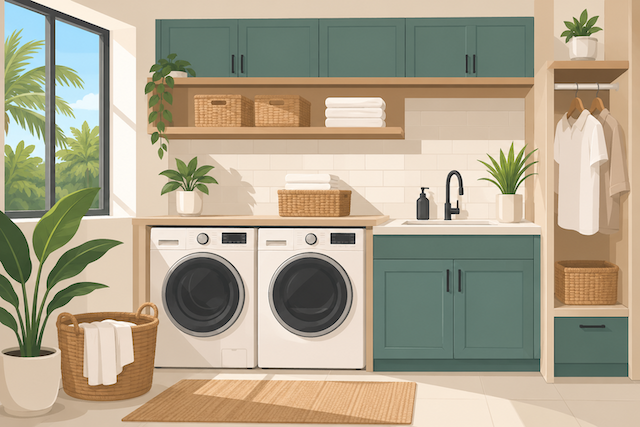
Every home has a laundry room, but not every home has one that works well. In South Florida, the combination of humidity, tight floor plans, and frequent use makes this one of the most important yet overlooked spaces to renovate.
A well-planned laundry room remodel does more than improve your daily routine. It makes chores easier, reduces wear on your appliances, and even adds to your home’s resale value. The key is choosing the right layout, materials, and upgrades for the local climate.
If you are already mapping out improvements around the house, this space deserves a spot on your list alongside kitchen and bathroom projects. Our complete room-by-room remodeling guide can help you see where a laundry room refresh fits into the bigger picture.
Why Laundry Rooms Deserve a Second Look
Laundry rooms see more traffic than most homeowners realize. Between washing, drying, folding, and storage, this small space takes a daily beating.
The problem is that many South Florida homes treat the laundry area as an afterthought. It might be a cramped closet, a corner of the garage, or a narrow hallway nook with no counter space and poor ventilation. Over time, that leads to frustration, clutter, and even moisture damage.
A remodel changes that. You can create a space that actually supports how you live rather than getting in the way.
Planning Your Laundry Room Layout
Measure First, Design Second
Before picking finishes, take a good look at your available square footage. Standard laundry rooms range from a compact 3-by-5-foot closet to a full 8-by-10-foot dedicated room. Each size calls for a different approach.
For small spaces, stackable washer and dryer units free up room for upper cabinets and a folding shelf. If you have more floor space, side-by-side appliances with a continuous countertop across the top give you a proper sorting and folding station.
Think About Workflow
A good laundry room layout follows a simple sequence: sort, wash, dry, fold, and store. Arrange your appliances, counter space, and cabinets to support that flow in a straight line or an L-shape. Avoid layouts that force you to carry wet clothes across the room.
Don’t Forget the Sink
A utility sink is one of the most useful additions to any laundry room. Hand-washing delicates, soaking stained clothes, or cleaning up after messy projects becomes much easier when you have a dedicated sink. If you are planning plumbing work, this is the time to add one. Our plumbing services team can help run the right connections during your remodel.
Choosing Materials That Hold Up in South Florida
Flooring
Standard flooring options like hardwood or basic laminate do poorly in laundry rooms. Between leaks, humidity, and foot traffic, you need something waterproof and durable.
Porcelain tile is the most reliable choice. It handles moisture without swelling, comes in styles that mimic wood or stone, and cleans up easily. Luxury vinyl plank is another strong option. It feels warmer underfoot than tile, resists water completely, and costs less to install.
Avoid carpet, traditional laminate, and unfinished wood. These materials absorb moisture and lead to mold problems within months in South Florida’s climate. For more ideas on what works best in humid environments, check out our guide on home flooring options that boost resale value.
Cabinetry and Countertops
Standard particleboard cabinets swell and deteriorate when exposed to moisture. Opt for plywood or marine-grade materials with a sealed finish instead. Thermofoil or laminate cabinet fronts are also good choices since they resist humidity and wipe clean easily.
For countertops, quartz or solid surface materials work well. They are non-porous, easy to maintain, and hold up against detergent spills and damp conditions.
Walls and Trim
Paint alone will not protect your laundry room walls. Use a semi-gloss or satin finish that resists moisture and can be wiped down. For baseboards, consider waterproof PVC baseboards. They handle humidity and accidental splashes far better than wood, which tends to rot or swell near washing machines.
Essential Storage and Organization
The best laundry room designs make storage feel effortless. Open shelving above the machines keeps detergent, dryer sheets, and supplies within reach without taking up floor space. Pull-out drying racks mounted on the wall or inside cabinets are a smart solution for items that cannot go in the dryer.
If you have the room, upper and lower cabinets on one wall provide concealed storage for cleaning products, irons, and bulk supplies. A countertop over the machines gives you a dedicated folding area that keeps piles off the nearest chair or bed.
For deeper organization, consider:
- A hanging rod for clothes that need to air dry
- Laundry sorting bins built into the cabinetry
- A drop-down ironing board mounted inside a cabinet
- Drawers for tools, sewing kits, and small essentials
Ventilation and Moisture Control
South Florida’s humidity makes ventilation a top priority in any laundry room. Without proper airflow, moisture from the dryer and washing machine leads to mildew, musty odors, and even structural issues.
Make sure your dryer vents directly to the outside using a smooth, rigid duct. Flexible foil ducts trap lint and restrict airflow, which reduces dryer efficiency and increases fire risk.
An exhaust fan is a smart addition if your laundry room lacks windows. Choose a model with a humidity sensor so it runs automatically when moisture levels rise.
If your laundry room shares a wall with a bathroom or kitchen, the same principles of moisture management apply. Our guide on moisture-resistant materials for Florida bathrooms covers many of the same considerations that matter in laundry spaces too.
Lighting and Electrical Considerations
Good lighting transforms a laundry room from a chore zone into a functional workspace. Overhead fixtures alone create shadows on countertops and inside cabinets. Layer your lighting with:
- Recessed or flush-mount ceiling lights for general brightness
- Under-cabinet LED strips to illuminate the folding counter
- Task lighting above the sink if you have one
Electrical planning matters too. Washers and dryers draw significant power, especially electric dryers. Make sure your panel and circuit breakers can handle the load. If you are moving appliances to a new location, budget for running new dedicated circuits.
When to Call a Professional
Some laundry room improvements are straightforward DIY projects. Painting, adding shelves, or swapping out cabinet hardware falls into that category.
But any work involving plumbing, electrical, or structural changes benefits from professional experience. Moving a washer hookup, installing a new sink, or adding ventilation requires permits and proper installation to avoid problems down the road. A professional remodeling team can coordinate all the trades involved and keep the project moving on schedule.
Bringing It All Together
A laundry room remodel does not need to be expensive to make a real difference. Focus on durable, waterproof materials, an efficient layout, and good storage. Those three things will turn a cramped, frustrating space into one of the most practical rooms in your home.
South Florida’s climate demands materials that resist moisture and stand up to daily use. Porcelain or luxury vinyl flooring, quartz countertops, sealed cabinetry, and proper ventilation form the foundation of a laundry room that lasts.
Whether you are planning a full renovation or just a refresh, this is a room where smart choices pay off every time you do a load of laundry. Small upgrades add up to a space that works harder for you, stays cleaner longer, and makes one of life’s routine tasks just a little more pleasant.