

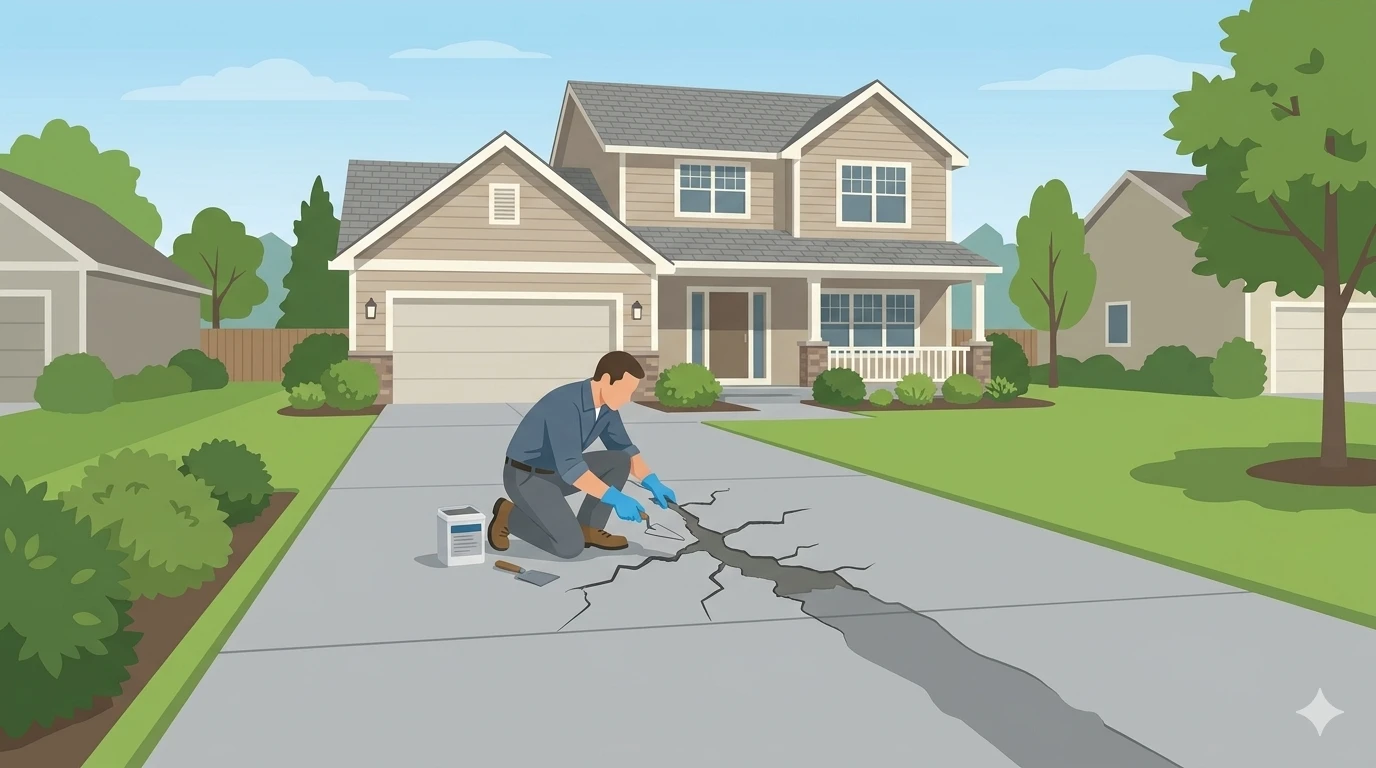
Large cracks in a driveway are more than an appearance problem. They can allow water to reach the underlying base, widen during temperature changes, create uneven surfaces, and eventually contribute to more extensive damage. Learning how to approach concrete driveway repair starts with identifying why the crack formed and determining whether a repair is appropriate or a larger section needs replacement.
The right repair method depends on the crack’s width, depth, movement, surrounding damage, and the condition of the slab underneath. ACI guidance emphasizes that cracks should be evaluated based on their cause and consequences rather than treated with a single repair method.
Key Takeaways
-
Large cracks should be evaluated before selecting a repair material or method.
-
Stable cracks may be repaired, while moving or structurally significant cracks can require professional attention.
-
Proper cleaning, preparation, filling, and sealing are essential for a durable repair.
-
South Florida’s moisture, heat, and drainage conditions make professional assessment especially valuable.
Why Large Driveway Cracks Need Attention
Concrete naturally experiences movement as it dries, heats, cools, and responds to changes in moisture. Properly designed contraction joints help control where cracking occurs, but uncontrolled cracks can still develop from shrinkage, settlement, drainage problems, heavy loads, poor base preparation, or movement in the surrounding soil.
A large crack also creates a pathway for water. ACI notes that cracks can allow water and other potentially harmful substances to enter a repair or concrete system, which can affect durability and performance.
That makes early concrete driveway repair worthwhile when the underlying slab remains sound. Ignoring a growing crack can turn a relatively manageable maintenance issue into a larger surface or structural problem.
First, Determine What Caused the Crack
Before buying patching material, inspect the entire driveway rather than focusing only on the visible opening.
Look for Settlement
A crack accompanied by a difference in elevation between the two sides may indicate movement below the slab. Settlement can occur when the supporting soil or base has shifted, compacted unevenly, or been affected by water.
A surface filler cannot correct a problem that originates underneath the slab. The repair may look good initially but crack again as the concrete continues to move.
Check for Drainage Problems
Water management is particularly important in areas exposed to heavy rainfall. Look for standing water, soil erosion, clogged drainage paths, or water flowing toward the crack.
Keeping water away from the base can help reduce conditions that contribute to recurring damage.
Examine the Crack Pattern
A single isolated crack can have a different cause from a network of interconnected cracks. Multiple cracks, displaced sections, crumbling edges, or significant changes in elevation deserve a closer assessment.
ACI explains that the significance of cracking depends on its type, cause, structure, and service conditions.
When Can a Large Crack Be Repaired?
Not every large crack requires complete driveway replacement. A stable crack in otherwise sound concrete may be suitable for a targeted repair.
A contractor will generally consider several factors:
-
Width and depth of the crack
-
Whether the crack is still moving
-
Whether both sides remain level
-
Condition of the surrounding concrete
-
Evidence of soil or base movement
-
Water exposure and drainage
-
Amount of surface deterioration
For homeowners researching concrete driveway repair, this assessment is important because the repair material should match the condition of the crack rather than simply filling the visible opening.
Cracks that continue to open, cause significant vertical displacement, or occur alongside widespread deterioration may require removal and replacement of part or all of the affected slab.
How to Repair Large Cracks Step by Step
1. Clean the Cracked Area
The first practical step is removing loose concrete, dirt, leaves, dust, and other debris from the crack.
A stiff brush, vacuum, or appropriate cleaning equipment can help expose the actual condition of the crack. The goal is to create a clean surface so the repair material can properly contact the concrete.
Poor preparation is one of the common reasons a repair separates from the surrounding surface.
2. Remove Loose or Weak Concrete
Large cracks often have weak edges that crumble when touched. These pieces should not simply be covered with patching compound.
Loose material needs to be removed carefully until the remaining concrete provides a reasonably solid surface. A professional can determine how much damaged material should be removed without unnecessarily enlarging the repair.
ACI’s current concrete repair guidance specifically addresses concrete removal, surface preparation, repair materials, and crack-repair techniques as separate considerations.
3. Choose the Appropriate Repair Material
The repair product should be selected according to the crack and the expected movement.
Some products are designed for narrow surface cracks, while others are formulated for deeper or wider repairs. Flexible sealants may be appropriate where controlled movement is expected, whereas rigid repair materials can be useful in different circumstances.
There is no universal filler that works for every driveway crack. ACI guidance on repair materials emphasizes selecting materials according to the specific repair application and service conditions.
4. Fill the Crack Correctly
Apply the selected repair material according to the manufacturer’s instructions. Deep cracks may require a compatible backing or staged filling rather than one thick application.
Avoid overfilling the area simply to create a raised patch. The repaired surface should be properly finished so it does not create an unnecessary trip hazard or interfere with vehicle traffic.
5. Allow Adequate Curing Time
A repair needs sufficient time to cure before the driveway is exposed to normal traffic.
The exact curing period depends on the product, weather, temperature, humidity, and repair depth. Following the manufacturer’s instructions is more reliable than assuming every repair product requires the same waiting period.
6. Seal Where Appropriate
Once the repair has cured, sealing may help limit water entry and protect the repaired area, depending on the repair system and driveway condition.
Sealing should not be treated as a substitute for correcting drainage, settlement, or structural movement. ACI identifies water intrusion through cracks as an important durability concern.
Concrete Driveway Repair vs. Replacement
One of the most important decisions is determining whether repairing the existing slab makes financial and practical sense.
A localized repair may be suitable when the surrounding concrete remains strong and the underlying problem is limited. Replacement becomes more reasonable when there is widespread cracking, severe settlement, extensive spalling, major displacement, or repeated failed repairs.
The concrete driveway repair cost can vary considerably depending on crack size, accessibility, preparation, material requirements, labor, and whether underlying problems must also be corrected.
Getting an on-site evaluation can provide a much more useful estimate than relying on a generic price range.
South Florida Considerations
South Florida driveways face conditions that deserve special attention. Heavy rainfall, high humidity, intense heat, drainage challenges, and soil movement can all affect outdoor concrete over time.
Homeowners should also consider local requirements and community restrictions before making significant changes. Understanding South Florida driveway construction costs and HOA rules can help with planning before a larger repair or replacement project begins.
Material selection also matters. Homeowners can compare concrete and pavers when deciding whether repairing the existing surface or changing the driveway material makes more sense for the property.
When DIY Repair Makes Sense
DIY concrete driveway repair can be reasonable for homeowners dealing with a relatively contained, stable crack and who have the appropriate tools and materials.
The project becomes more complicated when the crack is unusually wide or deep, continues through multiple sections, has raised or sunken edges, or appears alongside drainage and settlement problems.
Large cracks should not automatically be treated as cosmetic defects. ACI explains that cracking can range from an appearance issue to evidence of more significant distress, depending on the circumstances.
Signs You Need Professional Help
Professional assessment is worth considering when:
-
The crack continues to widen.
-
One side of the slab is higher than the other.
-
Several large cracks are developing.
-
Water collects around the damaged area.
-
Concrete edges are breaking apart.
-
Vehicles cause noticeable movement.
-
The driveway has repeated repair failures.
-
Cracks extend across multiple slabs or sections.
Protecting your home’s driveway starts with choosing qualified concrete driveway contractors near me. By partnering with specialists who inspect sub-grade conditions and soil stability, homeowners can achieve durable repairs that prevent future cracking and settling.
For a South Florida project, how to hire a licensed driveway contractor in South Florida is a useful starting point for evaluating experience, licensing, project scope, and repair methods.
Choosing the Right Driveway Material
Repairing the existing slab is not always the only option. In some cases, replacing a damaged section with a different surface may provide a more suitable long-term solution.
Factors such as drainage, appearance, maintenance, vehicle loads, property layout, and local conditions should all be considered. Reviewing the best driveway materials can help homeowners understand the alternatives before committing to a larger project.
A driveway is a long-term exterior investment, so the material should fit both the property and its environmental conditions.
Why Professional Preparation Matters
A successful concrete driveway repair involves more than filling a visible gap. The contractor needs to understand whether the crack is caused by shrinkage, movement, settlement, drainage, loading, or another condition.
This is especially important for large cracks because repairing the surface without addressing the cause can result in recurring damage.
Top Renovations is a perfect contractor option for homeowners in South Florida who need professional driveway work and want the project evaluated as a complete system rather than simply patched at the surface.
How to Reduce Future Cracking
Preventive maintenance starts with water management and regular inspection.
Keep drainage paths clear, address standing water, monitor developing cracks, and avoid allowing small areas of deterioration to remain exposed for long periods.
Proper jointing also plays an important role in controlling random cracking. The American Cement Association explains that contraction joints are intentionally used to control where concrete cracks as it contracts.
Heavy vehicles should also be considered when evaluating an existing driveway. A surface designed for ordinary residential traffic may experience additional stress when repeatedly exposed to unusually heavy loads.
Final Thoughts
Large driveway cracks deserve attention because the visible opening may be only part of the problem. The best concrete driveway repair approach begins by identifying the cause, evaluating the condition of the surrounding slab, preparing the damaged area correctly, and selecting a repair material suited to the situation.
Stable, localized damage may be repairable without replacing the entire driveway. However, movement, settlement, widespread deterioration, or recurring cracks can point toward a larger solution.
For South Florida homeowners, professional evaluation is particularly useful because weather, moisture, drainage, and soil conditions can influence how repairs perform over time. Addressing the cause instead of simply hiding the crack gives the project a better chance of providing a durable result.
FAQs
Can large cracks in a driveway be repaired?
Yes, stable cracks can often be repaired, but moving, displaced, or structurally significant cracks may require more extensive work.
How long does a driveway crack repair last?
Longevity depends on the crack’s cause, repair material, preparation quality, movement, drainage, and overall slab condition.
What causes large cracks in concrete driveways?
Common causes include shrinkage, soil settlement, drainage problems, temperature movement, heavy loads, and inadequate construction or base preparation.
Should I repair or replace a cracked driveway?
Repair may suit localized damage, while widespread cracking, settlement, displacement, or severe deterioration may make replacement more appropriate.
Does South Florida weather affect driveway cracks?
Yes, heat, rainfall, humidity, drainage conditions, and soil movement can influence concrete performance and recurring cracking.