

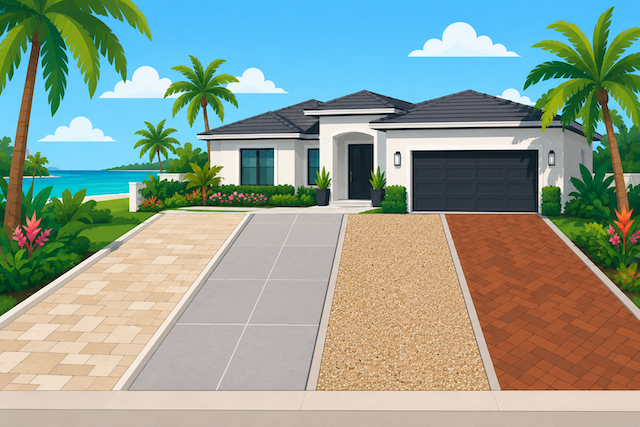
Your driveway is one of the first things anyone sees when they approach your home. It sets the tone for the entire property, handles daily wear from vehicles and weather, and plays a surprisingly large role in your home’s overall value. Choosing the right driveway material for a South Florida home means balancing heat resistance, moisture durability, visual appeal, and long-term maintenance costs.
This guide breaks down the most popular driveway materials available to South Florida homeowners, explains how each one performs in the local climate, and helps you decide which option best suits your property and budget.
Why Your Driveway Material Matters More Than You Think
Many homeowners focus their renovation budgets on kitchens and bathrooms while overlooking the driveway. That is a mistake. A cracked, faded, or uneven driveway creates a poor first impression and can actually reduce your property’s market value before a buyer ever steps inside.
In South Florida, the stakes are even higher. Intense sun, heavy rain, and shifting soil put constant pressure on driveway surfaces. The wrong material can deteriorate quickly, leading to costly repairs and a frustrating maintenance cycle.
A well-chosen driveway, on the other hand, delivers years of reliable performance while enhancing your home’s curb appeal every single day.
Top Driveway Materials for South Florida Properties
Concrete Driveways
Concrete remains one of the most popular driveway choices across South Florida, and for good reason. It handles the region’s heat well, provides a clean and modern appearance, and lasts for decades with proper care.
A standard concrete driveway typically lasts 30 to 40 years, making it one of the longest-lasting options available. It also offers design flexibility through stamping, staining, and coloring techniques that can mimic more expensive materials.
Pros:
- Excellent durability in hot climates
- Long lifespan with minimal maintenance
- Wide range of finishes and colors
- Strong resale value appeal
Cons:
- Can crack under heavy shifting soil
- Repairs are visible and sometimes costly
- Requires periodic sealing
For homeowners who want a reliable, low-fuss surface that looks great for decades, concrete is hard to beat.
Paver Driveways
Paver driveways have grown significantly in popularity throughout South Florida. Made from concrete, brick, or natural stone units, pavers offer a premium look that elevates your home’s entrance immediately.
One of the biggest advantages of pavers is repairability. If a section becomes damaged or stained, individual units can be replaced without redoing the entire driveway. This makes pavers a practical long-term investment despite their higher upfront cost.
Pros:
- Beautiful, high-end appearance
- Easy to repair individual sections
- Excellent drainage when installed properly
- Resistant to cracking from soil movement
Cons:
- Higher material and installation cost
- Weeds can grow between joints over time
- Requires periodic re-sanding
Paver driveways pair exceptionally well with matching walkways and outdoor living areas, creating a cohesive exterior design that impresses visitors and buyers alike.
Asphalt Driveways
Asphalt offers a budget-friendly alternative that performs reasonably well in South Florida conditions. It installs quickly, provides a smooth driving surface, and works well for larger driveway areas where cost is a primary concern.
However, asphalt does absorb more heat than lighter-colored materials, which can be uncomfortable during peak summer months. It also requires more frequent maintenance than concrete or pavers, including regular sealing every two to three years.
Pros:
- Lower upfront cost
- Quick installation timeline
- Smooth, consistent surface
- Easy to repair and resurface
Cons:
- Absorbs heat in sunny climates
- Requires regular sealing
- Shorter lifespan than concrete (15 to 20 years)
- Oil stains are more visible
For homeowners prioritizing budget over longevity, asphalt delivers solid value when maintained properly.
Stone Driveways
Natural stone driveways create a stunning, one-of-a-kind entrance that few other materials can match. Options like travertine, limestone, and coral stone are popular in South Florida because they naturally complement the region’s architectural styles.
Stone performs well in heat and handles moisture effectively when sealed correctly. The organic textures and color variations give your property a distinctive character that stands out in any neighborhood.
Pros:
- Unique, luxurious appearance
- Naturally cool underfoot
- Extremely durable when properly installed
- Increases perceived property value
Cons:
- Highest material cost among all options
- Requires professional installation
- Needs periodic sealing to prevent staining
- Can be slippery when wet if not textured
Stone driveways make a strong statement. For homeowners who want their property entrance to feel like a design feature rather than just a functional surface, natural stone delivers.
How to Choose the Right Material for Your Home
Selecting the best driveway material depends on several practical factors beyond just appearance.
Climate Considerations
South Florida’s tropical climate demands materials that can handle intense UV exposure, heavy rainfall, and high humidity year-round. Concrete and pavers generally perform best because they resist heat absorption and drain efficiently when installed correctly.
Budget Planning
Your budget will naturally influence your options. Asphalt offers the lowest entry point, while natural stone sits at the premium end. Concrete and pavers fall in the middle range and typically deliver the best balance of cost and longevity.
When budgeting, factor in the full lifecycle cost, not just the initial installation price. A material that costs more upfront but lasts 30 years often proves cheaper over time than a budget option requiring replacement in 15.
Property Style
Your home’s architecture should guide your driveway material choice. Modern homes pair well with clean concrete finishes or geometric paver patterns. Mediterranean-style properties often look best with stone or warm-toned pavers. Classic homes benefit from traditional brick or stamped concrete designs.
Maintenance Willingness
Be honest about how much time you want to spend maintaining your driveway. Concrete requires the least ongoing attention. Pavers need occasional re-sanding. Asphalt demands regular sealing. Stone requires periodic sealing and careful cleaning.
The Installation Process Matters as Much as the Material
Even the best driveway material will fail prematurely if installed incorrectly. Proper preparation is critical, especially in South Florida where soil conditions and drainage patterns vary significantly from property to property.
A professional installation typically includes thorough site evaluation, proper grading for drainage, a well-compacted base layer, and precise finishing work. Cutting corners during any of these steps leads to premature cracking, pooling water, and uneven surfaces.
Working with experienced driveway installation professionals ensures every phase of the process meets industry standards and is tailored to your specific property conditions.
Driveway Maintenance Tips for South Florida Homeowners
Regardless of which material you choose, consistent maintenance extends your driveway’s lifespan significantly.
For concrete driveways:
- Seal every two to three years
- Clean stains promptly to prevent absorption
- Fill small cracks before they expand
For paver driveways:
- Re-sand joints annually
- Pressure wash surface as needed
- Replace damaged pavers promptly
For asphalt driveways:
- Seal every two to three years
- Avoid parking heavy vehicles in one spot for extended periods
- Address potholes and cracks immediately
For stone driveways:
- Reseal every one to two years
- Use pH-neutral cleaners
- Address loose or shifting stones quickly
Curb Appeal and Resale Value
A well-maintained driveway does more than just look nice. Real estate professionals consistently note that exterior condition influences buyer perception before they even enter a home. A clean, modern driveway signals that the property has been cared for, which builds buyer confidence and can support a stronger asking price.
Many homeowners who invest in exterior upgrades find that pairing a new driveway with complementary improvements creates a compounding effect on curb appeal. Adding a quality fence alongside a new driveway, for example, creates a polished, unified property appearance that stands out in competitive markets.
If you are planning a larger exterior renovation, combining driveway replacement with other outdoor projects often saves money and ensures a consistent design across your entire property.
Common Driveway Mistakes to Avoid
Choosing Based on Price Alone
The cheapest option upfront is not always the most economical over time. Consider lifespan, maintenance costs, and replacement frequency when comparing materials.
Ignoring Drainage
Poor drainage is the number one cause of premature driveway failure in South Florida. Water must be directed away from the surface and your home’s foundation to prevent erosion and structural damage.
Skipping Professional Installation
DIY driveway projects may seem appealing, but the equipment, expertise, and preparation required make professional installation the smarter choice for most homeowners.
Overlooking HOA Requirements
Many South Florida neighborhoods have specific guidelines about driveway materials, colors, and designs. Check your homeowners association rules before committing to a material choice.
Final Thoughts
Your driveway is more than a place to park. It is a permanent feature that influences your home’s appearance, functionality, and market value every day. Choosing the right material for a South Florida property means considering the local climate, your maintenance preferences, your budget, and the overall look you want to achieve.
Whether you lean toward the clean durability of concrete, the premium appeal of pavers, the affordability of asphalt, or the distinctive beauty of natural stone, investing in quality materials and professional installation ensures your driveway performs well for decades. If you are ready to explore your options, requesting a professional consultation is the best place to start.
Frequently Asked Questions
1. What is the most durable driveway material for South Florida?
Concrete and pavers are generally the most durable options for South Florida conditions. Both handle heat, moisture, and heavy use effectively when installed properly.
2. How long does a concrete driveway last in Florida?
A well-installed concrete driveway typically lasts 30 to 40 years in South Florida with regular sealing and basic maintenance.
3. Are paver driveways worth the extra cost?
Yes. Pavers offer excellent durability, easy repairability, and a premium appearance that can increase your home’s resale value. Their higher upfront cost is often offset by lower long-term maintenance expenses.
4. How often should I seal my driveway?
Most driveway materials benefit from sealing every two to three years. Stone driveways may need more frequent sealing, while concrete can sometimes go longer depending on exposure.
5. Can a new driveway increase my home’s resale value?
Absolutely. A new or well-maintained driveway significantly improves curb appeal, which directly influences buyer perception and can support a stronger sale price.