

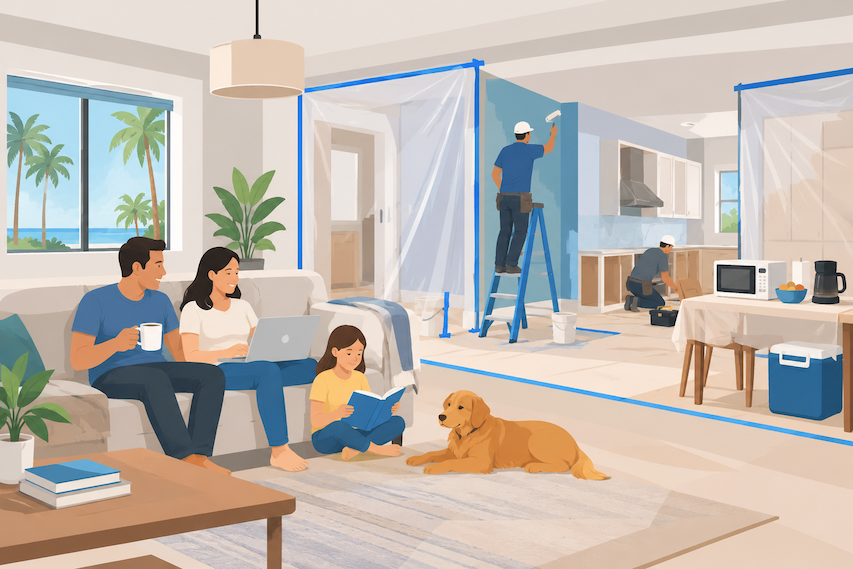
Renovating your home does not always mean packing your belongings, finding temporary housing, and moving somewhere else until construction is finished. With proper planning, many Florida homeowners can continue living in their homes while renovation work is underway.
The key is to organize construction into manageable phases, establish safe living areas, control dust and noise, protect furniture, and coordinate essential utilities before work begins. However, some projects involving major structural changes, extensive plumbing, electrical work, or hazardous materials may require temporary relocation.
For homeowners in South Florida, where heat, humidity, heavy rain, and hurricane-related construction requirements can affect project schedules, preparation is especially important. Understanding what to expect can help you maintain your daily routine while making meaningful improvements to your property.
Can You Renovate a Florida Home While Living in It?
Yes, you can renovate a Florida home while living in it, provided the construction areas are properly separated and essential facilities remain accessible. The feasibility depends on the size of the project, the rooms involved, household needs, and potential safety concerns.
Many homeowners stay during smaller or phased renovations, such as:
-
Replacing flooring in individual rooms.
-
Updating interior doors and windows.
-
Installing new baseboards and trim.
-
Painting bedrooms or living areas.
-
Remodeling one bathroom while another remains available.
-
Completing exterior improvements without disrupting indoor living spaces.
However, staying in the home becomes more difficult when multiple rooms are under construction simultaneously.
For example, replacing flooring throughout the entire house may require moving furniture repeatedly and limiting access to different areas. A complete kitchen renovation can also make everyday meal preparation challenging.
The goal is not simply to remain in the property throughout construction. It is to make sure the home remains safe, functional, and reasonably comfortable.
What Renovation Projects Are Easier to Complete While Living at Home?
Smaller projects and renovations that can be isolated to specific areas are generally easier to manage while the household remains occupied. Projects involving essential utilities, extensive demolition, or major structural changes require more careful planning.
Here is a general comparison:
| Renovation Project | Difficulty While Occupied | Important Consideration |
|---|---|---|
| Interior painting | Low | Allow proper ventilation and drying time |
| Baseboard installation | Low | Move furniture and protect flooring |
| Exterior stucco work | Low to moderate | Manage exterior access and construction noise |
| Window replacement | Moderate | Protect openings and plan installation timing |
| Flooring replacement | Moderate | Complete rooms in manageable sections |
| Bathroom remodeling | Moderate to high | Maintain access to another bathroom |
| Kitchen remodeling | High | Arrange an alternative cooking area |
| Major electrical upgrades | High | Coordinate planned power interruptions |
| Extensive plumbing work | High | Maintain access to essential water facilities |
| Structural remodeling | High | Evaluate safety and temporary accommodation needs |
The difficulty also depends on the home’s layout and the number of people living there.
A household with several bathrooms may manage a bathroom renovation more easily than a household with only one. Similarly, replacing flooring in a spare bedroom is less disruptive than working on the only entrance to the home.
How Should You Plan Renovation Work in Different Phases?
A phased renovation divides construction into smaller sections so homeowners can continue using unaffected areas of the property. It also helps contractors coordinate materials, labor, and access without unnecessarily disrupting the entire household.
Before construction starts, discuss a room-by-room schedule with your contractor.
1. Start With the Most Disruptive Work
Complete work that involves demolition, structural changes, plumbing modifications, and major electrical adjustments before installing new finishes.
This prevents newly completed areas from being damaged by later construction activities.
For example, if your project includes opening walls, relocating electrical outlets, and installing new flooring, the demolition and rough-in work should generally happen before the final flooring installation.
2. Separate the House Into Construction Zones
Divide the property into three practical areas:
-
Construction zone: Rooms where contractors are actively working.
-
Transition zone: Hallways, entrances, and pathways used to move materials and equipment.
-
Living zone: Clean and functional areas reserved for everyday household activities.
Clearly identifying these spaces makes it easier for everyone to understand where construction is allowed.
It also helps prevent workers, tools, and construction materials from unnecessarily entering occupied rooms.
3. Complete One Section Before Moving to Another
Whenever possible, finish one room or section before starting another.
For example, a bedroom renovation can be completed before construction moves into the adjacent living area.
This approach reduces the number of unfinished spaces and gives homeowners more predictable access to their belongings.
4. Schedule Inspections Before Closing Up Work
Some renovations require inspections before walls, ceilings, or other construction elements are covered.
Coordinate these inspections with the contractor and avoid scheduling finish work before required approvals are completed.
This is particularly important for projects involving electrical, plumbing, and structural modifications.
For homeowners considering larger changes, understanding the home renovation challenges in South Florida can help identify local construction considerations before work begins.
How Can You Protect Your Furniture and Belongings During Renovation?
Protecting furniture and personal belongings starts with removing unnecessary items from construction areas and covering everything that remains. Dust, paint splashes, debris, and accidental damage can affect rooms beyond the immediate work zone.
Before contractors arrive, prepare each room.
Remove Items From Construction Areas
Take out:
-
Furniture and decorative pieces.
-
Electronics and appliances that are not needed.
-
Curtains, rugs, and removable fixtures.
-
Personal documents and valuables.
-
Clothing and other items stored in exposed cabinets.
If you cannot move everything out, relocate belongings to a designated storage room.
Cover Furniture Properly
Use durable plastic sheeting or appropriate protective covers for furniture that must remain inside the property.
Do not rely on thin bedsheets to protect items from fine construction dust.
For delicate electronics, artwork, and valuable belongings, consider moving them away from the construction area entirely.
Protect Floors and Walkways
Construction workers frequently move tools, equipment, and materials throughout the property.
Use suitable floor protection in areas where workers will regularly pass. Temporary protective coverings can help prevent scratches, dirt, and accidental impact damage.
Pay particular attention to:
-
Entryways.
-
Hallways.
-
Staircases.
-
Existing tile and hardwood floors.
-
Areas connecting construction and living zones.
Secure Important Documents and Personal Items
Keep passports, financial records, jewelry, medication, and other valuable belongings in a secure location.
If contractors need access to bedrooms, closets, or storage areas, discuss these arrangements before construction begins.
How Do You Control Dust During a Home Renovation?
Dust control is one of the most important parts of living in your home during renovation. Demolition, sanding, cutting, and drywall work can release particles that spread through doorways, ventilation systems, and other openings.
A combination of physical barriers, proper ventilation planning, regular cleanup, and designated construction routes can help reduce the spread of dust.
Use Temporary Dust Barriers
Contractors can use plastic barriers, temporary partitions, and sealed openings to separate construction areas from occupied rooms.
For projects involving significant dust-producing work, discuss whether specialized containment systems are appropriate.
Simply closing a bedroom door may not be enough when demolition or sanding is happening nearby.
Protect Your HVAC System
Construction dust can enter HVAC return vents and circulate throughout the home.
Before work starts, discuss the following with your contractor:
-
Whether nearby air returns need temporary protection.
-
Whether the HVAC system should be turned off during certain dusty activities.
-
How to prevent dust from entering ductwork.
-
When air filters should be inspected or replaced.
Do not permanently block HVAC returns or supply vents without professional guidance, since this can affect system performance.
Maintain a Regular Cleaning Schedule
Daily cleanup helps keep dust and debris from accumulating.
Ask the contractor to establish a cleanup routine that includes:
-
Removing construction debris.
-
Vacuuming suitable surfaces with appropriate equipment.
-
Wiping down accessible surfaces.
-
Keeping walkways clear.
-
Checking temporary barriers for gaps.
-
Securing tools and materials before leaving.
For older properties, be particularly cautious before disturbing materials that may contain asbestos or lead-based paint. These materials require appropriate testing and qualified handling rather than ordinary household cleanup.
How Can You Maintain Essential Utilities During Renovation?
Water, electricity, plumbing, air conditioning, and internet access are essential for maintaining a functional household during construction. Homeowners should discuss planned service interruptions before work begins so they can make alternative arrangements.
Different renovation activities affect utilities in different ways.
| Utility | Potential Disruption | Recommended Preparation |
|---|---|---|
| Electricity | Power may need to be disconnected during electrical work | Schedule outages in advance |
| Water | Plumbing modifications may interrupt water supply | Arrange temporary water access |
| Plumbing | Bathrooms, sinks, or drains may become unavailable | Keep alternative facilities accessible |
| Air conditioning | Dust-producing work may affect HVAC operation | Coordinate system protection |
| Internet | Wiring or electrical work may interrupt connectivity | Identify temporary alternatives |
| Gas | Certain appliance or utility work may require shutdowns | Use qualified professionals for disconnection and reconnection |
Plan Around Power Interruptions
Electrical upgrades may require temporary power shutdowns.
If someone in the household works remotely, relies on medical equipment, or needs refrigeration for essential items, communicate these requirements before scheduling the work.
Never attempt to reconnect electrical systems or modify wiring yourself.
Maintain Access to Water and Bathrooms
A bathroom renovation can become particularly disruptive if the property has only one bathroom.
If plumbing work is scheduled, ask the contractor when water will be unavailable and how long the interruption is expected to last.
For larger projects, temporary accommodation may be more practical than trying to manage without essential facilities.
Keep Air Conditioning in Mind
Florida’s heat and humidity make air conditioning an important consideration during renovation.
Some activities may require the HVAC system to be temporarily shut down or protected. However, prolonged periods without adequate climate control can make the property uncomfortable and may affect moisture-sensitive materials.
Coordinate these interruptions with your contractor, particularly during warmer months.
How Can You Keep Your Kitchen Functional During Remodeling?
A kitchen renovation does not necessarily require moving out, but homeowners should prepare an alternative cooking and food preparation area before demolition begins. Without a functional kitchen, everyday activities can become difficult.
A temporary kitchen can be set up in a dining room, spare room, or another clean area away from construction.
Consider preparing the following:
-
Microwave or another suitable small cooking appliance.
-
Mini refrigerator.
-
Drinking water.
-
Disposable or reusable dishes.
-
Basic utensils.
-
Coffee maker.
-
Storage containers.
-
Easy-to-prepare meals.
Avoid placing temporary cooking appliances near construction materials, dust, or exposed electrical work.
If the renovation includes extensive plumbing or electrical modifications, ask the contractor when the kitchen sink, refrigerator, and other appliances can safely be reconnected.
You should also discuss how long the kitchen will remain unavailable so you can plan groceries and meals accordingly.
How Do You Make Renovation Safer for Children and Pets?
Children and pets need additional protection during construction because open work areas can contain sharp tools, exposed wiring, chemicals, debris, and other hazards.
A renovation site should never be treated as a safe play or living area.
Before work starts, establish clear boundaries.
Create Restricted Construction Areas
Use secure barriers and keep construction rooms inaccessible to children and pets.
Do not rely entirely on verbal instructions, especially when contractors are regularly entering and leaving the property.
Keep Hazardous Materials Secure
Paints, solvents, adhesives, cleaning chemicals, and construction tools should remain in designated storage areas.
Ask contractors to secure these materials at the end of each workday.
Maintain a Consistent Household Routine
Construction can disrupt normal sleeping, eating, and play schedules.
If possible, maintain regular routines by keeping bedrooms and designated family areas away from active construction.
For pets, consider arranging temporary care during demolition or other noisy activities.
How Does Florida’s Weather Affect Renovations While Living at Home?
Florida’s weather can influence construction schedules, material storage, ventilation, and the comfort of occupied rooms. South Florida homeowners should account for heat, humidity, heavy rainfall, and hurricane season when planning renovation work.
Prepare for Rain and Humidity
Rain can delay exterior construction activities, including painting, stucco applications, and other weather-dependent work.
Humidity can also affect drying and curing times for certain materials.
Ask your contractor how weather conditions may influence the schedule and whether temporary protective coverings are needed.
Protect Openings During Window and Door Replacement
Replacing windows and doors may temporarily expose portions of the home to outdoor conditions.
Plan installation carefully so openings are not left unsecured or exposed longer than necessary.
For properties requiring impact-resistant products, review the available doors and window installation options before finalizing material selections.
Consider Hurricane Season
If renovation work takes place during hurricane season, discuss how the contractor will secure construction materials, equipment, temporary openings, and exposed areas when severe weather approaches.
A renovation schedule should include a plan for protecting the property if weather conditions change unexpectedly.
When Should You Temporarily Move Out During a Renovation?
Temporary relocation is advisable when construction makes the home unsafe, removes access to essential facilities, or creates conditions that cannot reasonably be managed while the household remains inside.
Not every renovation can be completed comfortably with occupants present.
Consider temporary accommodation in situations involving:
-
Extensive structural demolition.
-
Major electrical or plumbing system replacement.
-
Significant roof work that exposes interior spaces.
-
Extensive asbestos or lead remediation.
-
Severe dust or chemical exposure.
-
Loss of access to all usable bathrooms.
-
Prolonged water or electricity interruptions.
-
Construction that affects nearly every living area.
The decision should be based on safety and practicality rather than simply trying to avoid additional accommodation costs.
How Long Should You Plan to Stay Somewhere Else?
The length of temporary relocation depends on the construction scope and the time needed to restore safe access to the property.
Ask your contractor to identify the most disruptive stages and provide realistic dates for when the home can be occupied again.
You may only need to leave for a few days during certain activities, while larger projects could require several weeks or longer.
If the work involves hazardous materials, follow the clearance and re-entry requirements established by qualified professionals.
How Much Should You Budget for Living Arrangements During Renovation?
Your renovation budget should account for additional household expenses if construction makes certain rooms or facilities temporarily unavailable. Even when you remain in the home, everyday costs may increase.
Potential expenses include:
-
Temporary accommodation.
-
Restaurant meals or food delivery.
-
Storage rental.
-
Laundry services.
-
Pet boarding.
-
Additional transportation.
-
Temporary internet or workspace arrangements.
-
Extra cleaning.
A practical approach is to prepare two budgets: one for construction and another for household living expenses.
This helps you understand the full financial impact of the project instead of focusing only on contractor estimates.
For a more detailed understanding of the financial side, review this South Florida home renovation cost guide.
How Can You Choose a Contractor Who Can Work Around an Occupied Home?
Choose a contractor who understands that renovating an occupied property requires careful scheduling, clear communication, and attention to household safety. Experience with construction alone is not enough; the team must also be able to coordinate work around the homeowner’s daily routine.
Before hiring a contractor, ask these questions:
-
Have you completed renovations while homeowners remained in the property?
-
Can the work be divided into separate construction phases?
-
How will you control dust and protect occupied rooms?
-
What happens when water or electricity needs to be disconnected?
-
How will workers enter and leave the property?
-
Who is responsible for daily cleanup?
-
How will schedule changes be communicated?
-
Which stages may require temporary relocation?
You should also review the contractor’s licensing, insurance, references, written estimate, and proposed project schedule.
A clear agreement helps establish expectations before construction begins.
Top Renovations provides interior remodeling services that cover layout improvements, updated finishes, lighting, and other interior upgrades. Discussing the project scope and household requirements early can help determine the most practical construction approach.
Home Renovation Preparation Checklist: What Should You Do Before Construction?
Preparing your home before contractors arrive can reduce delays, protect personal belongings, and make it easier to continue living in the property. A written checklist also helps ensure that important arrangements are not overlooked.
Use this checklist before your renovation begins:
Planning and scheduling
-
Confirm the renovation scope and written estimate.
-
Review the construction schedule.
-
Identify rooms that will be unavailable.
-
Confirm the work hours and site access arrangements.
-
Discuss possible delays and schedule changes.
Household preparation
-
Remove personal belongings from construction areas.
-
Move valuable items into secure storage.
-
Prepare a temporary kitchen if necessary.
-
Identify alternative bathroom facilities.
-
Arrange temporary accommodation if required.
-
Make arrangements for children and pets.
Property protection
-
Protect existing flooring and furniture.
-
Establish dust barriers.
-
Identify safe household pathways.
-
Discuss HVAC protection.
-
Confirm debris removal and daily cleanup procedures.
Utilities and safety
-
Review planned electricity interruptions.
-
Confirm water shutdown schedules.
-
Discuss plumbing and HVAC access.
-
Secure important documents and valuables.
-
Confirm that construction areas will remain inaccessible to unauthorized occupants.
Completing these steps before the first day of construction can make the renovation process easier to manage.
Frequently Asked Questions About Living at Home During Renovation
Is it cheaper to stay home during a renovation?
Staying home can reduce accommodation and relocation expenses, but it does not always make the renovation less expensive. Additional cleaning, food, storage, and transportation costs may still arise.
Can I sleep in my house during remodeling?
Yes, provided the sleeping area is separated from construction hazards and remains safe and comfortable. However, major demolition, hazardous material removal, or extensive structural work may make temporary accommodation necessary.
How do I keep renovation dust out of my bedroom?
Keep bedroom doors closed, use appropriate dust barriers, protect ventilation openings when advised by qualified professionals, and keep the room outside the active construction zone. Regular cleaning also helps reduce accumulated dust.
Can contractors work while I am at home?
Yes, contractors can generally work while homeowners are present, provided access, safety, working hours, and construction boundaries are agreed upon. Homeowners should avoid entering active work areas.
Should I renovate one room at a time?
When practical, yes. Completing one room or section before moving to another can help maintain access to essential living spaces and reduce the disruption caused by construction.
What should I do if my kitchen is unavailable during renovation?
Set up a temporary kitchen in a clean area away from construction. Use suitable small appliances, keep basic food supplies available, and arrange alternative meal options during periods when cooking facilities are unavailable.
Can I stay in my home during a bathroom renovation?
It depends on how many bathrooms the property has and the extent of the work. If another functional bathroom is available, remaining in the home may be practical. Otherwise, temporary accommodation may be necessary.
How can I reduce renovation delays while living at home?
Finalize material selections early, maintain communication with the contractor, coordinate inspections, prepare rooms before scheduled work, and avoid unnecessary changes after construction begins.
Final Thoughts
Renovating a Florida home without moving out is possible when the project is planned around the needs of the household. Proper construction sequencing, dust management, furniture protection, utility coordination, and clear communication can make a significant difference.
However, staying in the property should never come at the expense of safety. Some renovations are simply too disruptive or hazardous to complete while occupants remain inside.
Before construction begins, discuss your living arrangements, project phases, and potential interruptions with your contractor. A realistic plan will help you protect your home, maintain a manageable daily routine, and move through the renovation with fewer surprises.
If you’re planning an interior or exterior renovation in South Florida, Top Renovations can help you define the project scope and explore practical improvements for your property. Contact the team at (954) 237-4257 to discuss your renovation plans.