

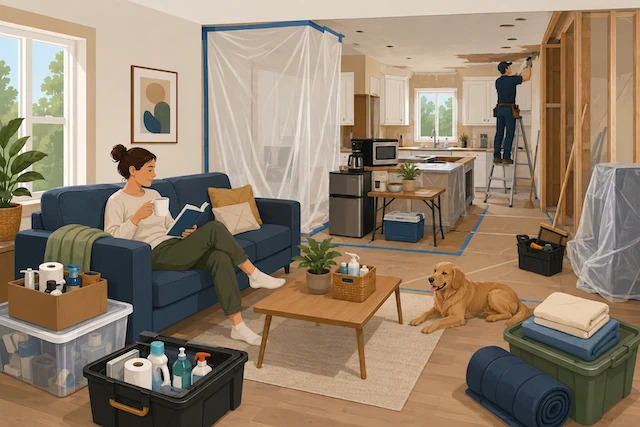
Home remodeling is exciting. You’re investing in a better, more functional space that fits your lifestyle and adds long-term value to your property. But while the finished result is worth it, living through the remodeling process can be one of the biggest challenges homeowners face.
Dust finds its way into unexpected places. Rooms become temporarily unusable. Daily routines get interrupted, and construction noise quickly becomes part of everyday life. Without a plan, even a small renovation can feel overwhelming.
The good news is that you don’t have to put your life completely on hold. With the right preparation and realistic expectations, you can stay comfortable, organized, and stress-free while your home is being transformed.
Whether you’re updating a single room or completing a whole-house renovation, this guide will help you navigate every stage of the remodeling process while making your temporary living situation much easier.
Why Living Through a Remodel Can Be Challenging
Most homeowners focus on selecting finishes, choosing contractors, and staying within budget. Few spend enough time planning how they’ll actually live during construction.
Depending on the scope of work, you may deal with:
-
Constant construction noise
-
Limited access to bathrooms or kitchens
-
Dust throughout the home
-
Temporary power or water interruptions
-
Reduced privacy
-
Changes to your daily routine
-
Safety concerns for children and pets
Understanding these challenges ahead of time allows you to prepare instead of reacting when they happen.
Decide Whether You Should Stay or Move Out
The first question to answer is whether staying in your home is practical.
Smaller remodeling projects—such as updating one bathroom or replacing flooring in a single area—usually allow homeowners to remain in the house with minimal inconvenience.
Larger renovations involving kitchens, multiple rooms, structural work, plumbing, or electrical upgrades may make temporary housing the better option.
If you’re unsure whether your project has reached that point, reviewing these signs it’s time for a home renovation can help you understand the scope of work your property may require.
Staying Makes Sense If:
-
Only one room is under construction
-
Utilities remain available
-
Dust and noise are manageable
-
You have another usable bathroom or kitchen
Consider Moving Out If:
-
Multiple rooms are demolished simultaneously
-
Plumbing will be disconnected
-
HVAC systems won’t be functioning
-
Young children or elderly family members live in the home
-
Anyone has respiratory conditions or severe allergies
Even relocating for just a few weeks can significantly reduce stress during major renovations.
Create a Temporary Living Space
If you’re staying home, dedicate one area that remains untouched by construction.
This space should become your daily retreat where you can relax, work, or sleep without ongoing disruptions.
Choose a room that includes:
-
Comfortable seating
-
Charging stations
-
Reliable internet
-
Television or entertainment
-
Storage for everyday essentials
Having one organized room makes the rest of the renovation feel much more manageable.
Protect Your Belongings Before Construction Starts
Construction dust spreads farther than most people expect.
Before demolition begins:
-
Pack seasonal clothing
-
Store fragile decorations
-
Cover furniture with plastic
-
Remove artwork from walls
-
Seal important documents in waterproof containers
Items you use daily should remain easily accessible, while valuables should be moved completely away from work areas.
Set Up a Temporary Kitchen
Kitchen remodels create the biggest disruption because they’re central to everyday life.
Even without a functioning kitchen, you can still prepare simple meals.
A temporary kitchen might include:
-
Microwave
-
Coffee maker
-
Air fryer
-
Electric kettle
-
Mini refrigerator
-
Paper plates and utensils
Planning meals ahead of time also reduces unnecessary stress.
If you’re deciding between a kitchen-only update and a larger renovation, understanding the differences in kitchen renovation costs can help you prepare for both the financial and practical impact.
Plan Meals in Advance
Cooking becomes difficult when appliances are unavailable.
Instead of relying on takeout every day:
-
Prepare freezer meals
-
Batch cook before construction starts
-
Use slow cookers or pressure cookers
-
Schedule grocery deliveries
-
Choose restaurants close to home for busy days
A simple meal plan saves both money and frustration.
Keep Dust Under Control
Dust is unavoidable during remodeling, but it doesn’t have to take over your home.
Ask your contractor about:
-
Plastic dust barriers
-
Floor protection
-
Air filtration systems
-
Daily cleanup procedures
You can also:
-
Change HVAC filters frequently
-
Vacuum with HEPA filters
-
Keep bedroom doors closed
-
Wipe surfaces regularly
Maintaining clean living areas improves comfort throughout the project.
Stay Organized Throughout the Project
Construction often creates temporary clutter.
Create designated storage bins for:
-
Medications
-
Chargers
-
Toiletries
-
Important paperwork
-
Cleaning supplies
-
Pet items
Label everything clearly so you’re not constantly searching for everyday necessities.
Communicate Regularly With Your Contractor
Good communication prevents misunderstandings.
Schedule weekly progress updates and discuss:
-
Upcoming work
-
Expected noise
-
Utility interruptions
-
Material deliveries
-
Timeline adjustments
Knowing what to expect each week makes the renovation much less stressful.
Create Safe Areas for Children and Pets
Construction zones contain tools, exposed wiring, nails, and sharp materials.
Protect family members by:
-
Installing temporary gates
-
Keeping pets in separate rooms
-
Explaining construction safety to children
-
Creating outdoor play areas
-
Scheduling walks during noisy work
Safety should always come before convenience.
Prepare for Utility Interruptions
Certain remodeling projects require temporary shutdowns of:
-
Electricity
-
Water
-
Internet
-
HVAC systems
Ask your contractor for advance notice whenever possible.
Keeping portable chargers, bottled water, flashlights, and backup internet options available helps minimize disruptions.
Protect Your Outdoor Spaces Too
Home remodeling doesn’t always stay inside the house.
Construction vehicles, dumpsters, and material deliveries may affect your driveway, lawn, or fencing.
If outdoor structures need repairs during your renovation, understanding how to address damaged fence posts can prevent additional property issues while contractors are already on-site.
Expect the Unexpected
Almost every remodeling project encounters at least one surprise.
Examples include:
-
Hidden water damage
-
Outdated wiring
-
Plumbing issues
-
Structural repairs
-
Material delays
Building flexibility into your timeline—and your mindset—helps you adapt when unexpected challenges arise.
Make Smart Design Decisions Early
Changing your mind halfway through construction often creates delays and increases costs.
Before work begins, finalize:
-
Paint colors
-
Flooring
-
Lighting
-
Fixtures
-
Appliances
-
Cabinet selections
If your kitchen is part of the project, comparing cabinet replacement options beforehand can help you choose the approach that best fits your budget and design goals.
Protect Your Mental Well-Being
Living in a construction zone can become mentally exhausting.
Simple habits make a noticeable difference:
-
Take walks each day
-
Spend time outside the home
-
Visit family or friends
-
Keep a normal sleep schedule
-
Maintain your regular routines whenever possible
Remember that remodeling is temporary.
Each week brings you closer to the finished home you’ve envisioned.
Keep Important Documents Accessible
Store copies of:
-
Remodeling contracts
-
Permits
-
Material warranties
-
Paint colors
-
Appliance manuals
-
Payment receipts
Keeping everything together avoids unnecessary stress if questions arise during construction.
Don’t Forget Daily Cleaning
Even with contractor cleanup, small amounts of dust accumulate every day.
Spend just 10–15 minutes each evening:
-
Vacuuming high-traffic areas
-
Wiping countertops
-
Emptying trash
-
Organizing temporary spaces
Small daily efforts prevent overwhelming cleanup later.
Focus on the End Result
The temporary inconvenience of remodeling often feels much larger while you’re living through it.
Keeping photos, design plans, or inspiration boards visible can remind you why you started the project in the first place.
Every completed phase brings you one step closer to a home that’s more comfortable, functional, and valuable.
Frequently Asked Questions
Is it safe to live in a house during remodeling?
Yes, for many projects. Minor renovations are generally safe, but extensive demolition, major plumbing work, or structural changes may require temporary relocation.
How do I reduce dust while living through a remodel?
Use plastic barriers, replace HVAC filters regularly, keep doors closed, vacuum frequently with a HEPA-filter vacuum, and ask your contractor about dust-control measures.
Should I move out during a kitchen remodel?
If your kitchen will be unusable for several weeks, moving out may be more convenient. Otherwise, setting up a temporary kitchen with small appliances can help you remain comfortable.
How can I stay organized during construction?
Create labeled storage bins, keep essential items together, establish one clean living area, and maintain regular communication with your contractor.
How long does the average home remodel take?
Project timelines vary depending on size and complexity. Small renovations may take a few weeks, while whole-home remodels can last several months.
Final Thoughts
Living through a home remodel doesn’t have to be chaotic. The key is planning ahead, setting realistic expectations, and creating temporary solutions that allow your daily life to continue with minimal disruption.
From protecting your belongings and organizing essential spaces to maintaining open communication with your contractor, every small step contributes to a smoother remodeling experience.
The construction phase is temporary, but the improvements you’ll enjoy for years to come make the effort worthwhile. With thoughtful preparation and a flexible mindset, you can stay comfortable throughout the process and look forward to the finished home with confidence.