

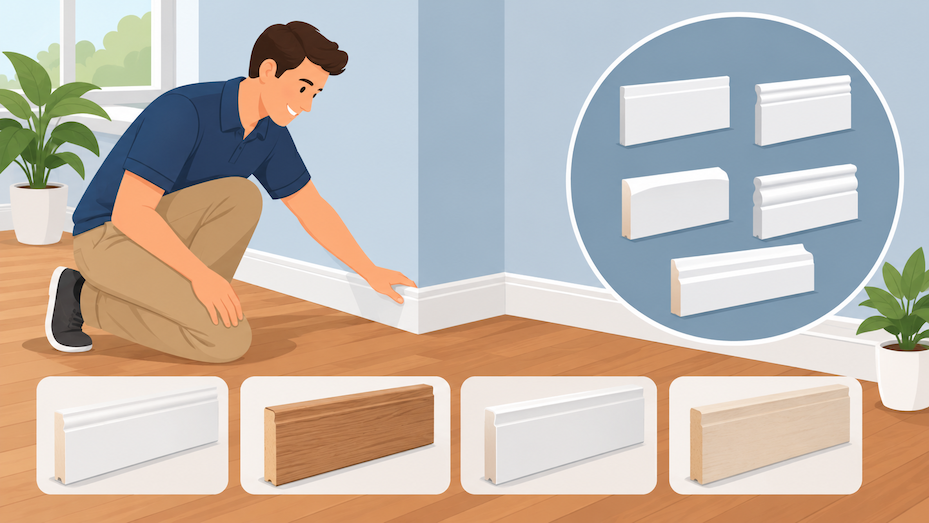
Baseboards may seem like a small design detail, but they have a noticeable impact on how finished and polished a room looks. The right baseboards can complement your flooring, protect walls from everyday wear, hide small gaps, and create a consistent transition between walls and floors.
If you’re wondering how to choose baseboards for your home, start by considering your interior design style, ceiling height, flooring material, room conditions, and maintenance preferences. The best option is one that balances appearance, durability, and practicality without making the room feel visually crowded.
Whether you’re updating a single room or planning a complete interior renovation, understanding the different baseboard materials, styles, sizes, and finishes will help you make a more confident decision.
What Are Baseboards and Why Are They Important?
Baseboards are decorative and protective trim pieces installed along the bottom of interior walls where they meet the floor. They create a finished transition between these surfaces while helping protect walls from furniture, vacuum cleaners, shoes, and everyday activity.
Although baseboards are often treated as a finishing detail, they serve several practical and aesthetic purposes.
What Do Baseboards Actually Do?
Baseboards provide more than decoration. They help protect vulnerable wall edges and give rooms a more complete appearance.
Their main functions include:
-
Protecting walls: Baseboards help prevent scratches, dents, scuffs, and minor impacts near the floor.
-
Covering installation gaps: They conceal small spaces between flooring materials and walls.
-
Improving room appearance: Properly selected trim creates a clean transition between walls and floors.
-
Connecting interior design elements: Baseboards help coordinate flooring, doors, window casings, and other interior finishes.
-
Adding architectural detail: Different profiles can make a room look traditional, modern, or more sophisticated.
For homeowners planning several interior upgrades, baseboards should be included in the finishing plan rather than treated as an afterthought.
What Are the Different Types of Baseboard Materials?
The best baseboard material depends on your budget, room conditions, desired appearance, and maintenance expectations. MDF, solid wood, PVC, and composite materials are among the most common options for residential interiors.
Each material has advantages and limitations worth considering before installation.
1. MDF Baseboards
Medium-density fiberboard (MDF) is an engineered wood product commonly used for interior trim. It provides a smooth, consistent surface that works particularly well with painted finishes.
MDF is popular because it is generally affordable, easy to paint, and available in different profiles.
Advantages:
-
Smooth surface for a clean painted finish.
-
Available in many traditional and contemporary designs.
-
Generally more affordable than solid wood.
-
Consistent dimensions and appearance.
Disadvantages:
-
Standard MDF can swell when exposed to excessive moisture.
-
Damaged sections may be difficult to repair seamlessly.
-
Not the best choice for areas with frequent water exposure.
MDF is a practical option for bedrooms, living rooms, hallways, and other dry interior spaces.
2. Solid Wood Baseboards
Solid wood baseboards offer a natural appearance and can complement traditional, transitional, and high-end interior designs.
Common choices include pine, oak, maple, and poplar. Different wood species have different grain patterns, costs, and finishing characteristics.
Advantages:
-
Natural wood grain and character.
-
Can be stained or painted.
-
Can be sanded and refinished.
-
Durable when properly installed and maintained.
Disadvantages:
-
Usually costs more than MDF.
-
Natural wood can expand or contract with changes in humidity.
-
Knots and grain variations may affect the final appearance.
Solid wood is worth considering when you want natural wood details or trim that coordinates with existing wood flooring, doors, or cabinetry.
3. PVC Baseboards
PVC baseboards are made from plastic and are designed to handle moisture better than standard MDF and many untreated wood products.
They are particularly useful in areas where water exposure or regular cleaning is a concern.
Advantages:
-
Moisture-resistant.
-
Won’t rot like untreated wood.
-
Easy to clean.
-
Suitable for certain bathrooms, laundry rooms, and utility spaces.
Disadvantages:
-
Some products have a less natural appearance than wood.
-
Quality and paint compatibility vary.
-
Lower-quality options may look less refined.
PVC is a practical choice for moisture-prone areas, provided the selected product is suitable for the installation environment.
4. Composite Baseboards
Composite baseboards are manufactured from combinations of materials designed to provide consistent dimensions, durability, and specific performance characteristics.
Some products are engineered to resist moisture, impacts, or other common sources of damage.
Advantages:
-
Available in different finishes and profiles.
-
Some options offer improved moisture resistance.
-
Consistent appearance.
-
Can be suitable for busy residential areas.
Disadvantages:
-
Performance varies by product.
-
Some options cost more than basic MDF.
-
Repair and painting requirements depend on the material.
Always check the manufacturer’s specifications before choosing a composite product.
Baseboard Material Comparison
Use the following comparison to narrow down your choices:
| Material | Main Advantage | Main Limitation | Best Application |
|---|---|---|---|
| MDF | Smooth painted finish | Standard MDF can swell with moisture | Bedrooms and living rooms |
| Solid Wood | Natural appearance | Higher cost and humidity movement | Living areas and formal interiors |
| PVC | Moisture resistance | Appearance varies by product | Bathrooms and laundry areas |
| Composite | Consistent construction | Performance varies by product | General residential interiors |
Which Baseboard Style Should You Choose?
The right baseboard style should complement your home’s architecture, furniture, flooring, and overall interior design. Simple profiles generally suit contemporary spaces, while more detailed designs work well in traditional interiors.
Here are some popular baseboard styles to consider.
1. Flat or Square-Edge Baseboards
Flat baseboards have a simple, straight profile without elaborate decorative details. They are a popular option for modern, minimalist, and contemporary interiors.
Their clean appearance makes them easy to coordinate with simple door casings and modern flooring.
Choose flat baseboards if you prefer:
-
Minimalist interior design.
-
Straight, clean architectural lines.
-
A simple painted finish.
-
A modern appearance that won’t feel dated quickly.
2. Colonial Baseboards
Colonial baseboards feature decorative curves and traditional detailing. They are commonly used in classic and traditional homes.
These profiles can add character to rooms with decorative doors, traditional cabinetry, and detailed interior trim.
They work particularly well when the rest of the home’s architectural details follow a similar style.
3. Rounded or Stepped Baseboards
Rounded and stepped baseboards feature subtle curves, angled edges, or layered profiles. They provide more visual interest than flat trim without necessarily appearing overly decorative.
They are versatile options for transitional interiors that combine traditional and contemporary elements.
4. Tall Baseboards
Tall baseboards create a more prominent visual border along the bottom of walls. They can make interiors feel more substantial and complement rooms with higher ceilings.
However, height should be selected carefully. Oversized baseboards can overwhelm smaller rooms or compete with other decorative features.
5. Craftsman-Style Baseboards
Craftsman-style baseboards typically feature straightforward shapes and defined edges. They complement homes with natural materials, simple architectural detailing, and understated decorative elements.
They are a good choice if you want something more distinctive than basic flat trim without using elaborate decorative profiles.
How Tall Should Your Baseboards Be?
Baseboard height should be proportional to your wall height, room size, and interior design. Shorter profiles often work well in compact rooms, while taller baseboards can create a more substantial appearance in rooms with higher ceilings.
There is no universal measurement that works for every home, but these general ranges provide a useful starting point.
Common Baseboard Height Options
| Ceiling Height | Suggested Baseboard Height | General Appearance |
|---|---|---|
| 8 feet | 3–5 inches | Simple and balanced |
| 9 feet | 4–6 inches | Slightly more prominent |
| 10 feet | 5–7 inches | More substantial |
| 11–12 feet | 6–9 inches or more | Architectural and decorative |
These are design guidelines, not strict construction requirements. The best proportion also depends on the room’s dimensions, door trim, furniture, and personal preference.
Should You Install Tall or Short Baseboards?
Tall baseboards are often a good fit for spacious rooms, higher ceilings, and traditional interiors. Shorter baseboards can keep smaller rooms looking clean and uncluttered.
Consider these factors:
-
Room size: Larger rooms can generally accommodate more substantial trim.
-
Ceiling height: Taller ceilings can support taller baseboards.
-
Door casing: Baseboard proportions should coordinate with the surrounding trim.
-
Interior style: Minimalist designs often benefit from simpler profiles.
-
Flooring: The baseboard should create a balanced transition without overwhelming the floor.
If you’re replacing existing baseboards, compare the new profile against your door casings and other architectural details before making a final selection.
How Do You Match Baseboards With Your Flooring?
Baseboards should complement your flooring without competing with its color, texture, or pattern. You can match the flooring, coordinate with the wall color, or use a contrasting finish to create a deliberate design feature.
The best approach depends on the overall look you want.
1. Baseboards With Hardwood Flooring
Hardwood flooring has natural grain patterns and variations in color. White or neutral painted baseboards can create a clean contrast, while stained wood trim can provide a more traditional, coordinated appearance.
If you choose stained wood, consider the wood species and undertones to avoid an obvious mismatch.
2. Baseboards With Tile Flooring
Tile flooring is common in kitchens, bathrooms, and many South Florida homes. Painted baseboards can soften the transition between tile and walls while keeping the room looking polished.
Choose a material that is appropriate for the room’s moisture conditions, particularly in bathrooms and laundry areas.
3. Baseboards With Luxury Vinyl Plank Flooring
Luxury vinyl plank (LVP) flooring often replicates the appearance of hardwood. White or neutral baseboards work well with many LVP colors and patterns.
For a modern interior, simple square-edge profiles can create a consistent, uncluttered look.
4. Baseboards With Carpet
Carpet creates a softer transition at the bottom of walls. Baseboards should be installed and finished in a way that leaves enough room for the carpet and its edge treatment.
Avoid choosing a profile that makes the carpet look compressed or creates an uneven appearance.
What Is the Best Baseboard Color for Your Home?
White is one of the most versatile baseboard colors because it works with many flooring styles and wall colors. However, matching the baseboard to the wall or using a contrasting shade can also produce an attractive result.
The right color depends on the mood and design of the room.
White Baseboards
White baseboards create a crisp separation between walls and flooring. They work especially well with neutral interiors, modern homes, and traditional spaces.
They can also make decorative trim more noticeable.
Matching Baseboards to Wall Color
Painting baseboards the same color as the walls creates a continuous appearance. This approach can make a room feel less visually segmented and works well with contemporary interiors.
It is particularly useful when you want the furniture, artwork, or architectural features to stand out.
Dark or Contrasting Baseboards
Dark baseboards can create a dramatic appearance and add definition to light-colored walls.
However, they should be used carefully because strong contrasts can draw attention to the bottom edge of the room.
Should Baseboards Match Door Trim?
Matching baseboards with door casings is a reliable way to create a consistent interior finish. They do not necessarily need to be identical, but their profiles, colors, and proportions should work together.
A coordinated approach helps different rooms feel connected, especially in homes with open floor plans.
What Should You Consider Before Buying Baseboards?
Before purchasing baseboards, measure the rooms, evaluate the installation environment, compare materials, and consider the existing interior finishes. Planning these details in advance can prevent unnecessary material purchases and installation problems.
Use this checklist when comparing products.
1. Measure the Total Wall Length
Measure each wall where baseboards will be installed. Add the measurements together and account for corners, door openings, closets, and other interruptions.
Purchase a reasonable amount of extra material to allow for cutting waste, damaged sections, and installation adjustments.
2. Check the Room Conditions
Some rooms experience more moisture, cleaning, and physical contact than others.
Consider:
-
Bathrooms and laundry rooms may require moisture-resistant materials.
-
Hallways often benefit from durable profiles that handle frequent contact.
-
Living rooms may prioritize appearance and coordination with flooring.
-
Bedrooms can accommodate a wider range of materials and styles.
3. Coordinate With Existing Interior Trim
Look at your door casings, window trim, cabinetry, and flooring before selecting a baseboard.
The goal is to create a consistent design rather than selecting each trim element independently.
4. Consider Maintenance Requirements
Painted baseboards may need occasional cleaning and touch-ups, especially in high-traffic areas.
Natural wood may require additional care depending on its finish and exposure to humidity. PVC and other moisture-resistant products may be easier to maintain in suitable applications.
5. Establish Your Budget
The total cost of a baseboard project includes more than the material itself.
Remember to account for:
-
Material and profile selection.
-
Total linear footage.
-
Cutting and installation labor.
-
Removal and disposal of old trim.
-
Caulking and filling.
-
Painting, staining, or finishing.
-
Repairs to walls or flooring edges when necessary.
Comparing these costs helps you select a product that fits your budget without sacrificing the overall quality of the installation.
How Do You Install Baseboards Properly?
Proper baseboard installation involves accurate measurements, careful cutting, secure attachment, and clean finishing. Even high-quality materials can look poorly installed if corners are uneven or gaps are left visible.
For a professional-looking result, the installation process should be handled carefully.
Step 1: Remove the Existing Baseboards
If you are replacing old trim, remove it carefully to minimize damage to the drywall and flooring.
Inspect the exposed wall edges and address any damaged sections before installing the new material.
Step 2: Prepare the Walls and Flooring
Clean the installation area and make sure the wall surface is suitable for the new baseboards.
Check for uneven areas, protruding nails, old adhesive, and gaps that may interfere with installation.
Step 3: Measure and Cut the Baseboards
Measure each wall section individually. Cut the baseboards to the required lengths and prepare the corners using appropriate miter or coping techniques.
Accurate cutting is especially important because visible gaps can affect the finished appearance.
Step 4: Secure the Baseboards
Attach the baseboards using suitable fasteners and installation methods for the selected material and wall construction.
Make sure each section sits properly against the wall without unnecessary gaps or movement.
Step 5: Fill and Caulk the Joints
Fill nail holes and address appropriate joints with compatible finishing products.
Caulking along the top edge can help create a cleaner transition between the wall and baseboard. Use products suitable for the material and application.
Step 6: Paint or Finish the Baseboards
Apply the selected paint, stain, or protective finish according to the manufacturer’s instructions.
Allow sufficient drying time before cleaning or placing furniture against the newly installed trim.
For larger interior projects, coordinating baseboard installation with flooring, painting, and other finishing work can help produce a more consistent result.
What Are the Most Common Baseboard Selection Mistakes?
The most common mistakes include choosing an unsuitable material, ignoring room proportions, overlooking moisture exposure, and selecting a profile that conflicts with the home’s interior design.
Avoid these problems by reviewing the following considerations before purchasing.
Choosing the Wrong Height
Baseboards that are too tall or too short can make a room feel visually unbalanced. Always consider ceiling height, room dimensions, and surrounding trim.
Ignoring Moisture Exposure
Standard MDF and some wood products are not suitable for areas with frequent water exposure. Choose materials designed for the conditions of the room.
Mixing Too Many Baseboard Styles
Using several unrelated profiles throughout the home can make the interior feel inconsistent.
Unless there is a clear design reason, maintaining a consistent baseboard style across connected rooms is usually the better approach.
Selecting Materials Based Only on Price
A low-cost product may not be the best long-term choice if it requires frequent repairs or cannot handle the room’s conditions.
Consider durability, maintenance, and installation requirements alongside the purchase price.
Forgetting About Door and Window Trim
Baseboards should complement the rest of the home’s architectural details. Ignoring door and window casing styles can result in an interior that looks disconnected.
When Should You Hire a Professional for Baseboard Installation?
Professional installation is worth considering when your home has uneven walls, complex corners, extensive trim work, or multiple flooring transitions. An experienced installer can help select appropriate materials, achieve cleaner joints, and maintain consistent proportions throughout the home.
While simple baseboard replacement may be manageable for homeowners with the right tools and experience, larger projects require careful coordination.
Consider professional help when:
-
You are replacing baseboards throughout the entire house.
-
Your walls or floors are uneven.
-
The design includes detailed profiles or custom trim.
-
You need precise corner joints and transitions.
-
Existing trim removal may damage walls or flooring.
-
Baseboard installation is part of a larger remodeling project.
Top Renovations provides baseboard services as part of its broader residential improvement offerings. Homeowners planning interior upgrades can explore Top Renovations’ home improvement and remodeling services to discuss the appropriate scope of work for their property.
If you are organizing several upgrades at once, it can also help to review this home renovation checklist to identify finishing details that should be included in your project plan.
Frequently Asked Questions About Choosing Baseboards
What is the best baseboard material for a home?
MDF is a popular choice for painted interior trim because of its smooth surface and affordability. Solid wood offers a natural appearance, while PVC and suitable composites are useful in areas where moisture resistance is important.
What baseboard height looks best in a house?
The ideal height depends on ceiling height, room dimensions, and interior design. A range of approximately 3 to 5 inches is a common starting point for rooms with standard 8-foot ceilings, while taller rooms can accommodate more substantial profiles.
Should baseboards match the flooring or walls?
Baseboards can match the walls, coordinate with the flooring, or create contrast between the two. White and neutral finishes are versatile choices, but the best option depends on the overall design.
Are MDF baseboards suitable for bathrooms?
Standard MDF is generally not recommended for areas with frequent water exposure because it can swell when moisture penetrates the material. Moisture-resistant alternatives or suitable PVC products may be better choices.
Are taller baseboards better?
Not necessarily. Taller baseboards can create a more prominent architectural appearance, but they should be proportional to the room. Oversized trim can overwhelm smaller spaces.
Do baseboards need to be replaced when installing new flooring?
Not always. Existing baseboards can sometimes remain in place if they are in good condition and the new flooring installation allows for a clean finished edge. However, replacement may be necessary if the trim is damaged, outdated, or incompatible with the new floor height.
Should baseboards be installed before or after flooring?
The installation sequence depends on the flooring type and project specifications. In many projects, flooring is installed before the final baseboards so the trim can cover the perimeter expansion gap. Follow the flooring manufacturer’s installation requirements.
How much extra baseboard material should I buy?
A common planning allowance is approximately 10% extra to account for cutting waste, corners, and mistakes. Complex room layouts may require additional material.
Can I paint existing baseboards instead of replacing them?
Yes. If existing baseboards are structurally sound and have an appropriate profile, cleaning, sanding, priming, and repainting can refresh their appearance without requiring replacement.
How often should baseboards be replaced?
There is no fixed replacement schedule. Baseboards can last many years when properly installed and maintained. Replacement is generally based on visible damage, moisture problems, outdated designs, or changes made during renovation.
Final Thoughts
Choosing the right baseboards is an important part of creating a finished, cohesive interior. The right combination of material, height, profile, and color can improve the appearance of your rooms while protecting walls and providing a clean transition between flooring and walls.
Before making a purchase, consider your home’s architectural style, ceiling height, flooring material, room conditions, and maintenance needs. A well-planned selection will look more natural and remain practical for years.
If you’re planning a home improvement project, don’t overlook the finishing details. Professional baseboard installation can help bring the entire interior design together and give your home a cleaner, more polished appearance.