

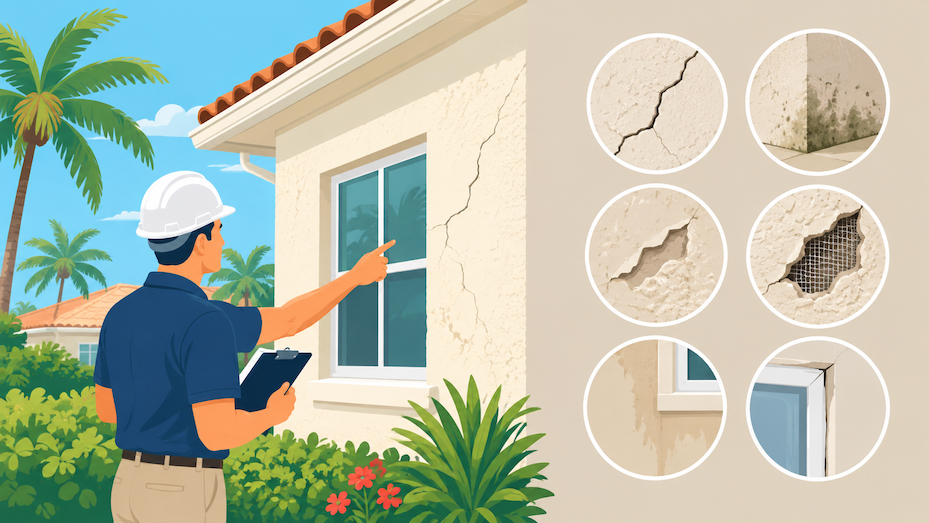
Stucco can last for decades, but South Florida’s intense sun, high humidity, heavy rainfall, and hurricane exposure can gradually wear down an exterior finish. Knowing when stucco needs replacement helps homeowners protect their property, prevent moisture intrusion, and avoid unnecessary renovation expenses.
Most traditional stucco systems can last 50 years or longer when properly installed and maintained. However, there is no fixed replacement schedule for every home. The right time to replace stucco depends on its age, installation quality, moisture protection, maintenance history, and the extent of any existing damage.
In South Florida, regular inspections are especially important because small cracks or deteriorating areas can allow water to reach the materials behind the stucco. Identifying these problems early can help determine whether localized repairs will work or whether a larger replacement project is necessary.
How Long Does Stucco Last in South Florida?
Traditional cement-based stucco can remain serviceable for 50 years or more, and some well-maintained installations last considerably longer. The finish may need periodic repairs, repainting, or protective maintenance long before the underlying stucco system reaches the end of its useful life.
In South Florida, longevity depends heavily on how well the exterior handles moisture and weather exposure.
Typical Stucco Lifespan
The following estimates provide general planning guidance, not guaranteed service lives or mandatory replacement intervals.
| Stucco Condition or System | General Lifespan Consideration |
|---|---|
| Traditional cement-based stucco | Can last 50 years or longer with proper installation and maintenance |
| Synthetic stucco or EIFS | Lifespan varies significantly by system design, installation, drainage, and maintenance |
| Stucco with recurring moisture damage | May require repairs or partial replacement much earlier |
| Poorly installed stucco | Can develop premature cracking, separation, or water intrusion |
| Well-maintained stucco with isolated surface cracks | May remain serviceable for many additional years after appropriate repairs |
These categories are not interchangeable. Traditional stucco and exterior insulation and finish systems (EIFS) have different construction details, so an inspection should identify which system is installed before recommending repairs.
Why South Florida’s Climate Matters
Stucco is durable, but it is not completely waterproof. Its performance depends on proper detailing, drainage, flashing, sealants, and the moisture-management system behind the exterior finish.
Several local conditions can accelerate deterioration:
-
Heavy rainfall: Water can enter through cracks, failed sealants, and poorly detailed openings.
-
High humidity: Persistent moisture can contribute to mold, corrosion of metal components, and deterioration of concealed materials.
-
Intense sunlight: Ultraviolet exposure and temperature changes can affect coatings, sealants, and some exterior finishes.
-
Hurricane exposure: Wind-driven rain can penetrate vulnerable joints and openings.
-
Coastal conditions: Salt-laden air can accelerate corrosion of susceptible metal components and fasteners.
-
Poor drainage: Water that repeatedly collects near exterior walls can increase moisture-related risks.
For broader context, see Top Renovations’ guide to common South Florida renovation challenges, which covers regional moisture, weather, and material concerns.
What Are the Signs That Stucco Needs Replacement?
The most reliable way to determine whether stucco needs replacement is to evaluate the severity, location, and underlying cause of the damage. Surface appearance alone does not always reveal the condition of the materials behind the finish.
Some problems can be corrected with localized repairs, while widespread deterioration may justify replacing larger sections.
1. Widespread or Recurring Cracks
Small hairline cracks can develop as building materials move or finishes age. They do not automatically mean the entire stucco exterior needs replacement.
However, cracks deserve closer attention when they are wide, growing, repeatedly reopening after repairs, or extending across multiple areas of the wall.
Watch for:
-
Long diagonal or stair-step cracks
-
Cracks around windows and doors
-
Repeated cracking in previously repaired areas
-
Cracks accompanied by bulging or separation
-
Multiple cracks that appear to be spreading
The important question is whether the cracks are limited to the finish or indicate movement, water damage, or a problem with the underlying assembly.
2. Stucco That Sounds Hollow or Is Separating
Stucco that has detached from its supporting surface may sound hollow when professionally assessed or may visibly bulge away from the wall.
This can happen when bonding fails, moisture damages underlying materials, or the installation was not properly executed.
A few isolated areas may be repairable. Extensive separation across an elevation can indicate a more significant problem requiring partial or full replacement.
Do not rely on tapping alone to determine the extent of damage. A qualified professional should evaluate questionable areas and establish whether the surrounding material remains securely attached.
3. Persistent Moisture Stains or Discoloration
Dark stains, recurring discoloration, peeling paint, and deteriorating coatings can indicate that moisture is repeatedly affecting an exterior wall.
These symptoms may also result from dirt, algae, irrigation overspray, or other surface conditions, so they do not automatically establish that the stucco has failed.
Pay particular attention when stains return after cleaning or appear alongside cracking, soft materials, musty odors, or interior water marks.
The source of the moisture should be identified before repairs begin. Otherwise, new stucco or paint may conceal the symptoms without correcting the underlying issue.
4. Soft, Crumbling, or Deteriorating Stucco
Stucco that flakes, crumbles, or loses material may have experienced prolonged weathering, moisture exposure, poor installation, or other forms of deterioration.
A damaged finish may be repairable if the affected area is limited and the supporting materials are sound.
When deterioration extends through substantial portions of the wall, replacement may be more practical than repeatedly patching failing sections.
5. Interior Water Damage Near Exterior Walls
Water stains on interior walls, bubbling paint, damaged baseboards, or persistent dampness near exterior walls can indicate a building-envelope problem.
Potential entry points include cracked stucco, failed window or door sealants, roof-to-wall transitions, and improperly installed flashing.
Replacing stucco without identifying the actual water entry point can leave the problem unresolved. The investigation should cover the exterior finish and the surrounding building components.
6. Extensive Damage Around Windows and Doors
Windows and doors are common locations for water intrusion because they involve joints between different building materials.
Damaged sealants, missing or defective flashing, and poorly executed transitions can allow rainwater behind the stucco.
If deterioration appears around several openings, the issue may involve the original installation or a broader moisture-management failure. Repairs should address the underlying details rather than simply covering the damaged finish.
Should You Repair or Replace Stucco?
Repair is usually appropriate when damage is localized, the surrounding stucco remains sound, and the underlying cause can be corrected. Replacement becomes more reasonable when deterioration is widespread, the system has failed, or repeated repairs no longer provide a reliable solution.
The decision should be based on a condition assessment rather than the age of the stucco alone.
When Stucco Repair Is Usually Enough
Localized repairs may be suitable when:
-
A few small cracks are present without signs of structural movement.
-
Damage is confined to a limited section of the wall.
-
The surrounding stucco remains firmly attached.
-
Moisture entry can be traced to a specific, correctable defect.
-
The underlying sheathing, framing, and moisture-management components remain serviceable.
After repairing the cause, the contractor can remove unsound material, prepare the surface, apply compatible repair materials, and restore the finish.
Matching the original texture and color may require additional finishing or repainting.
When Partial Stucco Replacement Makes Sense
Partial replacement may be appropriate when damage affects one wall, one elevation, or several concentrated areas while the rest of the exterior remains in good condition.
Examples include:
-
Moisture damage around a group of windows
-
A deteriorated section beneath a roof or balcony transition
-
Localized failure caused by defective installation
-
Damaged stucco over a limited area of compromised sheathing
The work should include any necessary correction of flashing, drainage, sealants, or other moisture-control details. Simply installing new stucco over a defective assembly can lead to recurring damage.
When Full Stucco Replacement May Be Necessary
Full replacement deserves consideration when:
-
Large portions of the exterior are separating or deteriorating.
-
Moisture damage is widespread across multiple walls.
-
The existing system has significant installation defects.
-
Repeated repairs have failed to resolve recurring problems.
-
Extensive concealed damage requires removal of the existing finish.
-
A renovation requires rebuilding the exterior wall assembly.
Full replacement is a substantial project, so it should follow a documented assessment of the wall system. In some cases, a combination of targeted replacement and localized repairs will provide a more cost-effective solution.
How Much Does Stucco Replacement Cost in South Florida?
Stucco replacement costs depend on the size of the affected area, the type of system, accessibility, labor, finish requirements, and whether concealed damage needs to be corrected.
A small repair is generally less expensive than replacing an entire exterior. However, a low initial estimate may not account for moisture-damaged sheathing, flashing corrections, or other work discovered after the surface is opened.
Factors That Affect Replacement Costs
Size of the project: Replacing a small section typically requires less material and labor than removing and rebuilding the exterior finish across an entire home.
Existing damage: Rot, corrosion, mold-affected materials, and deteriorated sheathing can add work beyond the stucco itself.
Stucco system: Traditional cement-based stucco and EIFS have different installation and repair requirements.
Access and height: Multi-story walls, restricted access, and scaffolding requirements can increase labor costs.
Finish matching: Matching existing color and texture can require additional preparation, coating, or work across a larger area.
Permits and related work: Depending on the scope and local jurisdiction, permits, inspections, engineering, or other building-envelope work may be necessary.
For general budgeting context, Top Renovations also explains how regional labor, material selection, and project scope influence home renovation costs in South Florida.
How to Get a More Accurate Estimate
Before comparing contractor proposals, ask for a written scope of work that identifies:
-
The areas to be repaired or replaced
-
The proposed stucco system and finish
-
How damaged underlying materials will be handled
-
Whether flashing, sealants, or drainage details require correction
-
Who is responsible for permits and inspections, when applicable
-
Whether painting, cleanup, and final inspection are included
Request clarification about concealed damage and how additional work will be priced if problems are discovered during removal.
Comparing detailed scopes is more useful than choosing a contractor based on the lowest headline price.
How to Extend the Life of Stucco in South Florida
Regular maintenance cannot prevent every problem, but it can help homeowners identify deterioration before it spreads.
The goal is to keep the exterior finish in good condition while ensuring that water drains away from the wall assembly.
Inspect the Exterior Regularly
Examine the stucco at least annually and after significant storms. Check around windows, doors, rooflines, balconies, exterior penetrations, and areas where different materials meet.
Look for new cracks, peeling coatings, discoloration, separation, and damaged sealants. Photographing changes can help you identify whether a problem is growing over time.
Arrange a professional assessment when damage is widespread, recurring, or difficult to interpret.
Maintain Sealants and Flashing
Sealants around windows, doors, and other openings can deteriorate with age and weather exposure.
Inspect these joints for gaps, cracking, or separation. Flashing should direct water away from vulnerable transitions rather than allowing it to enter the wall assembly.
Repairs must use compatible materials and appropriate installation methods. Covering a drainage opening or applying sealant indiscriminately can trap water instead of preventing intrusion.
Keep Water Away From Exterior Walls
Make sure gutters, downspouts, and drainage systems function as intended where installed. Avoid allowing irrigation systems to spray exterior walls continuously.
The surrounding grade and hardscape should direct water away from the home in accordance with applicable requirements.
If water regularly pools beside the building, investigate the drainage problem rather than relying on the stucco finish alone to protect the wall.
Address Small Problems Promptly
A minor crack or isolated area of damaged sealant may be relatively straightforward to correct when the surrounding materials remain sound.
Delaying an assessment can allow water to enter the wall and affect materials that are more expensive to replace.
However, not every crack requires immediate patching without investigation. If the crack is expanding or repeatedly returning, determine its cause before applying another surface repair.
Use Appropriate Exterior Coatings
Exterior paint and coatings can help protect stucco when they are compatible with the existing system and applied to a properly prepared surface.
The correct product depends on the substrate, existing coating, moisture conditions, and manufacturer’s recommendations. Some wall assemblies need to manage water vapor or drain moisture, so applying an unsuitable coating can create additional problems.
Consult a qualified contractor before coating stucco that shows signs of trapped moisture or extensive deterioration.
What to Expect During a Stucco Replacement Project
Understanding the process helps homeowners prepare for the work and recognize why a proper assessment matters.
The exact sequence depends on whether the project involves a small section, one elevation, or the entire exterior.
Step 1: Inspect the Existing Wall System
The contractor evaluates visible damage, identifies the existing stucco type where possible, and investigates likely sources of moisture or separation.
Additional testing or selective removal may be necessary to determine the condition of concealed materials.
Step 2: Define the Repair or Replacement Scope
Based on the findings, the contractor establishes which areas need removal, what underlying components require attention, and how the new finish will be integrated with the existing wall.
This is also the time to discuss the finish, budget, access requirements, and any applicable permits.
Step 3: Remove Damaged Materials
Unsound stucco is removed carefully to expose the relevant layers of the wall assembly.
If concealed damage is discovered, the scope may need to be adjusted before reconstruction continues.
Step 4: Correct Moisture and Installation Problems
Depending on the findings, the work may involve repairing sheathing, correcting flashing, restoring drainage details, or addressing other defective components.
These corrections are essential because installing a new finish over the original defect can result in another failure.
Step 5: Install and Finish the Stucco
The contractor installs the appropriate materials and layers according to the selected system and its manufacturer’s specifications.
Curing, surface preparation, texture, and coating requirements depend on the materials being used and the project conditions.
Step 6: Review the Completed Work
The final review should confirm that the agreed scope has been completed, the finish is consistent with the project specifications, and relevant drainage and flashing details have been addressed.
Keep copies of the contract, permits, inspection records where applicable, product information, and warranty documentation.
How to Choose a Stucco Contractor in South Florida
Stucco replacement involves more than applying a new exterior finish. The contractor must understand how the wall manages moisture and how the stucco connects to windows, doors, roofs, and other building components.
Before hiring someone, verify that the contractor has the appropriate Florida license for the work, required insurance, and experience with the type of stucco system installed on your home.
Ask for references and examples of comparable projects. A contractor should be able to explain why repair, partial replacement, or full replacement is appropriate for your property’s condition.
A reliable proposal should describe the removal process, substrate repairs, moisture-management details, materials, finish, cleanup, and payment schedule. It should also explain how unexpected damage will be documented and priced.
Be cautious of recommendations for complete replacement that are based only on a few surface cracks, as well as unusually low bids that exclude investigation of potential water damage.
If the project is part of a larger exterior upgrade, review the property’s other needs at the same time. Top Renovations’ guide to exterior upgrades for Pompano Beach homes discusses how stucco condition, exterior appearance, and other improvements fit into broader home maintenance planning.
Frequently Asked Questions
How often should stucco be replaced in South Florida?
There is no universal replacement interval. Traditional cement-based stucco can last 50 years or longer with proper installation and maintenance, but the timing depends on the wall system’s condition, moisture exposure, and maintenance history. Inspect the exterior regularly and replace it when deterioration cannot be addressed reliably with localized repairs.
Can stucco last 100 years?
Some traditional stucco installations may remain serviceable for many decades, potentially approaching or exceeding a century when the construction is sound and maintenance is consistent. However, a 100-year lifespan should not be treated as a guarantee. The underlying wall assembly, weather exposure, and repair history all matter.
Does cracked stucco always need to be replaced?
No. Small, isolated cracks can often be repaired if the surrounding material is sound and there is no significant underlying damage. Wide, expanding, recurring, or widespread cracks warrant a closer assessment to determine whether the cause is movement, moisture intrusion, or another problem.
Is it better to repair stucco or replace it?
Repair is generally preferable when the damage is limited and the underlying wall remains in good condition. Partial or full replacement may be more appropriate when stucco is extensively detached, deteriorated, or affected by recurring moisture problems that cannot be resolved through localized repairs.
Does South Florida humidity damage stucco?
Humidity alone does not mean stucco will fail. However, persistent moisture, heavy rainfall, defective flashing, poor drainage, and inadequate installation can contribute to deterioration. Proper moisture management is essential to the long-term performance of stucco in South Florida.
Can you put new stucco over old stucco?
It depends on the existing system, substrate condition, compatibility, and manufacturer’s requirements. Applying a new layer over unsound or moisture-damaged material can conceal problems rather than solve them. A contractor should assess the existing assembly before recommending an overlay or another replacement method.
What is the difference between stucco repair and stucco restoration?
Stucco repair usually addresses specific defects, such as localized cracks or damaged sections. Restoration is a broader term that can involve multiple repairs, surface preparation, coating renewal, and correction of deterioration across a larger portion of the exterior. The precise scope varies by contractor and project.
Should I replace stucco before selling my home?
Not necessarily. The decision depends on the stucco’s condition, any evidence of water intrusion, inspection findings, and buyer expectations. Documented repairs may be sufficient for a home with isolated defects, while widespread deterioration may require more substantial work. Obtain an assessment before committing to a full replacement.
Key Takeaways
-
Traditional cement-based stucco can last 50 years or longer when properly installed and maintained.
-
South Florida’s humidity, heavy rainfall, intense sun, and hurricane exposure make moisture management particularly important.
-
Cracks, discoloration, hollow areas, crumbling material, and interior water stains can indicate problems that need investigation.
-
Localized damage does not automatically require full stucco replacement.
-
Widespread deterioration, extensive separation, and recurring moisture intrusion may justify partial or complete replacement.
-
Repairing the source of water intrusion is just as important as restoring the exterior finish.
-
Regular inspections, compatible coatings, sound sealants, and effective drainage can help extend the life of a stucco exterior.
-
Written estimates and a clear assessment of the underlying wall system help homeowners make informed decisions.
Final Thoughts
Stucco replacement in South Florida should be based on the condition of the exterior wall, not simply the number of years since installation. A properly maintained system may remain serviceable for decades, while poor installation or persistent moisture can cause problems much sooner.
If your home’s stucco is cracking repeatedly, separating from the wall, or showing signs of water intrusion, arrange an inspection before deciding on the scope of work. Identifying the underlying cause early can help you avoid unnecessary replacement and protect the long-term condition of your property.
Top Renovations can help homeowners evaluate exterior renovation needs and plan improvements based on the property’s condition, project scope, and budget. Request an assessment to determine whether targeted repairs, partial replacement, or a larger stucco project is the most appropriate next step.