

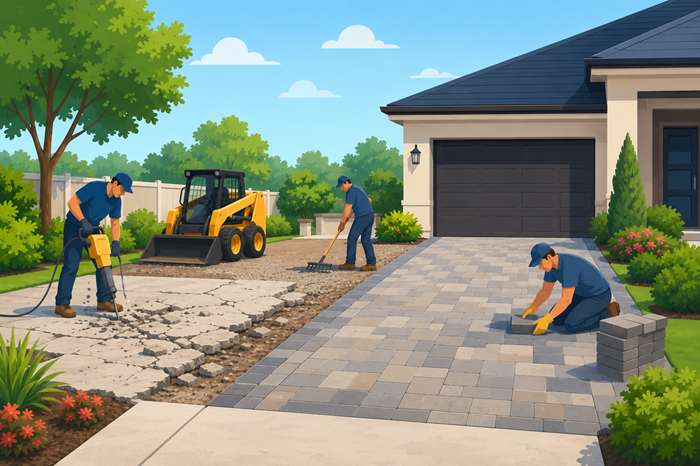
Replacing an aging surface is one of the best investments you can make for your home’s appearance, functionality, and long-term value. Whether you’re dealing with cracks, drainage issues, or years of wear and tear, understanding the driveway replacement process helps you plan your project with confidence.
Planning a driveway replacement early allows homeowners to compare materials, budget accurately, and avoid costly surprises during construction.
Homeowners often wonder what affects pricing, which materials offer the best value, and whether repairs are enough or a complete replacement makes more financial sense. In this guide, we’ll break down every major cost factor, explain material options, and share practical tips for keeping your budget under control while achieving a durable, attractive result.
What Affects the Cost of Replacing a Driveway?
Several factors influence the total project price. Every driveway replacement project is unique, so obtaining a detailed estimate is the best way to understand the actual scope and pricing.
Some of the biggest pricing factors include:
- Total square footage
- Existing surface removal
- Material selection
- Site preparation
- Drainage improvements
- Labor costs in your location
- Decorative finishes
- Permit requirements
A professional driveway contractor can inspect your property and recommend the most cost-effective solution based on your home’s conditions.
Average Cost Per Square Foot
The biggest pricing factor is the material you choose.
Typical installation costs generally fall into these ranges: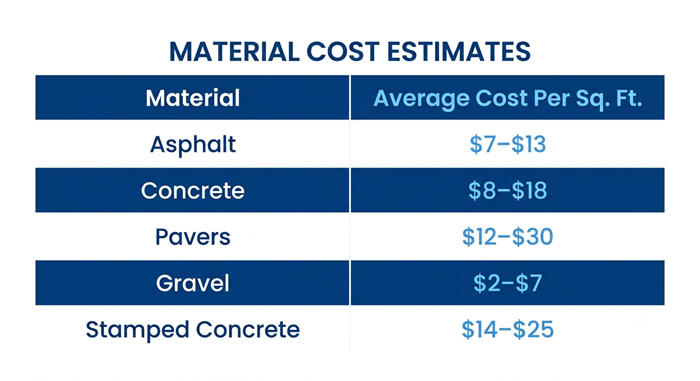
These ranges include both labor and materials in many situations, although regional pricing and project complexity may change the final estimate.
When budgeting, many homeowners specifically research the driveway replacement cost per square foot because it provides a useful baseline before requesting contractor quotes.
Material Options and Their Long-Term Value
Selecting the right material for your driveway replacement should balance durability, maintenance needs, appearance, and long-term value.
Concrete
Concrete remains one of the most popular choices because it offers durability, low maintenance, and a clean appearance that complements nearly every home style.
Although the initial investment can be higher than asphalt, the concrete driveway replacement cost is often balanced by its longer lifespan and lower maintenance requirements.
Asphalt
Asphalt is usually less expensive upfront and installs quickly. It performs especially well in colder climates where freeze-thaw cycles are common.
However, periodic sealing helps maximize its lifespan.
Pavers
Pavers offer exceptional curb appeal and design flexibility.
If appearance matters as much as durability, researching the best driveway pavers can help you choose materials that resist fading while maintaining their color for years.
Gravel
Gravel provides the lowest installation cost but requires ongoing maintenance to keep the surface level and attractive.
It works well for rural properties and long driveways.
Additional Expenses You Should Expect
The installation itself isn’t always the only expense.
Your estimate may also include:
- Demolition of the existing surface
- Tree root removal
- Soil stabilization
- Drainage corrections
- Edge restraints
- Utility adjustments
- Decorative borders
- Sealants or protective coatings
Understanding these items ahead of time helps prevent unexpected costs later.
Repair or Replace?
Not every damaged surface requires complete reconstruction.
Minor issues such as isolated cracks or small surface deterioration may only require driveway repair, which is generally more affordable.
However, replacement becomes the better investment when you notice:
- Large structural cracks
- Significant sinking
- Poor drainage
- Widespread deterioration
- Foundation movement beneath the surface
A professional inspection can determine which solution offers better long-term value.
Hidden Factors That Can Increase Project Costs
Some homes require additional work before installation begins.
These conditions commonly increase the total project budget:
Poor Drainage
Water is one of the biggest enemies of any paved surface.
Improving drainage during installation protects your investment and reduces future maintenance.
Existing Damage Below the Surface
Weak subgrade materials often require excavation and replacement before new materials can be installed.
Decorative Finishes
Stamped patterns, exposed aggregate, colored concrete, and premium borders all increase labor and material costs while dramatically improving curb appeal.
Ways to Save Money Without Sacrificing Quality
Careful planning before beginning a driveway replacement can help reduce unnecessary expenses while ensuring lasting results.
Consider these practical tips:
- Schedule work during slower contractor seasons.
- Compare multiple written estimates.
- Choose durable materials suited to your climate.
- Address drainage issues during installation.
- Avoid unnecessary decorative upgrades if working within a tight budget.
- Invest in regular maintenance after installation.
If you’re planning multiple exterior upgrades, exploring these smart ways to finance south florida curb appeal may help you spread costs more comfortably.
Why Professional Installation Usually Pays Off
While some homeowners consider handling the project themselves, professional installation often delivers better long-term performance.
Experienced contractors understand grading, drainage, compaction, reinforcement, and local building requirements.
If you’re weighing your options, it’s worth taking time to compare professional vs DIY driveway installation before making a decision.
Maintenance Tips That Protect Your Investment
Replacing your surface is only the first step.
Proper maintenance extends its lifespan considerably.
Some simple habits include:
- Clean stains promptly.
- Remove weeds before they spread.
- Keep drainage areas clear.
- Seal surfaces when recommended.
- Avoid excessive vehicle loads.
- Repair small cracks early.
For paver surfaces, understanding why unsealed pavers develop mold, weeds, and insect problems can help you avoid costly maintenance issues later.
How to Get the Most Accurate Estimate
Every project is different, making professional estimates essential.
The most accurate quote should include:
- Material costs
- Labor
- Demolition
- Site preparation
- Cleanup
- Warranty information
- Estimated timeline
Requesting detailed written estimates allows you to compare value instead of simply choosing the lowest price. A professionally completed driveway replacement not only improves curb appeal but also provides a safer and more durable surface for everyday use.
Conclusion
Understanding the driveway replacement cost involves much more than looking at a price per square foot. Material selection, site conditions, labor, drainage, and long-term maintenance all influence the final investment.
Choosing quality materials and experienced professionals often results in fewer repairs, greater durability, and stronger curb appeal over the years. By comparing options carefully and planning ahead, homeowners can complete a successful project that enhances both the appearance and value of their property.
Frequently Asked Questions
1. How long does a new driveway typically last?
Most installations last 20–30 years with proper maintenance.
2. What is the best season for replacement?
Spring and fall usually provide ideal weather conditions.
3. Can a new driveway increase home value?
Yes, it improves curb appeal and can positively impact resale value.
4. Should I repair or completely replace my driveway?
Replacement is usually better when structural damage is widespread.
5. How long before I can drive on a new surface?
It depends on the material, but most require several days before regular vehicle use.