

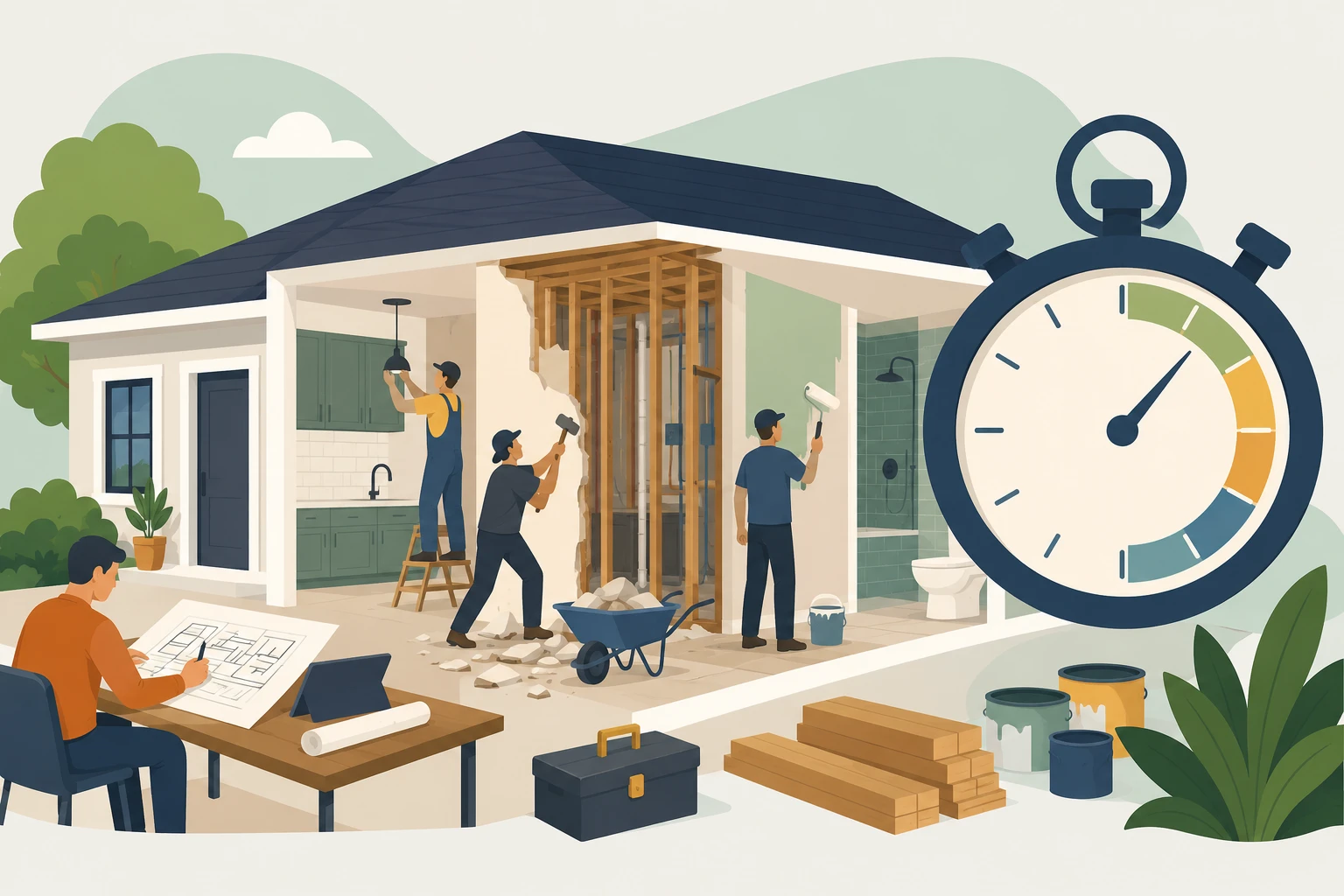
Planning a home renovation is exciting, but one of the first questions homeowners ask is: how long will it actually take?
The truth is that renovation timelines vary widely depending on the scope of work, permit approvals, material availability, and contractor coordination. A small bathroom update may take a few weeks, while a full-home remodel can stretch across several months.
Understanding realistic renovation timelines helps homeowners plan better, avoid frustration, and make smarter decisions throughout the project. Whether you’re remodeling a kitchen, updating an exterior, or transforming an investment property, having a clear timeline makes the process far smoother from start to finish.
In this guide, we’ll break down how long different renovation projects usually take, what delays are most common, and how homeowners can keep projects moving efficiently.
Why Renovation Timelines Matter
Many renovation problems start with unrealistic expectations.
Homeowners often assume projects will move faster than they actually do. At the same time, some contractors underestimate schedules just to secure the job.
A well-planned renovation timeline helps:
-
Reduce stress
-
Minimize unexpected costs
-
Improve communication
-
Coordinate permits and inspections
-
Prevent rushed workmanship
Most importantly, realistic scheduling protects the quality of the final result.
Average Renovation Timelines by Project Type
Different renovation projects come with very different schedules. The timeline depends on labor, demolition, inspections, custom materials, and overall complexity.
Bathroom Renovation Timeline
A standard bathroom remodel usually takes:
-
2–4 weeks for cosmetic updates
-
4–8 weeks for full renovations
Smaller bathrooms move faster because there’s less demolition and fewer materials involved.
However, custom tile work, plumbing relocation, and special-order vanities can add additional time.
Kitchen Remodeling Timeline
Kitchen renovations are typically more complex.
Most kitchen remodels take:
-
6–10 weeks for moderate renovations
-
3–5 months for larger custom kitchens
Cabinet production often becomes the biggest scheduling factor. Electrical updates, plumbing modifications, and countertop fabrication can also extend timelines.
Homeowners planning major upgrades often begin with a detailed home remodeling consultation to create a realistic project schedule before demolition begins.
Full Home Renovation Timeline
Whole-home remodeling projects generally require:
-
4–8 months for medium-sized homes
-
6–12 months for larger luxury properties
This type of renovation involves multiple moving parts happening simultaneously:
-
Flooring
-
Electrical
-
Plumbing
-
Painting
-
Structural work
-
Permits
-
Inspections
The more trades involved, the more coordination the project requires.
Exterior Renovation Timeline
Exterior renovations usually move faster than interior projects, but weather conditions can still create delays.
Typical timelines include:
-
Exterior painting: 1–2 weeks
-
Stucco repairs: 2–4 weeks
-
Patio renovations: 3–6 weeks
-
Roofing updates: 1–3 weeks
Outdoor projects involving gates or perimeter upgrades often overlap with custom modern fence installation schedules to complete the property transformation cohesively.
What Causes Renovation Delays?
Almost every renovation project experiences some form of delay. The key is understanding which delays are normal and which ones indicate poor project management.
Permit Approvals
Permit delays are one of the most common timeline issues in South Florida.
Some cities process permits quickly, while others may take weeks depending on:
-
Inspection backlogs
-
Revision requests
-
Seasonal demand
-
HOA approvals
Projects involving structural modifications or electrical changes usually take longer to approve.
Material Shortages
Custom materials can dramatically affect schedules.
Common delay items include:
-
Cabinets
-
Windows
-
Appliances
-
Imported tile
-
Specialty fixtures
Supply chain disruptions can add several weeks if materials are ordered late.
Change Orders
Homeowners often change design decisions during construction.
While adjustments are common, changing layouts, finishes, or materials mid-project usually slows progress because crews must stop, reorder materials, or revise plans.
Hidden Damage
Older homes often reveal unexpected problems after demolition begins.
Contractors may uncover:
-
Water damage
-
Mold
-
Outdated wiring
-
Structural issues
-
Plumbing leaks
These repairs are necessary before construction can continue safely.
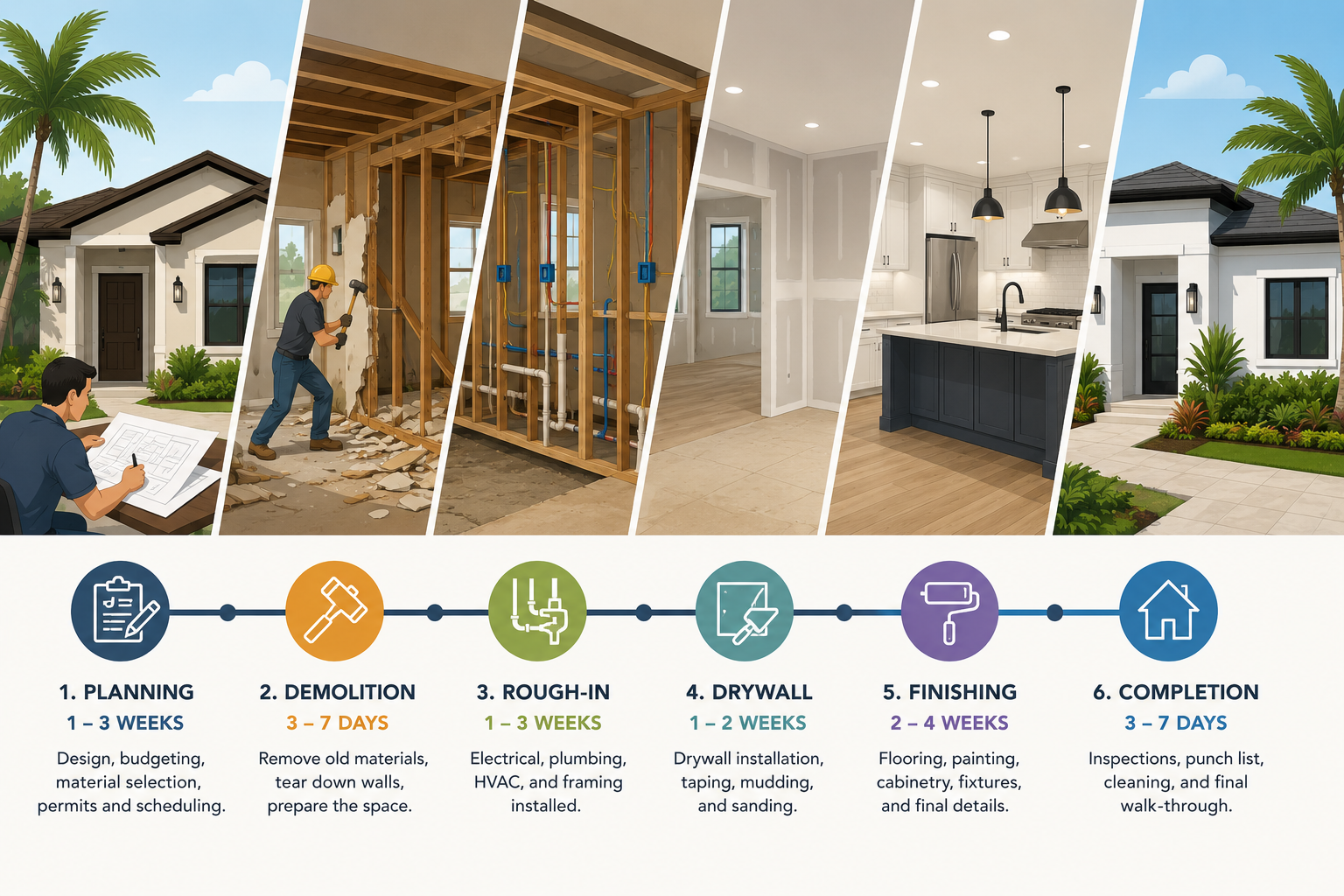
How Long Should Planning Take Before Renovation?
One of the biggest mistakes homeowners make is rushing into demolition before fully planning the project.
A proper planning phase usually takes:
-
2–4 weeks for smaller renovations
-
1–3 months for larger remodels
This stage includes:
-
Design decisions
-
Material selection
-
Permit applications
-
Budget planning
-
Scheduling
Projects that skip proper planning tend to experience the most delays later.
The Difference Between Cosmetic and Structural Renovations
Not all renovations are equally complicated.
Cosmetic Renovations
Cosmetic updates usually move quickly because they don’t affect the home’s structure.
Examples include:
-
Painting
-
Flooring
-
Cabinet refacing
-
Lighting replacement
-
Fixture upgrades
These projects often stay on schedule more easily.
Structural Renovations
Structural renovations require significantly more time because they involve:
-
Engineering
-
Permits
-
Inspections
-
Demolition
-
Specialized labor
Removing walls, relocating plumbing, or expanding living spaces always adds complexity.
Renovation Timelines for Investment Properties
Investment renovations often operate under tighter deadlines because time directly affects profitability.
For example:
-
Airbnb renovations may prioritize speed before peak travel seasons
-
Rental properties may need fast turnover between tenants
-
Fix-and-flip projects rely heavily on timeline efficiency
Vacation rental renovations especially require careful coordination between design, functionality, and durability.
How to Keep a Renovation Project on Schedule
While delays happen, there are several ways homeowners can reduce unnecessary setbacks.
Finalize Design Decisions Early
The more decisions made before construction starts, the smoother the project usually runs.
This includes:
-
Paint colors
-
Flooring
-
Fixtures
-
Cabinet styles
-
Appliances
-
Layout approvals
Late decisions almost always create scheduling issues.
Order Materials in Advance
Ordering materials early prevents projects from stalling while waiting for deliveries.
Contractors often recommend securing:
-
Cabinets
-
Tile
-
Plumbing fixtures
-
Appliances
-
Windows
before demolition begins.
Hire Organized Contractors
Strong project management matters just as much as construction quality.
An experienced contractor coordinates:
-
Trade scheduling
-
Permit tracking
-
Inspections
-
Material deliveries
-
Timeline updates
Poor communication is one of the biggest warning signs homeowners encounter during renovations. Understanding the issues can help prevent major scheduling problems.
How South Florida Weather Impacts Renovation Timelines
South Florida weather creates unique construction challenges.
Hurricane season, heavy rain, and humidity can affect:
-
Exterior painting
-
Roofing
-
Concrete curing
-
Stucco application
-
Outdoor construction
Summer months may also bring slower permit approvals due to seasonal demand increases.
Experienced contractors typically build weather buffers into the schedule.
Budget Renovations vs High-End Renovations
The renovation budget also affects project length.
Budget Renovations
Budget-focused projects may move faster because:
-
Simpler materials are used
-
Layouts stay mostly unchanged
-
Fewer custom items are involved
Luxury Renovations
High-end projects typically take longer due to:
-
Custom fabrication
-
Imported materials
-
Detailed craftsmanship
-
Complex designs
-
Specialty installations
Luxury timelines prioritize precision over speed.
Should You Live in Your Home During Renovation?
This depends entirely on the project scope.
Many homeowners stay home during:
-
Single-room remodels
-
Cosmetic updates
-
Exterior renovations
However, full-home renovations involving plumbing or electrical shutdowns often make temporary relocation more practical.
Living through major construction can slow progress because crews must work around occupied spaces.
Signs a Renovation Timeline Is Unrealistic
Some contractors promise overly aggressive schedules that simply aren’t realistic.
Warning signs include:
-
No permit discussion
-
Vague scheduling
-
No material lead-time planning
-
Extremely low bids with fast completion promises
-
Lack of detailed project phases
Well-organized renovations usually include clear milestone schedules from the beginning.
What a Realistic Renovation Timeline Looks Like
A professionally managed renovation timeline often follows this structure:
Week 1–2
-
Permits finalized
-
Materials ordered
-
Site preparation
Week 3–5
-
Demolition
-
Structural work
-
Rough plumbing/electrical
Week 6–8
-
Drywall
-
Flooring
-
Cabinet installation
Week 9–10
-
Painting
-
Fixtures
-
Final finishes
Week 11–12
-
Inspections
-
Punch-list items
-
Final cleanup
Larger renovations simply expand each phase.
Final Thoughts
So, how long should a renovation project take?
The honest answer depends on the size, complexity, and level of planning involved. Smaller cosmetic projects may finish within weeks, while larger full-home renovations can take several months.
The most successful renovation projects aren’t necessarily the fastest ones. They’re the projects with realistic schedules, strong communication, organized planning, and experienced professionals managing every stage carefully.
Understanding the renovation timeline ahead of time allows homeowners to plan confidently, reduce stress, and avoid costly surprises during construction.
Frequently Asked Questions
How long does a typical home renovation take?
Most home renovations take anywhere from a few weeks to several months depending on the project size and complexity.
Why do renovations take longer than expected?
Permit delays, material shortages, weather conditions, design changes, and hidden structural issues commonly extend renovation timelines.
What is the fastest type of renovation?
Cosmetic updates like painting, flooring replacement, and fixture upgrades are usually the fastest renovations to complete.
How long does a kitchen remodel take?
Most kitchen remodels take between 6–10 weeks, while larger custom kitchens may require several months.
Can weather delay renovations in Florida?
Yes. Rain, hurricanes, humidity, and extreme heat can impact outdoor construction schedules significantly.
Should I move out during a renovation?
For smaller projects, staying home is often manageable. Larger renovations involving plumbing, electrical systems, or multiple rooms may require temporary relocation.